


Information signsBelgium
 Traffic rules
 Belgium
 Priority signs
 Warning signs
 Prohibitory signs
 Mandatory signs
 Information signs
 Additional signs
Information signs
An information sign is a traffic sign that provides useful guidance or clarification to road users without imposing rules or warnings. These signs inform drivers about things like parking zones, directions, facilities, road layouts, or the start and end of built-up areas. Their purpose is to help drivers navigate confidently by giving clear, practical information that improves orientation, comfort, and overall traffic flow.























1. Start of a priority road
This traffic sign indicates the start of a priority road. Drivers on the priority road normally have priority over traffic entering from side roads until the priority road ends, unless traffic lights, other signs or applicable traffic rules indicate otherwise.
Signal routier B9 • Voie prioritaire.
Verkeersbord B9 • Voorrangsweg.
2. End of the priority road
This traffic sign indicates the end of the priority road. The road no longer has continuing priority at subsequent intersections. Follow the applicable traffic lights, priority signs and default priority rules.
Signal routier B11 • Fin de voie prioritaire.
Verkeersbord B11 • Einde van voorrangsweg.
3. Start of a built-up area
This traffic sign indicates the start of a built-up area. From this point, the traffic rules that apply to built-up areas take effect according to the applicable local regulations.
Signal routier F1b • Commencement d'une agglomération. Ce signal est placé à droite, à chaque accès d'une agglomération; il peut être répété à gauche.
Verkeersbord F1b • Begin van een bebouwde kom. Dit verkeersbord wordt rechts geplaatst op elke toegangsweg tot een bebouwde kom; het mag links herhaald worden.
4. End of the built-up area
This traffic sign indicates the end of the built-up area. The traffic rules specifically associated with the built-up area cease to apply from this point according to the applicable local regulations.
Signal routier F3b • Fin d'une agglomération. Ce signal est placé à droite, à chaque sortie d'une agglomération; il peut être répété à gauche.
Verkeersbord F3b • Einde van een bebouwde kom. Dit verkeersbord wordt rechts geplaatst op elke uitvalsweg van een bebouwde kom; het mag links herhaald worden.
5. City limit
This traffic sign indicates a city or town limit. It marks the boundary or entrance of the named locality. Any traffic rules associated with the boundary depend on the applicable local regulations.

Verkeersbord F43 • Plaatsnaambord.
6. Start of a motorway
This traffic sign indicates the start of a motorway. From this point, special motorway rules apply, including restrictions on which road users may enter and on stopping, reversing and other manoeuvres. Follow the applicable speed limits, lane rules and local motorway regulations.
Signal routier F5 • Commencement d'une autoroute ou accès à une autoroute. Les règles spéciales de circulation sur les autoroutes s'appliquent à partir de l'endroit où le signal est placé.
Verkeersbord F5 • Begin of oprit van een autosnelweg. De bijzondere verkeersregelen op de autosnelwegen gelden vanaf de plaats waar het verkeersbord aangebracht is. Dit verkeersbord wordt rechts geplaatst en mag links herhaald worden.
7. End of the motorway
This traffic sign indicates the end of the motorway. The special motorway rules end at this point. Follow the speed limits, access rules and other traffic signs that apply to the road ahead.
Signal routier F7 • Fin d'autoroute. Ce signal est placé à droite et peut être répété à gauche.
Verkeersbord F7 • Einde van een autosnelweg. Dit verkeersbord wordt rechts geplaatst en mag links herhaald worden.
8. Start of an expressway
This traffic sign indicates the start of an expressway. From this point, the traffic rules and access conditions that apply to expressways take effect according to the applicable local regulations.
Signal routier F9 • Route pour automobiles. Les règles spéciales de circulation sur les routes pour automobiles s'appliquent à partir de l'endroit où le signal est placé.
Verkeersbord F9 • Autoweg. De bijzondere verkeersregelen op de autowegen gelden vanaf de plaats waar het verkeersbord is aangebracht. Dit verkeersbord wordt rechts geplaatst en mag links herhaald worden.
9. End of the expressway
This traffic sign indicates the end of the expressway. The special traffic rules associated with the expressway end at this point. Follow the rules and traffic signs that apply to the road ahead.
Signal routier F11 • Fin de route pour automobiles. Ce signal est placé à droite et peut être répété à gauche.
Verkeersbord F11 • Einde van een autoweg. Dit verkeersbord wordt rechts geplaatst en mag links herhaald worden.
10. Start of a residential area
This traffic sign indicates the start of a residential area. Special traffic rules apply within the area according to the applicable signs and local regulations. These rules may affect speed, parking and how different road users use the road.
Signal routier F12a • Commencement d'une zone résidentielle ou d'une zone de rencontre. Les règles spéciales de circulation dans les zones résidentielles ou les zones de rencontre s'appliquent à partir de l'endroit où le signal est placé. Ce signal est placé à droite de chaque accès à une zone résidentielle ou une zone de rencontre; il peut être répété à gauche.
Verkeersbord F12a • Begin van een woonerf of van een erf. De bijzondere verkeersregelen in de woonerven of erven gelden vanaf de plaats waar het verkeersbord aangebracht is. Dit verkeersbord wordt rechts geplaatst aan elke toegang tot een woonerf of erf; het mag links herhaald worden.
11. End of the residential area
This traffic sign indicates the end of the residential area. The special traffic rules associated with the residential area end at this point. Follow the traffic signs and rules that apply beyond the area.
Signal routier F12b • Fin d'une zone résidentielle. Ce signal est placé à droite de chaque sortie d'une zone résidentielle ou d'une zone de rencontre; il peut être répété à gauche.
Verkeersbord F12b • Einde van een woonerf of van een erf. Dit verkeersbord wordt rechts geplaatst aan elke uitgang van een woonerf of erf; het mag links herhaald worden.
12. Start of a zone for pedestrians
This traffic sign indicates the start of a pedestrian zone. Pedestrians are the principal road users within the zone, while access by vehicles and other road users is subject to the applicable traffic signs and local rules.
Signal routier F103 • Commencement d'une zone piétonne. Ce signal est placé à droite, à chaque accès d'une zone piétonne; il peut être répété à gauche.
Verkeersbord F103 • Begin van een voetgangerszone. Dit verkeersbord wordt rechts geplaatst aan elke toegang tot een voetgangerszone; het mag links herhaald worden.
13. End of the zone for pedestrians
This traffic sign indicates the end of the pedestrian zone. The special traffic rules associated with the pedestrian zone end at this point. Follow the traffic signs and rules that apply beyond the zone.
Signal routier F105 • Fin d'une zone piétonne. Ce signal est placé à droite, à chaque sortie d'une zone piétonne; il peut être répété à gauche.
Verkeersbord F105 • Einde van een voetgangerszone. Dit verkeersbord wordt rechts geplaatst aan elke uitgang van een voetgangerszone; het mag links herhaald worden.
14. Start of a zone for cyclists
This traffic sign indicates the start of a zone for cyclists. Special traffic rules apply throughout the zone according to the applicable signs and local regulations.
Signal routier F111 • Début d'une zone cyclable. La mention « Zone cyclable » sur le signal est facultative.
Verkeersbord F111 • Begin van de fietszone. De vermelding « Fietszone » op het verkeersbord is facultatief.
15. End of the zone for cyclists
This traffic sign indicates the end of the zone for cyclists. The special rules associated with the cyclist zone end at this point. Other traffic rules or restrictions may still apply.
Signal routier F113 • Fin d'une zone cyclable.
Verkeersbord F113 • Einde van een fietszone.
16. Bike box
This traffic sign indicates a bike box. A bike box, also called an advanced stop area, is a marked space at a signal-controlled junction where cyclists may position themselves ahead of other traffic when the applicable signal requires them to stop.
Signal routier F14 • Zone avancée pour cyclistes et conducteurs de cyclomoteurs à deux roues.
Verkeersbord F14 • Opstelvak voor fietsers en bestuurders van tweewielige bromfietsen.
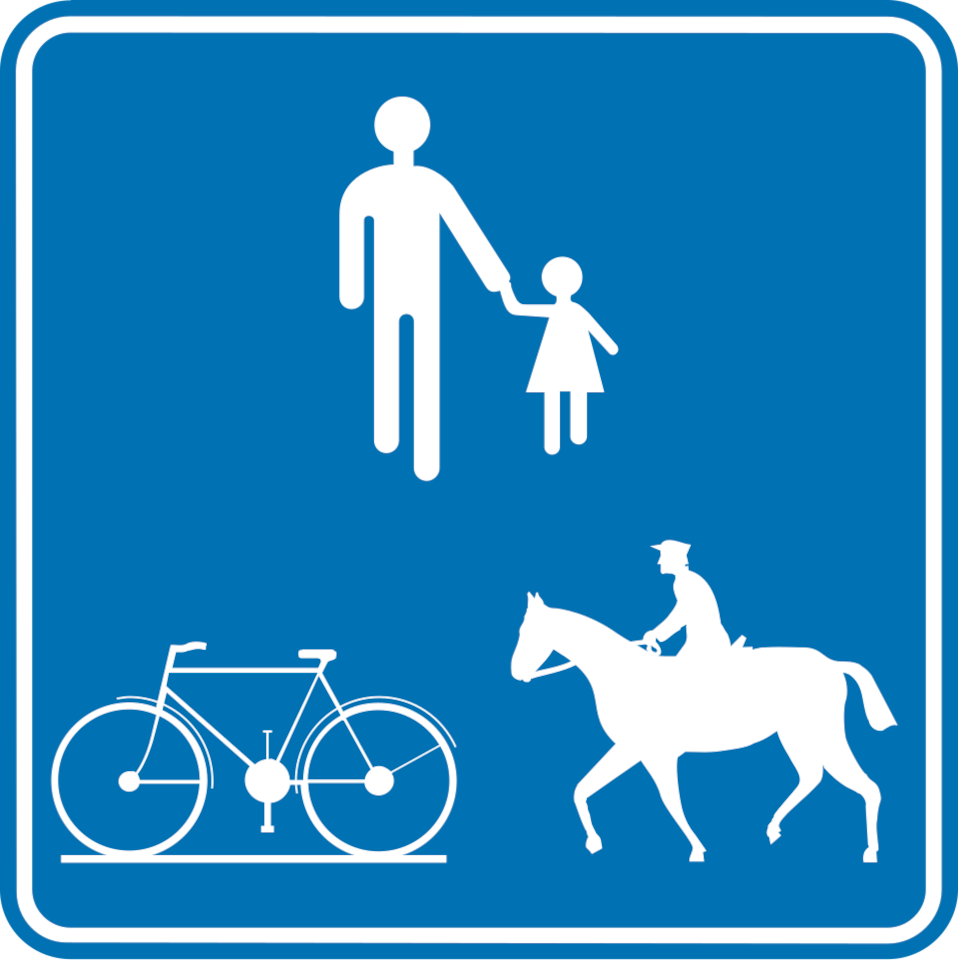
17. Reserved road for the indicated road users
This traffic sign indicates the start of a road reserved for the indicated road users. The symbols on the sign show which road-user categories may use the road. Other road users may enter only where an applicable exemption or local rule permits it.

Verkeersbord R9 • Begin van een weg of van wegen voorbehouden voor het verkeer van de aangeduide weggebruikers (voorbeelden). Het verkeersbord kan aangepast zijn volgens de categorieën van weggebruikers. Op dit bord zijn ten minste 2 categorieën van weggebruikers aangeduid. De maximale snelheid die er geldt, kan als aanwijzing rechtsonder op het verkeersbord aangeduid zijn.
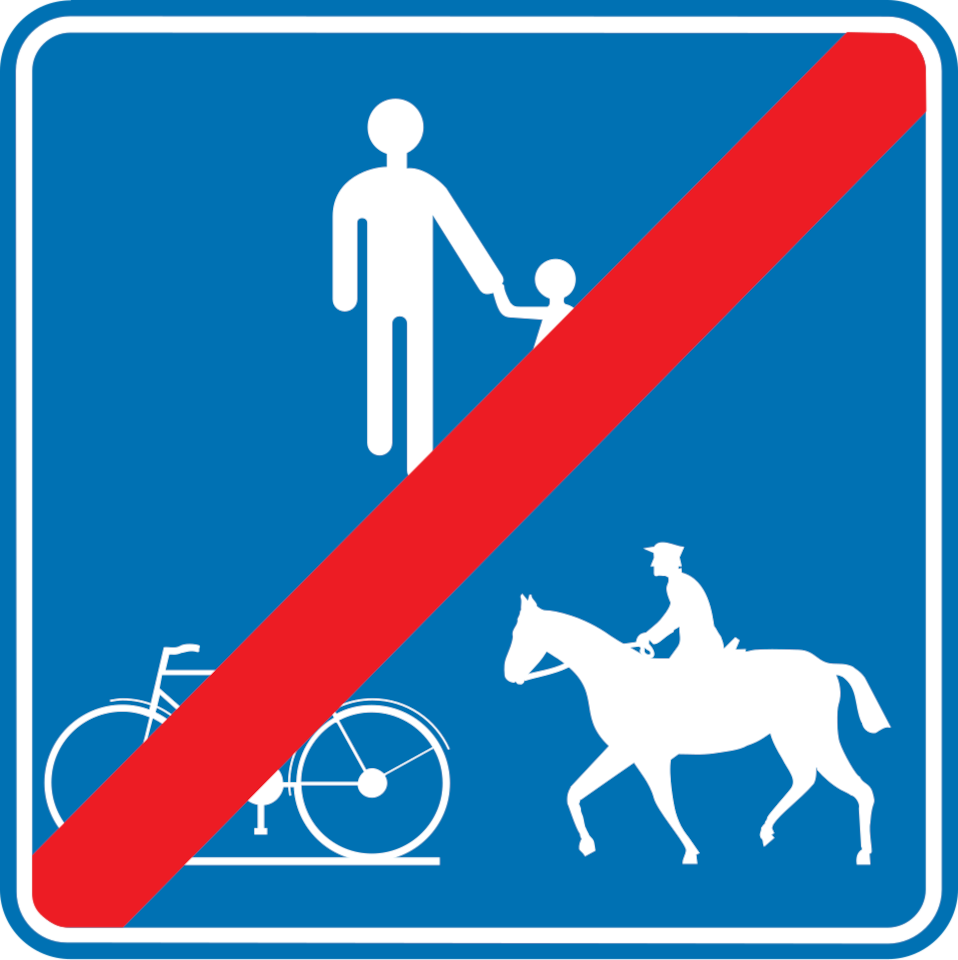
18. End of reserved road
This traffic sign indicates the end of a road reserved for indicated road users. The special rules associated with the reserved road end at this point. Follow the traffic signs, road markings and rules that apply beyond it.

Verkeersbord R11 • Einde van een weg of van wegen voorbehouden voor het verkeer van de aangeduide weggebruikers (voorbeelden).
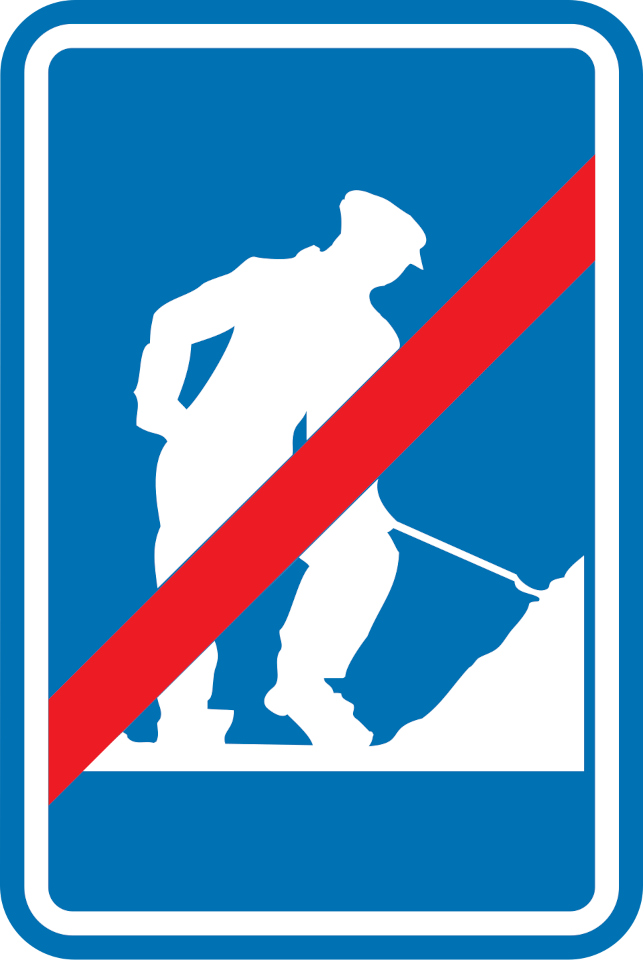
19. End of roadworks
This traffic sign indicates the end of the roadworks area. Continue according to the normal road layout and traffic rules, but keep following any temporary restrictions that have not been separately ended or replaced by another sign.
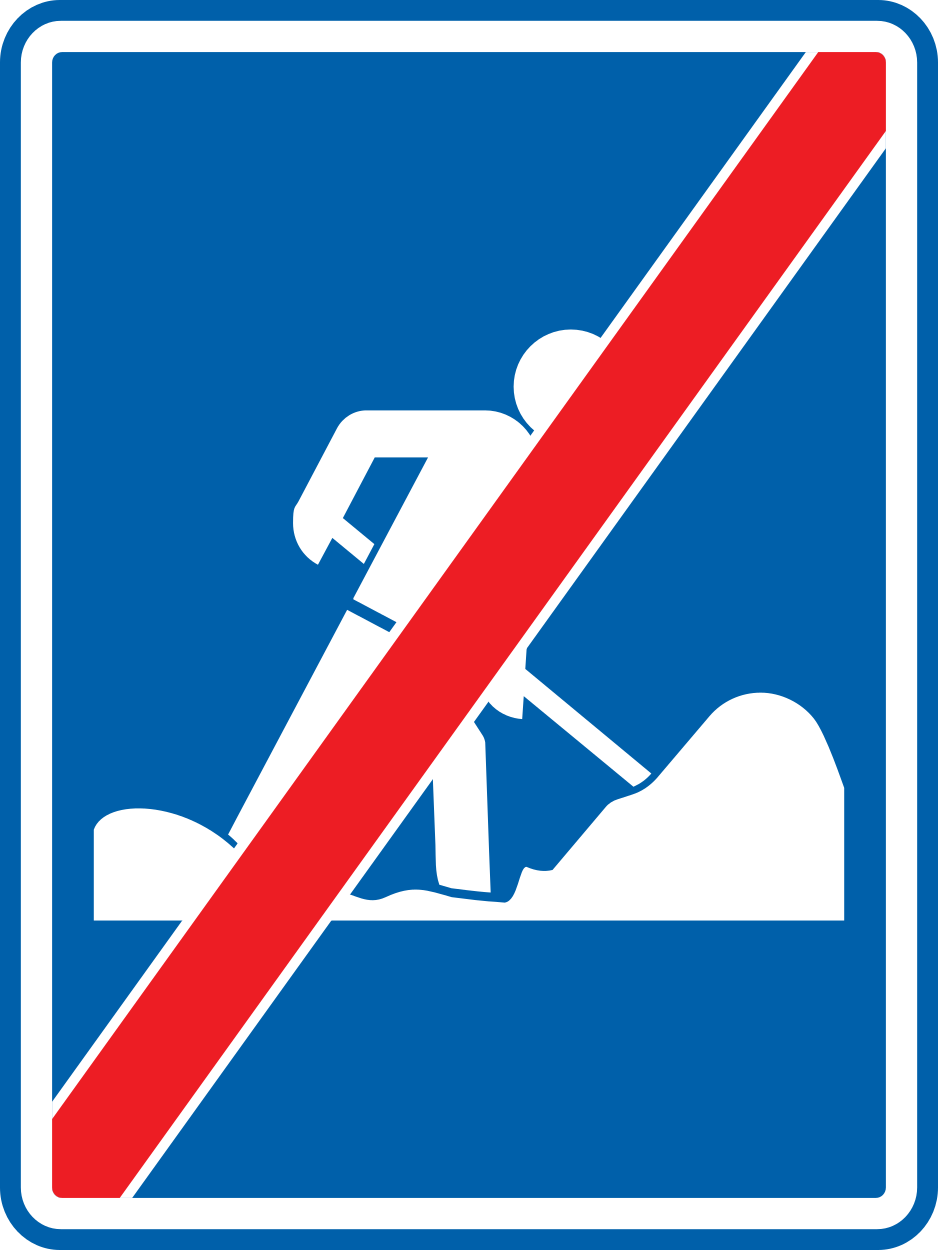
Verkeersbord R39 • Einde van de werken.
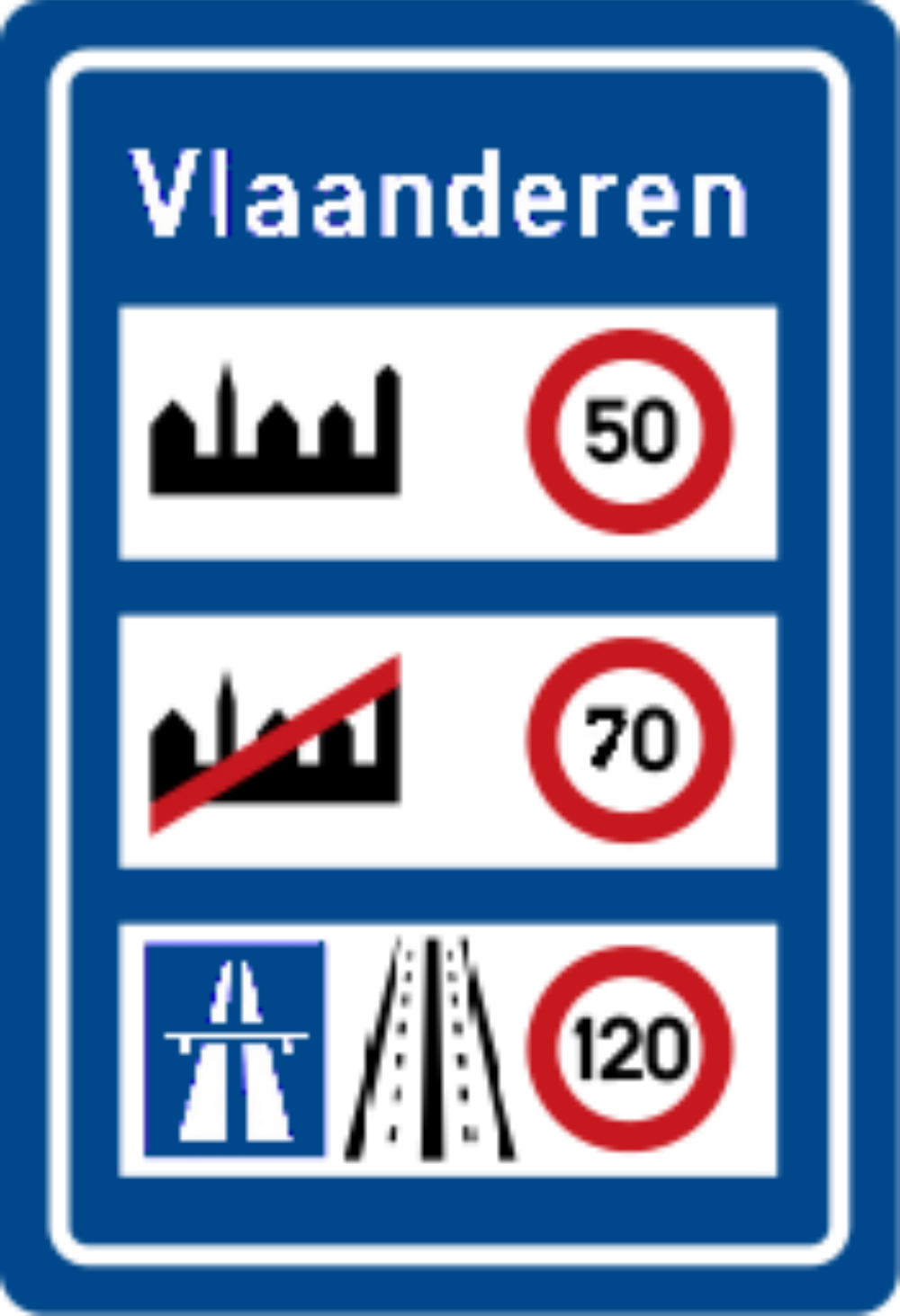
20. National speed limits
This traffic sign indicates the national speed limits. The applicable default maximum speeds depend on the road type, vehicle category and local traffic rules when no different speed limit is indicated.
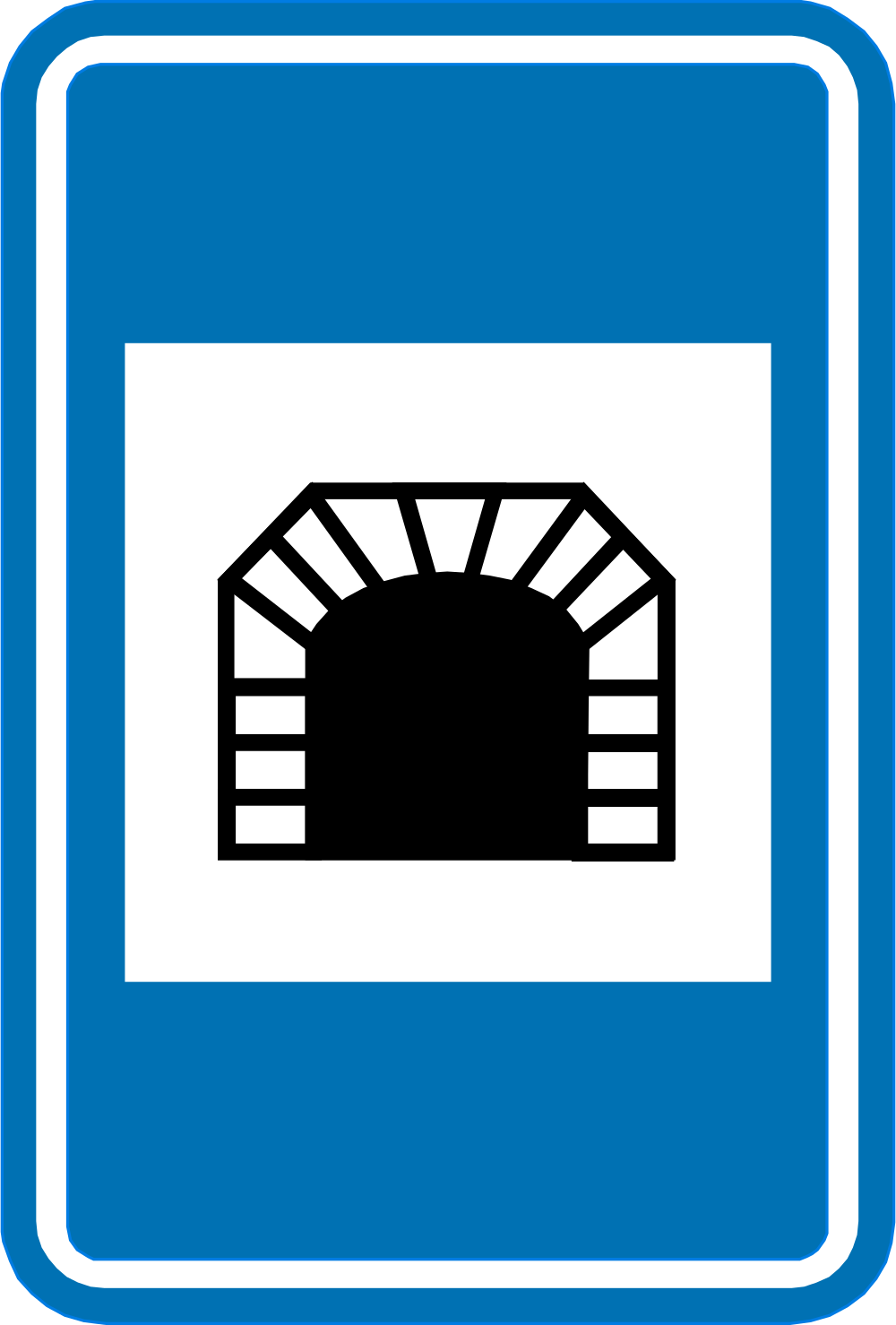
21. Start of a tunnel
This traffic sign indicates the start of a tunnel. Special traffic rules may apply within the tunnel, including requirements concerning vehicle lighting, speed or following distance. Follow the applicable signs and local rules.
Signal routier F8 • Tunnel. Tunnel d'une longueur de plus de 500 mètres. La longueur du tunnel est indiquée sur un panneau additionnel et éventuellement son nom.
Verkeersbord F8 • Tunnel met een lengte van meer dan 500 meter. Op onderborden wordt de lengte van de tunnel en eventueel zijn naam aangeduid.
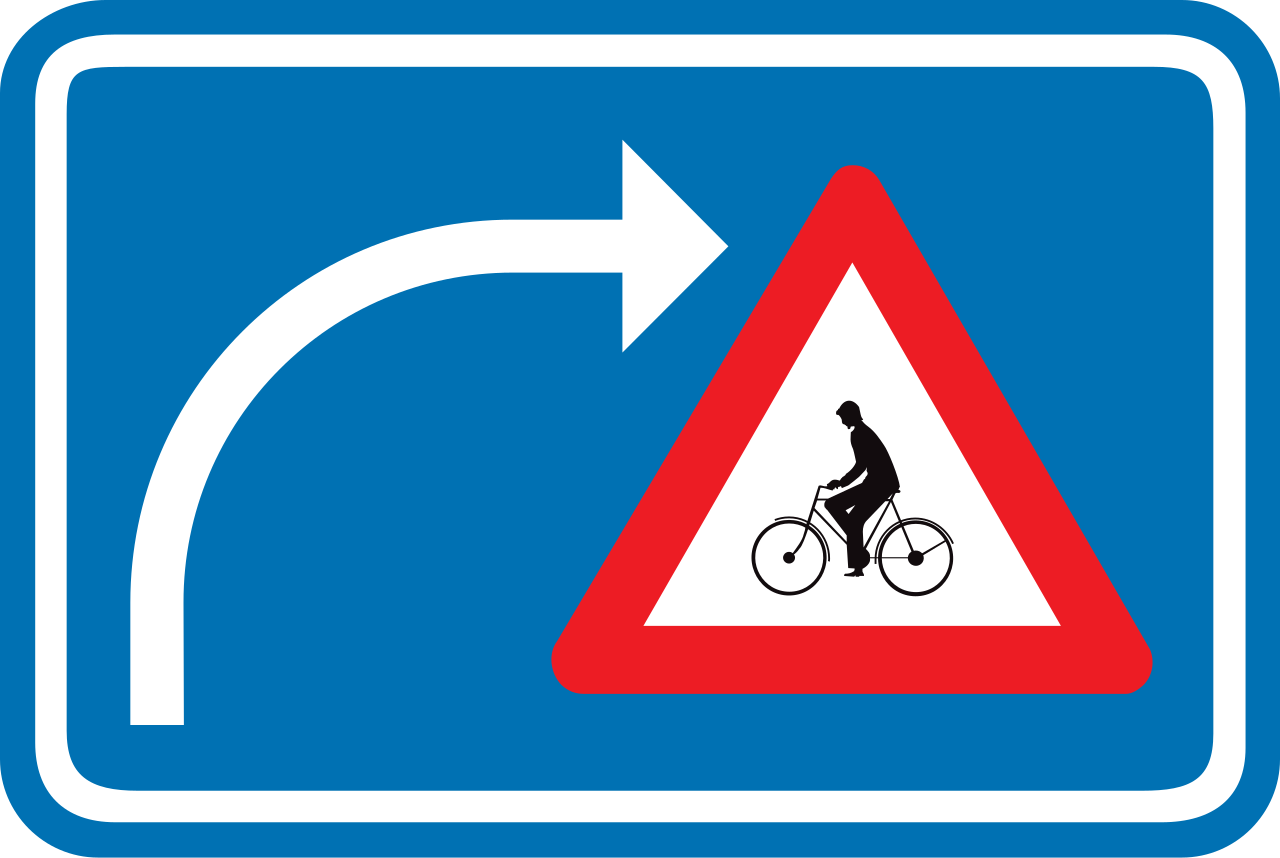
22. Warning for cyclists when turning right
This traffic sign warns drivers turning right that cyclists may cross their path. Check carefully for cyclists before and during the turn, reduce speed and give way when required.
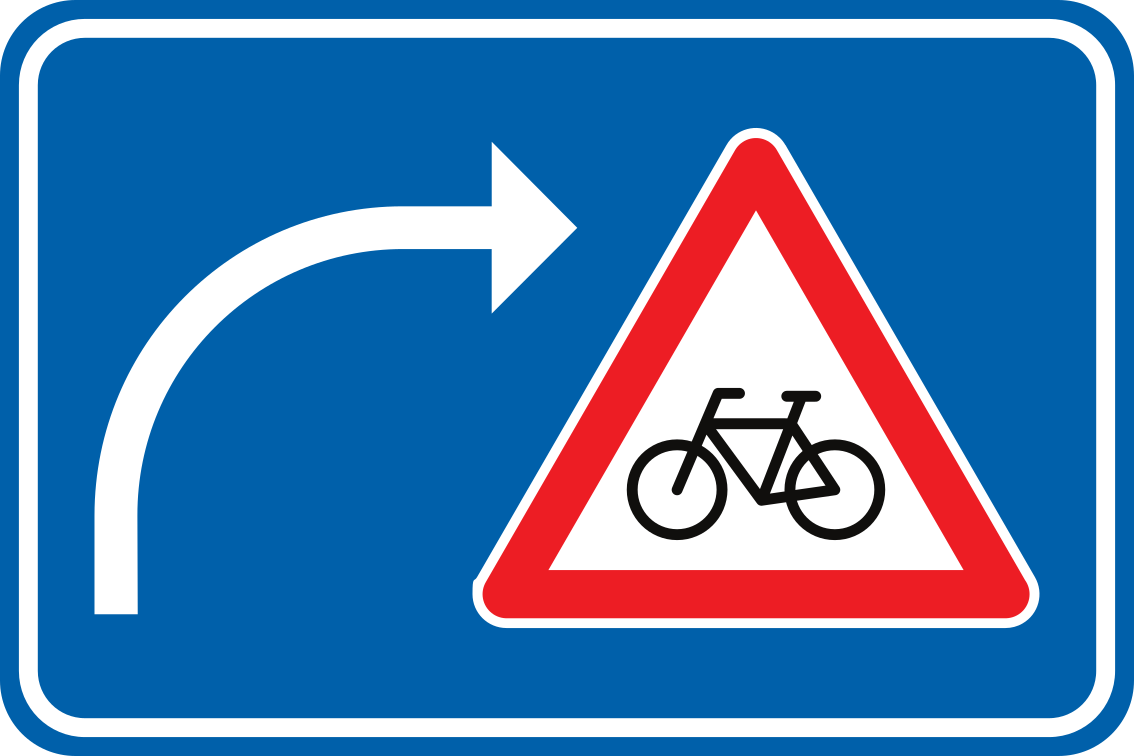
Verkeersbord F50 • Verkeersbord dat de bestuurders die van richting veranderen, wijst op een gevaar. Het symbool op het gevaarsbord kan aangepast zijn in functie van de plaatsgesteldheid.
23. Speed bump
This traffic sign indicates a speed bump. A speed bump is a raised section of the roadway designed to reduce vehicle speeds.
Signal routier F87 • Dispositif(s) surélevé(s).
Verkeersbord F87 • Verhoogde inrichting(en).
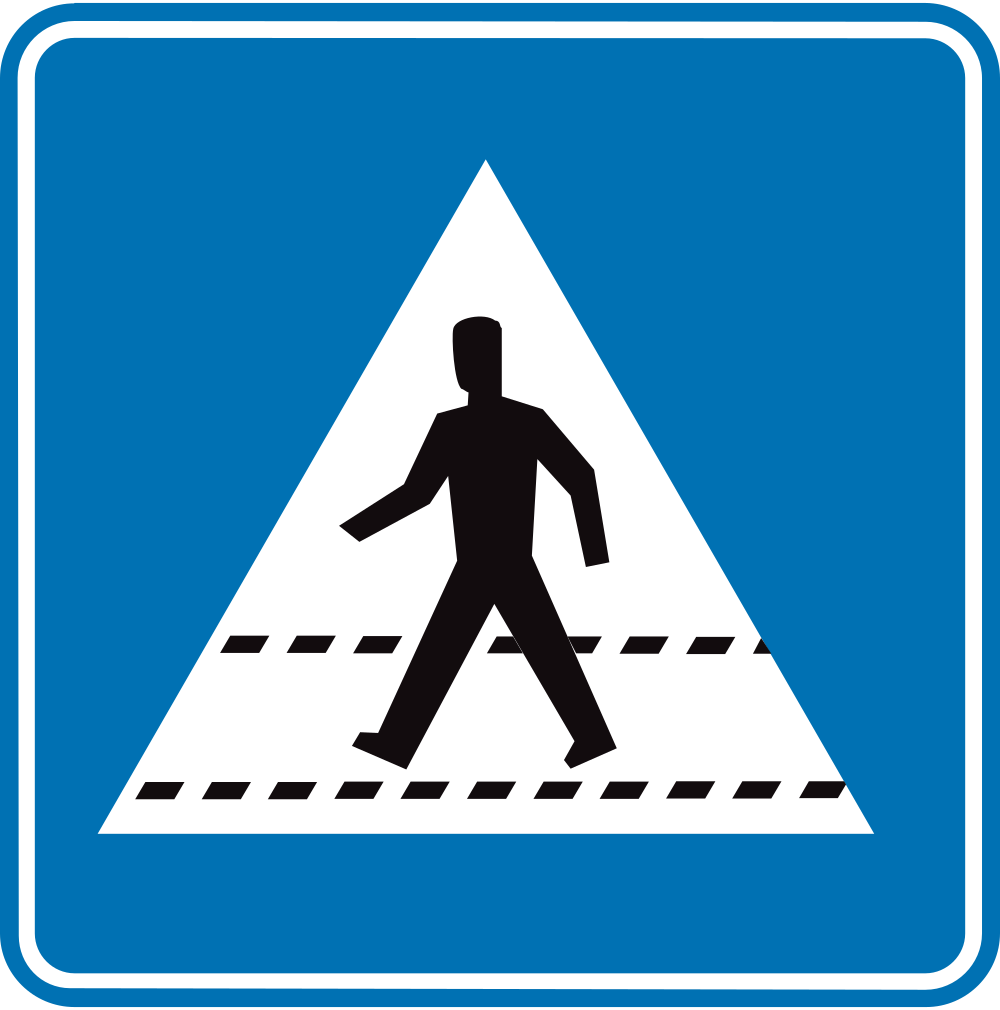
24. Crossing for pedestrians
This traffic sign indicates a crossing for pedestrians. It marks a designated place where pedestrians cross the road. Priority and crossing rules depend on the applicable traffic signs, signals and local regulations.
Signal routier F49 • Passage pour piétons.
Verkeersbord F49 • Oversteekplaats voor voetgangers.
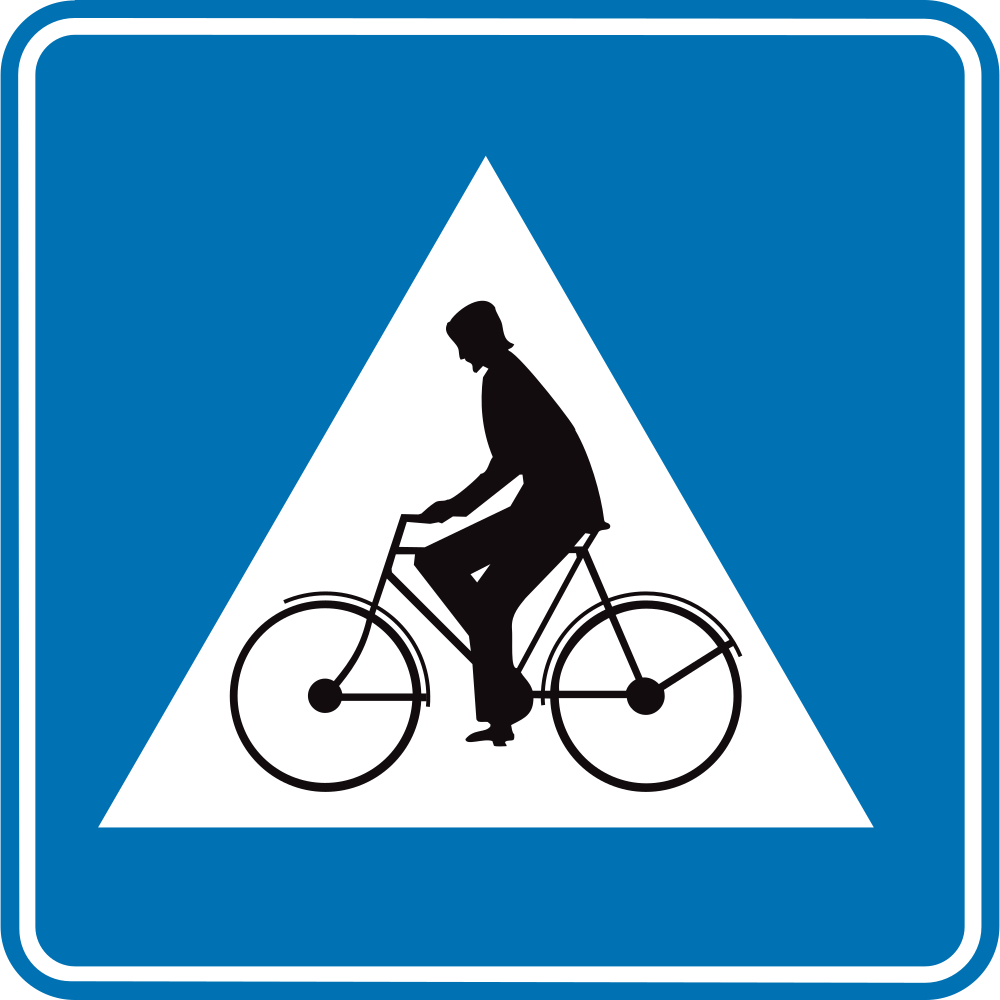
25. Crossing for cyclists
This traffic sign indicates a crossing for cyclists. It marks a designated place where cyclists cross the road. Priority depends on the applicable traffic signs, signals and local rules.
Signal routier F50 • Passage pour conducteurs de bicyclettes et de cyclomoteurs à deux roues.
Verkeersbord F50 • Oversteekplaats voor fietsers en bestuurders van tweewielige bromfietsen.
26. Road narrowing, oncoming drivers have to give way
This traffic sign indicates a road narrowing where oncoming drivers have to give way.
Signal routier B21 • Passage étroit. Priorité de passage par rapport aux conducteurs venant en sens opposé.
Verkeersbord B21 • Smalle doorgang. Voorrang ten opzichte van de bestuurders die uit de tegenovergestelde richting komen.
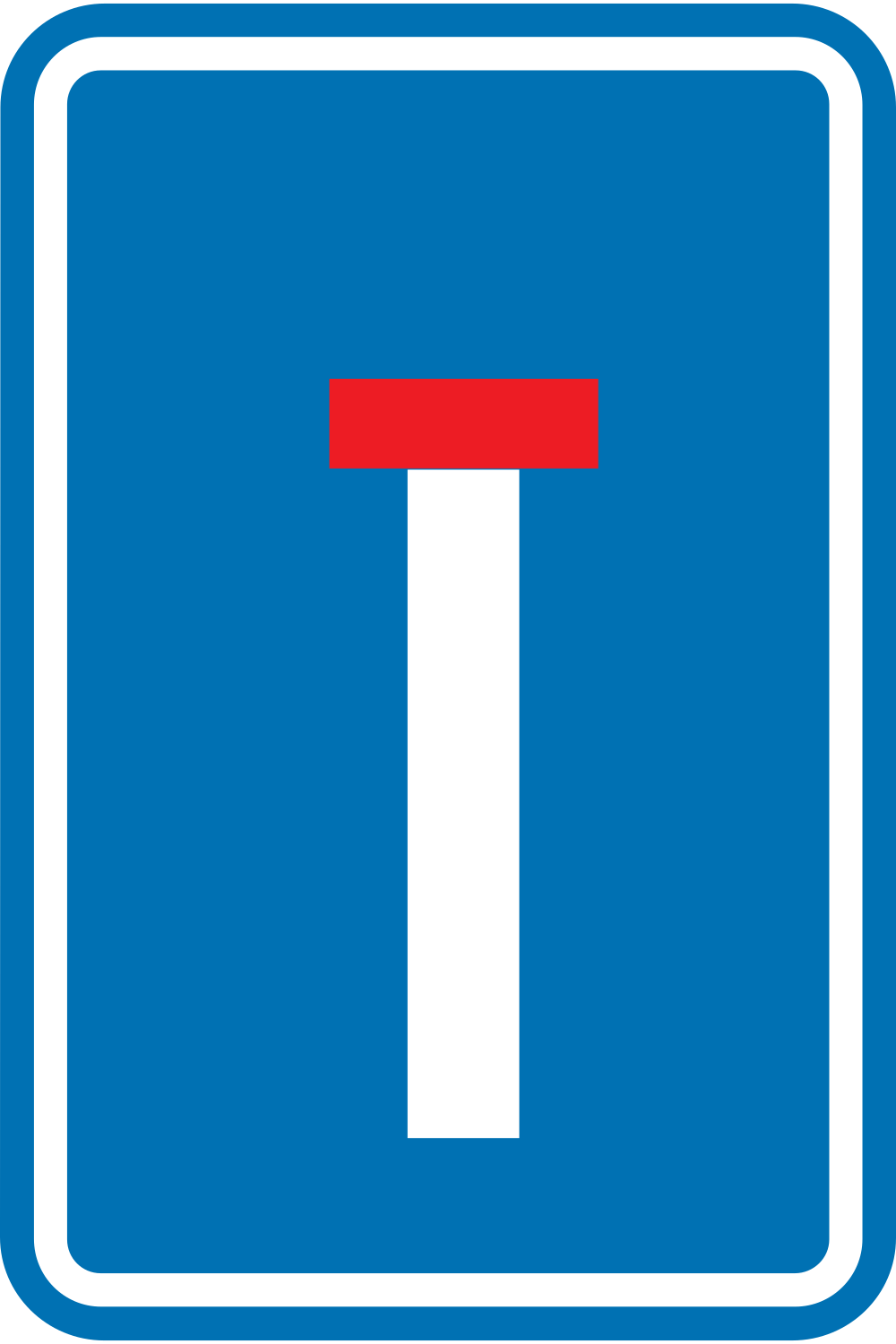
27. Dead end street
This traffic sign indicates a dead end street. The road has no through route for vehicles, although access to properties or other destinations along the road may still be possible.
Signal routier F45 • Voie sans issue.
Verkeersbord F45 • Doodlopende weg.
28. Dead end street with a passage for pedestrians and cyclists
This traffic sign indicates a dead end street with a passage for pedestrians and cyclists. The road has no through route for motor vehicles, but pedestrians and cyclists can continue beyond the dead end.
Signal routier F45b • Voie sans issue, excepté pour les piétons et les cyclistes.
Verkeersbord F45b • Doodlopende weg, uitgezonderd voor voetgangers en fietsers.
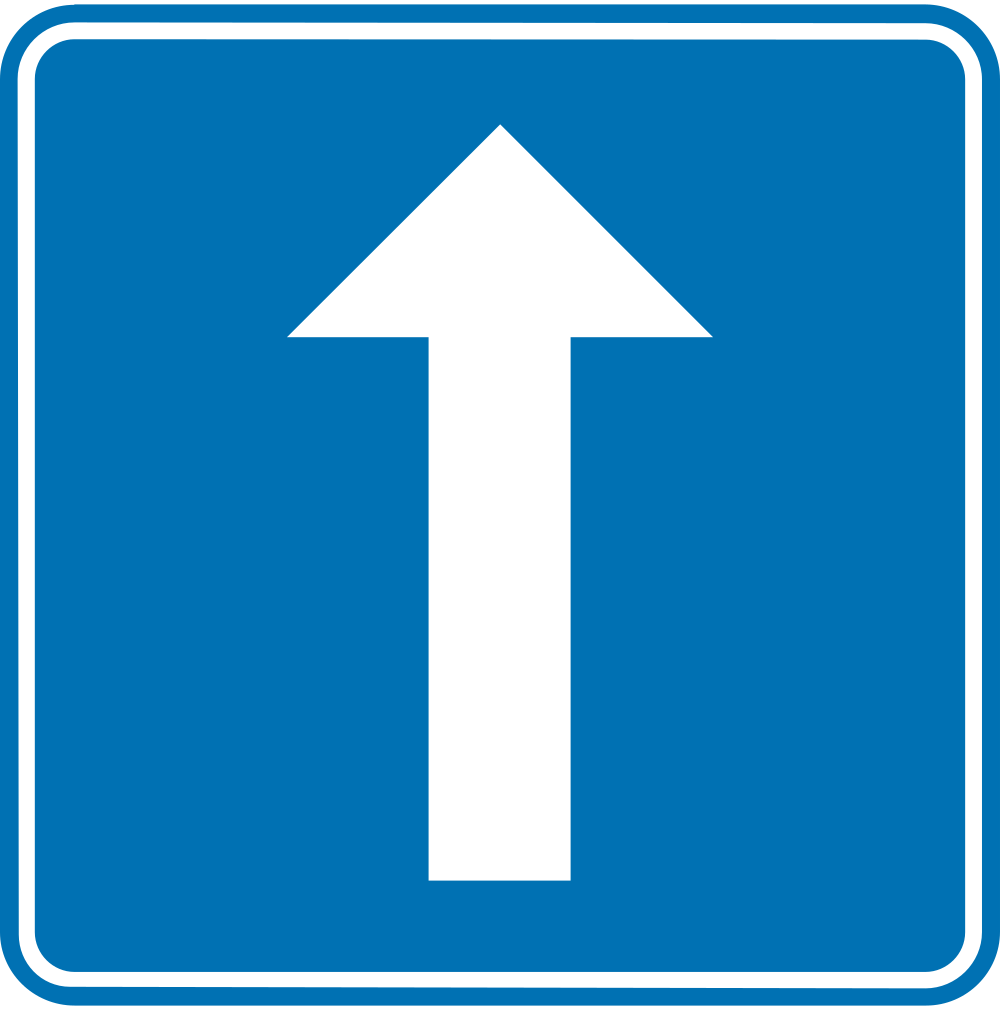
29. Road with one-way traffic
This traffic sign indicates a road with one-way traffic. Vehicular traffic may travel only in the permitted direction, subject to any exceptions indicated by traffic signs or local rules.
Signal routier F19 • Voie publique à sens unique.
Verkeersbord F19 • Openbare weg met eenrichtingsverkeer.
30. Lane for buses
This traffic sign indicates a lane for buses. The lane is intended for buses and any other road users permitted by the applicable signs or local rules.
Signal routier F17 • Indication des bandes de circulation d'une chaussée parmi lesquelles une est réservée aux autobus.
Verkeersbord F17 • Aanduiding van de rijstroken van een rijbaan met een strook voorbehouden voor autobussen.
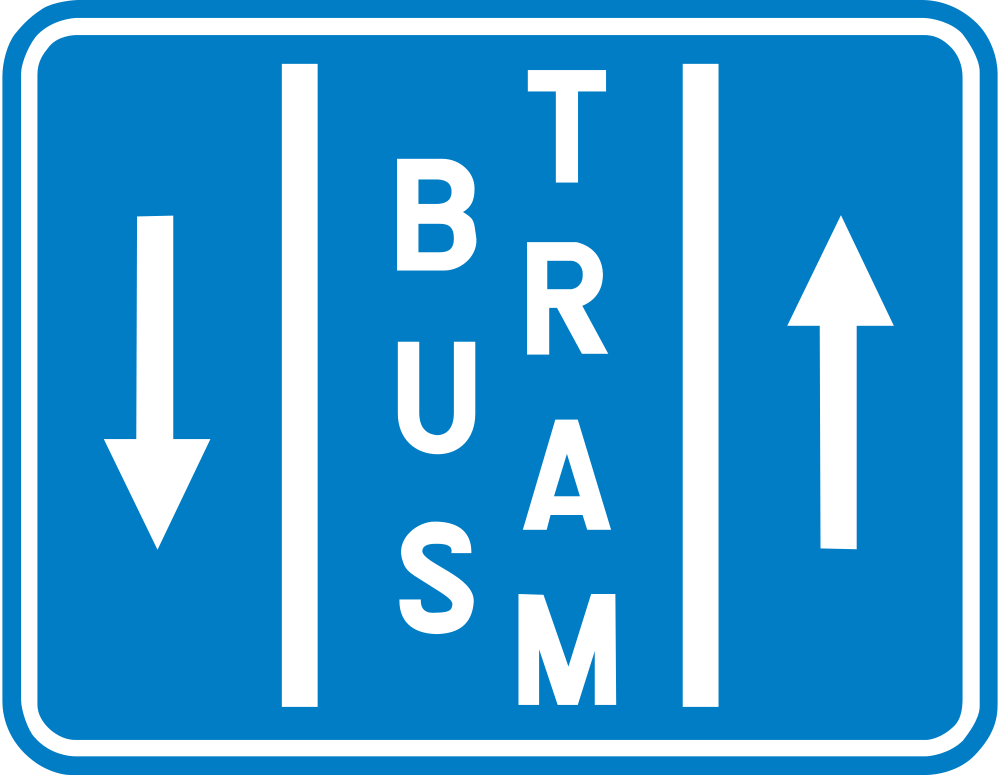
31. Lane for buses and trams
This traffic sign indicates a lane for buses and trams. The lane is intended for buses and trams and may also be used by other road users where the applicable signs or local rules permit it.
Signal routier F18 • Indication d'un site spécial franchissable réservé à la circulation des véhicules des services réguliers de transport en commun.
Verkeersbord F18 • Aanwijzing van een bijzondere overrijdbare bedding, voorbehouden aan het verkeer van voertuigen van geregelde diensten voor gemeenschappelijk vervoer.
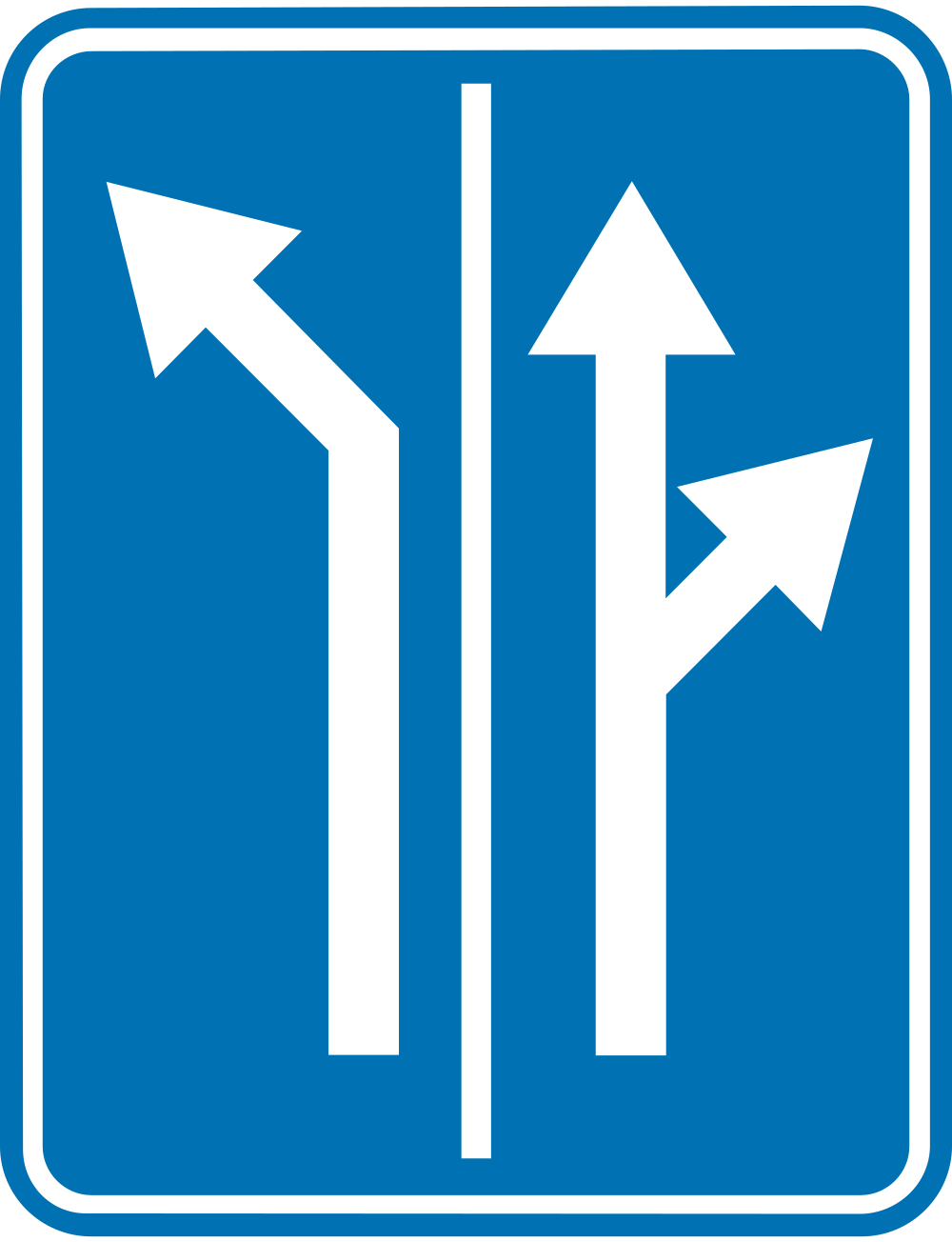
32. Overview of the lanes and their direction
This traffic sign gives an overview of the lanes and their direction. The arrows or other indications show how the lanes continue and which directions or destinations they serve.
Signal routier F13 • Signal annonçant des flèches sur la chaussée et prescrivant le choix d'une bande de circulation. Ce signal peut indiquer les différentes directions. La ligne séparant les bandes de circulation peut éventuellement être une ligne discontinue.
Verkeersbord F13 • Verkeersbord dat pijlen op de rijbaan aankondigt en de keuze van een rijstrook voorschrijft. Dit verkeersbord kan de verschillende richtingen aanduiden. De streep tussen de rijstroken kan eventueel onderbroken zijn.
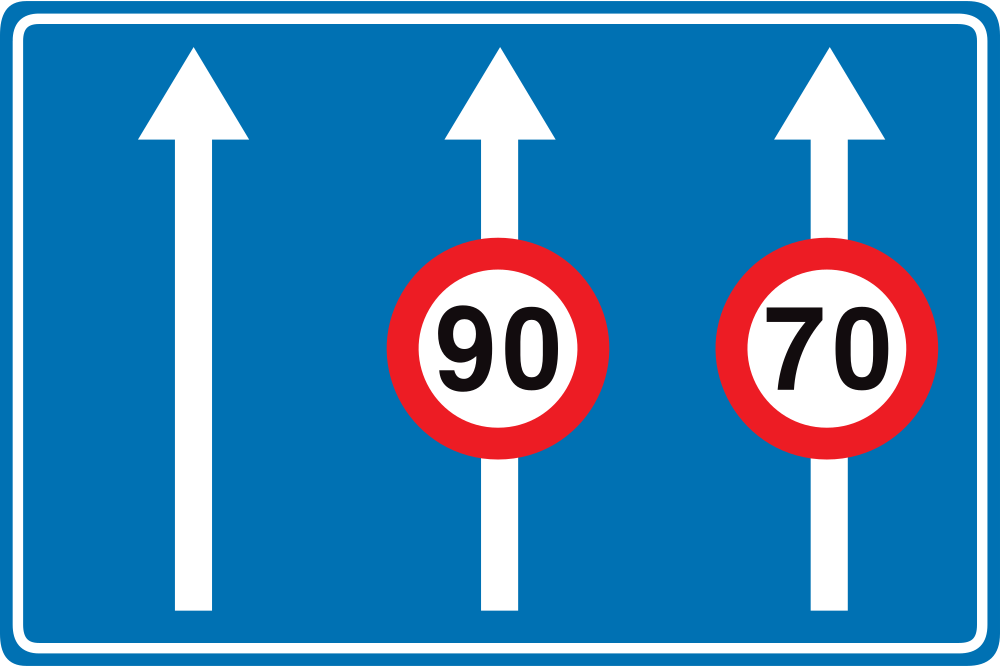
33. Maximum speed of a lane
This traffic sign indicates the maximum speed for the indicated lane. Vehicles using that lane must not exceed the displayed speed limit while the restriction applies.
Signal routier F91 • Signal indiquant un danger ou prescrivant une réglementation qui ne s'applique qu'à une ou plusieurs bandes de circulation d'une chaussée comportant plusieurs bandes de circulation dans le même sens.
Verkeersbord F91 • Verkeersbord dat een gevaar aanduidt of een verkeersregel voorschrijft die slechts van toepassing is op één of meerdere rijstroken van een rijbaan die meerdere rijstroken in dezelfde richting omvat.
34. General information about the directions
This traffic sign gives general information about road directions. The arrows, destinations and route information show which direction to follow.
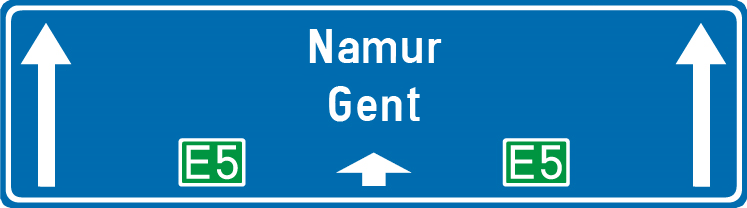
Verkeersbord F15 • Verkeersbord dat de keuze van een richting voorschrijft. Neerwaarts of opwaarts gerichte pijlen hebben betrekking op doorgaande richtingen. Schuine pijlen hebben betrekking op afslaande richtingen. Het aantal pijlen vertegenwoordigt het aantal rijstroken. De bestuurder moet afhankelijk van de richting die hij volgt, de aanwijzingen volgen.
35. Junction directions and destinations
This traffic sign shows the junction directions and destinations. The destinations are listed with arrows showing which direction to follow.
Signal routier F27 • Signal de préavis.
Verkeersbord F27 • Voorwegwijzer.
36. Junction layout, directions and destinations
This traffic sign shows the junction layout, directions and destinations. The diagram shows how the roads are arranged and which direction leads to each indicated destination or route.
Signal routier F25 • Signal de préavis.
Verkeersbord F25 • Voorwegwijzer.
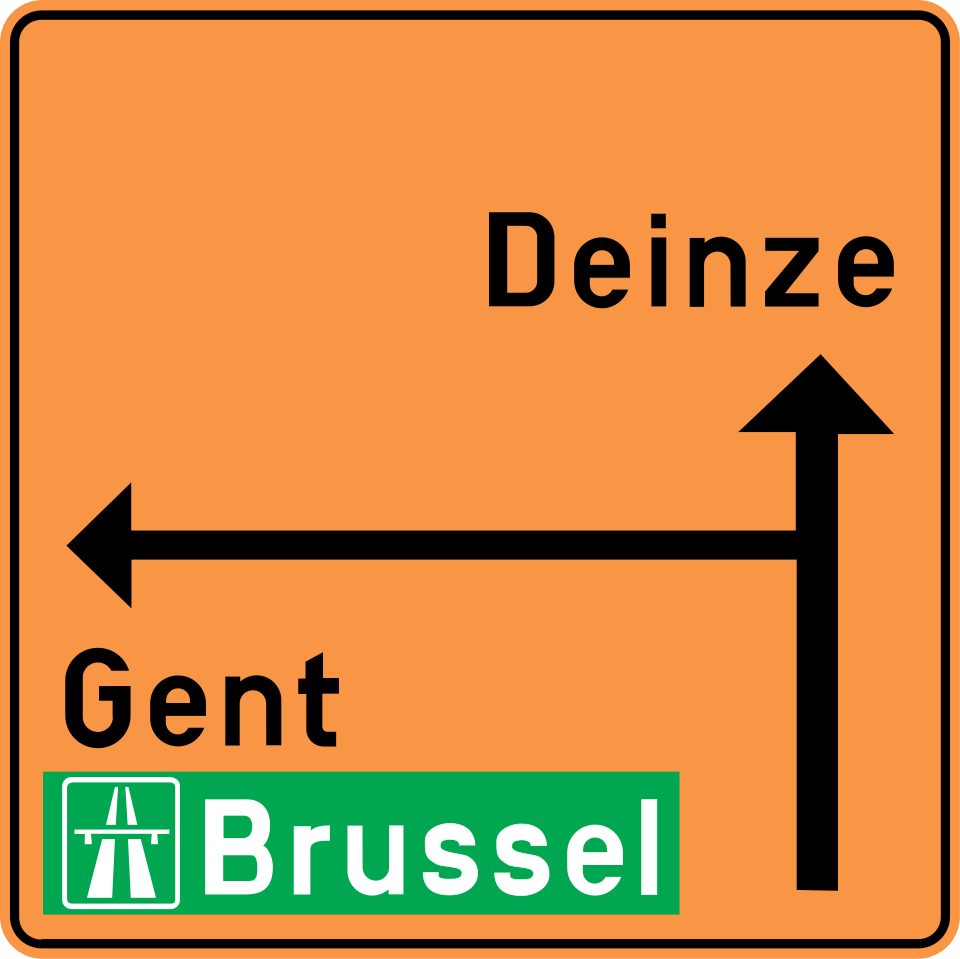
37. Detour directions at the intersection
This traffic sign indicates a detour and shows the temporary directions to destinations at the upcoming intersection. Follow the indicated arrows to continue along the detour.
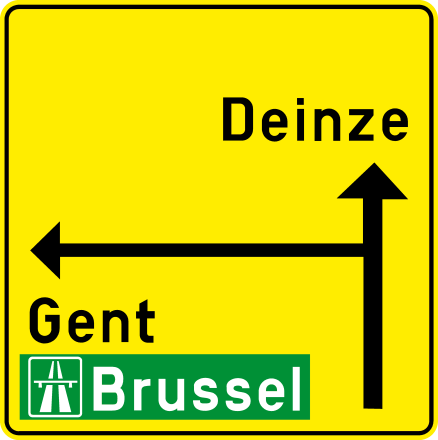
Verkeersbord F39 • Voorwegwijzer die een omleiding aankondigt.
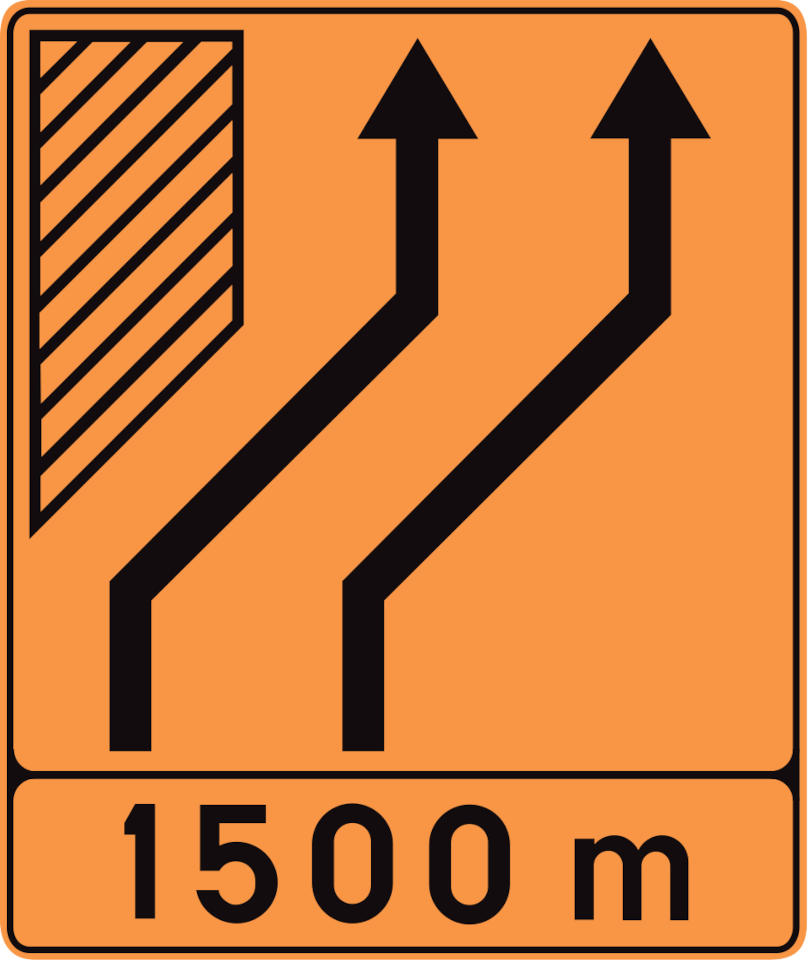
38. Temporary diversion of lanes ahead
This traffic sign indicates that the traffic lanes ahead temporarily shift sideways, usually because of roadworks or an obstruction. Follow the arrows, stay within your lane and move into the temporary alignment in good time. The number of arrows shows the number of lanes that continue.
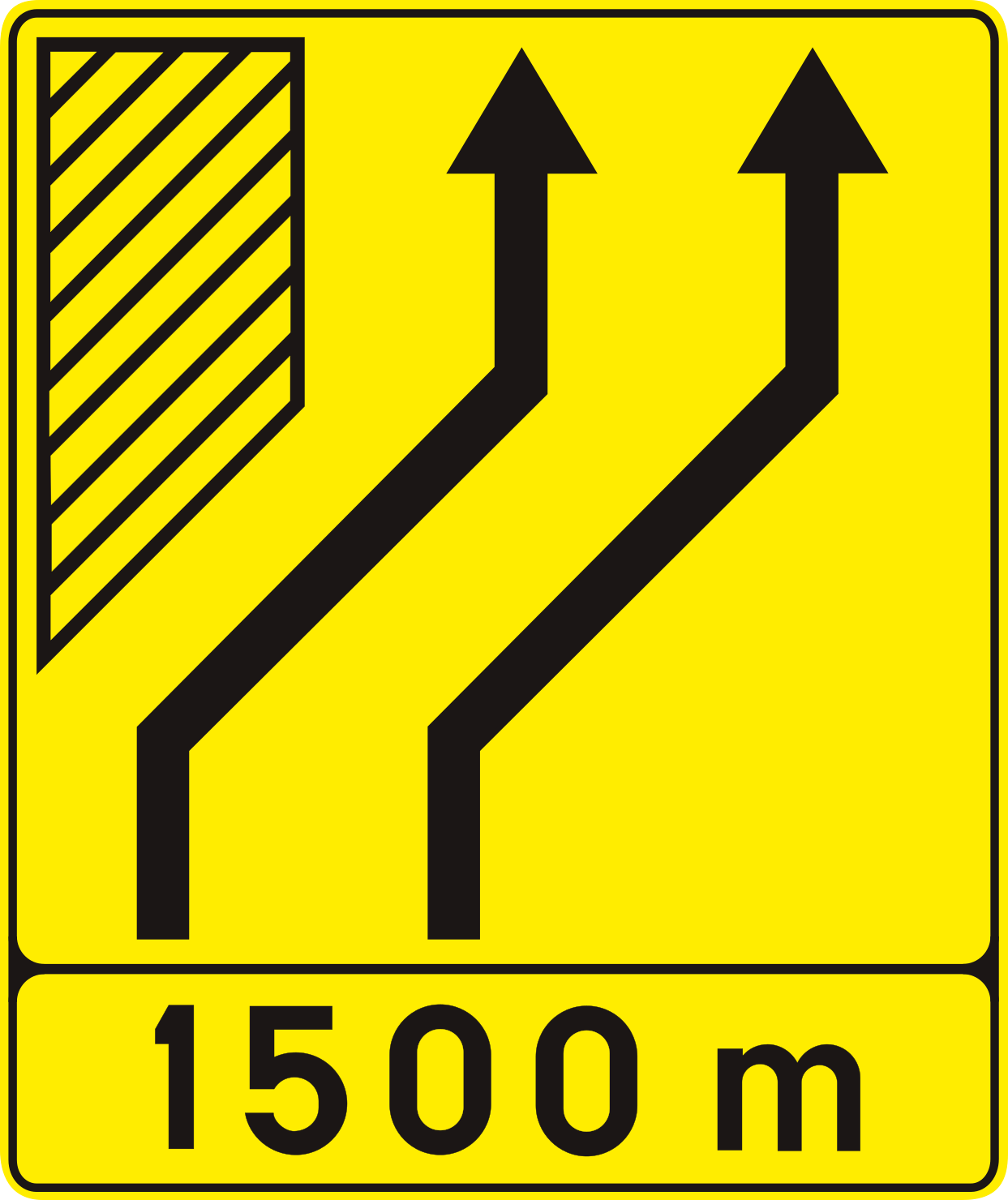
Verkeersbord F81 • Tijdelijke aanwijzingen bij werken. Voorwegwijzer die een uitwijking aankondigt. Het symbool stemt overeen met de plaatsgesteldheid.
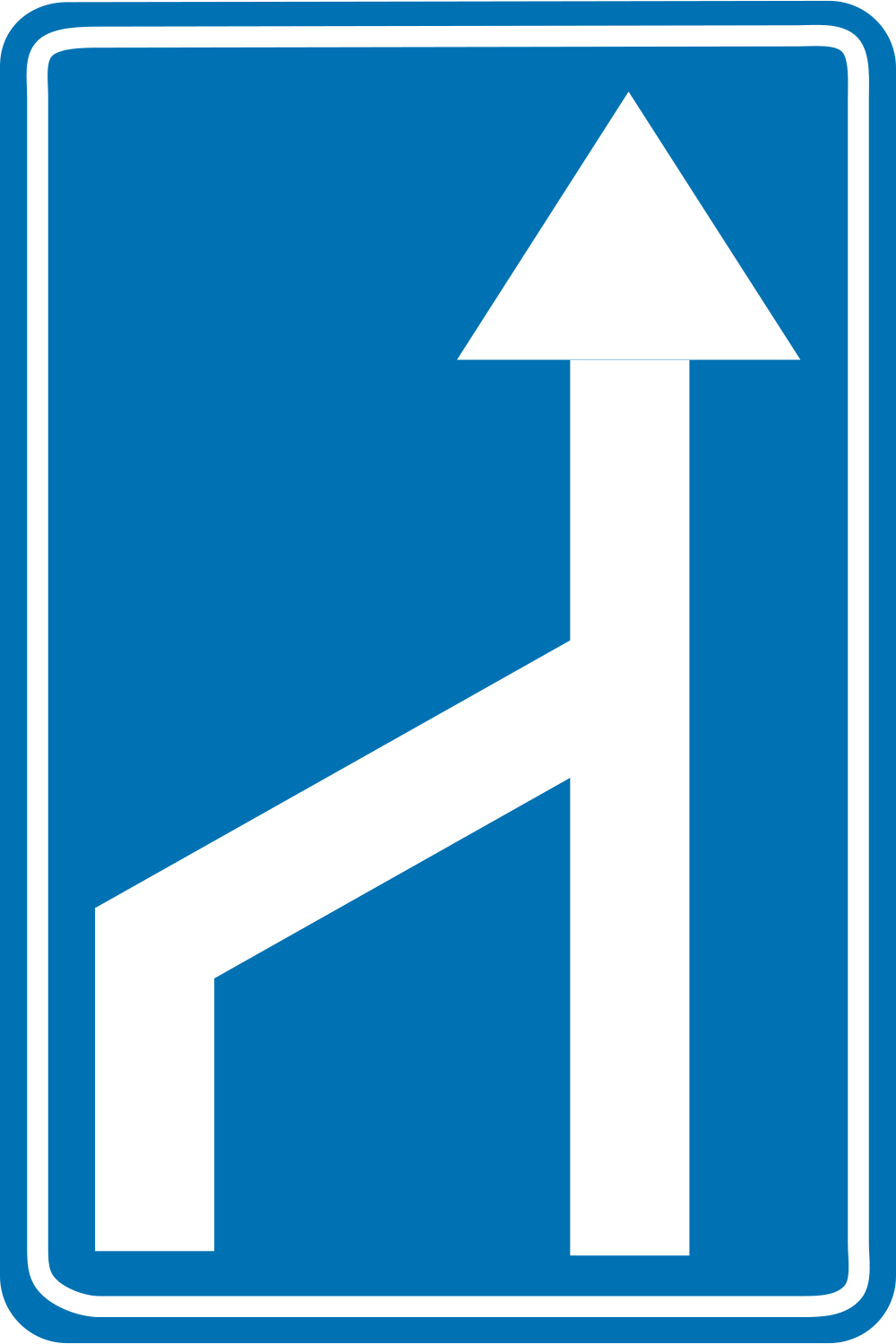
39. End of a lane
This traffic sign indicates the end of a lane. The displayed lane arrangement shows which lane ends and how the remaining traffic lanes continue.
Signal routier F97 • Signal indiquant un rétrécissement ayant l'importance d'une bande de circulation.
Verkeersbord F97 • Verkeersbord dat een versmalling aanduidt die de omvang van een rijstrook heeft.
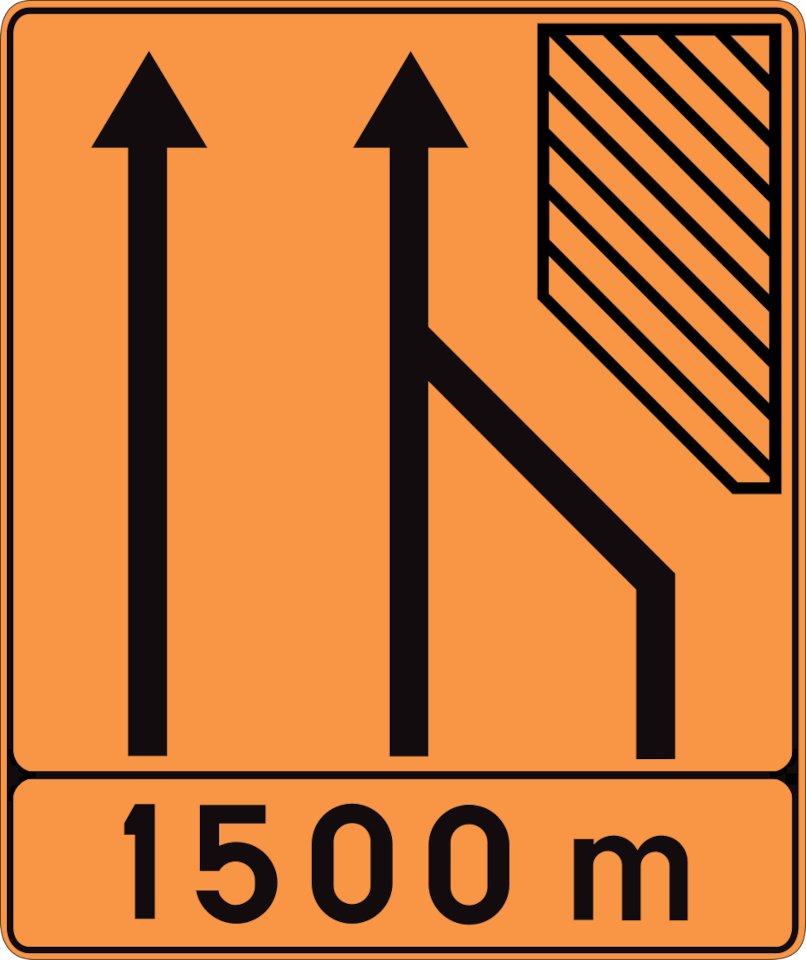
40. Temporary lane end ahead
This traffic sign indicates that one traffic lane ends temporarily ahead. Drivers in the ending lane must merge into a continuing lane according to the temporary road layout, markings and applicable merging rules.
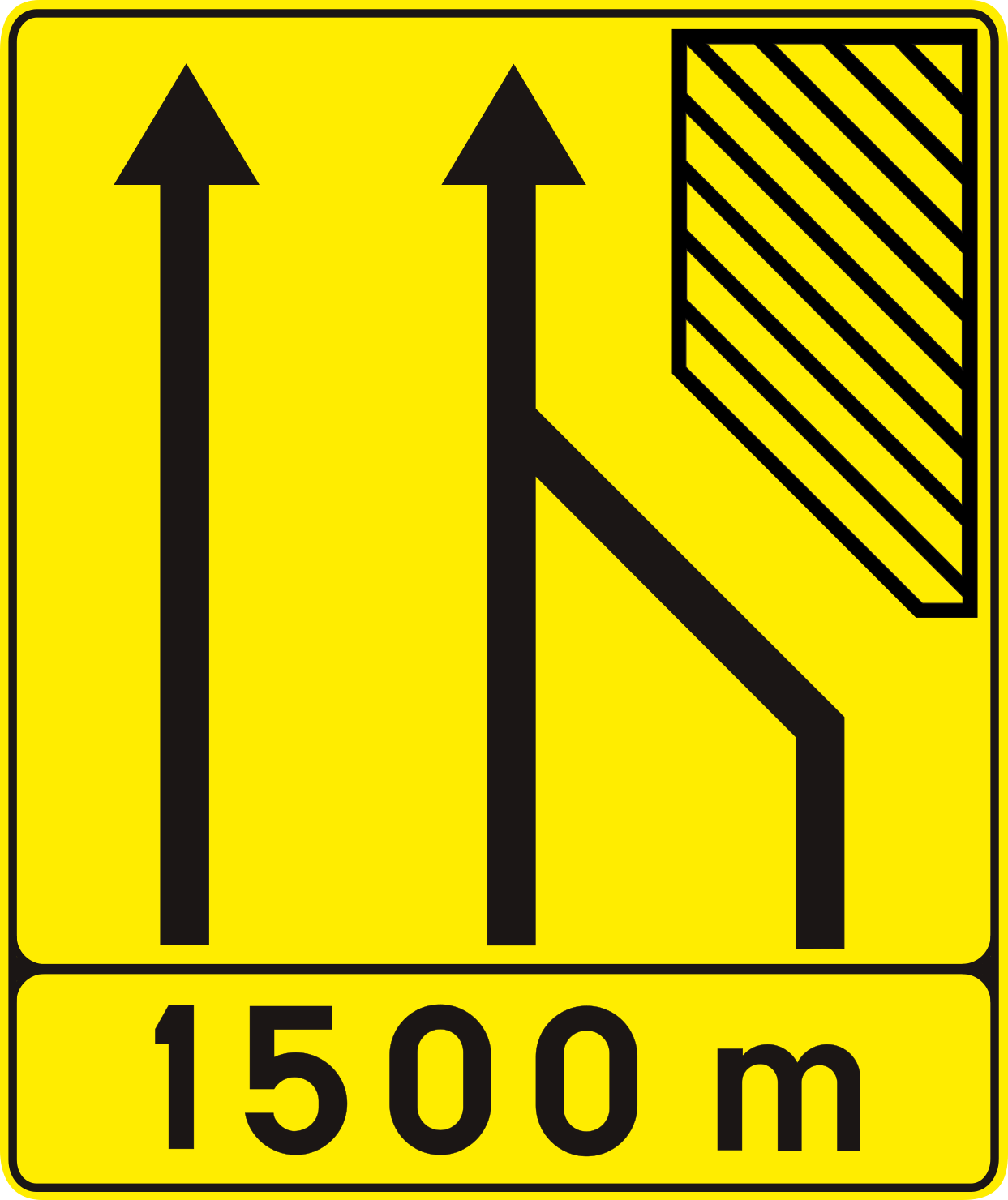
Verkeersbord F80 • Tijdelijke aanwijzingen bij werken. Voorwegwijzer die de vermindering van het aantal rijstroken aankondigt. Het symbool stemt overeen met de plaatsgesteldheid.
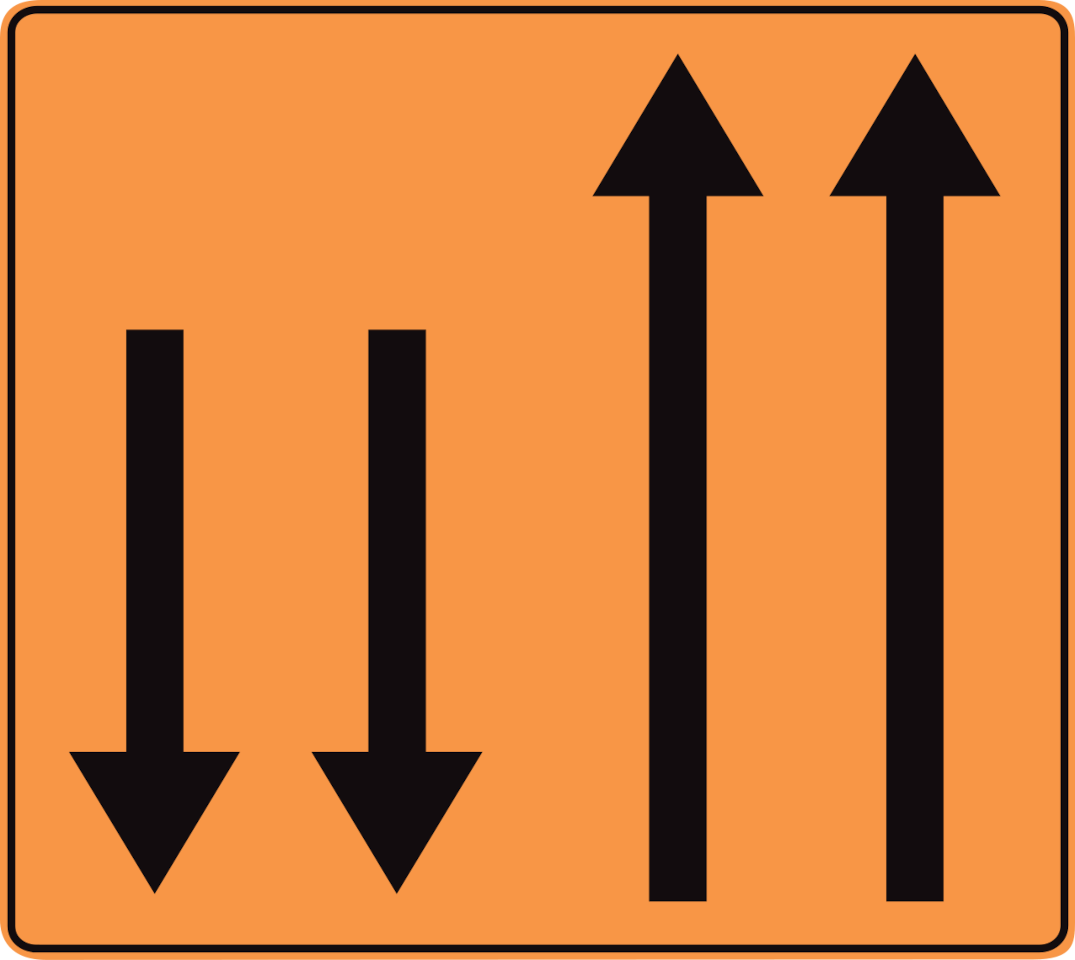
41. Overview of temporary lanes
This traffic sign indicates the temporary lane arrangement. The arrows indicate how many lanes are available in each direction of travel. Follow the temporary road markings and remain in the lane assigned to your direction.
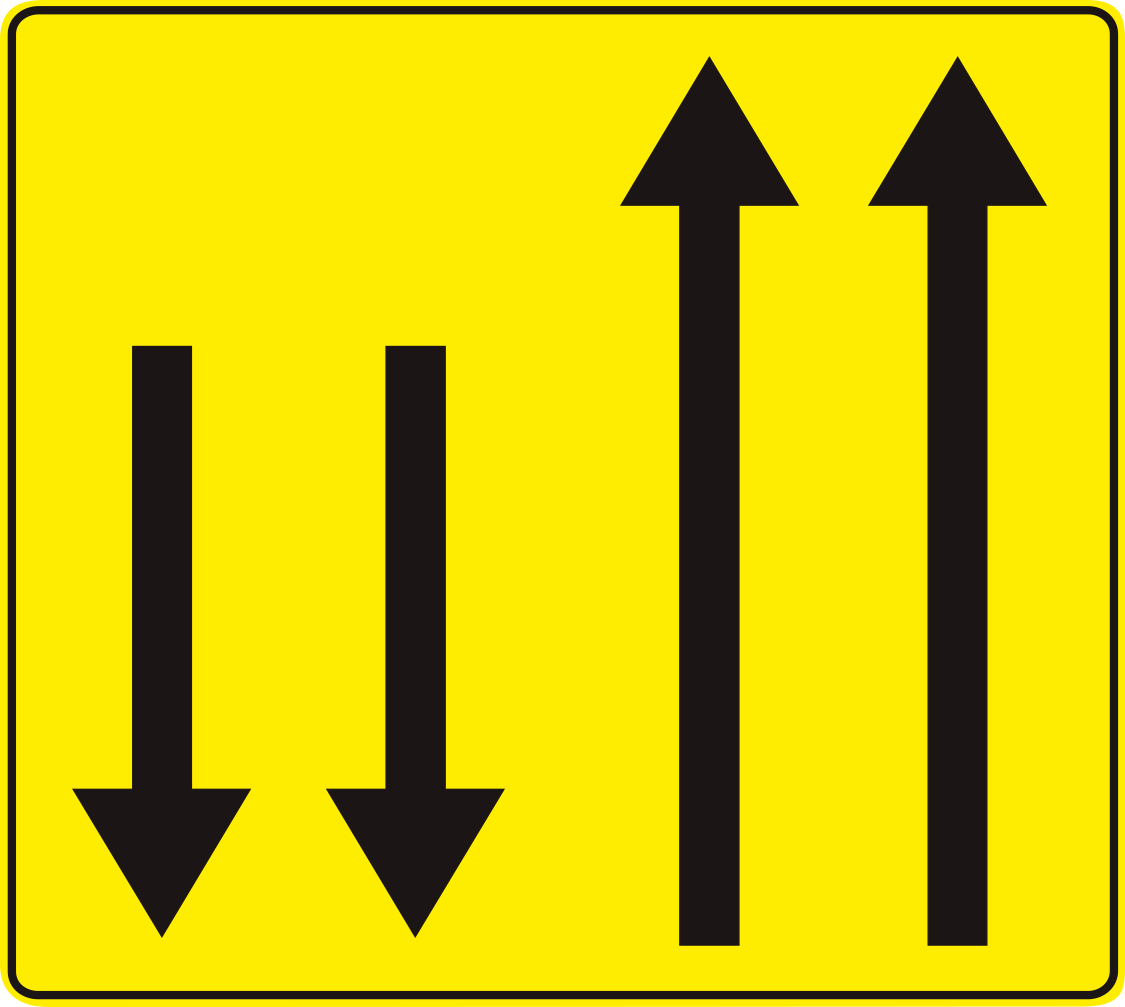
Verkeersbord F85 • Tijdelijke aanwijzingen bij werken. Verkeer toegelaten in beide richtingen op een deel van de rijbaan met éénrichtingsverkeer.
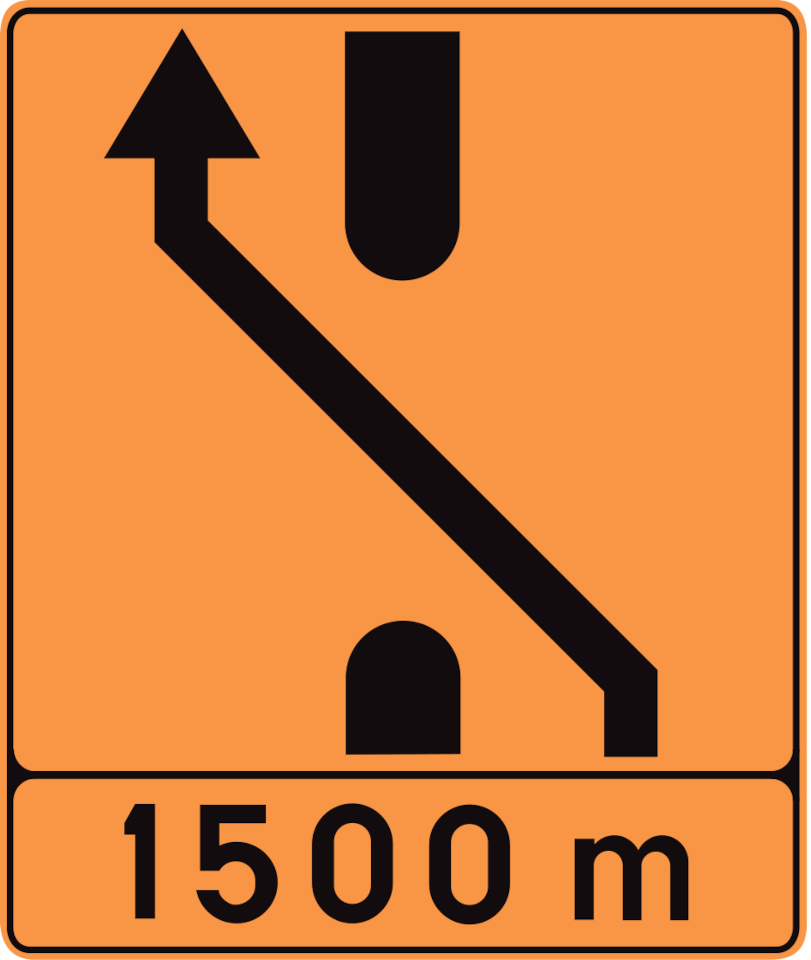
42. Temporary median strip diversion
This traffic sign indicates that traffic is temporarily directed through an opening in the central reservation. Follow the displayed direction and temporary lane markings through the diversion.
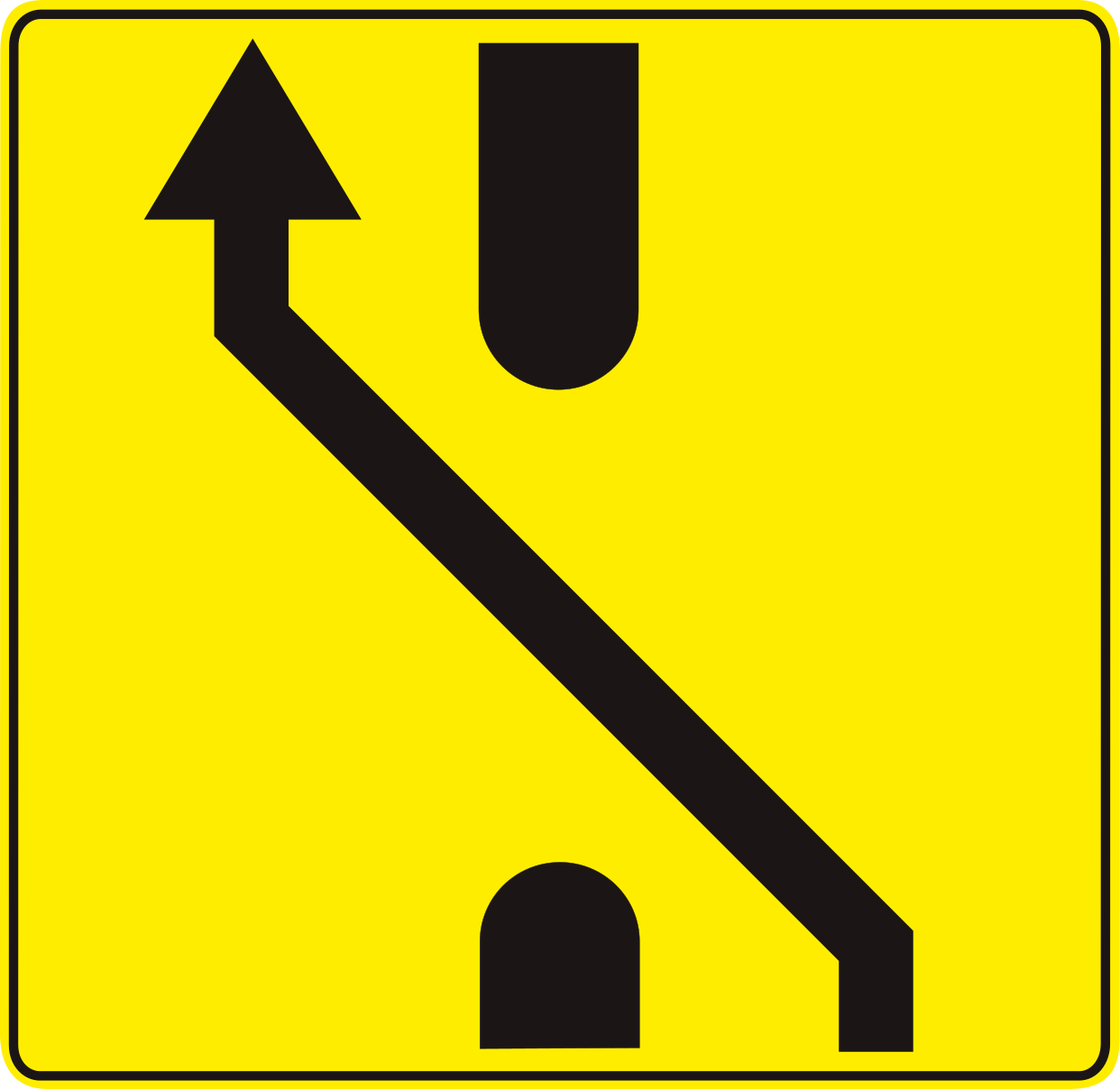
Verkeersbord F83 • Tijdelijke aanwijzingen bij werken. Voorwegwijzer die een doorsteek van de middenberm aankondigt.
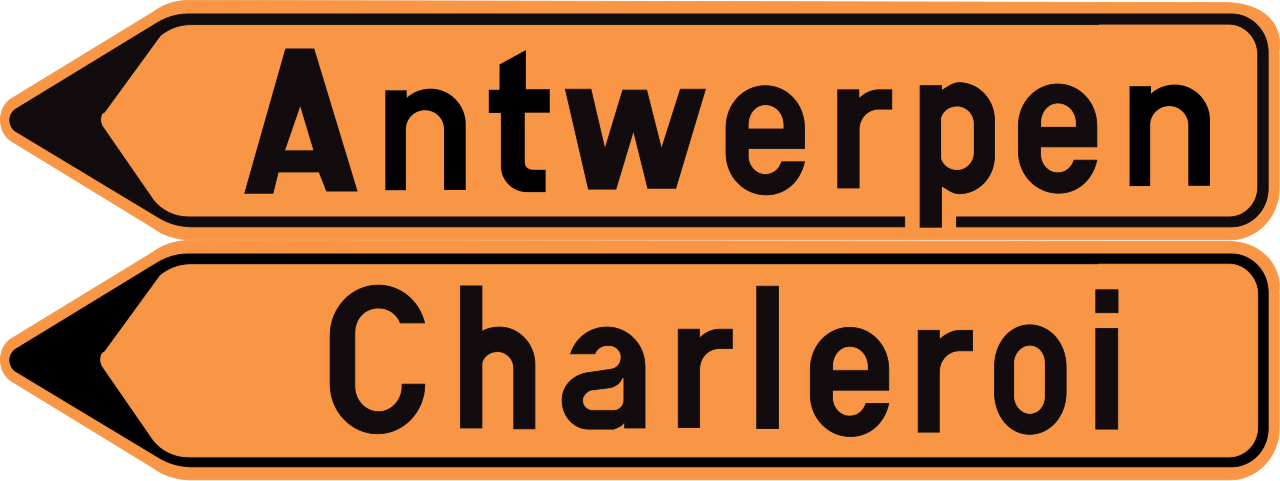
43. Detour
This traffic sign indicates a detour. The temporary route guides traffic around a road closure, roadworks or another disruption affecting the normal route.

Verkeersbord F41 • Wegwijzer. Omleiding. “Omleiding” kan vervangen zijn door de naam van de bestemming.
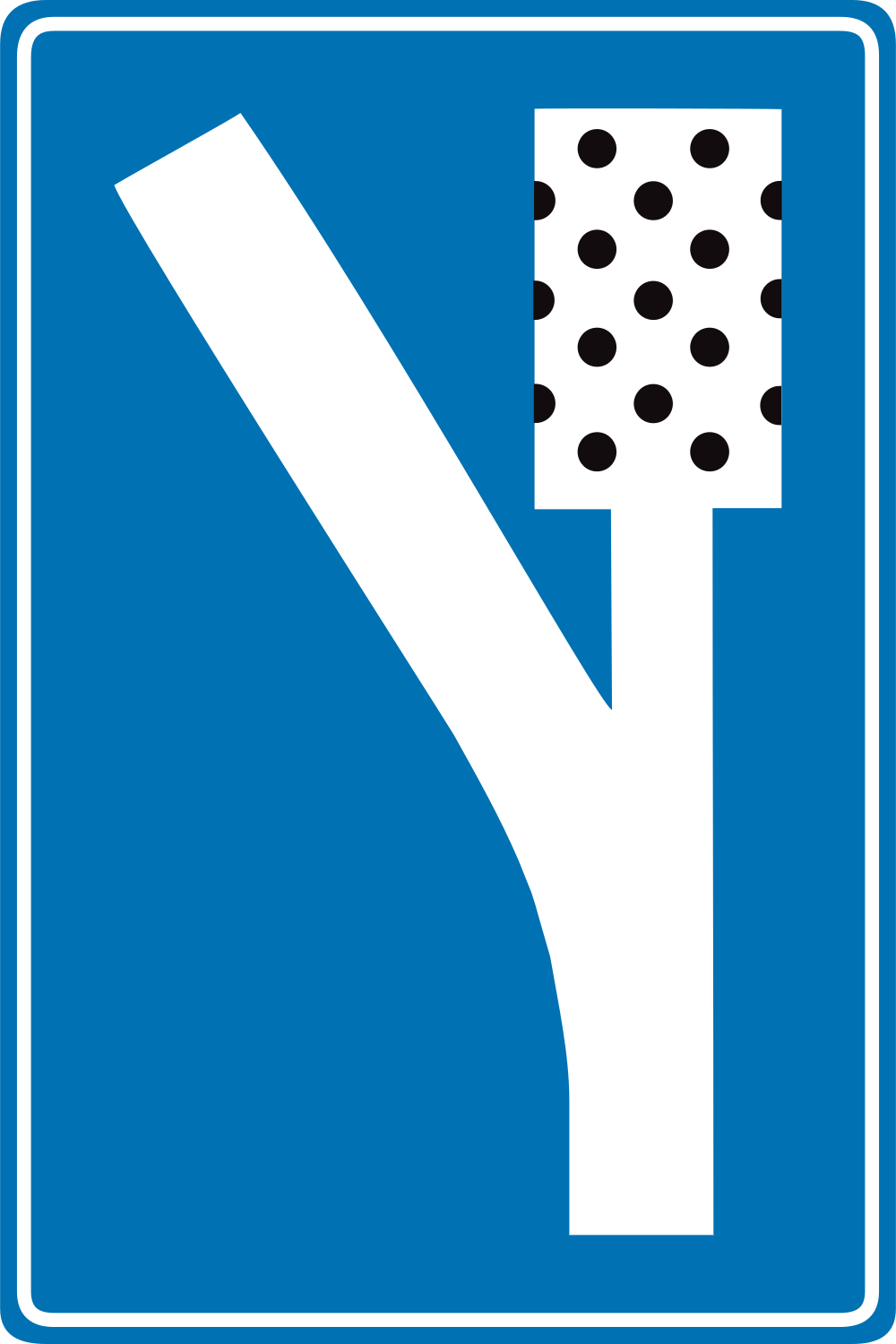
44. Runaway truck ramp
This traffic sign indicates a runaway truck ramp. The emergency escape ramp is intended for vehicles that are unable to slow or stop normally, particularly following a loss of braking capability.
Signal routier F95 • Piste de détresse.
Verkeersbord F95 • Noodstopstrook.
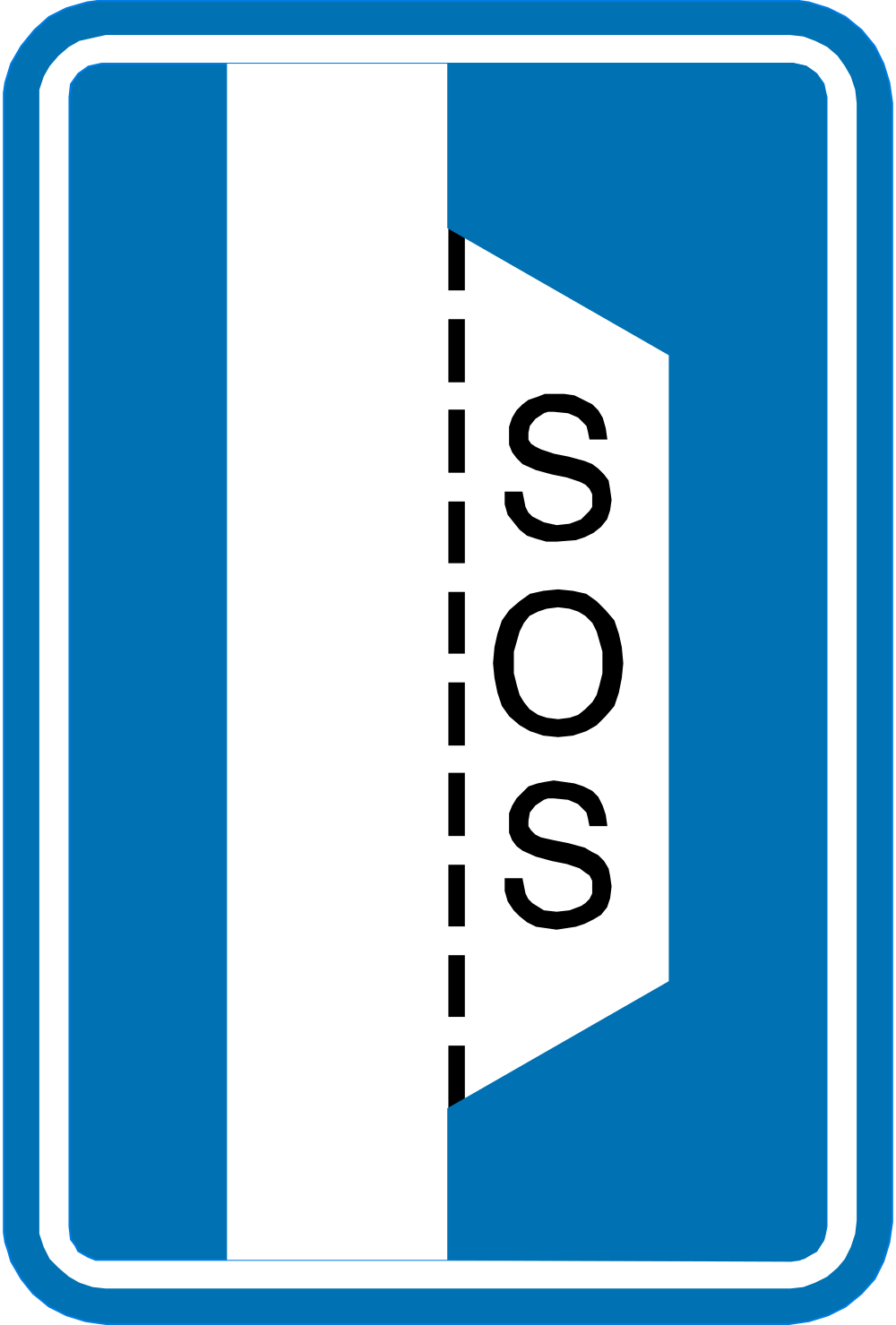
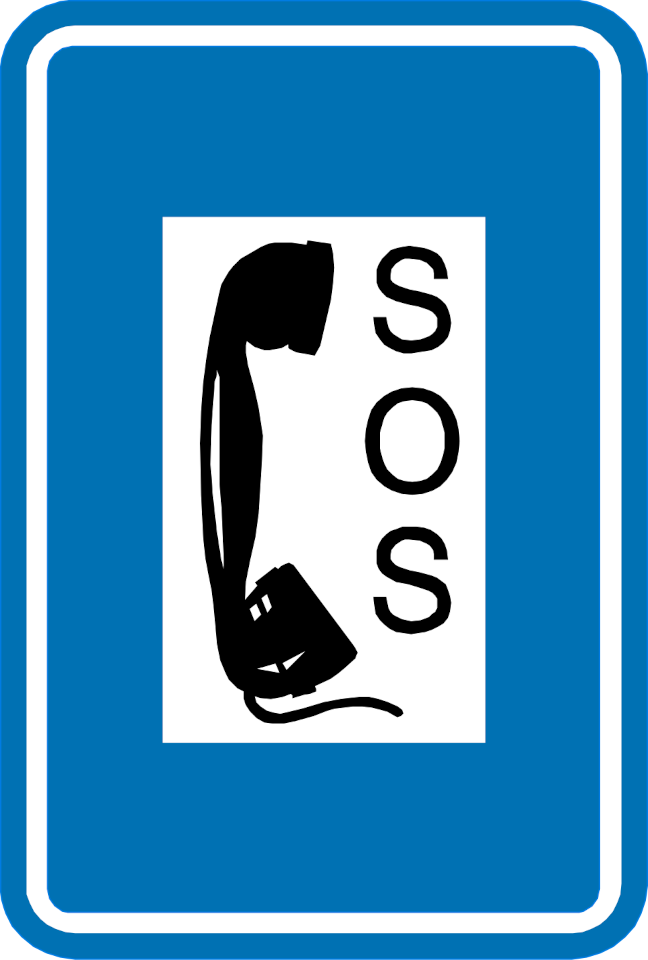
45. Emergency stopping place with SOS telephone
This traffic sign indicates an emergency stopping place with an SOS telephone. Vehicles may use the designated stopping area in an emergency or breakdown, and the telephone provides a means of requesting assistance.
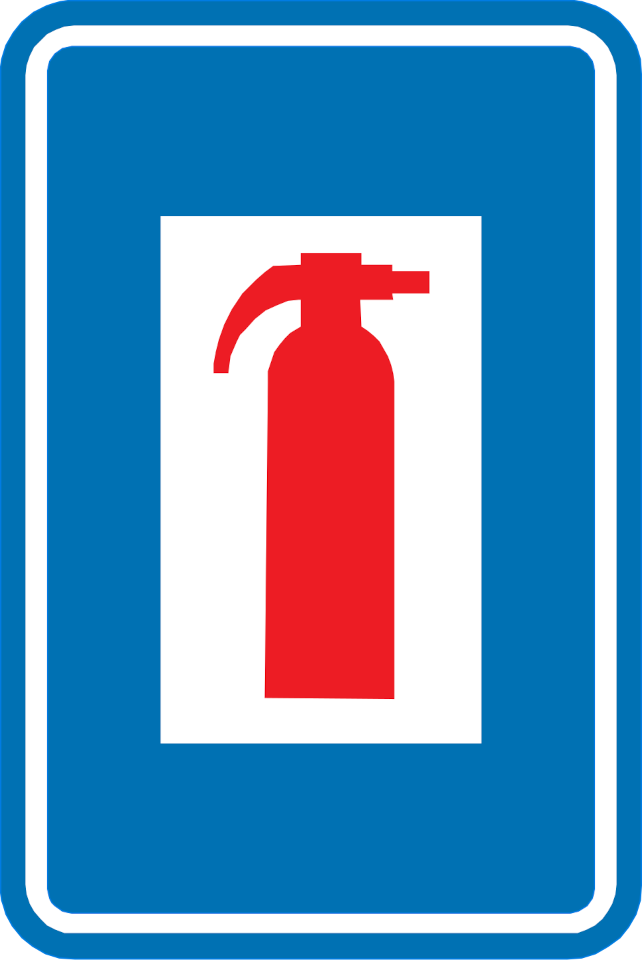
Signal routier F98 • Garage. Un panneau additionnel sur lequel sont reproduits les symboles ci-après indique que le garage est doté d'un téléphone d'appel d'urgence et d'un extincteur.
Verkeersbord F98 • Vluchthaven. Een onderbord met volgende symbolen duidt aan dat de vluchthaven uitgerust is met een noodtelefoon en een brandblusser.
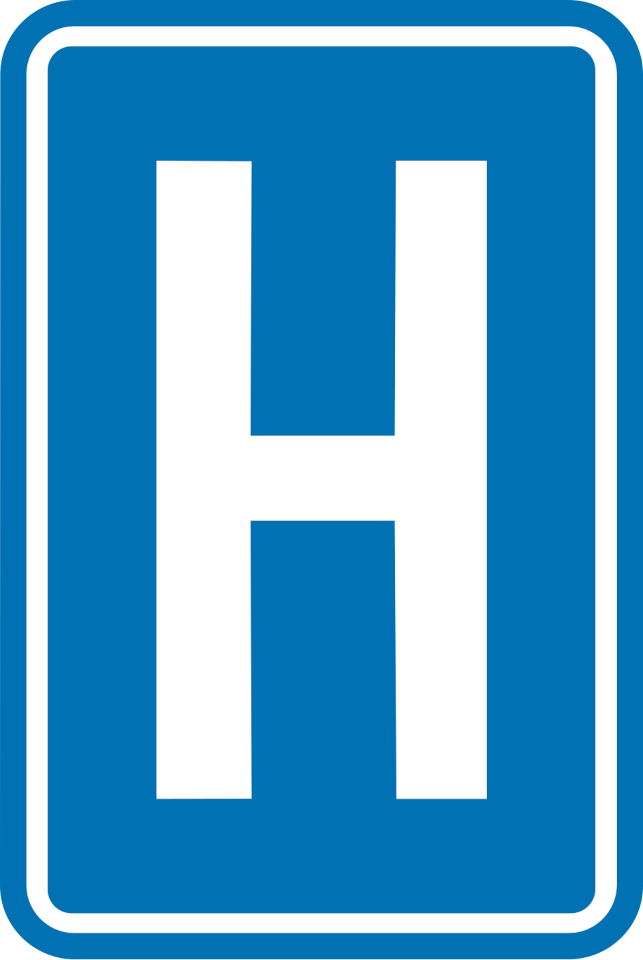
46. Hospital
This traffic sign indicates a hospital or medical facility. Follow any accompanying direction or distance information to reach it.
Verkeersbord F53 • Ziekenhuis.
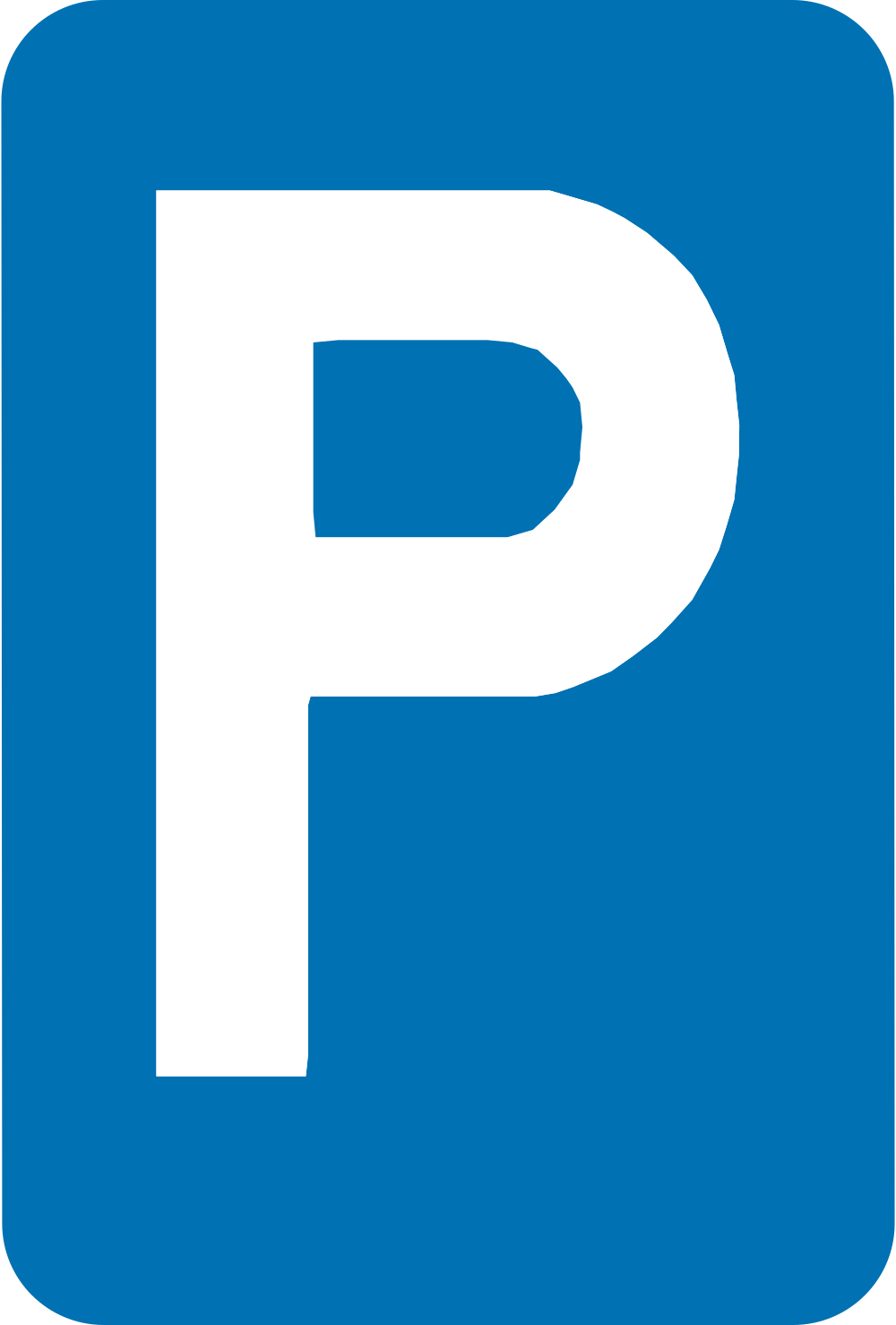
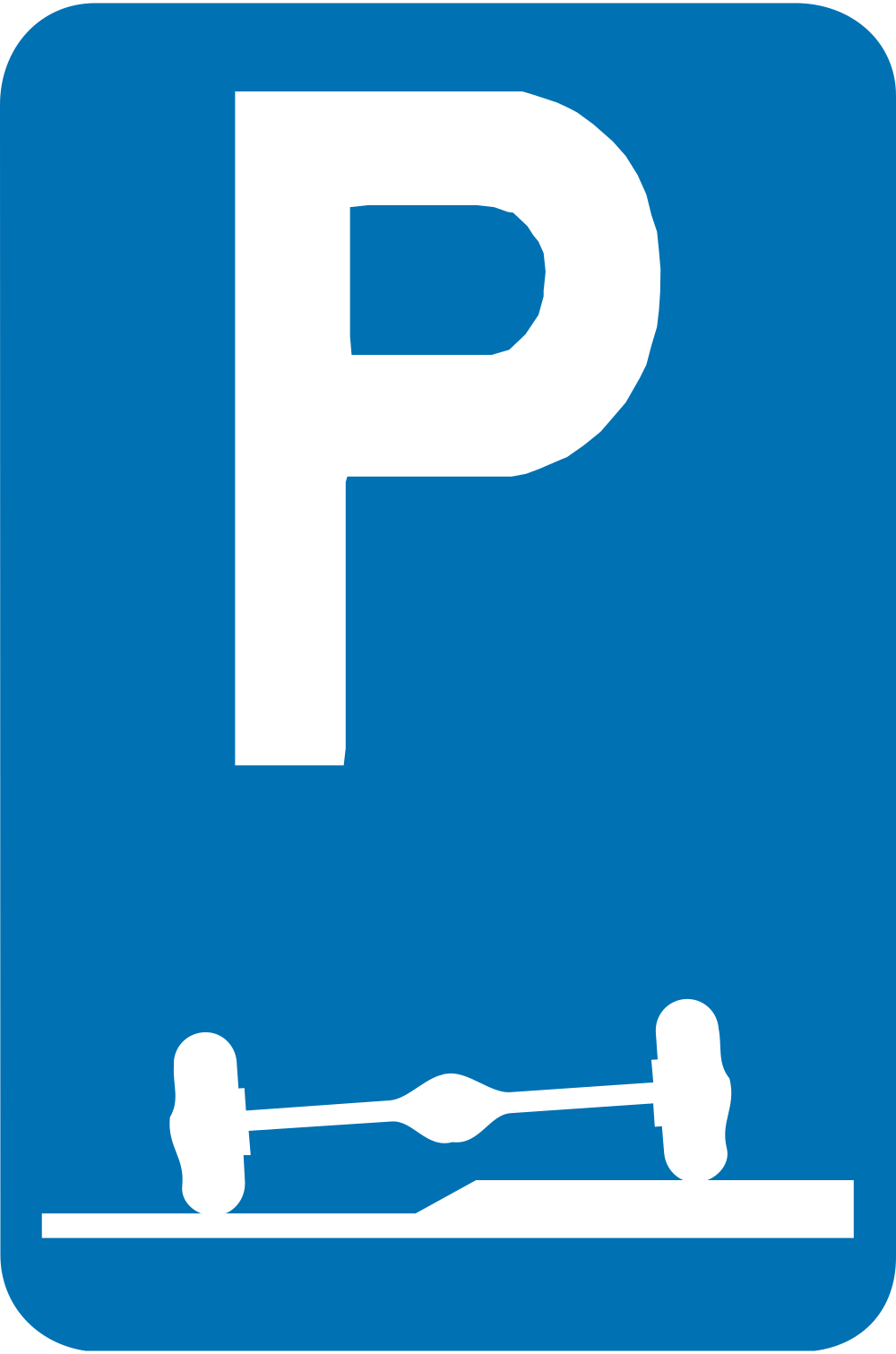
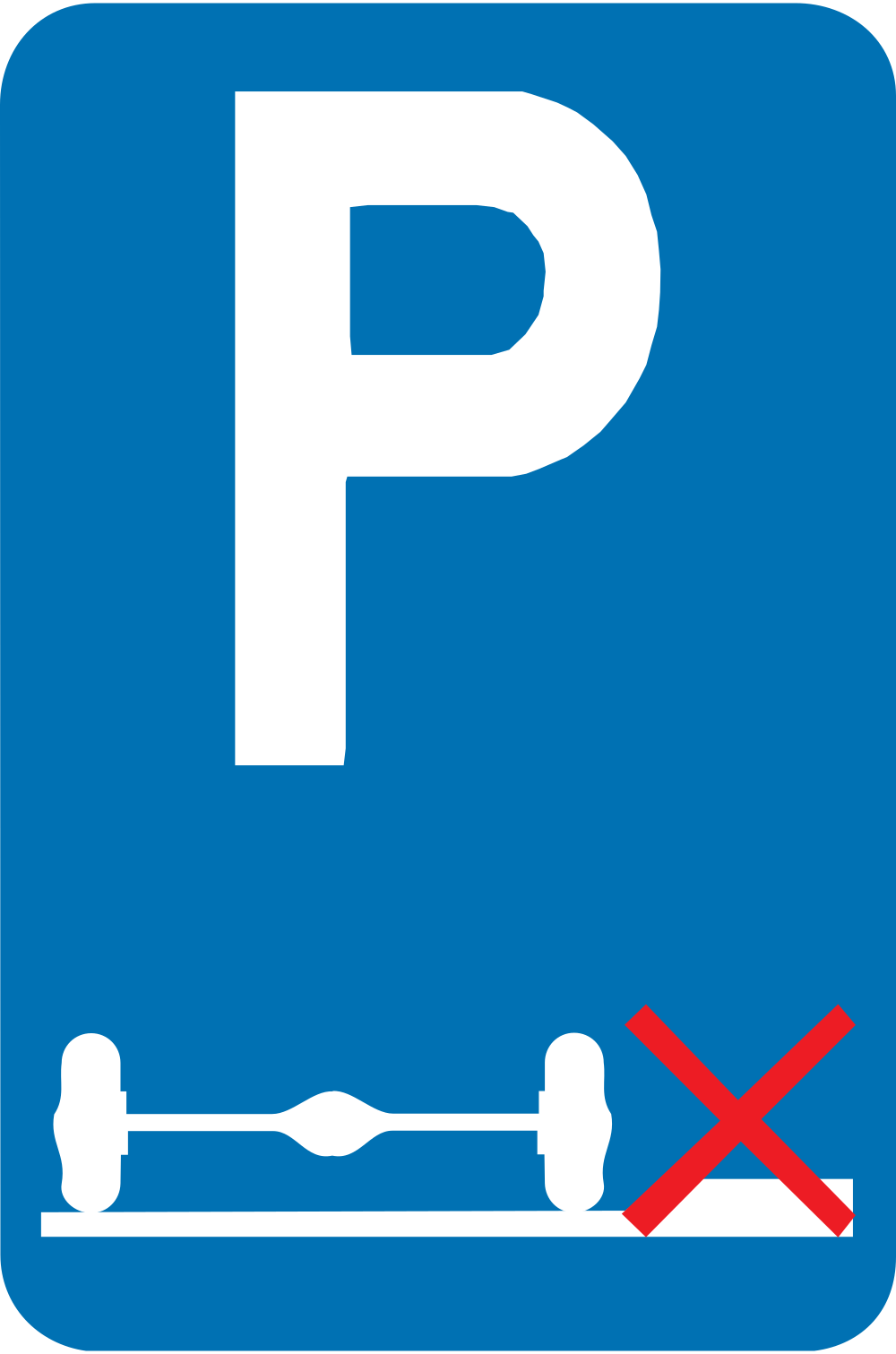
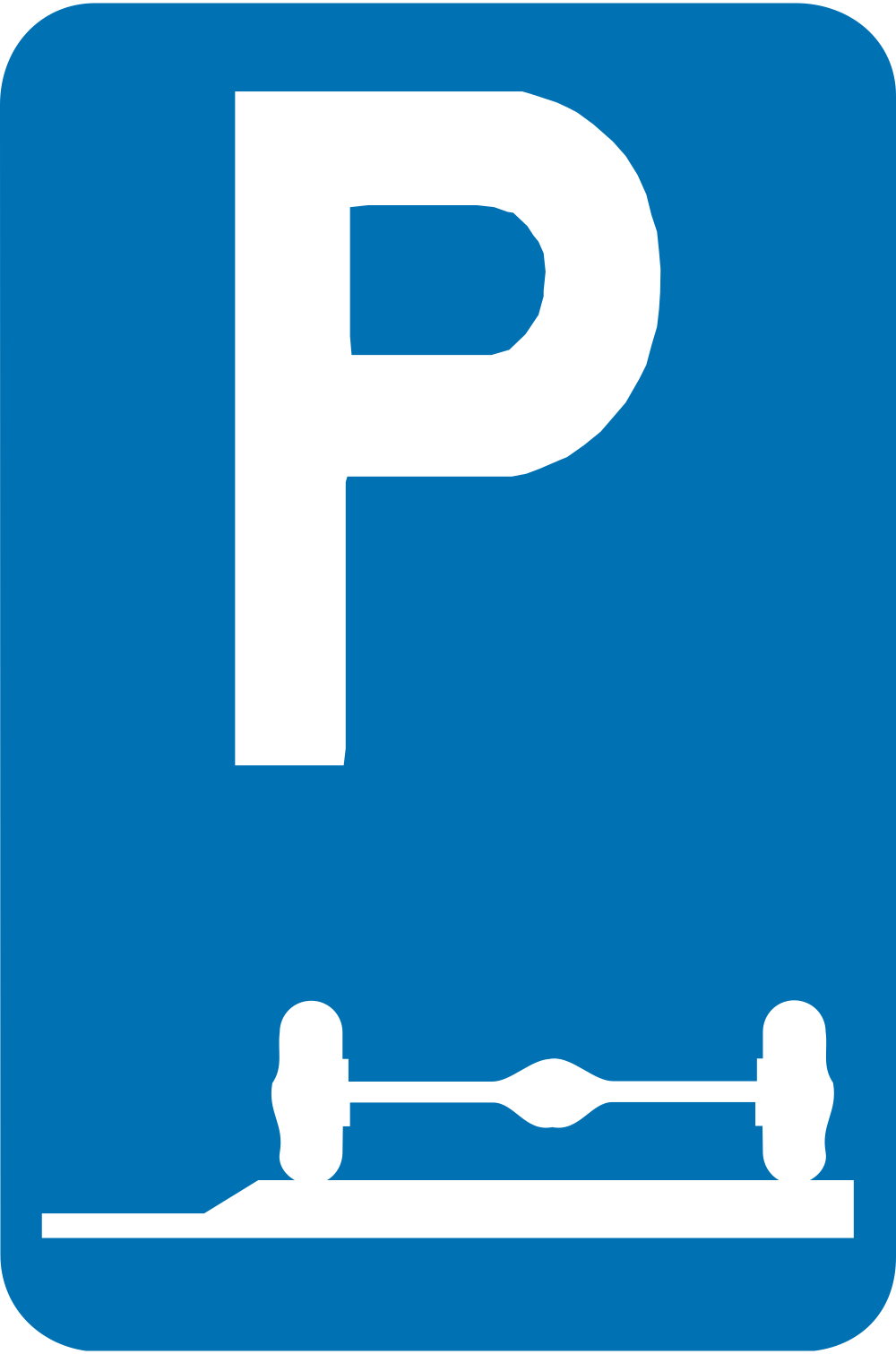
47. Parking allowed
This traffic sign indicates that parking is allowed. Vehicles may be parked in the area covered by the sign subject to any indicated conditions, restrictions or local parking rules.
Signal routier E9a • Stationnement autorisé.
Verkeersbord E9a • Parkeren toegelaten.
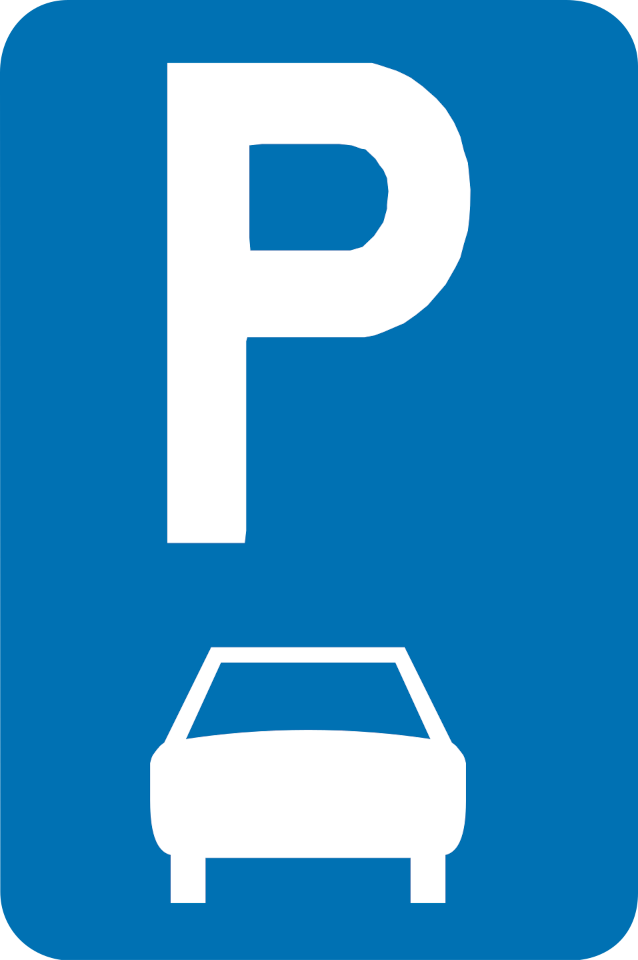
48. Parking only allowed for cars
This traffic sign indicates that parking is reserved for cars. Other vehicle categories may not use the parking space or area unless an applicable sign or local rule permits it.
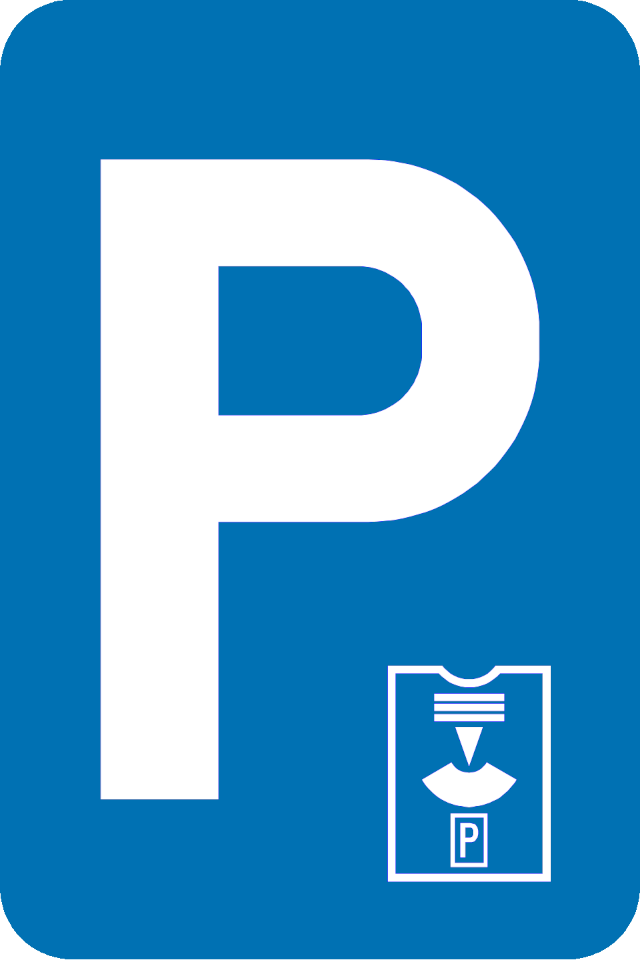
49. Parking only allowed for a limited time
This traffic sign indicates that parking is allowed only for a limited time. Observe the permitted parking duration and use a parking disc or other time-recording method where required.
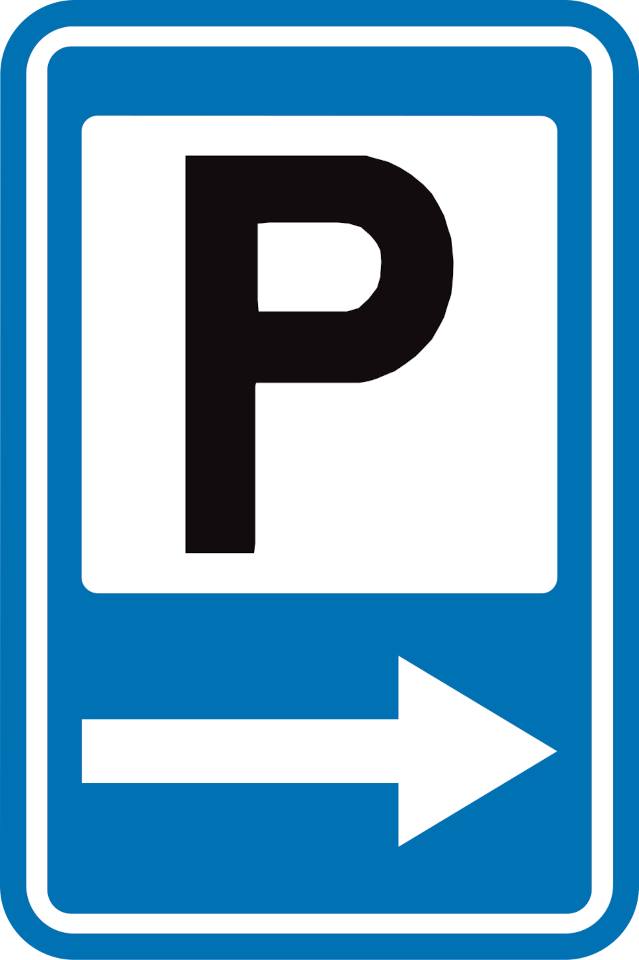
50. Direction to covered car park
This traffic sign indicates the direction to a covered or indoor parking facility. Follow the arrow to reach the covered car park.
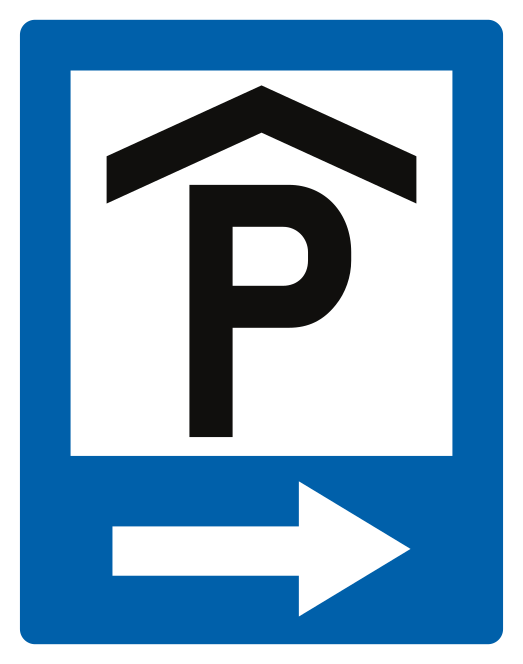
Verkeersbord F58 • Aankondiging van een overdekte parking.