


All-way stopCanada
 Traffic rules
 Canada
37. All-way stop
An all-way stop is an intersection where traffic approaching from every direction is required to stop before entering. It is usually indicated by a stop sign on each approach and is commonly used where traffic from intersecting roads needs to be controlled without traffic lights.
Every driver must come to a complete stop and proceed only when it is safe and permitted. The rules determining which vehicle may proceed first differ between countries, so drivers should follow the local priority rules rather than assuming that the first vehicle to arrive always has priority.
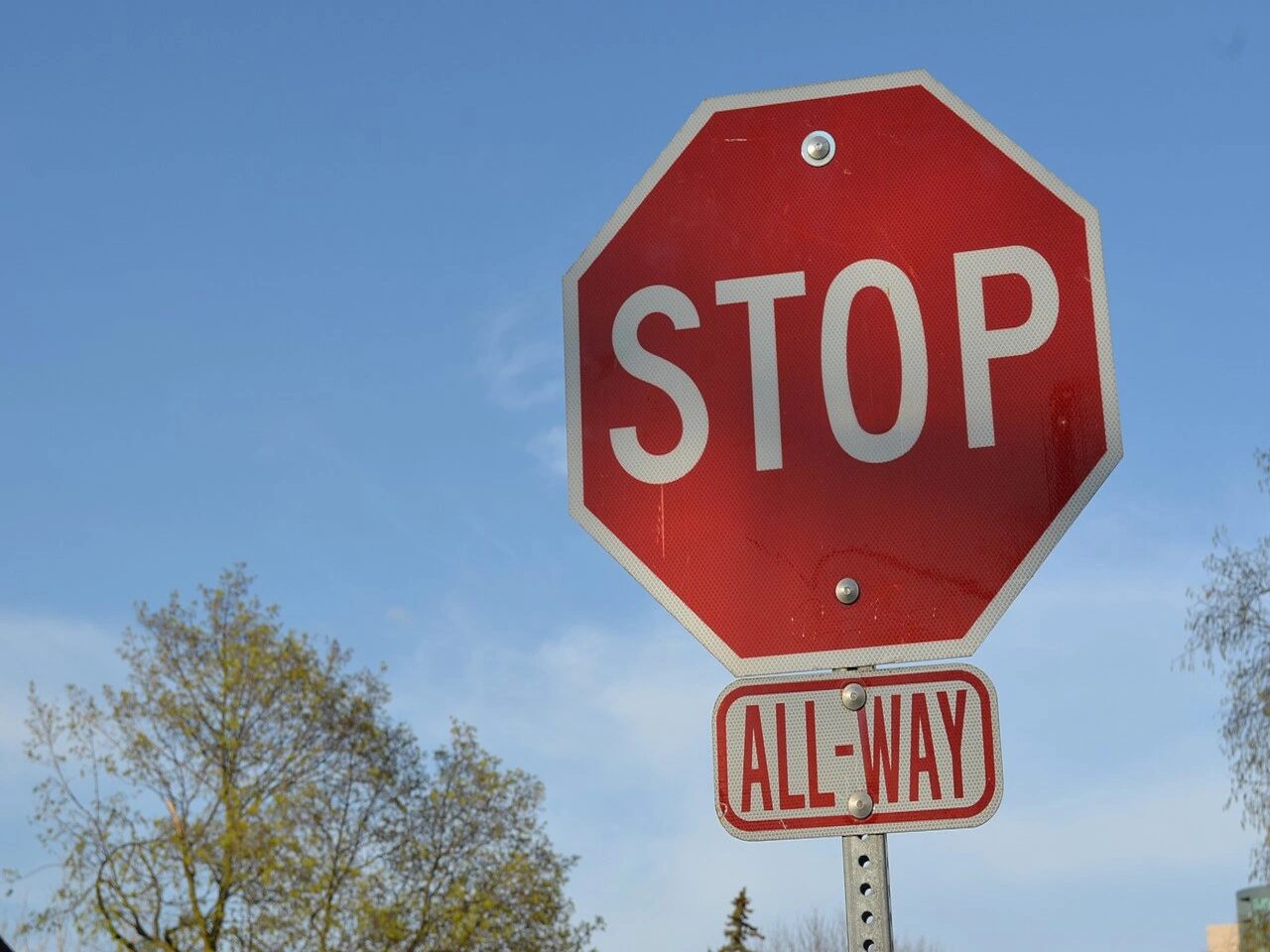
Wikimedia.org • Raysonho • CC BY-SA
Are four-way STOP intersections used in Canada?
Yes. They are used in Canadian jurisdictions, but priority and enforcement are governed by provincial and territorial law. The Ontario driver handbook, for example, explains all-way-stop priority.
🔗 ontario.ca • Ontario MTO — STOP, YIELD, simultaneous arrival and all-way stops
Who goes first at an all-way STOP in Ontario?
The vehicle that comes to a complete stop first generally proceeds first. When two vehicles stop at the same time, the vehicle on the left gives way to the vehicle on the right. Give way to pedestrians and comply with turning rules.
🔗 ontario.ca • Ontario MTO — STOP, YIELD, simultaneous arrival and all-way stops
Can you roll through a four-way STOP in Canada?
No. A STOP sign requires a complete stop. For example, British Columbia requires drivers at a four-way stop to give way to vehicles already in the intersection and enter only when safe.
🔗 icbc.com • ICBC Learn to Drive Smart, Chapter4 — complete stop and four-way priority


