


U-turnCanada
An introduction to the traffic rules and road signs of Canada. Learn about driving, road safety and much more in our illustrated book, with answers to frequently asked questions.
For informational purposes only. Always follow official regulations. Some content and images were created with AI assistance.
 Traffic rules
 Canada
45. U-turn
A U-turn is a driving manoeuvre in which a vehicle turns around to travel in the opposite direction. It normally involves crossing part of the roadway and re-entering traffic facing the direction from which the vehicle came.
Before making a U-turn, the driver should check surrounding traffic, pedestrians and cyclists, signal when required and make sure there is enough visibility and space to complete the manoeuvre safely. U-turns may be prohibited by traffic signs or on particular types of roads.
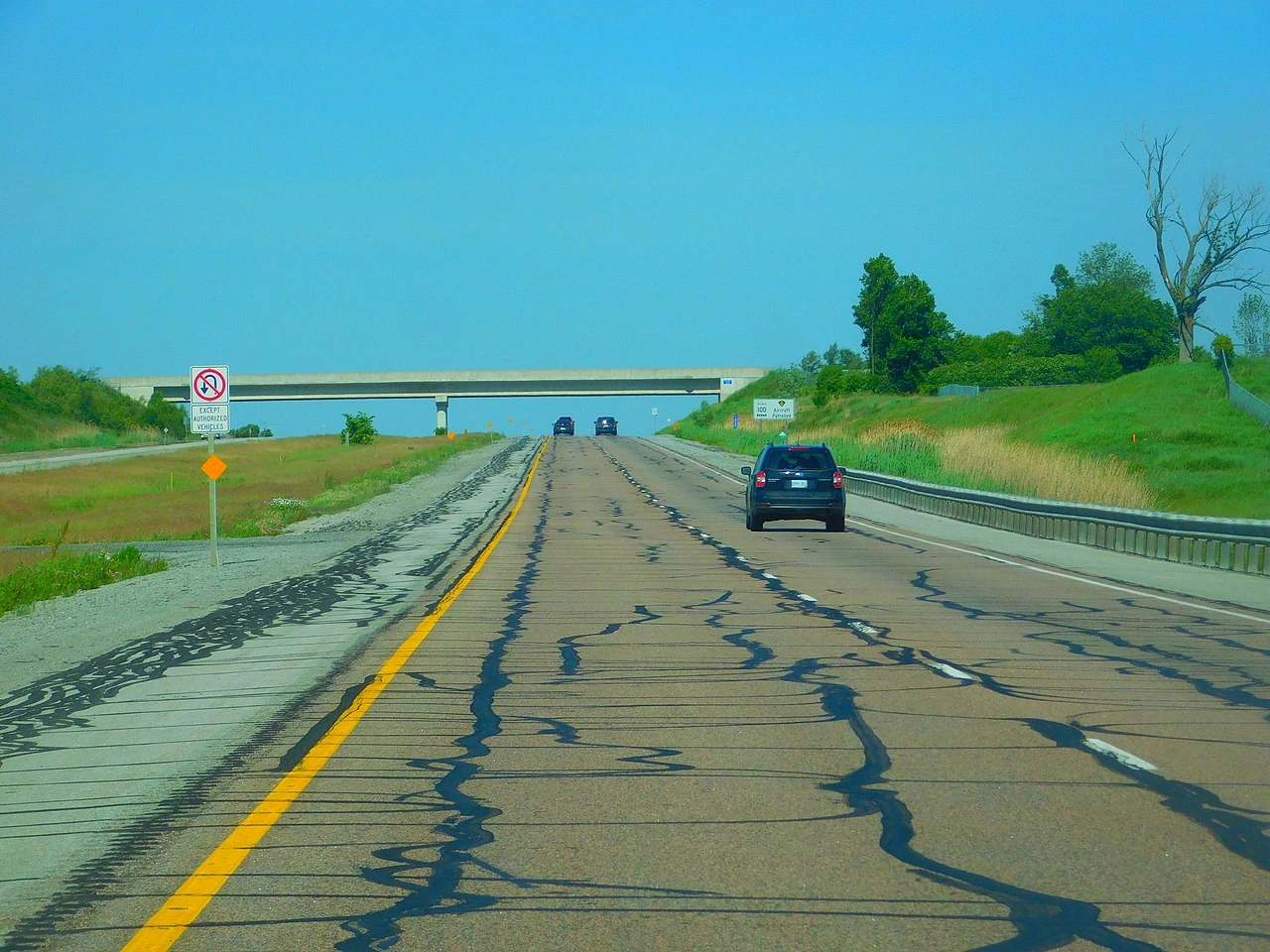
Wikimedia.org • Adam Moss • CC BY-SA
What sight distance does Ontario require for a U-turn?
In Ontario, the Driver’s Handbook says you must be able to see at least 150 metres in both directions. U-turns are prohibited on curves or near railway crossings, hilltops, bridges and tunnels where visibility is obstructed.
🔗 ontario.ca • Ontario MTO — roundabout controls and150m U-turn visibility
Does a U-turn sign override the need to check for traffic in Ontario?
No. First check that no sign prohibits a U-turn. Even where the manoeuvre is allowed, do not turn unless the required visibility is available and both directions are clear.
🔗 ontario.ca • Ontario MTO — roundabout controls and150m U-turn visibility


