


Reversible laneCanada
An introduction to the traffic rules and road signs of Canada. Learn about driving, road safety and much more in our illustrated book, with answers to frequently asked questions.
For informational purposes only. Always follow official regulations. Some content and images were created with AI assistance.
 Traffic rules
 Canada
67. Reversible lane
A reversible lane is a traffic lane whose permitted direction of travel can be changed at different times to provide additional capacity in the direction with the greatest traffic demand. It is commonly used on roads where traffic flows strongly in one direction during certain periods and in the opposite direction at other times.
Reversible lanes are normally controlled by overhead lane signals, traffic lights, signs or movable barriers. Drivers must enter the lane only when the signals indicate that travel in their direction is permitted.
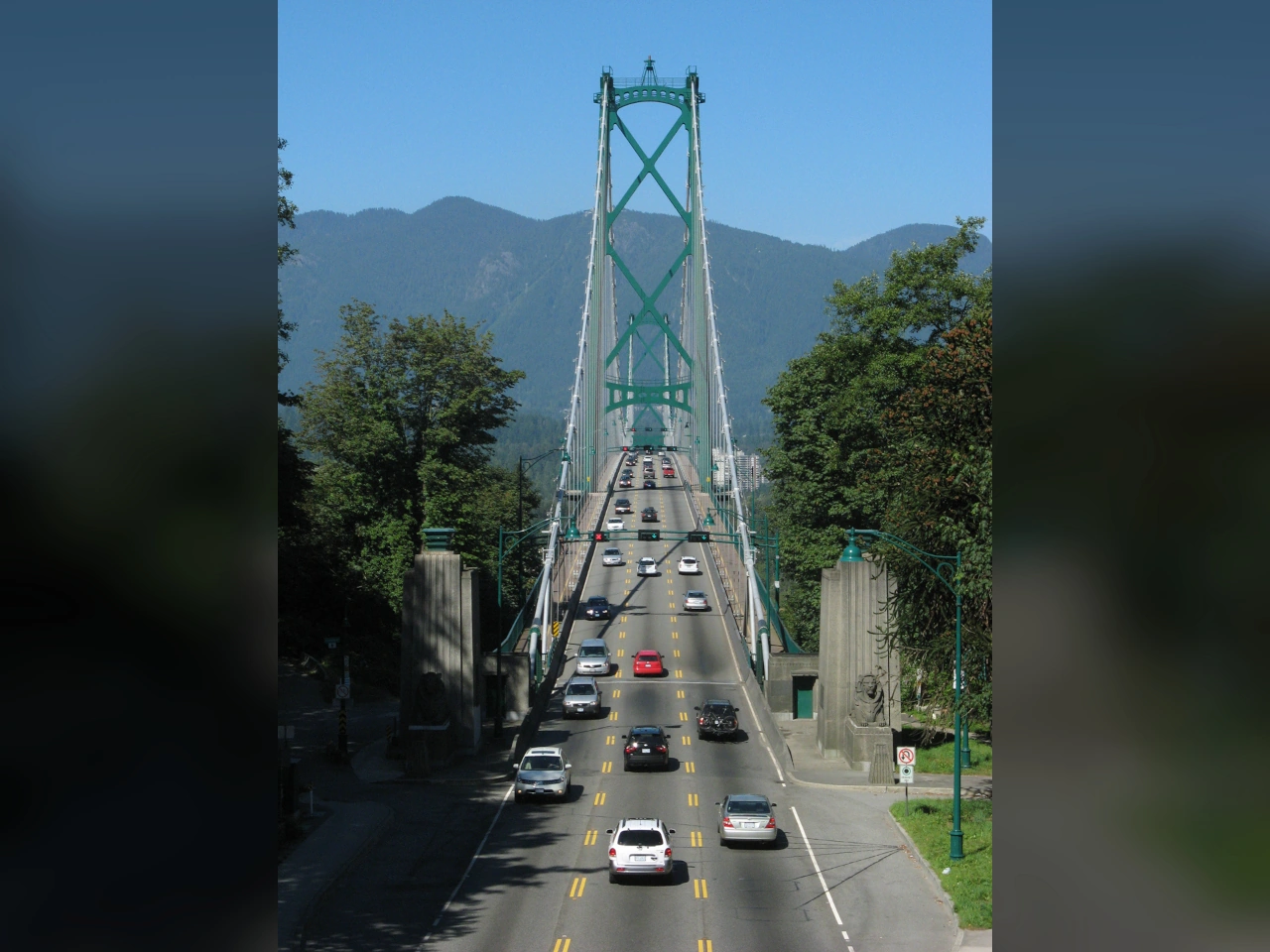
Wikimedia.org • Bobanny • CC0
Where is a reversible lane used in British Columbia?
The Lions Gate Bridge in Vancouver has a controlled counterflow system that changes how its three lanes are allocated between northbound and southbound traffic. The George Massey Tunnel also uses counterflow operations. Follow the lane-control signals rather than an assumed timetable.
Does the Lions Gate Bridge always have two lanes in the same direction?
No. The counterflow allocation changes with traffic and conditions. British Columbia gives approximate weekday periods for different allocations, but operators adjust the lanes for actual traffic, visibility and weather. Always follow the signals in force.


