


CanadaCanada
 Traffic rules
 Canada
1. Canada
Canada stretches across northern North America from the Atlantic to the Pacific and Arctic oceans, and traffic drives on the right. Its enormous size creates very different driving environments, from congested metropolitan motorways to mountain passes in the west and long, sparsely populated highways through forests and northern regions. Snow, ice and extreme winter temperatures are major seasonal hazards in much of the country, while wildlife such as deer, moose and bears can also appear on rural roads.
Traffic law is primarily the responsibility of Canada's provinces and territories, so speed limits, child-restraint rules, novice-driver restrictions and foreign-licence requirements are not completely uniform nationwide. Canada has no road vignette and most highways are free, although individual toll roads, bridges and facilities exist. Road-sign language also varies: English predominates in many provinces, French is prominent in Québec, and federal signage is generally bilingual in English and French.
AI
Which side of the road do you drive on in Canada?
Drive on the right-hand side of the road.
Which side should you overtake on in Canada?
Normally overtake on the left. Passing on the right is permitted in certain circumstances, particularly on multi-lane roads, subject to provincial or territorial rules.
What is the emergency telephone number in Canada?
Call 911 for police, fire or ambulance assistance in an emergency.
Are traffic rules the same throughout Canada?
No. Provinces and territories make and enforce most rules concerning speed limits, licensing, vehicle use and road behaviour, so some requirements differ across Canada.
What is the alcohol limit for drivers in Canada?
Under federal criminal law, having a BAC of 80 mg of alcohol per 100 ml of blood (0.08%) or more within two hours of driving is a criminal offence. Driving while impaired can be an offence even below that concentration.
Can drivers face consequences below 0.08% BAC in Canada?
Yes. Provinces and territories impose additional administrative rules, commonly beginning around 0.05% BAC, and novice or young drivers are generally subject to zero-alcohol requirements. The exact thresholds and consequences depend on the jurisdiction.
What is the general speed limit in built-up areas in Canada?
There is no single nationwide urban speed limit. An unsigned limit of 50 km/h is common; for example, Ontario uses 50 km/h in cities, towns and villages where no other limit is posted, and British Columbia generally uses 50 km/h within municipalities.
What is the general speed limit outside built-up areas in Canada?
There is no national rural default. For example, unsigned roads outside built-up areas are generally limited to 80 km/h in Ontario and outside municipalities in British Columbia, while major highways commonly have higher posted limits.
What is the highest speed limit in Canada?
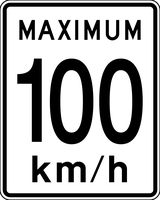
Most major high-speed highways are posted at 100 or 110 km/h. British Columbia has sections of Highway 5, the Coquihalla Highway, posted at 120 km/h. Always follow the limit shown on the road.
Do Canadian school zones have a nationwide speed limit?
No. School-zone limits and operating times are set provincially, territorially or locally and can vary substantially. Follow the signs at each school zone.
Do you need a vignette to drive in Canada?
No. Canada has no nationwide road vignette. Most highways can be used without paying a road toll.
Are there toll roads in Canada?
Yes, but tolling is limited to particular roads, bridges and other facilities. One prominent example is Ontario's Highway 407 ETR, an all-electronic toll highway without conventional toll booths.
Are seat belts compulsory in Canada?
Yes. Seat-belt use is compulsory under provincial and territorial law for occupants of seating positions equipped with belts, subject to limited exemptions.
Are child car seats compulsory in Canada?
Yes, but there is no single nationwide age, weight or height threshold. Each province or territory establishes its own child-restraint rules. For example, Ontario's booster-seat requirements use age, weight and a height threshold of 145 cm, while Québec generally requires an appropriate restraint until a child reaches 145 cm or 9 years of age.
Are motorcycle helmets compulsory in Canada?
Motorcycle riders and passengers are generally required by provincial or territorial law to wear an approved motorcycle helmet, subject to any jurisdiction-specific exemptions.
Can you use a mobile phone while driving in Canada?
Provinces and territories prohibit or restrict handheld mobile-phone use while driving. Rules for hands-free devices and novice drivers vary by jurisdiction.
Are daytime running lights required in Canada?
Canadian vehicle standards require daytime running-light systems on modern vehicles sold in Canada. Newer vehicles also have requirements intended to prevent drivers from travelling after dark with only their daytime running lights operating.
Who has priority at an uncontrolled intersection in Canada?
Rules are provincial or territorial, but a common rule is that when two vehicles reach an otherwise equal intersection at approximately the same time, the driver on the left yields to the vehicle on the right. Signs, signals and specific intersection rules take precedence.
Who has priority at a roundabout in Canada?
Drivers entering a roundabout must generally yield to traffic already circulating inside it. Follow lane markings, signs and local rules when using multi-lane roundabouts.
Can you turn right at a red light in Canada?
In most of Canada, a right turn on red is permitted after a complete stop when the way is clear, unless a sign prohibits it. A notable exception is the island of Montréal, where right turns on red are prohibited.
Must drivers give way to pedestrians at crosswalks in Canada?
Yes. Drivers must yield or stop for pedestrians as required at pedestrian crossings. The precise stopping and crossing rules vary between provinces and territories.
What should you do when a school bus has flashing red lights in Canada?
You must generally stop for a school bus displaying flashing red lights or an extended stop arm. Rules for traffic approaching from the opposite direction can differ on physically divided roads, so follow the rules of the province or territory in which you are driving.
What should you do when an emergency vehicle approaches in Canada?
Give way to emergency vehicles using their warning lights or siren and move safely out of their path. Provinces and territories also have move-over or slow-down rules when passing stopped emergency and roadside vehicles.
Are winter tyres compulsory in Canada?
There is no nationwide winter-tyre requirement. Québec requires winter tyres on most registered passenger vehicles from 1 December to 15 March, while British Columbia requires qualifying winter tyres on designated routes generally from 1 October to 31 March, with some routes extending to 30 April.
Are snow chains compulsory in Canada?
There is no general nationwide requirement for ordinary passenger cars to carry snow chains. Chain and traction-device rules vary by province, road and vehicle type, particularly on mountainous routes.
Can tourists drive in Canada with a foreign driving licence?
Usually yes, but the permitted period depends on the province or territory. For example, visitors may drive in British Columbia with a valid foreign licence for up to six months, and non-resident visitors may drive in Québec with a valid foreign licence for six consecutive months.
Do you need an International Driving Permit in Canada?
Not always. Requirements vary by province or territory and by the language and type of foreign licence. An International Driving Permit can provide an official translation and should be carried with the original licence where required.
Is motor vehicle insurance compulsory in Canada?
Yes. Mandatory motor-vehicle insurance requirements are established by each province or territory. The minimum required coverage and insurance system differ between jurisdictions.
What should drivers know about wildlife on Canadian roads?
Large animals such as deer, moose and bears can enter roads unexpectedly, particularly in rural and forested areas. Reduce speed where wildlife warning signs are posted and be especially alert around dawn and dusk.
What should drivers know about winter driving in Canada?
Snow, ice, freezing rain and black ice can make Canadian roads extremely slippery. Reduce speed, increase following distance, check provincial road-condition services and be prepared for rapidly changing weather or highway closures.
What languages are used on road signs in Canada?
Language varies by jurisdiction. English is widely used, French predominates on Québec provincial road signs, and many signs in bilingual jurisdictions and on federal property use both English and French. Symbol-based signs are also widely used.

