


Mandatory signsCanada
 Traffic rules
 Canada
 Priority signs
 Warning signs
 Prohibitory signs
 Mandatory signs
 Information signs
Mandatory signs
A mandatory sign is a traffic sign that tells drivers what they must do. Instead of prohibiting actions, these signs impose obligations such as following a specific direction, using a particular lane, or keeping a minimum speed. Their purpose is to guide traffic safely and efficiently by ensuring that all road users follow the same required behaviour in places where it is necessary for order and safety.
How are compulsory instructions shown in Canada?
Ontario’s regulatory signs also require actions or particular lane use; compulsory instructions are not limited to blue circles.
How can a mandatory turn be indicated in Canada?
Ontario example: Mandatory movements may be shown by regulatory signs, lane-direction arrows or turn-only indications. Do not expect the sign shape to be identical to the European blue circular sign system.
Does a mandatory-direction sign give me priority over pedestrians in Canada?
Ontario example: No. It tells you which way to move, not who goes first. Check traffic lights, other priority signs, pedestrians and cyclists, and give way when required before completing the manoeuvre.

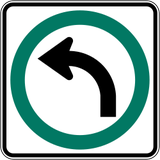
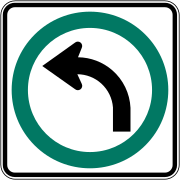
1. Turning left mandatory
This traffic sign indicates that turning left is mandatory at the junction ahead. Traffic must turn left and may not continue straight ahead or turn right.
English • Québec P-110-2-G • Turn left. Turn left at the indicated junction. This green-circle arrow prescribes the movement.
Sources
🔗 Commons.wikimedia.org
🔗 Cdn-contenu.quebec.ca • Québec MTMD · Regulatory signs poster, April 2026, p. 1
🔗 Legisquebec.gouv.qc.ca • Québec · Road signs regulation C-24.2, r. 41, section 18 (official consolidation, 1 May 2026) (FR)
SVG source: Transports Québec • Public domain • Original revision 2013-07-29. Wikimedia original unmodified.
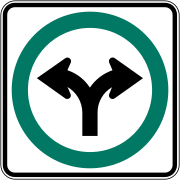
2. Turning left or right mandatory
This traffic sign indicates that turning left or right is mandatory at the junction ahead. Traffic may turn either left or right but may not continue straight ahead.
English • Québec P-110-4 • Turn left or right. Turn either left or right at the indicated junction; do not continue straight ahead.
Sources
🔗 Commons.wikimedia.org
🔗 Cdn-contenu.quebec.ca • Québec MTMD · Regulatory signs poster, April 2026, p. 1
🔗 Legisquebec.gouv.qc.ca • Québec · Road signs regulation C-24.2, r. 41, section 18 (official consolidation, 1 May 2026) (FR)
SVG source: Transports Québec • Public domain • Original revision 2013-08-01. Wikimedia original unmodified.
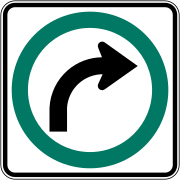
3. Turning right mandatory
This traffic sign indicates that turning right is mandatory at the junction ahead. Traffic must turn right and may not continue straight ahead or turn left.
English • Québec P-110-2-D • Turn right. Turn right at the indicated junction.
Sources
🔗 Commons.wikimedia.org
🔗 Cdn-contenu.quebec.ca • Québec MTMD · Regulatory signs poster, April 2026, p. 1
🔗 Legisquebec.gouv.qc.ca • Québec · Road signs regulation C-24.2, r. 41, section 18 (official consolidation, 1 May 2026) (FR)
SVG source: Transports Québec • Public domain • Original revision 2013-07-29. Wikimedia original unmodified.
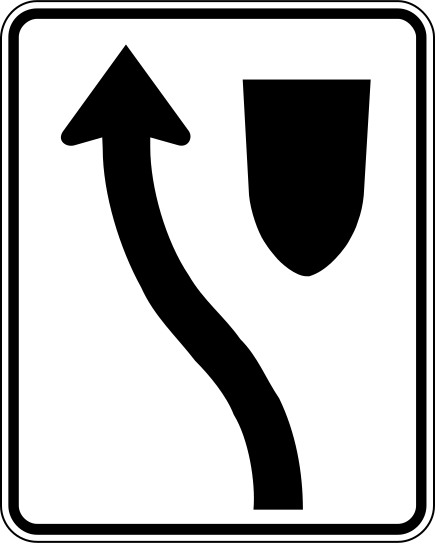
4. Pass obstacle on the left
This traffic sign indicates that traffic must pass an obstacle on the left. Keep to the left of the obstacle and follow any accompanying signs or road markings.
English • Québec P-90-G • Keep left of the obstruction. Pass to the left of the obstruction.
Sources
🔗 Commons.wikimedia.org
🔗 Cdn-contenu.quebec.ca • Québec MTMD · Regulatory signs poster, April 2026, p. 1
🔗 Legisquebec.gouv.qc.ca • Québec · Road signs regulation C-24.2, r. 41, section 15 (official consolidation, 1 May 2026) (FR)
SVG source: Transports Québec • Public domain • Original revision 2012-12-26. Wikimedia original unmodified.
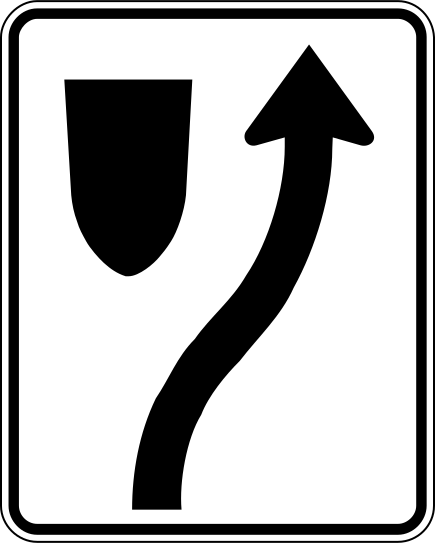
5. Pass obstacle on the right
This traffic sign indicates that traffic must pass an obstacle on the right. Keep to the right of the obstacle and follow any accompanying signs or road markings.
English • Québec P-90-D • Keep right of the obstruction. Pass to the right of the obstruction.
Sources
🔗 Commons.wikimedia.org
🔗 Cdn-contenu.quebec.ca • Québec MTMD · Regulatory signs poster, April 2026, p. 1
🔗 Legisquebec.gouv.qc.ca • Québec · Road signs regulation C-24.2, r. 41, section 15 (official consolidation, 1 May 2026) (FR)
SVG source: Transports Québec • Public domain • Original revision 2012-12-26. Wikimedia original unmodified.
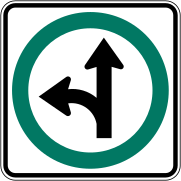
6. Driving straight ahead or turning left mandatory
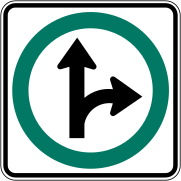
This traffic sign indicates that traffic must continue straight ahead or turn left. One of the indicated directions must be followed; turning right is prohibited.
English • Québec P-110-3-G • Straight ahead or left. Continue straight ahead or turn left at the indicated junction.
Sources
🔗 Commons.wikimedia.org
🔗 Cdn-contenu.quebec.ca • Québec MTMD · Regulatory signs poster, April 2026, p. 1
🔗 Legisquebec.gouv.qc.ca • Québec · Road signs regulation C-24.2, r. 41, section 18 (official consolidation, 1 May 2026) (FR)
Image via Commons.wikimedia.org
Transports Québec • Public domain • Source revision 2013-08-01. Wikimedia original unmodified.
7. Driving straight ahead or turning right mandatory
This traffic sign indicates that traffic must continue straight ahead or turn right. One of the indicated directions must be followed; turning left is prohibited.
English • Québec P-110-3-D • Straight ahead or right. Continue straight ahead or turn right at the indicated junction.
Sources
🔗 Commons.wikimedia.org
🔗 Cdn-contenu.quebec.ca • Québec MTMD · Regulatory signs poster, April 2026, p. 1
🔗 Legisquebec.gouv.qc.ca • Québec · Road signs regulation C-24.2, r. 41, section 18 (official consolidation, 1 May 2026) (FR)
SVG source: Transports Québec • Public domain • Original revision 2013-08-01. Wikimedia original unmodified.
8. Driving straight ahead mandatory
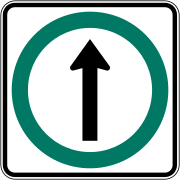
This traffic sign indicates that driving straight ahead is mandatory. Traffic must continue straight ahead and may not turn left or right at the location to which the sign applies.
English • Québec P-110-1 • Straight ahead only. Continue straight ahead at the indicated junction; do not turn left or right.
Sources
🔗 Commons.wikimedia.org
🔗 Cdn-contenu.quebec.ca • Québec MTMD · Regulatory signs poster, April 2026, p. 1
🔗 Legisquebec.gouv.qc.ca • Québec · Road signs regulation C-24.2, r. 41, section 18 (official consolidation, 1 May 2026) (FR)
SVG source: Transports Québec • Public domain • Original revision 2013-07-29. Wikimedia original unmodified.
9. Mandatory path for cyclists
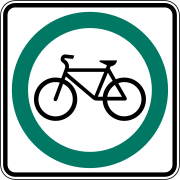
This traffic sign indicates a mandatory path for cyclists. Cyclists must use the designated path where the sign applies. Other road users may use the path only where the applicable signs or local rules permit them to do so.
English • Québec P-120-9 • Compulsory cycle route. Cyclists must use the indicated cycle route. This is a route instruction, not merely a general statement that cycling is permitted.
Sources
🔗 Commons.wikimedia.org
🔗 Rsr.transports.gouv.qc.ca • Québec MTMD · Road sign directory, indexed sign description
SVG source: Transports Québec • Public domain • Original revision 2013-09-27. Wikimedia original unmodified.
10. Mandatory path for mopeds
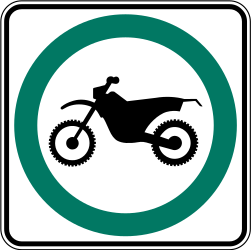
This traffic sign indicates a mandatory path for mopeds. The moped categories covered by the sign must use the designated path. Other road users may use it only where the applicable signs or local rules permit them to do so.
English • Québec P-120-3 • Compulsory route for motorcycles. Motorcyclists must follow the indicated route. The drawing is a motorcycle, although the shared key says moped.
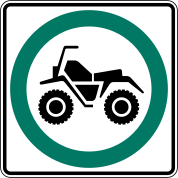
11. Mandatory path for snowmobiles
This traffic sign indicates a mandatory path for snowmobiles. Snowmobiles must use the designated path or track where required. Other road users may use it only where specifically permitted.
English • Québec P-120-8 • Compulsory route for quad bikes. Quad-bike riders must follow the indicated route. The symbol denotes a quad bike, not farm machinery.
Sources
🔗 Commons.wikimedia.org
🔗 Cdn-contenu.quebec.ca • Québec MTMD · Regulatory signs poster, April 2026, p. 1
SVG source: Transports Québec • Public domain • Original revision 2013-08-02. Wikimedia original unmodified.
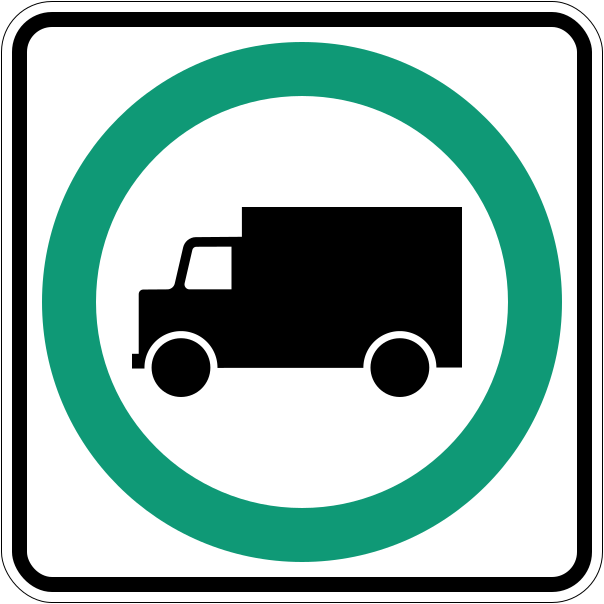
12. Mandatory lane for trucks
This traffic sign indicates a mandatory lane for trucks. Trucks must use the designated lane where the sign applies. Other road users may use the lane only where the applicable signs or local rules permit them to do so.
English • Québec P-120-1 • Compulsory route for trucks. Drivers of the truck category covered by this sign must follow the indicated route.
Sources
🔗 Commons.wikimedia.org
🔗 Cdn-contenu.quebec.ca • Québec MTMD · Regulatory signs poster, April 2026, p. 1
🔗 Legisquebec.gouv.qc.ca • Québec · Road signs regulation C-24.2, r. 41, section 21 (official consolidation, 1 May 2026) (FR)
SVG source: Transports Quebec — Government of Quebec • Public domain • Original revision 2024-12-26. Wikimedia original unmodified.
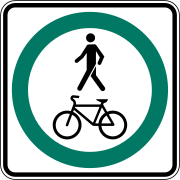
13. Mandatory shared pedestrian and cycle path
This traffic sign indicates a mandatory shared path for pedestrians and cyclists. Pedestrians and cyclists must use the same designated path rather than separate sections. They must share the space safely and follow the applicable local rules.
English • Québec P-120-11 • Compulsory shared route for pedestrians and cyclists. Pedestrians and cyclists must use the indicated shared route together. There is no left/right separation shown.
Sources
🔗 Commons.wikimedia.org
🔗 Rsr.transports.gouv.qc.ca • Québec MTMD · Road sign directory, indexed sign description
SVG source: Transports Québec • Public domain • Original revision 2013-09-26. Wikimedia original unmodified.
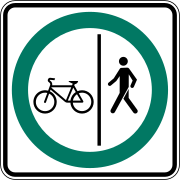
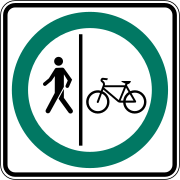
14. Mandatory divided pedestrian and cycle path
This traffic sign indicates a mandatory divided path for pedestrians and cyclists. Pedestrians and cyclists must use the section designated for them. Other road users may use the path only where the applicable signs or local rules permit them to do so.
English • Québec P-120-10 family • Separate routes for pedestrians and cyclists. Use the side indicated by the symbols: cyclists on the left and pedestrians on the right. The dividing line separates the two compulsory routes. The sign family is confirmed; some details of this illustration were not fully matched to the reviewed standard.
Sources
🔗 Commons.wikimedia.org
🔗 Rsr.transports.gouv.qc.ca • Québec MTMD · Road sign directory, indexed sign description
SVG source: Transports Québec • Public domain • Original revision 2013-09-26. Wikimedia original unmodified.
15. Mandatory divided pedestrian and cycle path
This traffic sign indicates a mandatory divided path for pedestrians and cyclists. Pedestrians and cyclists must use the section designated for them. Other road users may use the path only where the applicable signs or local rules permit them to do so.
English • Québec P-120-10 family • Separate routes for pedestrians and cyclists. Use the side indicated by the symbols: pedestrians on the left and cyclists on the right. The dividing line separates the two compulsory routes. The sign family is confirmed; some details of this illustration were not fully matched to the reviewed standard.
Sources
🔗 Commons.wikimedia.org
🔗 Rsr.transports.gouv.qc.ca • Québec MTMD · Road sign directory, indexed sign description
SVG source: Transports Québec • Public domain • Original revision 2013-09-26. Wikimedia original unmodified.
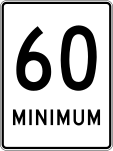
16. Start of a minimum speed
This traffic sign indicates the start of a minimum speed. Road users covered by the sign must travel at or above the indicated speed when conditions allow. Driving more slowly may still be necessary because of traffic, weather, road conditions or another safety-related reason.
English • Québec P-70-1 • Minimum speed: 60 km/h. This sign prescribes a minimum speed of 60 km/h for the road where it applies. It is not a nationwide minimum for all Canadian roads.
Sources
🔗 Commons.wikimedia.org
🔗 Cdn-contenu.quebec.ca • Québec MTMD · Regulatory signs poster, April 2026, p. 1
🔗 Legisquebec.gouv.qc.ca • Québec · Road signs regulation C-24.2, r. 41, section 12 (official consolidation, 1 May 2026) (FR)
SVG source: Transports Québec • Public domain • Original revision 2013-07-29. Wikimedia original unmodified.
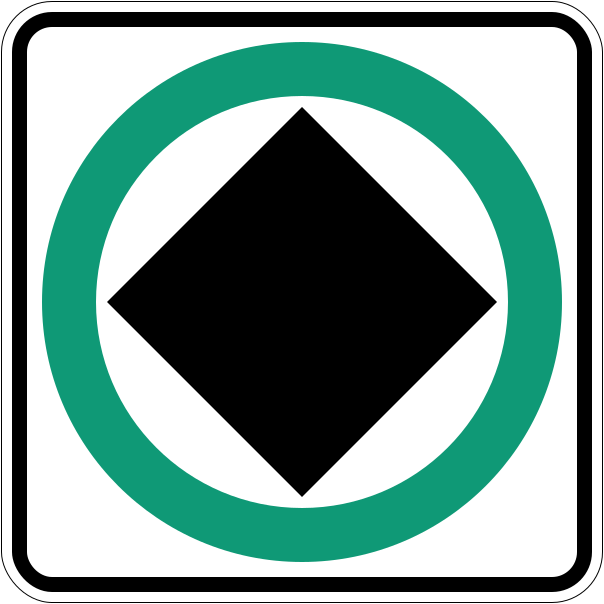
17. Mandatory route for dangerous goods
This traffic sign indicates a mandatory route for vehicles carrying dangerous goods. Vehicles carrying dangerous goods must use the route indicated by the sign.
English • Québec P-120-4 • Compulsory route for dangerous goods carriers. Carriers transporting dangerous goods that require vehicle placards must follow the indicated route. The black diamond represents dangerous goods; it is not an HOV-lane symbol.
Sources
🔗 Commons.wikimedia.org
🔗 Cdn-contenu.quebec.ca • Québec MTMD · Regulatory signs poster, April 2026, p. 1
SVG source: Transports Quebec — Government of Quebec • Public domain • Original revision 2024-12-26. Wikimedia original unmodified.
