

FinlandFinland
 Traffic rules
 Finland
1. Finland
Finland is a Nordic country in Northern Europe, bordered by Sweden, Norway and Russia. Traffic drives on the right, and long distances, sparsely populated areas and rapidly changing weather can make driving very different from conditions elsewhere in Europe. Winter is especially important: snow, ice and darkness affect both road conditions and speed limits, while drivers in northern Finland must also be prepared for reindeer and other wildlife on the road.
Finland has two national languages: Finnish and Swedish. Road signs containing place names or other text may therefore be in Finnish, Swedish or both, particularly in bilingual municipalities. In the far north, drivers may also encounter Sámi place names. Finnish roads use many long place names and distinctive letters such as ä and ö, so foreign drivers should pay close attention to destination signs when planning longer journeys.
AI-generated by Rijbewijs-online.be • WCIT • CC BY-SA
Which number can you call in an emergency in Finland?
Call 112 for urgent emergency assistance. Give the operator your location and explain what happened.
🔗 suomi.fi • Finnish Emergency Response Centre Agency, emergency number 112
What is the legal alcohol limit for drivers in Finland?
The drink-driving threshold is 0.5‰ (0.5 g/l) of alcohol in the blood.
🔗 europa.eu • Your Europe / national authorities, Finland road rules, Alcohol limits
What speed limits apply to passenger cars in Finland?
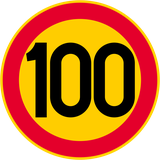
Built-up areas: The general maximum is 50 km/h unless signs indicate otherwise. Outside built-up areas: The general maximum is 80 km/h unless another limit is signed. Motorways: Posted limits can permit 120 km/h in suitable summer conditions. Lower seasonal and variable limits apply: Fintraffic’s 2026 guidance describes motorway sections where 120 km/h may be used in good daylight conditions but the maximum is 100 km/h in darkness or wintry conditions. Follow the displayed limit and drive more slowly whenever conditions require it.
🔗 europa.eu • Your Europe, Finnish national-authority road-safety information
🔗 fintraffic.fi • Fintraffic, 2026 seasonal and variable motorway limits, 120/100 km/h example
What are the seat-belt and child-restraint rules in Finland?
Seat belts must be used by drivers and passengers on seats equipped with them, subject to specific legal exemptions.
Children shorter than 135 cm must use an approved child restraint suitable for their size in a car equipped with seat belts or another approved installation method. Children under 3 must always use a child restraint, including in a taxi.
For a child aged 3 or older and shorter than 135 cm, a taxi exception permits the seat belt on a rear seat only when no child restraint is available. A rear-facing child seat must not be placed in front of an active frontal airbag. Continuing to use a suitable child restraint up to 150 cm is a safety recommendation.
🔗 liikenneturva.fi • Finnish Road Safety Council, child-seat law and taxi exception
🔗 liikenneturva.fi • Finnish Road Safety Council, child-seat guidance
Can you use a mobile phone while driving in Finland?
A driver of a motor vehicle may not hold a communication device in the hand while driving. Other technical devices must also not be used in a way that interferes with or endangers driving.
When are winter tyres mandatory in Finland?
Winter tyres must be used between 1 November and 31 March when weather or road conditions require them. Drivers must therefore consider both current conditions and the conditions expected during the journey.
What safety equipment should you carry in a car in Finland?
A car must have a warning triangle. It is also strongly recommended to carry a high-visibility vest, flashlight and warm clothing, particularly when travelling during winter or through remote areas.
Must cars use lights during the day in Finland?
Yes. A motor vehicle must use headlights or daytime running lights whenever it is being driven. In darkness, twilight or poor visibility, headlights and rear lights must be used.
Can a visitor use a driving licence issued in another EU country in Finland?
Yes. A valid, full EU driving licence is recognised for the vehicle categories it covers. You must meet the applicable minimum age. A learner licence or a temporary replacement certificate does not have the same automatic recognition.
Are motorcycle helmets compulsory in Finland?
Yes. On an ordinary, open motorcycle, both the rider and passenger must wear a protective helmet. Use a helmet that meets the applicable approval requirements and fasten it correctly. Check the specific rules before relying on an exemption for an enclosed or specially equipped vehicle.
🔗 europa.eu • Your Europe / national authorities, Finland road rules

