


Mandatory signsHungary
 Traffic rules
 Hungary
 Priority signs
 Warning signs
 Prohibitory signs
 Mandatory signs
 Information signs
 Additional signs
Mandatory signs
A mandatory sign is a traffic sign that tells drivers what they must do. Instead of prohibiting actions, these signs impose obligations such as following a specific direction, using a particular lane, or keeping a minimum speed. Their purpose is to guide traffic safely and efficiently by ensuring that all road users follow the same required behaviour in places where it is necessary for order and safety.










How are compulsory instructions shown in Hungary?
Utasítást adó signs prescribe actions such as following a direction or using a designated route.
What does a mandatory-direction sign require in Hungary?
Where a compulsory-direction sign is installed in Hungary, follow only the arrow direction or permitted combination of directions. The restriction applies at the location or movement it regulates; it is not an instruction to ignore other traffic controls.
Does a mandatory-direction sign give me priority over pedestrians in Hungary?
No. The arrow prescribes direction. Give way to pedestrians at designated crossings and, when turning at a junction, to pedestrians crossing the road you enter even without a marked crossing. Obey traffic lights and the other priority rules.

1. Mandatory roundabout direction
This traffic sign indicates the mandatory direction around a roundabout. Traffic must circulate in the direction shown by the arrows. The sign does not itself determine priority; follow the applicable priority signs, traffic signals and local rules.
English • Traffic sign figure 23 • Roundabout. The sign identifies a road on which drivers must travel with the enclosed central area on their left.
Magyar • 23. ábra • Körforgalom. A tábla olyan utat jelez, amelyen úgy kell haladni, hogy az út által körbezárt terület a vezetőtől balra essék.
Sources
🔗 Commons.wikimedia.org
🔗 Njt.jog.gov.hu • 1/1975. (II. 5.) KPM–BM együttes rendelet (KRESZ) • 13(1)c • 23. ábra
Replacement SVG: Commons.wikimedia.org • Wikimedia Commons original • Kys5g • CC BY 4.0 • Original revision 2023-12-07. Wikimedia original unmodified.
Image via Commons.wikimedia.org
Kys5g • CC BY 4.0 • Source revision 2023-12-07. Wikimedia original unmodified.
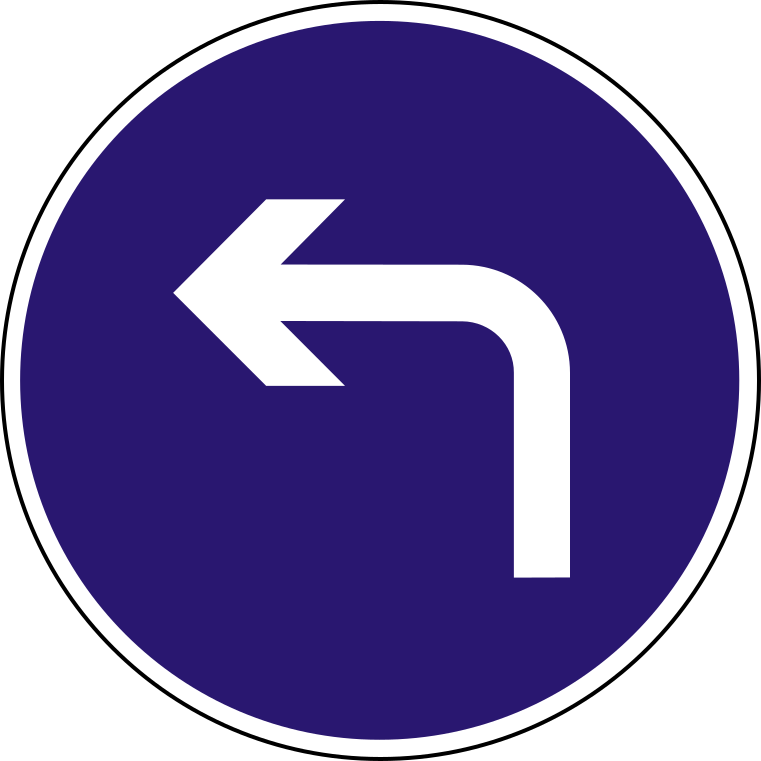
2. Turning left mandatory
This traffic sign indicates that turning left is mandatory at the junction ahead. Traffic must turn left and may not continue straight ahead or turn right.
English • Traffic sign figure 17–19 • Mandatory direction. At the junction, drivers must continue in one of the directions shown by the arrows. A supplementary plate showing a bus or bicycle and arrows (figure 18/d) means that a scheduled-service bus or cyclist may continue in the directions shown on that vehicle's supplementary plate. Direction arrows and layout diagrams are illustrative; the sign always depicts the actual situation.
Magyar • 17–19. ábra • Kötelező haladási irány. Az útkereszteződésben a táblán lévő nyíl (nyilak) által jelzett irányban (irányok valamelyikében) kell továbbhaladni. A tábla alatt elhelyezett autóbuszt vagy kerékpárt és nyilat (nyilakat) mutató kiegészítő tábla (18/d. ábra) azt jelzi, hogy az menetrend szerint közlekedő autóbusz vagy a kerékpáros a jármű jelképét feltüntető kiegészítő táblán lévő nyíl (nyilak) által jelzett irányban haladhat tovább. Az irányt jelző nyilak és az alaprajzi vázlatok példálózó jellegűek; a jelzés mindig a tényleges helyzetet tünteti fel.
Sources
🔗 Commons.wikimedia.org
🔗 Njt.jog.gov.hu • 1/1975. (II. 5.) KPM–BM együttes rendelet (KRESZ) • 13(1)a • 17–19. ábra
🔗 Njt.jog.gov.hu • KRESZ • 20/A. §
Image via Commons.wikimedia.org
Gigillo83 • Public domain • Source revision 2014-03-19. Wikimedia original unmodified.
3. Turning left or right mandatory
This traffic sign indicates that turning left or right is mandatory at the junction ahead. Traffic may turn either left or right but may not continue straight ahead.
English • Traffic sign figure 17–19 • Mandatory direction. At the junction, drivers must continue in one of the directions shown by the arrows. A supplementary plate showing a bus or bicycle and arrows (figure 18/d) means that a scheduled-service bus or cyclist may continue in the directions shown on that vehicle's supplementary plate. Direction arrows and layout diagrams are illustrative; the sign always depicts the actual situation.
Magyar • 17–19. ábra • Kötelező haladási irány. Az útkereszteződésben a táblán lévő nyíl (nyilak) által jelzett irányban (irányok valamelyikében) kell továbbhaladni. A tábla alatt elhelyezett autóbuszt vagy kerékpárt és nyilat (nyilakat) mutató kiegészítő tábla (18/d. ábra) azt jelzi, hogy az menetrend szerint közlekedő autóbusz vagy a kerékpáros a jármű jelképét feltüntető kiegészítő táblán lévő nyíl (nyilak) által jelzett irányban haladhat tovább. Az irányt jelző nyilak és az alaprajzi vázlatok példálózó jellegűek; a jelzés mindig a tényleges helyzetet tünteti fel.
Sources
🔗 Commons.wikimedia.org
🔗 Njt.jog.gov.hu • 1/1975. (II. 5.) KPM–BM együttes rendelet (KRESZ) • 13(1)a • 17–19. ábra
🔗 Njt.jog.gov.hu • KRESZ • 20/A. §
Image via Commons.wikimedia.org
Gigillo83 • Public domain • Source revision 2014-03-19. Wikimedia original unmodified.
4. Turning right mandatory
This traffic sign indicates that turning right is mandatory at the junction ahead. Traffic must turn right and may not continue straight ahead or turn left.
English • Traffic sign figure 17–19 • Mandatory direction. At the junction, drivers must continue in one of the directions shown by the arrows. A supplementary plate showing a bus or bicycle and arrows (figure 18/d) means that a scheduled-service bus or cyclist may continue in the directions shown on that vehicle's supplementary plate. Direction arrows and layout diagrams are illustrative; the sign always depicts the actual situation.
Magyar • 17–19. ábra • Kötelező haladási irány. Az útkereszteződésben a táblán lévő nyíl (nyilak) által jelzett irányban (irányok valamelyikében) kell továbbhaladni. A tábla alatt elhelyezett autóbuszt vagy kerékpárt és nyilat (nyilakat) mutató kiegészítő tábla (18/d. ábra) azt jelzi, hogy az menetrend szerint közlekedő autóbusz vagy a kerékpáros a jármű jelképét feltüntető kiegészítő táblán lévő nyíl (nyilak) által jelzett irányban haladhat tovább. Az irányt jelző nyilak és az alaprajzi vázlatok példálózó jellegűek; a jelzés mindig a tényleges helyzetet tünteti fel.
Sources
🔗 Commons.wikimedia.org
🔗 Njt.jog.gov.hu • 1/1975. (II. 5.) KPM–BM együttes rendelet (KRESZ) • 13(1)a • 17–19. ábra
🔗 Njt.jog.gov.hu • KRESZ • 20/A. §
Image via Commons.wikimedia.org
Gigillo83 • Public domain • Source revision 2014-03-19. Wikimedia original unmodified.
5. Pass obstacle on the left
This traffic sign indicates that traffic must pass an obstacle on the left. Keep to the left of the obstacle and follow any accompanying signs or road markings.
English • Traffic sign figure 21 • Passing direction. The sign, or the obstruction or other object on which it is installed, must be passed in the direction shown by the arrow.
Magyar • 21. ábra • Kikerülési irány. A táblát – illetőleg azt az akadályt vagy egyéb tárgyat, amelyen a táblát elhelyezték – a táblán levő nyíl által jelzett irányban kell kikerülni.
Sources
🔗 Commons.wikimedia.org
🔗 Njt.jog.gov.hu • 1/1975. (II. 5.) KPM–BM együttes rendelet (KRESZ) • 13(1)b • 21. ábra
Replacement SVG: Commons.wikimedia.org • Wikimedia Commons original • 3247 • Public domain • Original revision 2023-05-28. Wikimedia original unmodified.
Image via Commons.wikimedia.org
3247 • Public domain • Source revision 2023-05-28. Wikimedia original unmodified.
6. Pass obstacle on either side
This traffic sign indicates that traffic must pass an obstacle on either the left or the right. Use either permitted side while following the road layout and any accompanying signs or markings.
English • Traffic sign figure 22 • Passing direction. The sign, or the obstruction or other object on which it is installed, must be passed in the direction shown by the arrow.
Magyar • 22. ábra • Kikerülési irány. A táblát – illetőleg azt az akadályt vagy egyéb tárgyat, amelyen a táblát elhelyezték – a táblán levő nyíl által jelzett irányban kell kikerülni.
Sources
🔗 Commons.wikimedia.org
🔗 Njt.jog.gov.hu • 1/1975. (II. 5.) KPM–BM együttes rendelet (KRESZ) • 13(1)b • 22. ábra
Replacement SVG: Commons.wikimedia.org • Wikimedia Commons original • Kys5g • CC BY 4.0 • Original revision 2026-05-27. Wikimedia original unmodified.
Image via Commons.wikimedia.org
Kys5g • CC BY 4.0 • Source revision 2026-05-27. Wikimedia original unmodified.
7. Pass obstacle on the right
This traffic sign indicates that traffic must pass an obstacle on the right. Keep to the right of the obstacle and follow any accompanying signs or road markings.
English • Traffic sign figure 20 • Passing direction. The sign, or the obstruction or other object on which it is installed, must be passed in the direction shown by the arrow.
Magyar • 20. ábra • Kikerülési irány. A táblát – illetőleg azt az akadályt vagy egyéb tárgyat, amelyen a táblát elhelyezték – a táblán levő nyíl által jelzett irányban kell kikerülni.
Sources
🔗 Commons.wikimedia.org
🔗 Njt.jog.gov.hu • 1/1975. (II. 5.) KPM–BM együttes rendelet (KRESZ) • 13(1)b • 20. ábra
Replacement SVG: Commons.wikimedia.org • Wikimedia Commons original • 3247 • Public domain • Original revision 2023-05-28. Wikimedia original unmodified.
Image via Commons.wikimedia.org
3247 • Public domain • Source revision 2023-05-28. Wikimedia original unmodified.
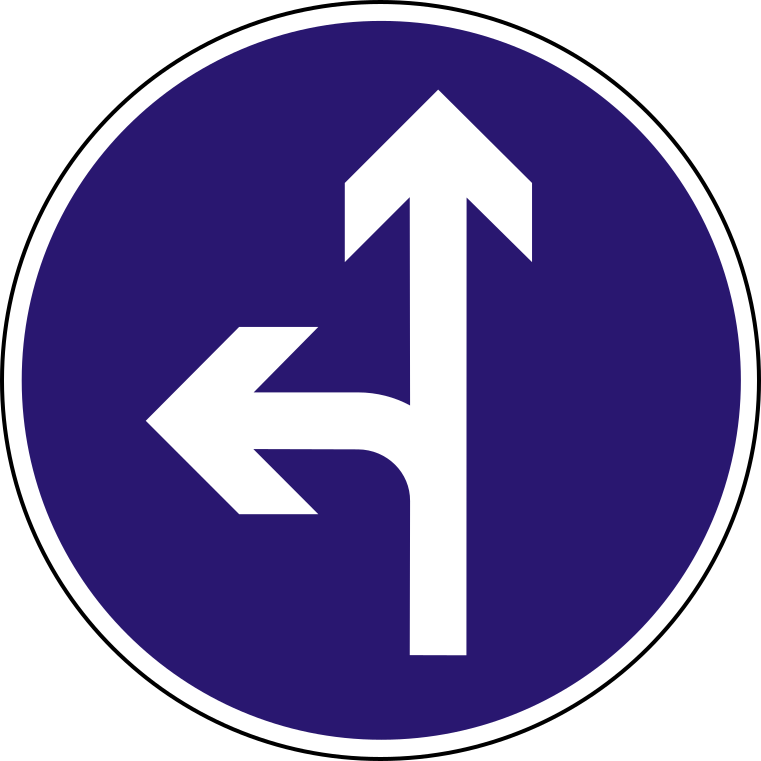
8. Driving straight ahead or turning left mandatory
This traffic sign indicates that traffic must continue straight ahead or turn left. One of the indicated directions must be followed; turning right is prohibited.
English • Traffic sign figure 17–19 • Mandatory direction. At the junction, drivers must continue in one of the directions shown by the arrows. A supplementary plate showing a bus or bicycle and arrows (figure 18/d) means that a scheduled-service bus or cyclist may continue in the directions shown on that vehicle's supplementary plate. Direction arrows and layout diagrams are illustrative; the sign always depicts the actual situation.
Magyar • 17–19. ábra • Kötelező haladási irány. Az útkereszteződésben a táblán lévő nyíl (nyilak) által jelzett irányban (irányok valamelyikében) kell továbbhaladni. A tábla alatt elhelyezett autóbuszt vagy kerékpárt és nyilat (nyilakat) mutató kiegészítő tábla (18/d. ábra) azt jelzi, hogy az menetrend szerint közlekedő autóbusz vagy a kerékpáros a jármű jelképét feltüntető kiegészítő táblán lévő nyíl (nyilak) által jelzett irányban haladhat tovább. Az irányt jelző nyilak és az alaprajzi vázlatok példálózó jellegűek; a jelzés mindig a tényleges helyzetet tünteti fel.
Sources
🔗 Commons.wikimedia.org
🔗 Njt.jog.gov.hu • 1/1975. (II. 5.) KPM–BM együttes rendelet (KRESZ) • 13(1)a • 17–19. ábra
🔗 Njt.jog.gov.hu • KRESZ • 20/A. §
Image via Commons.wikimedia.org
Gigillo83 • Public domain • Source revision 2014-03-19. Wikimedia original unmodified.
9. Driving straight ahead or turning right mandatory
This traffic sign indicates that traffic must continue straight ahead or turn right. One of the indicated directions must be followed; turning left is prohibited.
English • Traffic sign figure 19 • Mandatory direction. At the junction, drivers must continue in one of the directions shown by the arrows. A supplementary plate showing a bus or bicycle and arrows (figure 18/d) means that a scheduled-service bus or cyclist may continue in the directions shown on that vehicle's supplementary plate.
Magyar • 19. ábra • Kötelező haladási irány. Az útkereszteződésben a táblán lévő nyíl (nyilak) által jelzett irányban (irányok valamelyikében) kell továbbhaladni. A tábla alatt elhelyezett autóbuszt vagy kerékpárt és nyilat (nyilakat) mutató kiegészítő tábla (18/d. ábra) azt jelzi, hogy az menetrend szerint közlekedő autóbusz vagy a kerékpáros a jármű jelképét feltüntető kiegészítő táblán lévő nyíl (nyilak) által jelzett irányban haladhat tovább.
Sources
🔗 Commons.wikimedia.org
🔗 Njt.jog.gov.hu • 1/1975. (II. 5.) KPM–BM együttes rendelet (KRESZ) • 13(1)a • 19. ábra
Replacement SVG: Commons.wikimedia.org • Wikimedia Commons original • 3247 • Public domain • Original revision 2006-08-27. Wikimedia original unmodified.
Image via Commons.wikimedia.org
3247 • Public domain • Source revision 2006-08-27. Wikimedia original unmodified.
10. Mandatory left
This traffic sign indicates a mandatory direction to the left. Traffic must proceed to the left at the sign and may not continue straight ahead or to the right.
English • Traffic sign figure 17–19 • Mandatory direction. At the junction, drivers must continue in one of the directions shown by the arrows. A supplementary plate showing a bus or bicycle and arrows (figure 18/d) means that a scheduled-service bus or cyclist may continue in the directions shown on that vehicle's supplementary plate. Direction arrows and layout diagrams are illustrative; the sign always depicts the actual situation.
Magyar • 17–19. ábra • Kötelező haladási irány. Az útkereszteződésben a táblán lévő nyíl (nyilak) által jelzett irányban (irányok valamelyikében) kell továbbhaladni. A tábla alatt elhelyezett autóbuszt vagy kerékpárt és nyilat (nyilakat) mutató kiegészítő tábla (18/d. ábra) azt jelzi, hogy az menetrend szerint közlekedő autóbusz vagy a kerékpáros a jármű jelképét feltüntető kiegészítő táblán lévő nyíl (nyilak) által jelzett irányban haladhat tovább. Az irányt jelző nyilak és az alaprajzi vázlatok példálózó jellegűek; a jelzés mindig a tényleges helyzetet tünteti fel.
Sources
🔗 Commons.wikimedia.org
🔗 Njt.jog.gov.hu • 1/1975. (II. 5.) KPM–BM együttes rendelet (KRESZ) • 13(1)a • 17–19. ábra
🔗 Njt.jog.gov.hu • KRESZ • 20/A. §
Image via Commons.wikimedia.org
Gigillo83 • Public domain • Source revision 2014-03-19. Wikimedia original unmodified.
11. Mandatory right
This traffic sign indicates a mandatory direction to the right. Traffic must proceed to the right at the sign and may not continue straight ahead or to the left.
English • Traffic sign figure 18 • Mandatory direction. At the junction, drivers must continue in one of the directions shown by the arrows. A supplementary plate showing a bus or bicycle and arrows (figure 18/d) means that a scheduled-service bus or cyclist may continue in the directions shown on that vehicle's supplementary plate.
Magyar • 18. ábra • Kötelező haladási irány. Az útkereszteződésben a táblán lévő nyíl (nyilak) által jelzett irányban (irányok valamelyikében) kell továbbhaladni. A tábla alatt elhelyezett autóbuszt vagy kerékpárt és nyilat (nyilakat) mutató kiegészítő tábla (18/d. ábra) azt jelzi, hogy az menetrend szerint közlekedő autóbusz vagy a kerékpáros a jármű jelképét feltüntető kiegészítő táblán lévő nyíl (nyilak) által jelzett irányban haladhat tovább.
Sources
🔗 Commons.wikimedia.org
🔗 Njt.jog.gov.hu • 1/1975. (II. 5.) KPM–BM együttes rendelet (KRESZ) • 13(1)a • 18. ábra
Replacement SVG: Commons.wikimedia.org • Wikimedia Commons original • Kys5g • CC BY 4.0 • Original revision 2026-05-27. Wikimedia original unmodified.
Image via Commons.wikimedia.org
Kys5g • CC BY 4.0 • Source revision 2026-05-27. Wikimedia original unmodified.
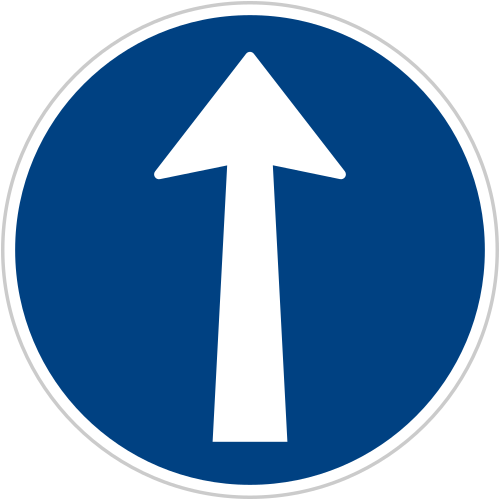
12. Driving straight ahead mandatory
This traffic sign indicates that driving straight ahead is mandatory. Traffic must continue straight ahead and may not turn left or right at the location to which the sign applies.
English • Traffic sign figure 17 • Mandatory direction. At the junction, drivers must continue in one of the directions shown by the arrows. A supplementary plate showing a bus or bicycle and arrows (figure 18/d) means that a scheduled-service bus or cyclist may continue in the directions shown on that vehicle's supplementary plate.
Magyar • 17. ábra • Kötelező haladási irány. Az útkereszteződésben a táblán lévő nyíl (nyilak) által jelzett irányban (irányok valamelyikében) kell továbbhaladni. A tábla alatt elhelyezett autóbuszt vagy kerékpárt és nyilat (nyilakat) mutató kiegészítő tábla (18/d. ábra) azt jelzi, hogy az menetrend szerint közlekedő autóbusz vagy a kerékpáros a jármű jelképét feltüntető kiegészítő táblán lévő nyíl (nyilak) által jelzett irányban haladhat tovább.
Sources
🔗 Commons.wikimedia.org
🔗 Njt.jog.gov.hu • 1/1975. (II. 5.) KPM–BM együttes rendelet (KRESZ) • 13(1)a • 17. ábra
Replacement SVG: Commons.wikimedia.org • Wikimedia Commons original • Kys5g • CC BY 4.0 • Original revision 2026-05-27. Wikimedia original unmodified.
Image via Commons.wikimedia.org
Kys5g • CC BY 4.0 • Source revision 2026-05-27. Wikimedia original unmodified.
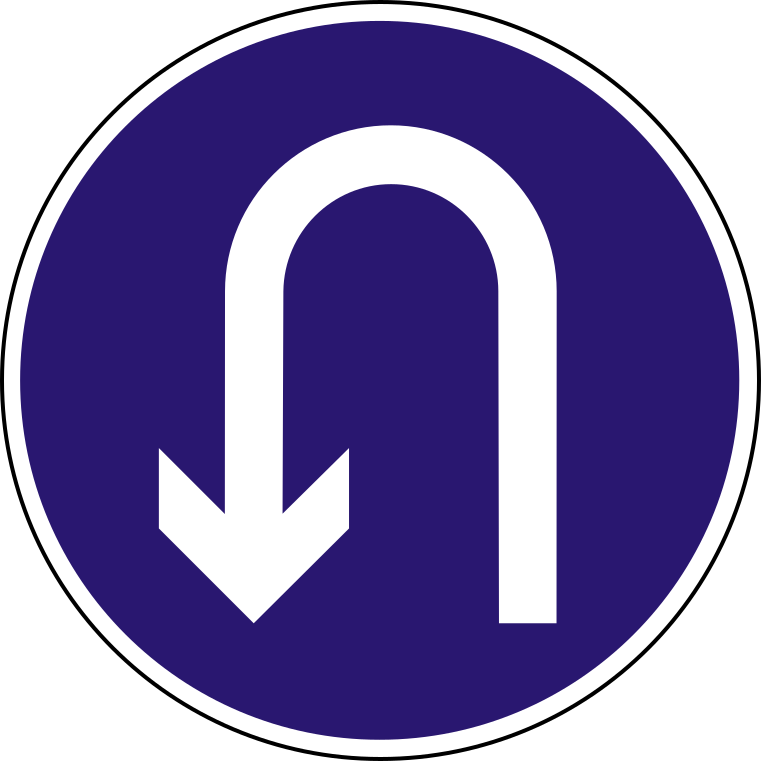
13. Turning around mandatory (U-turn)
This traffic sign indicates that a U-turn is mandatory. Traffic must turn around in the direction indicated at the location to which the sign applies.
English • Traffic sign figure 17–19 • Mandatory direction. At the junction, drivers must continue in one of the directions shown by the arrows. A supplementary plate showing a bus or bicycle and arrows (figure 18/d) means that a scheduled-service bus or cyclist may continue in the directions shown on that vehicle's supplementary plate. Direction arrows and layout diagrams are illustrative; the sign always depicts the actual situation.
Magyar • 17–19. ábra • Kötelező haladási irány. Az útkereszteződésben a táblán lévő nyíl (nyilak) által jelzett irányban (irányok valamelyikében) kell továbbhaladni. A tábla alatt elhelyezett autóbuszt vagy kerékpárt és nyilat (nyilakat) mutató kiegészítő tábla (18/d. ábra) azt jelzi, hogy az menetrend szerint közlekedő autóbusz vagy a kerékpáros a jármű jelképét feltüntető kiegészítő táblán lévő nyíl (nyilak) által jelzett irányban haladhat tovább. Az irányt jelző nyilak és az alaprajzi vázlatok példálózó jellegűek; a jelzés mindig a tényleges helyzetet tünteti fel.
Sources
🔗 Commons.wikimedia.org
🔗 Njt.jog.gov.hu • 1/1975. (II. 5.) KPM–BM együttes rendelet (KRESZ) • 13(1)a • 17–19. ábra
🔗 Njt.jog.gov.hu • KRESZ • 20/A. §
Image via Commons.wikimedia.org
Gigillo83 • Public domain • Source revision 2014-03-19. Wikimedia original unmodified.
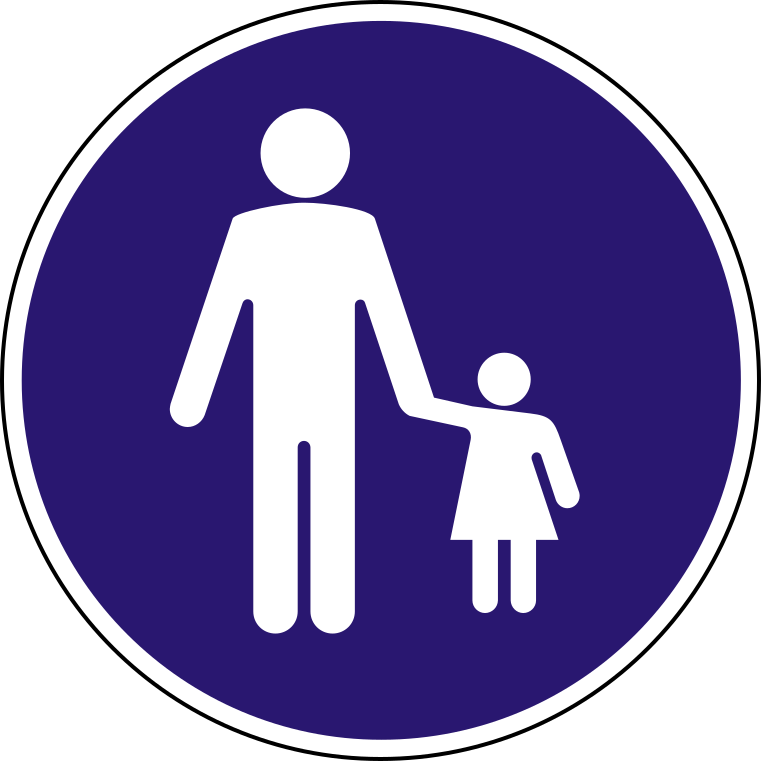
14. Mandatory path for pedestrians
This traffic sign indicates the start of a mandatory path for pedestrians. Pedestrians must use the designated path, while other road users may use it only where the applicable signs or local rules permit them to do so.
English • Traffic sign figure 26/b • Pedestrian path. The sign identifies a separate route for pedestrians. Vehicles are prohibited on the path.
Magyar • 26/b. ábra • Gyalogút. A tábla olyan önálló utat jelez, amely a gyalogosok közlekedésére szolgál; jármű közlekedése a gyalogúton tilos.
Sources
🔗 Commons.wikimedia.org
🔗 Njt.jog.gov.hu • 1/1975. (II. 5.) KPM–BM együttes rendelet (KRESZ) • 13(1)g • 26/b. ábra
Image via Commons.wikimedia.org
Gigillo83 • Public domain • Source revision 2014-03-19. Wikimedia original unmodified.
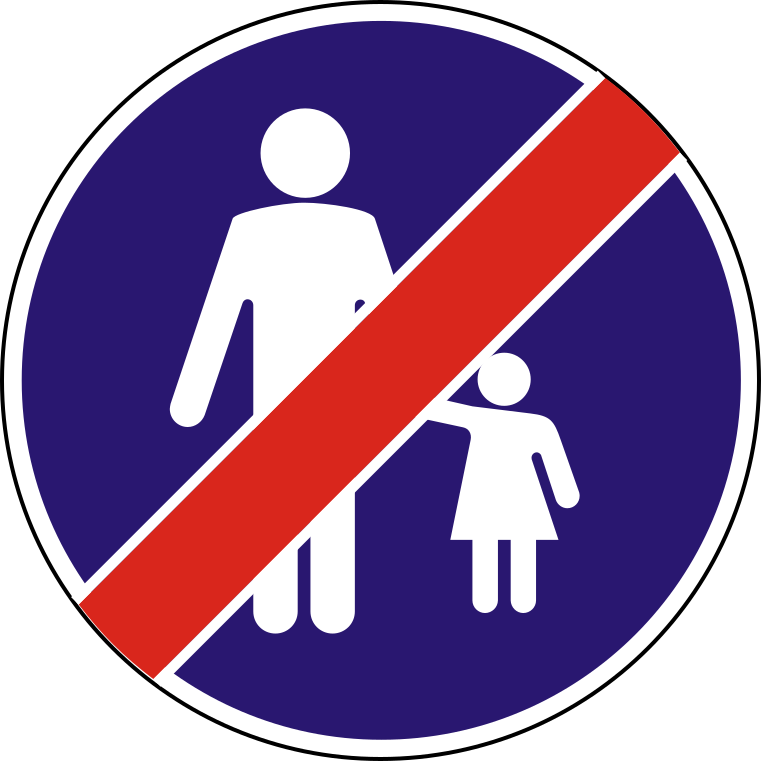
15. End of mandatory path for pedestrians
This traffic sign indicates the end of the mandatory path for pedestrians. The requirement associated with the designated path ends at this point. Pedestrians must continue according to the subsequent path or road layout and applicable local rules.
English • Traffic sign figure 26/c • End of the pedestrian path. The pedestrian path ends.
Magyar • 26/c. ábra • Gyalogút vége. A gyalogút vége.
Sources
🔗 Commons.wikimedia.org
🔗 Njt.jog.gov.hu • 1/1975. (II. 5.) KPM–BM együttes rendelet (KRESZ) • 13(1)h • 26/c. ábra
Image via Commons.wikimedia.org
Gigillo83 • Public domain • Source revision 2014-03-19. Wikimedia original unmodified.
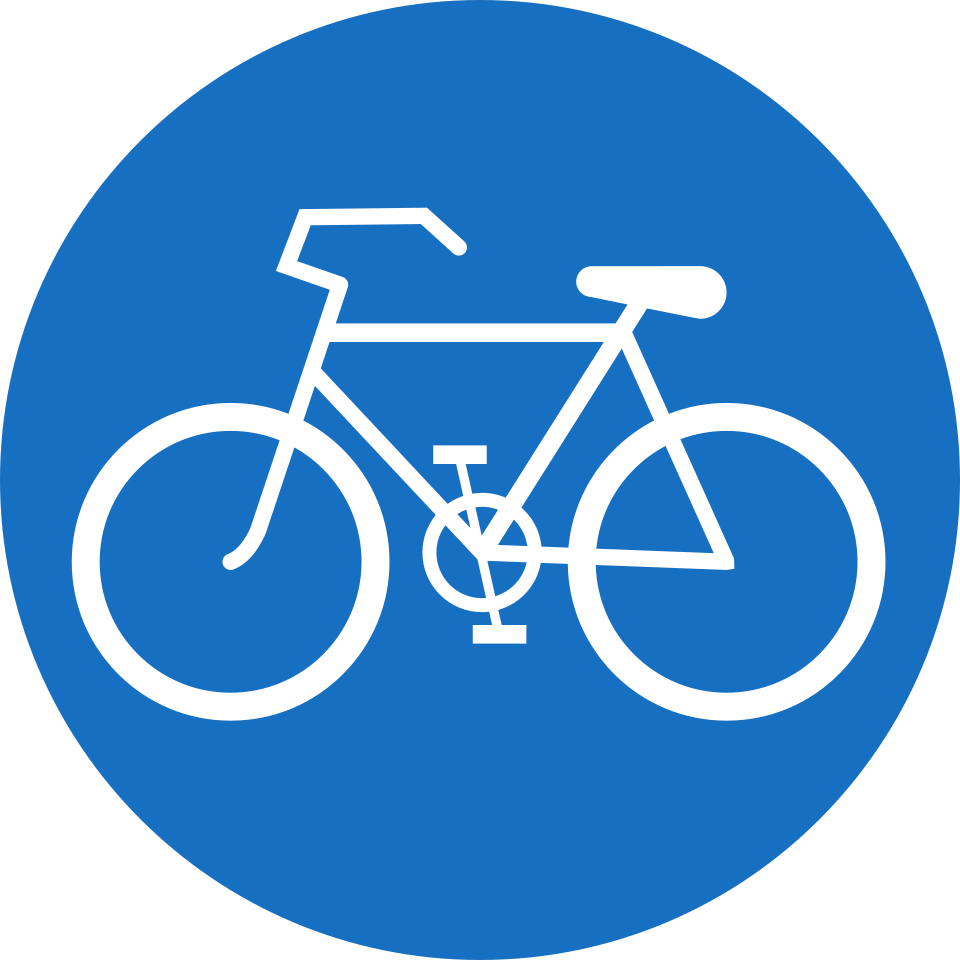
16. Mandatory path for cyclists
This traffic sign indicates a mandatory path for cyclists. Cyclists must use the designated path where the sign applies. Other road users may use the path only where the applicable signs or local rules permit them to do so.
English • Traffic sign figure 26 • Cycle path. The sign identifies a route designated for two-wheeled bicycles. Outside built-up areas, motorised invalid carriages, powered wheelchairs and two-wheeled mopeds may use it unless signs prohibit this. Other vehicles are prohibited.
Magyar • 26. ábra • Kerékpárút. A tábla a kétkerekű kerékpárok közlekedésére kijelölt utat jelez; a segédmotoros rokkantkocsi, a gépi meghajtású kerekes szék és a kétkerekű segédmotoros kerékpár lakott területen kívül a kerékpárutat igénybe veheti, ha ezt jelzőtábla nem tiltja. A kerékpárúton más jármű közlekedése tilos.
Sources
🔗 Commons.wikimedia.org
🔗 Njt.jog.gov.hu • 1/1975. (II. 5.) KPM–BM együttes rendelet (KRESZ) • 13(1)e • 26. ábra
Replacement SVG: Commons.wikimedia.org • Wikimedia Commons original • 3247 • Public domain • Original revision 2006-08-27. Wikimedia original unmodified.
Image via Commons.wikimedia.org
3247 • Public domain • Source revision 2006-08-27. Wikimedia original unmodified.
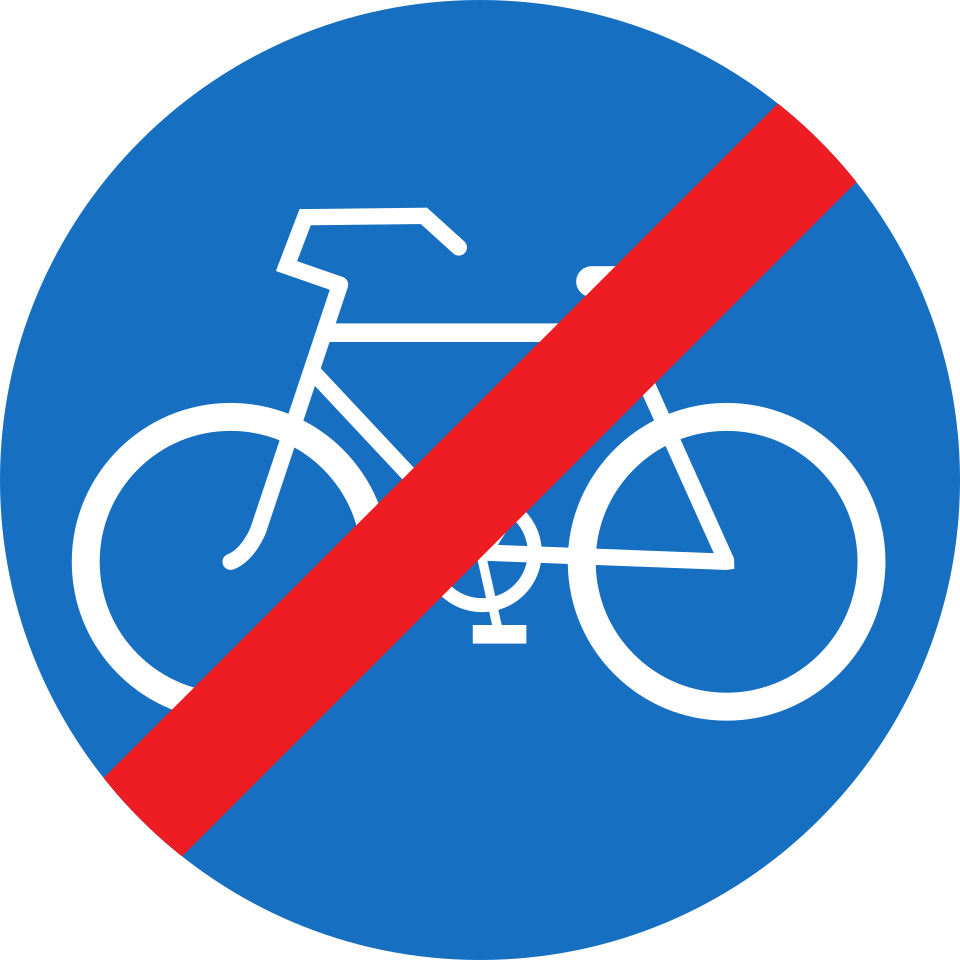
17. End of mandatory path for cyclists
This traffic sign indicates the end of the mandatory path for cyclists. The requirement associated with the designated path ends at this point. Cyclists must continue according to the road layout, other traffic signs and applicable local rules.
English • Traffic sign figure 26/a • End of the cycle path. The cycle path ends.
Magyar • 26/a. ábra • Kerékpárút vége. A kerékpárút vége.
Sources
🔗 Commons.wikimedia.org
🔗 Njt.jog.gov.hu • 1/1975. (II. 5.) KPM–BM együttes rendelet (KRESZ) • 13(1)f • 26/a. ábra
Replacement SVG: Commons.wikimedia.org • Wikimedia Commons original • 3247 • Public domain • Original revision 2006-08-27. Wikimedia original unmodified.
Image via Commons.wikimedia.org
3247 • Public domain • Source revision 2006-08-27. Wikimedia original unmodified.
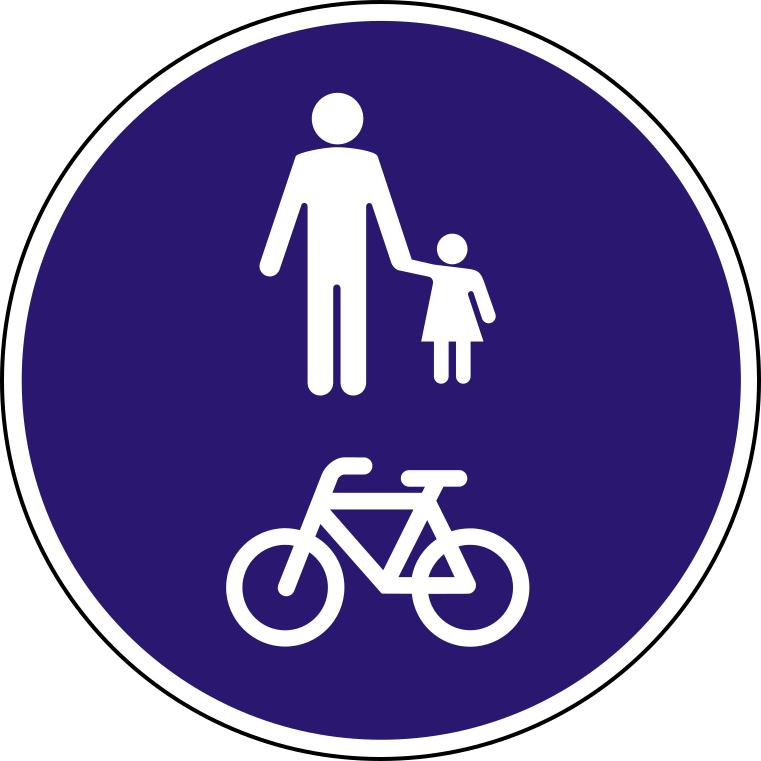
18. Mandatory shared pedestrian and cycle path
This traffic sign indicates a mandatory shared path for pedestrians and cyclists. Pedestrians and cyclists must use the same designated path rather than separate sections. They must share the space safely and follow the applicable local rules.
English • Traffic sign figure 26/d • Pedestrian and cycle path. A route designated for pedestrians, wheelchairs and two-wheeled bicycles. If pedestrian and cycle traffic are separated by road markings (figure 26/e), pedestrians and cyclists may use only the part designated for them.
Magyar • 26/d. ábra • Gyalog- és kerékpárút. A gyalogos, a kerekes szék és a kétkerekű kerékpár közlekedésére kijelölt út. Ha a gyalogos és a kerékpáros forgalmat burkolati jel választja el (26/e. ábra), a gyalogos és a kerékpáros csak az útnak a részére kijelölt részén közlekedhet.
Sources
🔗 Commons.wikimedia.org
🔗 Njt.jog.gov.hu • 1/1975. (II. 5.) KPM–BM együttes rendelet (KRESZ) • 13(1)i • 26/d. ábra
Image via Commons.wikimedia.org
Gigillo83 • Public domain • Source revision 2014-03-19. Wikimedia original unmodified.
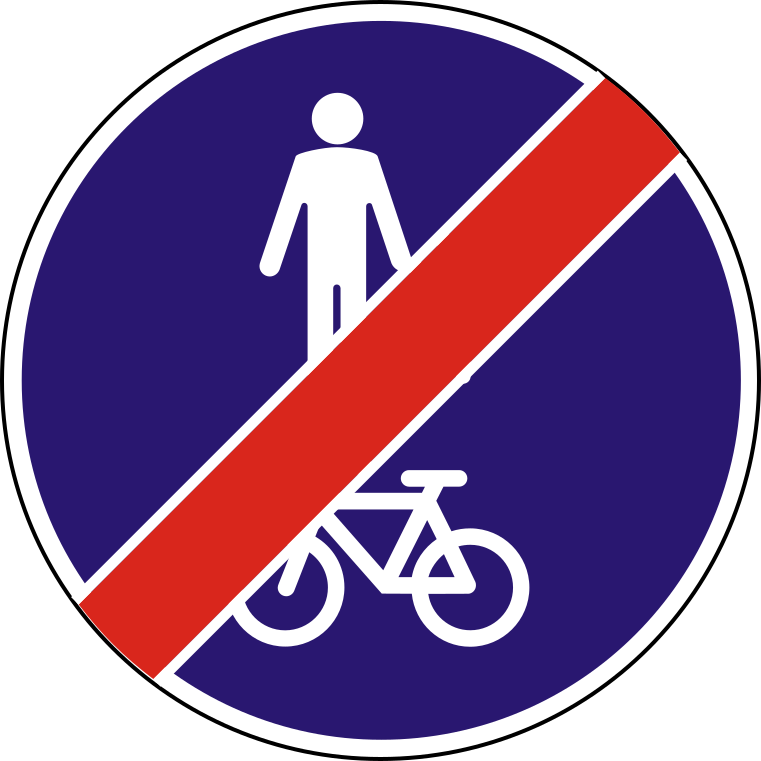
19. End of shared pedestrian and cycle path
This traffic sign indicates the end of the mandatory shared path for pedestrians and cyclists. The shared-path requirement ends at this point. Pedestrians and cyclists must continue according to the subsequent path or road layout and applicable local rules.
English • Traffic sign figure 26/f • End of the pedestrian and cycle path. The pedestrian and cycle path ends.
Magyar • 26/f. ábra • Gyalog- és kerékpárút vége. A gyalog- és kerékpárút vége.
Sources
🔗 Commons.wikimedia.org
🔗 Njt.jog.gov.hu • 1/1975. (II. 5.) KPM–BM együttes rendelet (KRESZ) • 13(1)j • 26/f. ábra
Image via Commons.wikimedia.org
Gigillo83 • Public domain • Source revision 2014-03-19. Wikimedia original unmodified.
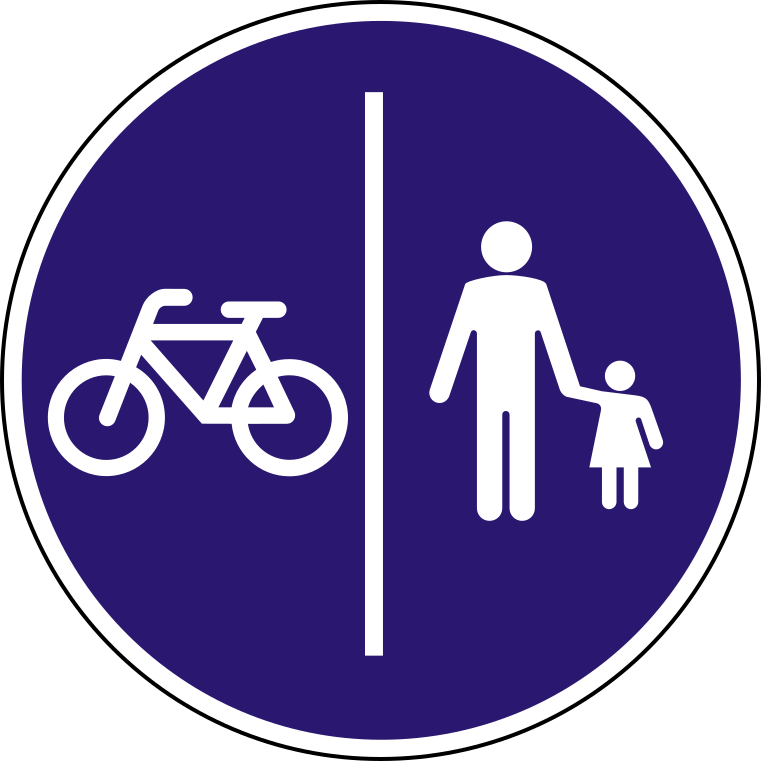
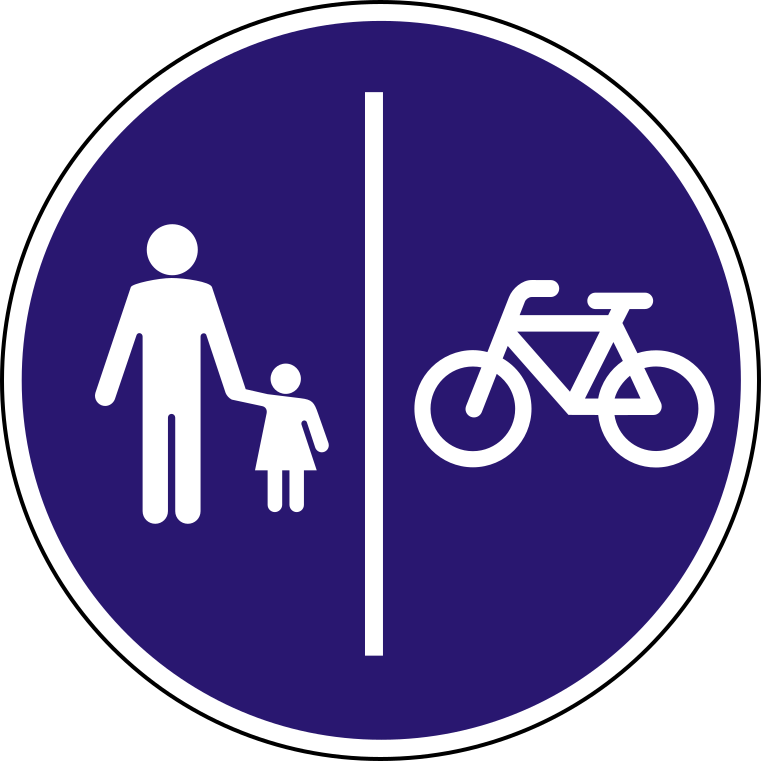
20. Mandatory divided pedestrian and cycle path
This traffic sign indicates a mandatory divided path for pedestrians and cyclists. Pedestrians and cyclists must use the section designated for them. Other road users may use the path only where the applicable signs or local rules permit them to do so.
English • Traffic sign figure 26/e • Pedestrian and cycle path. A route designated for pedestrians, wheelchairs and two-wheeled bicycles. If pedestrian and cycle traffic are separated by road markings (figure 26/e), pedestrians and cyclists may use only the part designated for them. Direction arrows and layout diagrams are illustrative; the sign always depicts the actual situation.
Magyar • 26/e. ábra • Gyalog- és kerékpárút. A gyalogos, a kerekes szék és a kétkerekű kerékpár közlekedésére kijelölt út. Ha a gyalogos és a kerékpáros forgalmat burkolati jel választja el (26/e. ábra), a gyalogos és a kerékpáros csak az útnak a részére kijelölt részén közlekedhet. Az irányt jelző nyilak és az alaprajzi vázlatok példálózó jellegűek; a jelzés mindig a tényleges helyzetet tünteti fel.
Sources
🔗 Commons.wikimedia.org
🔗 Njt.jog.gov.hu • 1/1975. (II. 5.) KPM–BM együttes rendelet (KRESZ) • 13(1)i • 26/e. ábra
🔗 Njt.jog.gov.hu • KRESZ • 20/A. §
Image via Commons.wikimedia.org
Gigillo83 • Public domain • Source revision 2014-03-19. Wikimedia original unmodified.
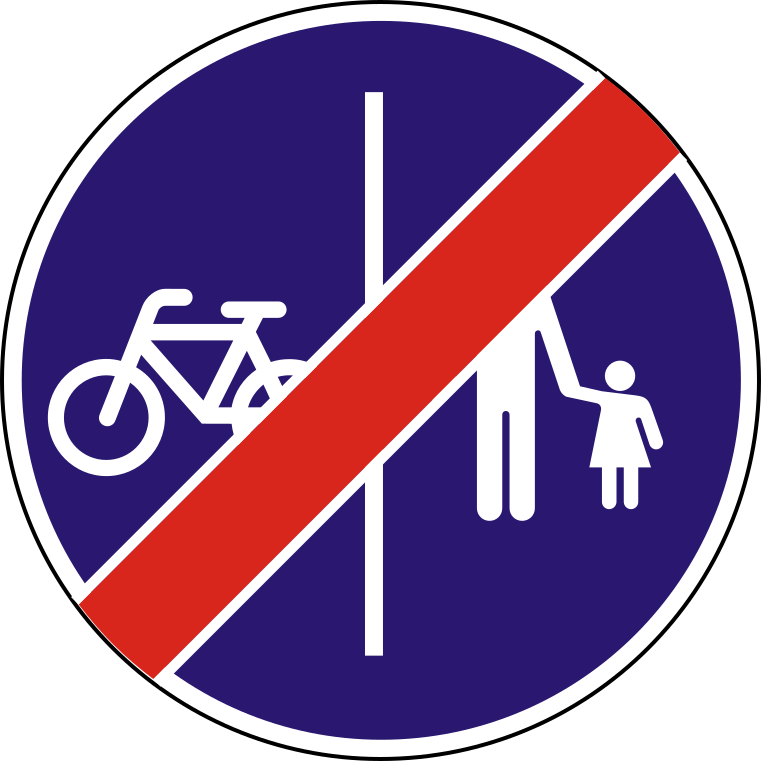
21. End of divided pedestrian and cycle path
This traffic sign indicates the end of the mandatory divided path for pedestrians and cyclists. The requirement to use the separately designated sections ends at this point. Continue according to the subsequent path or road layout and applicable local rules.
English • Traffic sign figure 26/g • End of the pedestrian and cycle path. The pedestrian and cycle path ends. Direction arrows and layout diagrams are illustrative; the sign always depicts the actual situation.
Magyar • 26/g. ábra • Gyalog- és kerékpárút vége. A gyalog- és kerékpárút vége. Az irányt jelző nyilak és az alaprajzi vázlatok példálózó jellegűek; a jelzés mindig a tényleges helyzetet tünteti fel.
Sources
🔗 Commons.wikimedia.org
🔗 Njt.jog.gov.hu • 1/1975. (II. 5.) KPM–BM együttes rendelet (KRESZ) • 13(1)j • 26/g. ábra
🔗 Njt.jog.gov.hu • KRESZ • 20/A. §
Image via Commons.wikimedia.org
Gigillo83 • Public domain • Source revision 2014-03-19. Wikimedia original unmodified.
22. Mandatory divided pedestrian and cycle path
This traffic sign indicates a mandatory divided path for pedestrians and cyclists. Pedestrians and cyclists must use the section designated for them. Other road users may use the path only where the applicable signs or local rules permit them to do so.
English • Traffic sign figure 26/e • Pedestrian and cycle path. A route designated for pedestrians, wheelchairs and two-wheeled bicycles. If pedestrian and cycle traffic are separated by road markings (figure 26/e), pedestrians and cyclists may use only the part designated for them.
Magyar • 26/e. ábra • Gyalog- és kerékpárút. A gyalogos, a kerekes szék és a kétkerekű kerékpár közlekedésére kijelölt út. Ha a gyalogos és a kerékpáros forgalmat burkolati jel választja el (26/e. ábra), a gyalogos és a kerékpáros csak az útnak a részére kijelölt részén közlekedhet.
Sources
🔗 Commons.wikimedia.org
🔗 Njt.jog.gov.hu • 1/1975. (II. 5.) KPM–BM együttes rendelet (KRESZ) • 13(1)i • 26/e. ábra
Image via Commons.wikimedia.org
Gigillo83 • Public domain • Source revision 2014-03-19. Wikimedia original unmodified.
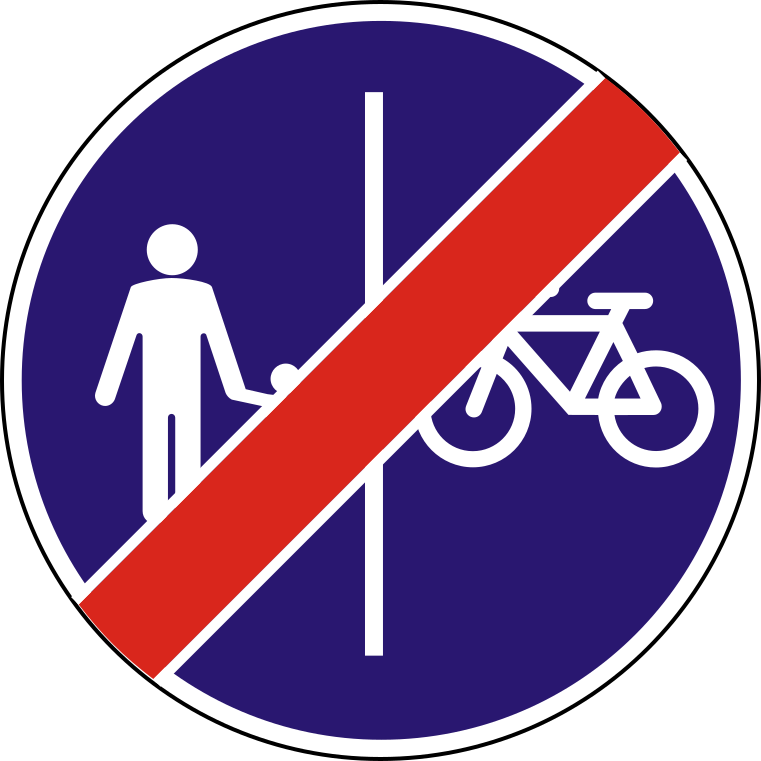
23. End of divided pedestrian and cycle path
This traffic sign indicates the end of the mandatory divided path for pedestrians and cyclists. The requirement to use the separately designated sections ends at this point. Continue according to the subsequent path or road layout and applicable local rules.
English • Traffic sign figure 26/g • End of the pedestrian and cycle path. The pedestrian and cycle path ends.
Magyar • 26/g. ábra • Gyalog- és kerékpárút vége. A gyalog- és kerékpárút vége.
Sources
🔗 Commons.wikimedia.org
🔗 Njt.jog.gov.hu • 1/1975. (II. 5.) KPM–BM együttes rendelet (KRESZ) • 13(1)j • 26/g. ábra
Image via Commons.wikimedia.org
Gigillo83 • Public domain • Source revision 2014-03-19. Wikimedia original unmodified.
24. Snow chains mandatory
This traffic sign indicates that snow chains are mandatory. Vehicles covered by the sign must use snow chains from this point as required by the applicable rules. Follow any supplementary signs or local instructions specifying the affected vehicles, wheels or conditions.
English • Traffic sign figure 26/l • Snow chains required. Vehicles using the road, including motor vehicles, agricultural tractors and slow-moving vehicles, must have snow chains fitted to the tyres on at least one driven axle.
Magyar • 26/l. ábra • Hólánc használata kötelező. Az úton közlekedő járműnek (gépkocsi, mezőgazdasági vontató, lassú jármű) legalább egy hajtott tengelyén a gumiabroncsokat hólánccal kell felszerelni.
Sources
🔗 Commons.wikimedia.org
🔗 Njt.jog.gov.hu • 1/1975. (II. 5.) KPM–BM együttes rendelet (KRESZ) • 13(1)k • 26/l. ábra
Image via Commons.wikimedia.org
Gigillo83 • Public domain • Source revision 2014-03-19. Wikimedia original unmodified.
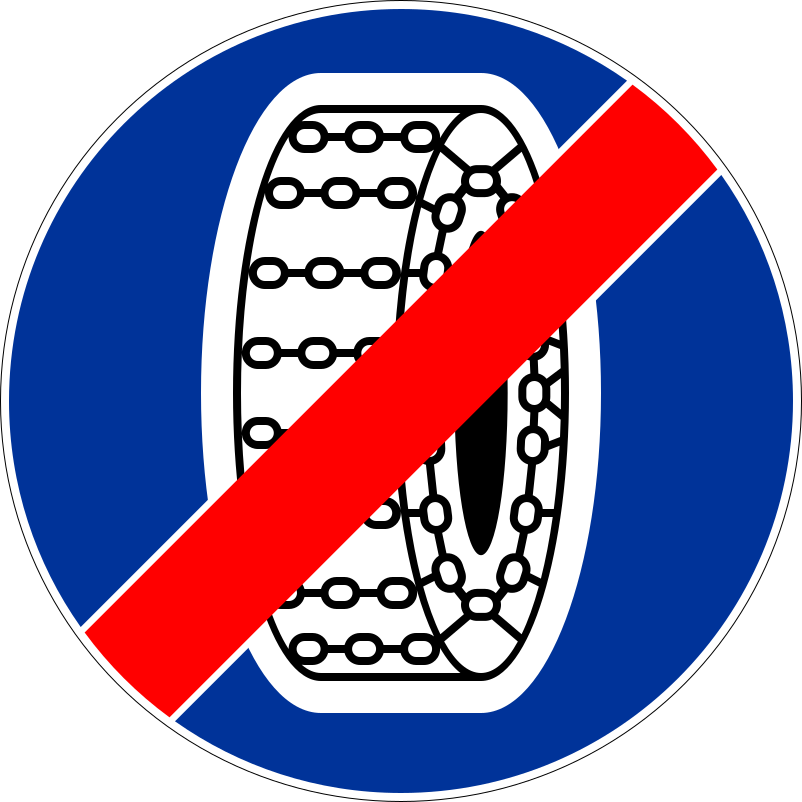
25. End of the snow-chain requirement
This traffic sign indicates the end of the snow-chain requirement. The requirement imposed by the preceding snow-chain sign ends at this point. Other winter-equipment requirements may still apply under the applicable local rules or road conditions.
English • Traffic sign figure 26/m • End of the snow-chain requirement. The effect of the sign requiring snow chains ends.
Magyar • 26/m. ábra • Hólánc használata kötelező vége. A hólánc használatát előíró jelzőtábla hatálya véget ér.
Sources
🔗 Commons.wikimedia.org
🔗 Njt.jog.gov.hu • 1/1975. (II. 5.) KPM–BM együttes rendelet (KRESZ) • 13(1)k/1 • 26/m. ábra
Replacement SVG: Commons.wikimedia.org • Wikimedia Commons original • Harry-C • CC BY 3.0 • Original revision 2025-09-27. Wikimedia original unmodified.
Image via Commons.wikimedia.org
Harry-C • CC BY 3.0 • Source revision 2025-09-27. Wikimedia original unmodified.
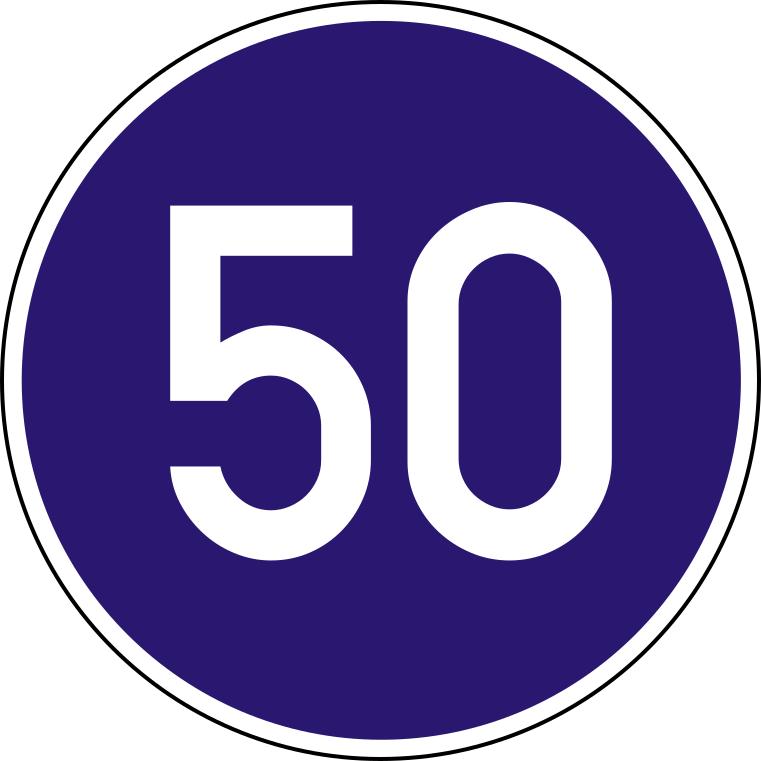
26. Start of a minimum speed
This traffic sign indicates the start of a minimum speed. Road users covered by the sign must travel at or above the indicated speed when conditions allow. Driving more slowly may still be necessary because of traffic, weather, road conditions or another safety-related reason.
English • Traffic sign figure 24 • Mandatory minimum speed. Drivers must travel at least at the speed shown, unless that speed would endanger people or property owing to road, traffic, weather or visibility conditions. Only the End of the mandatory minimum speed sign (figure 25) cancels this requirement.
Magyar • 24. ábra • Kötelező legkisebb sebesség. Az úton legalább a táblán megjelölt sebességgel kell haladni – kivéve, ha ez a sebesség az út-, a forgalmi, az időjárási vagy a látási viszonyok miatt a személy- és vagyonbiztonságot veszélyeztetné; a jelzőtábla hatályát csak a „Kötelező legkisebb sebesség vége” tábla (25. ábra) oldja fel.
Sources
🔗 Commons.wikimedia.org
🔗 Njt.jog.gov.hu • 1/1975. (II. 5.) KPM–BM együttes rendelet (KRESZ) • 13(1)d • 24. ábra
Image via Commons.wikimedia.org
Gigillo83 • Public domain • Source revision 2014-03-19. Wikimedia original unmodified.
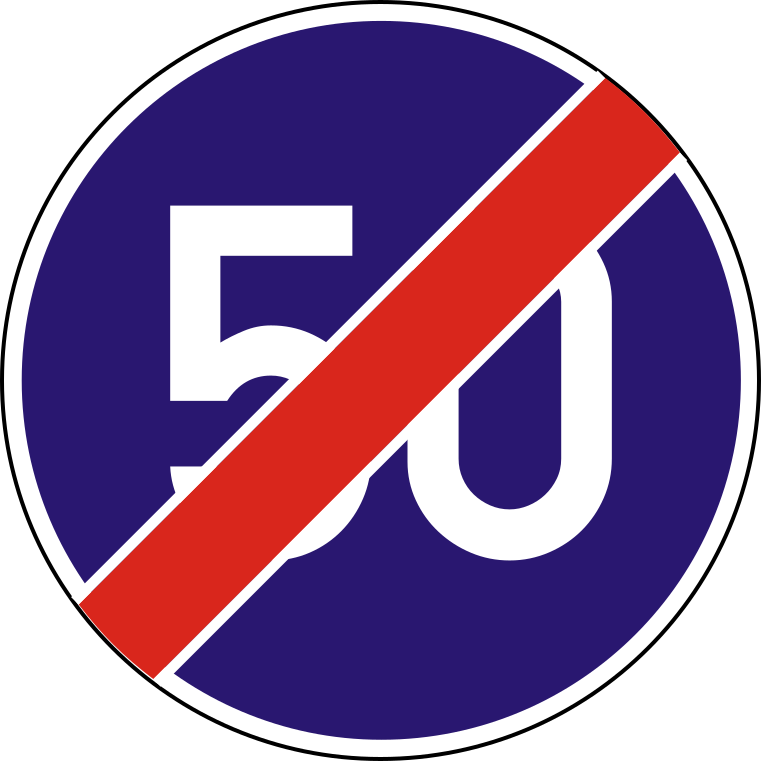
27. End of the minimum speed
This traffic sign indicates the end of the minimum speed. The previously indicated minimum speed no longer applies beyond this point. Continue to follow any other posted speed requirements and the applicable traffic rules.
English • Traffic sign figure 25 • End of the mandatory minimum speed. The effect of the sign imposing a minimum speed ends.
Magyar • 25. ábra • Kötelező legkisebb sebesség vége. A kötelező legkisebb sebességet előíró jelzőtábla hatálya véget ér.
Sources
🔗 Commons.wikimedia.org
🔗 Njt.jog.gov.hu • 1/1975. (II. 5.) KPM–BM együttes rendelet (KRESZ) • 13(1)d • 25. ábra
Image via Commons.wikimedia.org
Gigillo83 • Public domain • Source revision 2014-03-19. Wikimedia original unmodified.
