


Speed bumpNew Zealand
 Traffic rules
 New Zealand
8. Speed bump
A speed bump is a raised traffic-calming device placed across all or part of a road to make drivers reduce their speed. It is commonly used near homes, schools, crossings, parking areas and other places where low vehicle speeds are important.
Speed bumps vary in shape, height and legal status. Drivers should approach them at a low, controlled speed and follow any warning signs or speed limits that apply.
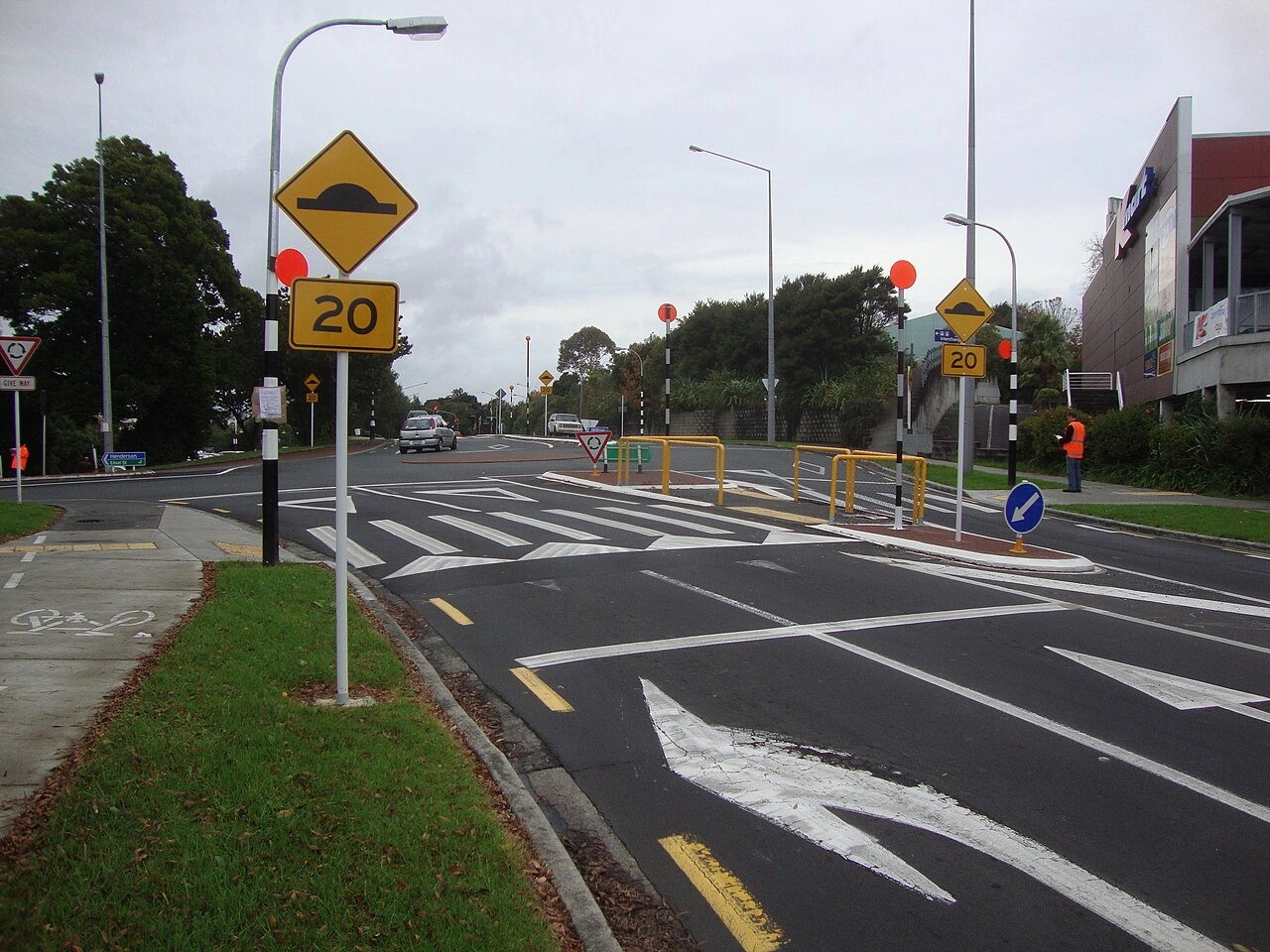
Wikimedia.org • Schwede66 • CC BY-SA
How should I recognise and approach a speed bump in New Zealand?
NZ Transport Agency guidance treats speed humps and raised platforms as traffic-calming measures. A raised platform may support a crossing, but the crossing’s signs and markings must be identified separately.
🔗 nzta.govt.nz • New Zealand, NZTA official Road Code — speed-bump
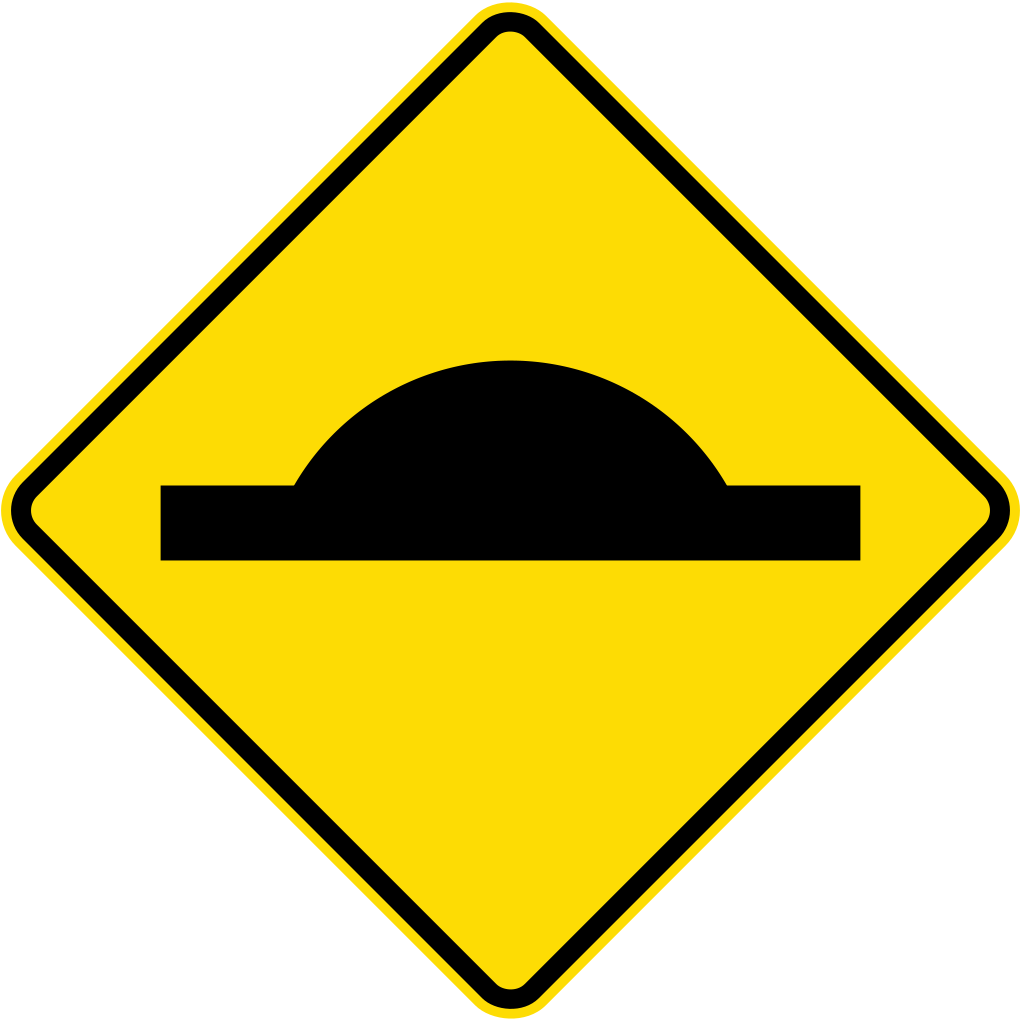 Warning for a speed bump.
English • W14-4 • Hump. A hump in the road is ahead. Slow down before reaching it.
Sources
🔗 Commons.wikimedia.org
🔗 Nzta.govt.nz • NZTA sign specifications • W14-4
Image via Commons.wikimedia.org
New Zealand Transport Agency • NZTA-Sign-Spec • Source revision 2024-09-22. Wikimedia original unmodified.
Which speed should I use at a raised device in New Zealand?
Follow the applicable limit and any advisory information, slowing further when needed for the platform or other road users. A design or advisory speed must not be confused with the road’s legal speed limit.
🔗 nzta.govt.nz • New Zealand, NZTA official Road Code — speed-bump
Does a raised road surface give pedestrians priority in New Zealand?
A raised device alone does not identify pedestrian priority. If it incorporates a crossing, apply the crossing’s controls and the national rules. At a zebra crossing, give way to pedestrians waiting to cross or already crossing. If a raised traffic island divides the crossing, apply the rule to your half. Never overtake a vehicle stopped at the crossing.
🔗 nzta.govt.nz • New Zealand, NZTA official Road Code — speed-bump


