


AustraliaAustralia
 Traffic rules
 Australia
1. Australia
Australia occupies an entire continent between the Indian and Pacific oceans, and traffic drives on the left. Driving environments range from large coastal cities and multi-lane freeways to remote Outback highways where fuel, services and settlements can be hundreds of kilometres apart. Long-distance drivers may encounter road trains stretching to 60 metres, unsealed roads and wildlife, particularly around dawn and dusk, making journey planning especially important away from major population centres.
Road rules are legally set by Australia's states and territories, although most are based closely on the national Australian Road Rules model. This creates some important regional differences in speed limits, licensing and novice-driver restrictions. Australia has no road vignette; toll roads are electronically charged and are concentrated around Sydney, Melbourne and southeast Queensland. Road signs use English and standardised symbols. Visitors can generally use a valid overseas licence, but licensing and translation requirements depend on the state or territory in which they are driving.
AI-generated by Rijbewijs-online.be • WCIT • CC BY-SA
What is the alcohol limit for drivers in Australia?
For most fully licensed drivers, it is illegal to drive with a BAC of 0.05% or higher. Learner and provisional drivers must generally have zero BAC, while lower or zero limits can also apply to certain professional and heavy-vehicle drivers.
🔗 nsw.gov.au • NSW Government, Road User Handbook, Alcohol limits, including learners and provisional licence holders; 🔗 australia.com • Tourism Australia, road safety and driving laws, Australian driving laws
What speed limits apply to passenger cars in Australia?
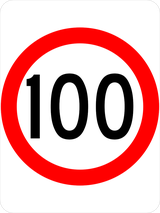
There is no single nationwide default. For example, New South Wales generally uses 50 km/h in built-up areas and 100 km/h elsewhere where no different limit is signed. In the Northern Territory, the corresponding defaults are generally 60 km/h and 110 km/h, although towns can have a lower gazetted default and some major highways have higher posted limits. Follow the signs and the rules of the state or territory where you are driving.
🔗 nsw.gov.au • NSW Government, Road User Handbook, NSW default limits; 🔗 nt.gov.au • Northern Territory Government, speed limits, Northern Territory default and posted limits
Are seat belts compulsory in Australia?
Yes. Drivers and passengers must use an approved seat belt where one is provided, subject to limited legal exemptions.
🔗 australia.com • Tourism Australia, road safety and driving laws, Australian driving laws
Can you use a mobile phone while driving in Australia?
Using a handheld mobile phone while driving is prohibited. Rules for mounted devices, hands-free functions and novice drivers vary between states and territories, and learner or provisional drivers often face much stricter restrictions.
🔗 australia.com • Tourism Australia, road safety and driving laws, Australian driving laws
When must children use a child seat in Australia?
Children under seven must use a suitable child restraint. Rules are administered by the states and territories. For example, New South Wales specifies different approved restraints for babies under six months, children from six months to under four, and children from four to under seven.
🔗 australia.com • Tourism Australia, road safety and driving laws, 🔗 nsw.gov.au • NSW Government, Road User Handbook
Can a visitor drive in Australia with an overseas licence?
Check the state or territory’s visitor rules. In New South Wales, an eligible tourist or temporary overseas visitor may use a current overseas licence for up to six months, subject to the applicable conditions. Carry the licence; if it is not in English, also carry an English translation or an International Driving Permit. Longer stays and changes in residence status can require a NSW licence.
🔗 nsw.gov.au • NSW Government, driving with an overseas licence

