


Traffic rulesAustralia
 Traffic rules
 Australia
1. Australia
Australia occupies an entire continent between the Indian and Pacific oceans, and traffic drives on the left. Driving environments range from large coastal cities and multi-lane freeways to remote Outback highways where fuel, services and settlements can be hundreds of kilometres apart. Long-distance drivers may encounter road trains stretching to 60 metres, unsealed roads and wildlife, particularly around dawn and dusk, making journey planning especially important away from major population centres.
Road rules are legally set by Australia's states and territories, although most are based closely on the national Australian Road Rules model. This creates some important regional differences in speed limits, licensing and novice-driver restrictions. Australia has no road vignette; toll roads are electronically charged and are concentrated around Sydney, Melbourne and southeast Queensland. Road signs use English and standardised symbols. Visitors can generally use a valid overseas licence, but licensing and translation requirements depend on the state or territory in which they are driving.
AI-generated by Rijbewijs-online.be • WCIT • CC BY-SA
What is the alcohol limit for drivers in Australia?
For most fully licensed drivers, it is illegal to drive with a BAC of 0.05% or higher. Learner and provisional drivers must generally have zero BAC, while lower or zero limits can also apply to certain professional and heavy-vehicle drivers.
🔗 nsw.gov.au • NSW Government, Road User Handbook, Alcohol limits, including learners and provisional licence holders; 🔗 australia.com • Tourism Australia, road safety and driving laws, Australian driving laws
What speed limits apply to passenger cars in Australia?
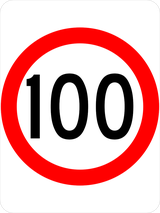
There is no single nationwide default. For example, New South Wales generally uses 50 km/h in built-up areas and 100 km/h elsewhere where no different limit is signed. In the Northern Territory, the corresponding defaults are generally 60 km/h and 110 km/h, although towns can have a lower gazetted default and some major highways have higher posted limits. Follow the signs and the rules of the state or territory where you are driving.
🔗 nsw.gov.au • NSW Government, Road User Handbook, NSW default limits; 🔗 nt.gov.au • Northern Territory Government, speed limits, Northern Territory default and posted limits
Are seat belts compulsory in Australia?
Yes. Drivers and passengers must use an approved seat belt where one is provided, subject to limited legal exemptions.
🔗 australia.com • Tourism Australia, road safety and driving laws, Australian driving laws
Can you use a mobile phone while driving in Australia?
Using a handheld mobile phone while driving is prohibited. Rules for mounted devices, hands-free functions and novice drivers vary between states and territories, and learner or provisional drivers often face much stricter restrictions.
🔗 australia.com • Tourism Australia, road safety and driving laws, Australian driving laws
When must children use a child seat in Australia?
Children under seven must use a suitable child restraint. Rules are administered by the states and territories. For example, New South Wales specifies different approved restraints for babies under six months, children from six months to under four, and children from four to under seven.
🔗 australia.com • Tourism Australia, road safety and driving laws, 🔗 nsw.gov.au • NSW Government, Road User Handbook
Can a visitor drive in Australia with an overseas licence?
Check the state or territory’s visitor rules. In New South Wales, an eligible tourist or temporary overseas visitor may use a current overseas licence for up to six months, subject to the applicable conditions. Carry the licence; if it is not in English, also carry an English translation or an International Driving Permit. Longer stays and changes in residence status can require a NSW licence.
🔗 nsw.gov.au • NSW Government, driving with an overseas licence

2. Motorway
A motorway is a road specially designed and signposted for motor traffic. Motorways normally have separate carriageways for opposing traffic, controlled access through designated entrances and exits, no direct access to neighbouring properties, and no level crossings with other roads, railways or paths.
Special traffic rules apply on motorways. The permitted road users, speed limits, lane rules, tolls and emergency procedures vary between countries, so drivers must follow the local traffic signs and regulations.
Wikimedia.org • Marcus Wong • CC BY-SA
How do people refer to a motorway in Australia?
The New South Wales handbook uses motorway, also referred to as a freeway or expressway, for a road usually having high speeds and more than one lane in each direction. Use the applicable state or territory rules and actual signs.
🔗 nsw.gov.au • Australia, NSW official road-user guidance — motorway
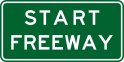 Start of a motorway.
English • Model rule 177 • freeway sign • Start of freeway. The freeway begins here. Follow freeway traffic and stopping restrictions, and any signs restricting entry by particular road users. State and territory rules and exceptions apply.
Sources
🔗 Commons.wikimedia.org
🔗 Pcc.gov.au • Australian Road Rules • model law • rule177; Schedule2p308
🔗 Legislation.qld.gov.au • Queensland Road Rules • local legislation example
SVG source: Government of Queensland • Public domain • Original revision 2012-10-09. Wikimedia original unmodified.
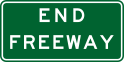 End of the motorway.
English • Model rules 97 and 177 • end freeway sign • End of freeway. The freeway ends here. Expect changing road conditions and continue to obey the applicable speed limit and other signs. State and territory rules and exceptions apply.
Sources
🔗 Commons.wikimedia.org
🔗 Pcc.gov.au • Australian Road Rules • model law • rules97,177; Schedule2p305
🔗 Legislation.qld.gov.au • Queensland Road Rules • local legislation example
SVG source: Government of Queensland • Public domain • Original revision 2012-10-09. Wikimedia original unmodified.
What speed limit applies to cars on a motorway in Australia?
There is no single nationwide motorway maximum. Follow the posted limit and any lower limit for your vehicle or licence class in the state or territory where you are driving. Do not import another state’s default.
🔗 nsw.gov.au • Australia, NSW official road-user guidance — motorway
How should I join a motorway in Australia?
Under the New South Wales handbook, when your entry lane ends and you cross a broken line to join a motorway lane, give way to vehicles already in that lane. Slow down, check your mirrors and blind spots, and look for a suitable gap. Obey any ramp-metering signals. Check the applicable rules in other states or territories.
🔗 nsw.gov.au • Australia, NSW official road-user guidance — motorway
Can I stop on an Australian motorway for a break?
Do not stop on a New South Wales motorway or freeway for an ordinary break. Use a designated rest or service area. NSW guidance distinguishes emergencies, such as avoiding a crash or a breakdown, when you should move into the emergency stopping lane if necessary. Check the corresponding rule in other states and territories.
🔗 nsw.gov.au • Australia, NSW official road-user guidance — motorway
3. Residential area
A residential area is a street or group of streets where housing and access to local properties are the main functions. Drivers should expect pedestrians, cyclists, children, parked vehicles and vehicles entering or leaving driveways.
Some countries identify particular residential areas with traffic signs and apply special low-speed and residential-area rules. The speed limit, pedestrian rights, parking rules and permitted road users therefore depend on local signs and regulations.
Wikimedia.org • Bidgee • CC BY-SA
How do people refer to a residential area in Australia?
In New South Wales, a shared zone is a specially designated area where pedestrians, bicycles and other vehicles share the road. It has shared-zone and end signs. Ordinary streets beside houses are different; check the relevant state or territory’s rules and signs.
🔗 nsw.gov.au • Australia, NSW official road-user guidance — residential-area
🔗 nsw.gov.au • Transport for NSW — Road User Handbook, relevant topic
What speed limit applies in a residential area in Australia?
In New South Wales, a shared zone normally has a 10 km/h limit, while an ordinary built-up road without another speed-limit sign normally has a 50 km/h default. Check the signs and the rules of the state or territory where you are driving.
🔗 nsw.gov.au • Australia, NSW official road-user guidance — residential-area
🔗 nsw.gov.au • Transport for NSW — Road User Handbook, relevant topic
What rights do pedestrians have in a signposted residential area in Australia?
In a New South Wales shared zone, drivers must give way to pedestrians, including slowing down and stopping if necessary. Do not infer this shared-zone rule solely from houses beside an ordinary street. Check the relevant rules elsewhere in Australia.
🔗 nsw.gov.au • Australia, NSW official road-user guidance — residential-area
🔗 nsw.gov.au • Transport for NSW — Road User Handbook, relevant topic
4. Speed limit
A speed limit is the maximum legal speed permitted on a road, lane or within a designated area. It may be established by general traffic law or indicated by fixed, variable or temporary traffic signs.
A speed limit is a maximum, not a target speed. Drivers must travel more slowly whenever traffic, visibility, weather, road conditions, vulnerable road users or the condition of the vehicle make the maximum permitted speed unsafe.
Wikimedia.org • Shinjiman • CC0
Which general speed limits should car drivers know in Australia?
Australia has state and territory rules. For example, unsigned defaults in New South Wales are generally 50 km/h in built-up areas and 100 km/h elsewhere. In the Northern Territory they are generally 60 and 110 km/h, with lower gazetted town defaults possible. Follow the jurisdiction’s rules and any different signed limit.
🔗 nsw.gov.au • Australia, NSW official road-user guidance — speed-limit
🔗 nt.gov.au • Australia, official supporting guidance — speed-limit
🔗 nsw.gov.au • Transport for NSW — Road User Handbook, relevant topic
Can I carry a remembered Australian state default into another state or territory?
No. Defaults and special speed rules depend on the jurisdiction. The New South Wales and Northern Territory examples already differ. On crossing a border, use the destination’s road rules and actual signs rather than assuming one nationwide default.
🔗 nsw.gov.au • Australia, NSW official road-user guidance — speed-limit
🔗 nt.gov.au • Australia, official supporting guidance — speed-limit
🔗 nsw.gov.au • Transport for NSW — Road User Handbook, relevant topic
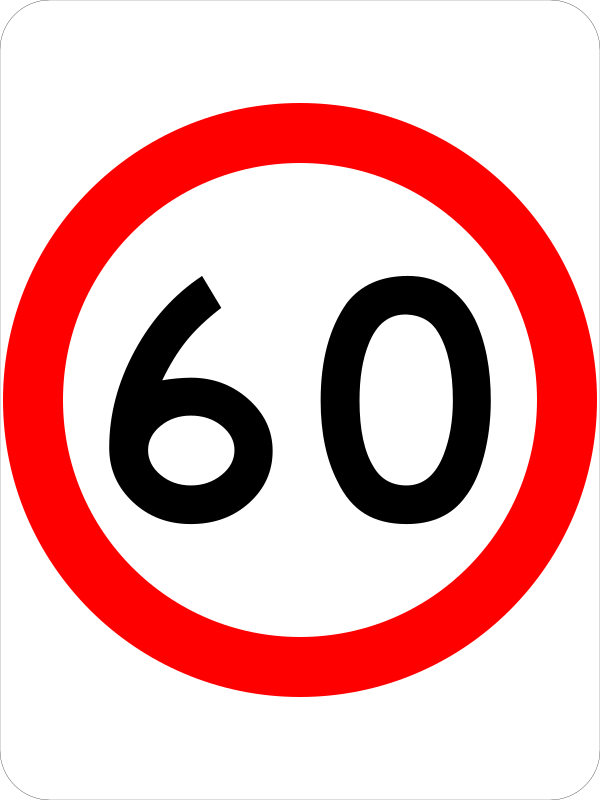 Start of a speed limit.
English • Model rules 20–21 • speed-limit sign • Maximum speed 60 km/h. Do not exceed 60 km/h where this sign applies. Drive more slowly when road, traffic or weather conditions require it. State and territory rules and exceptions apply.
Sources
🔗 Commons.wikimedia.org
🔗 Pcc.gov.au • Australian Road Rules • model law • rules20–21; Schedule2p316
🔗 Legislation.qld.gov.au • Queensland Road Rules • local legislation example
SVG source: Standards Australia • Public domain • Original revision 2025-09-12. Wikimedia original unmodified.
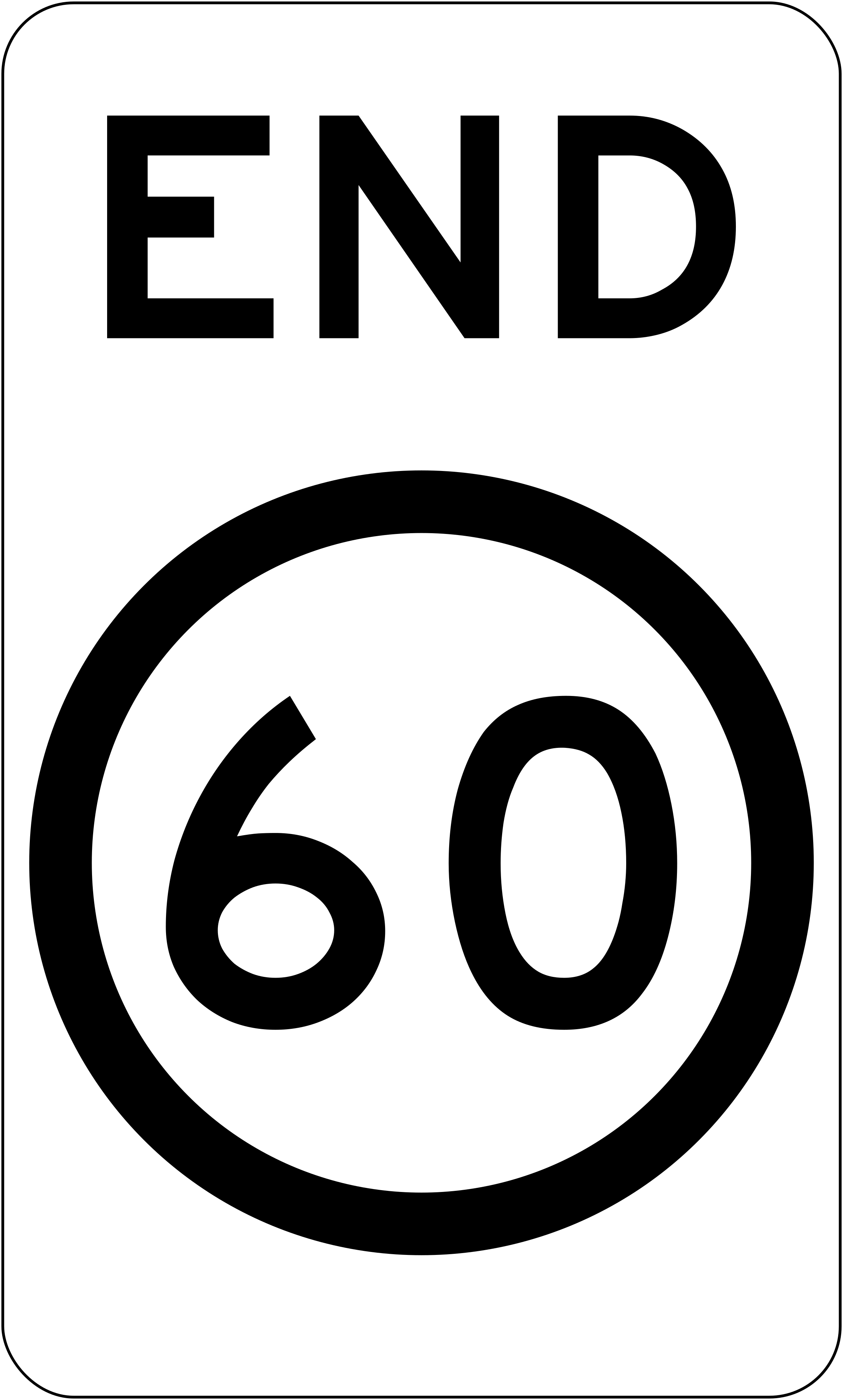 End of the speed limit.
English • Model rule 21 • end speed-limit sign • End of 60 km/h limit. The signed 60 km/h limit ends here. Follow any other applicable speed restriction or the default limit under the local rules. State and territory rules and exceptions apply.
Sources
🔗 Commons.wikimedia.org
🔗 Pcc.gov.au • Australian Road Rules • model law • rule21; Schedule2p307
🔗 Legislation.qld.gov.au • Queensland Road Rules • local legislation example
SVG source: Standards Australia • Public domain • Original revision 2020-03-21. Wikimedia original unmodified.
What happens when a New South Wales school-zone sign has operating times?
In New South Wales, the school-zone maximum applies on school days during the times shown on the sign. School days are published by the NSW Department of Education. Do not infer whether the limit applies from whether children are visible. Outside those periods, follow the other limit governing the road.
🔗 nsw.gov.au • Australia, NSW official road-user guidance — speed-limit
🔗 nt.gov.au • Australia, official supporting guidance — speed-limit
🔗 nsw.gov.au • Transport for NSW — Road User Handbook, relevant topic
5. Advisory speed
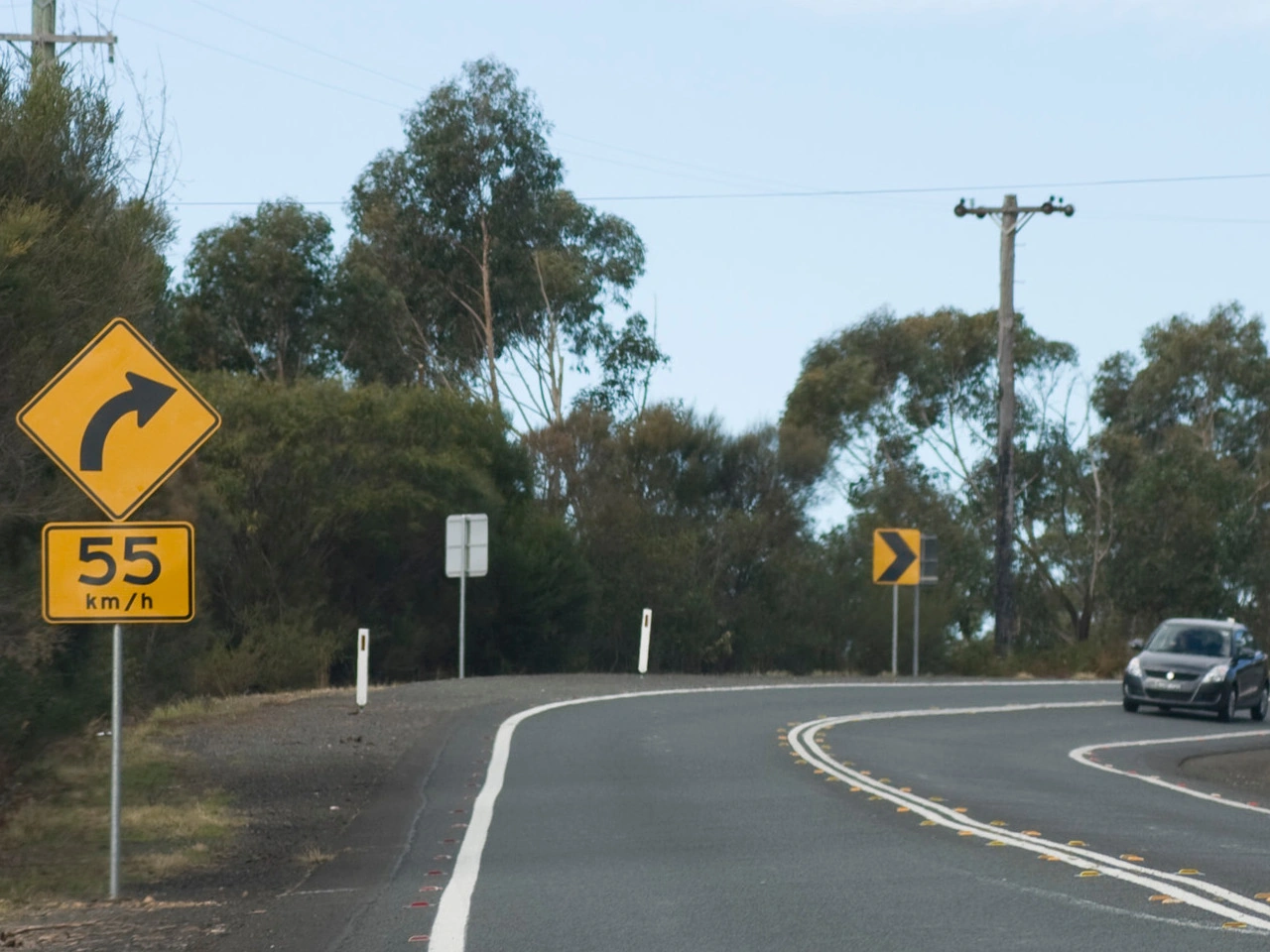
An advisory speed is a recommended speed for a particular road section or hazard rather than a legally imposed maximum speed. It may be shown near bends, junctions, steep gradients, roadworks or other locations where a lower speed can help drivers negotiate the road safely.
Drivers should treat an advisory speed as guidance for safe driving conditions and should travel even more slowly when weather, visibility, traffic or road conditions require it. A separate legally binding speed limit must still be obeyed.
Wikimedia.org • Maksym Kozlenko • CC BY-SA
Are Australian curve advisory speeds the same as legal maxima?
No. For example, the New South Wales standard treats advisory signs for curves, bends, humps and dips as warnings rather than enforceable numerical speed limits. Binding limits and safe-driving duties still apply. Use the rules and signs of the actual state or territory.
🔗 standards.transport.nsw.gov.au • Australia, NSW official road-user guidance — advisory-speed
🔗 nsw.gov.au • Australia, official supporting guidance — advisory-speed
🔗 nsw.gov.au • Transport for NSW — Road User Handbook, relevant topic
Why do New South Wales curve advisory numbers often end in five?
The NSW Speed Zoning Standard recommends that curve advisory speeds end in 5 and use 10 km/h intervals. These are warnings for negotiating a curve in good road and weather conditions, rather than enforceable maximum-speed signs. Read the sign’s form and meaning and obey any lower legal restriction; the final digit alone is not a complete test.
🔗 standards.transport.nsw.gov.au • Australia, NSW official road-user guidance — advisory-speed
🔗 nsw.gov.au • Australia, official supporting guidance — advisory-speed
🔗 nsw.gov.au • Transport for NSW — Road User Handbook, relevant topic
Is an Australian curve’s advisory speed guaranteed to be safe in rain?
No. NSW guidance describes a speed for negotiating the curve in good road and weather conditions. Rain, reduced grip, visibility, traffic or the vehicle can require a lower speed. A recommendation is not a compulsory minimum.
🔗 standards.transport.nsw.gov.au • Australia, NSW official road-user guidance — advisory-speed
🔗 nsw.gov.au • Australia, official supporting guidance — advisory-speed
🔗 nsw.gov.au • Transport for NSW — Road User Handbook, relevant topic
6. Bike path
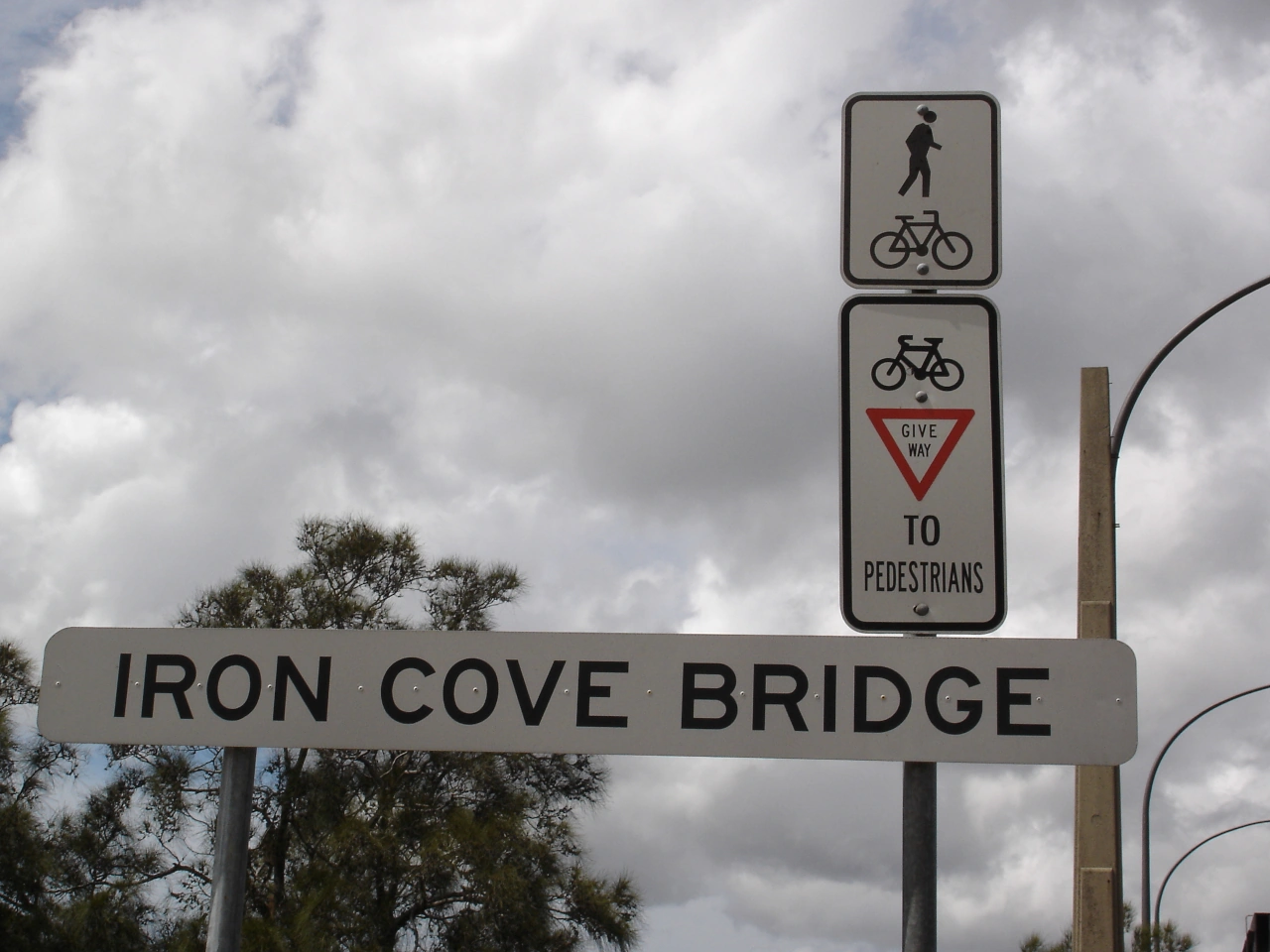
A bike path is a part of a road or a separate route intended primarily or exclusively for people riding bicycles. It may be physically separated from motor traffic, marked on the road surface or identified by traffic signs.
Bike paths may be one-way, two-way or shared with other road users. The permitted users, direction of travel, priority rules and obligation to use the path depend on local traffic signs and regulations.
Wikimedia.org • Andy Mitchell • CC BY-SA
Must cyclists use every Australian bicycle lane?
The obligation varies by jurisdiction. In New South Wales, use a provided bicycle lane unless impracticable. Queensland does not legally require cyclists to use bicycle lanes. Check the rules for the state or territory; these examples do not establish one rule for all Australia.
🔗 nsw.gov.au • Australia, NSW official road-user guidance — path-cyclist
🔗 qld.gov.au • Australia, official supporting guidance — path-cyclist
🔗 nsw.gov.au • Australia, official supporting guidance — path-cyclist
🔗 nsw.gov.au • Transport for NSW — Road User Handbook, relevant topic
Is a bicycle lane the same as a bicycle path in New South Wales?
No. A bicycle lane is a marked part of a road reserved for bicycle riders. A bicycle path is a separately designated route. A shared path permits both bicycle riders and pedestrians, so check its signs before assuming exclusive cycling use.
🔗 nsw.gov.au • Australia, NSW official road-user guidance — path-cyclist
🔗 qld.gov.au • Australia, official supporting guidance — path-cyclist
🔗 nsw.gov.au • Australia, official supporting guidance — path-cyclist
🔗 nsw.gov.au • Transport for NSW — Road User Handbook, relevant topic
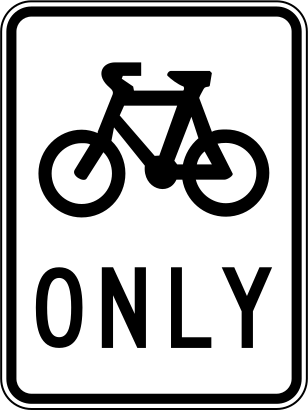 Mandatory path for cyclists.
English • Model rules 239 and 252 • bicycle path sign • Bicycle path. This path is designated for bicycles. Pedestrians may cross only as permitted by the local rules; other users and exceptions depend on the jurisdiction. State and territory rules and exceptions apply.
Sources
🔗 Commons.wikimedia.org (Government of Queensland • CC BY 3.0 au)
🔗 Pcc.gov.au • Australian Road Rules • model law • rules239,252; Schedule2p303
🔗 Legislation.qld.gov.au • Queensland Road Rules • local legislation example
SVG source: Government of Queensland • CC BY 3.0 au • Original revision 2012-10-10. Wikimedia original unmodified.
Who has priority on a shared walking and cycling path in New South Wales?
Bicycle riders must give way to pedestrians and keep left unless impracticable. On a separated path, use the side designated for bicycles. These are New South Wales rules; consult the applicable state or territory rules when travelling elsewhere.
🔗 nsw.gov.au • Australia, NSW official road-user guidance — path-cyclist
🔗 qld.gov.au • Australia, official supporting guidance — path-cyclist
🔗 nsw.gov.au • Australia, official supporting guidance — path-cyclist
🔗 nsw.gov.au • Transport for NSW — Road User Handbook, relevant topic
7. Pedestrian warning
A pedestrian warning is a traffic warning indicating that pedestrians may be crossing or entering the roadway ahead. It is commonly used near pedestrian crossings or other locations where drivers need advance notice of frequent pedestrian activity.
Drivers approaching a pedestrian warning should reduce speed when necessary, watch carefully for pedestrians and be prepared to stop. The design of the warning sign and the priority rules at the crossing vary between countries.
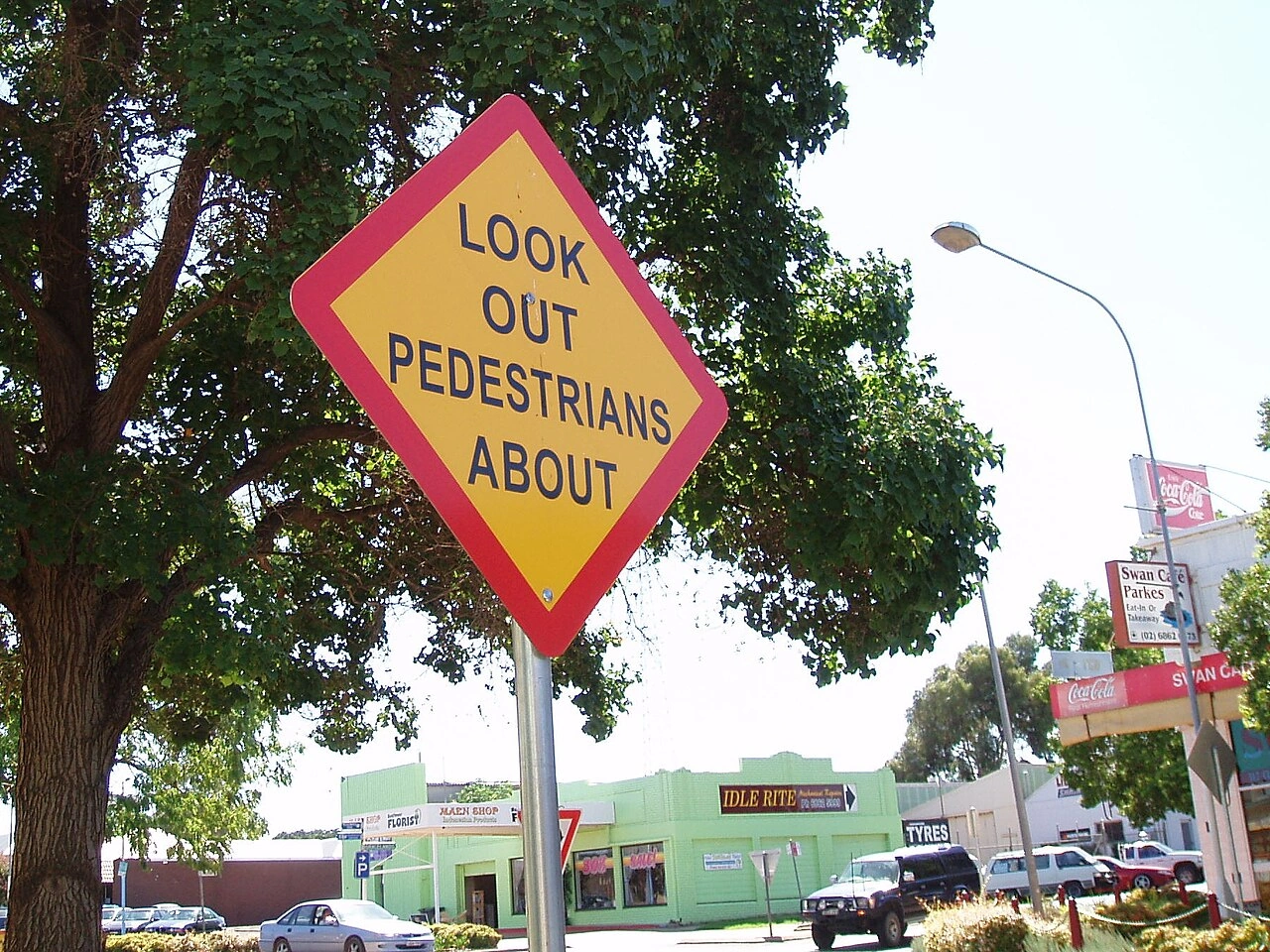
Wikimedia.org • Amanda Slater • CC BY-SA
How should I react to a pedestrian warning in Australia?
Reduce speed, look along both sides of the road and be ready to stop. The warning identifies a pedestrian hazard ahead; children, people with limited mobility or others may enter the road unexpectedly.
🔗 nsw.gov.au • Australia, NSW official road-user guidance — pedestrian-warning
Does a pedestrian warning in Australia identify the crossing itself?
Not necessarily. An advance warning alerts you to danger ahead. The actual crossing is identified by its own signs, markings or signals. Apply the crossing rules when you reach it, and follow any supplementary distance information.
🔗 nsw.gov.au • Australia, NSW official road-user guidance — pedestrian-warning
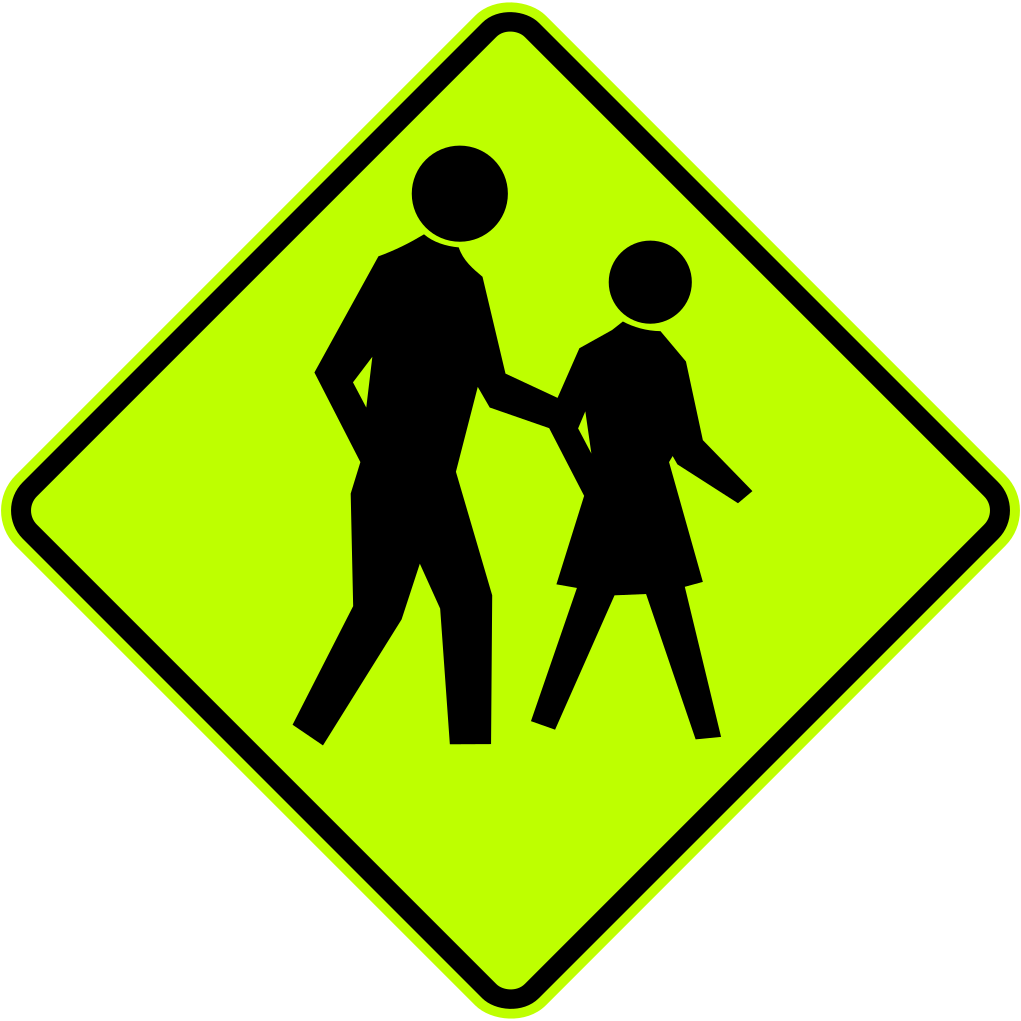 Warning for pedestrians.
English • W6-3 • Children. Children may cross the road ahead. Slow down and be prepared to stop; this warning sign does not itself mark a pedestrian crossing.
Sources
🔗 Commons.wikimedia.org
🔗 Transport.nsw.gov.au • Transport for NSW • W6-3
🔗 Qld.gov.au • Queensland Government • warning-sign illustrations
Image via Commons.wikimedia.org
Standards Australia • CC BY-SA 3.0 AU • Source revision 2024-09-14. Wikimedia original unmodified.
What should drivers know about pedestrian crossings in Australia?
In New South Wales, give way to pedestrians on a pedestrian crossing and approach slowly enough to stop. A driver turning at an intersection must also give way to pedestrians crossing the road being entered, subject to the applicable rules.
🔗 nsw.gov.au • Australia, NSW official road-user guidance — pedestrian-warning
8. Bridge
A bridge is a structure that carries a road, path or railway over an obstacle such as a river, valley, railway line or another road. A road bridge may carry one or more roadways together with pedestrian or cycling facilities.
Drivers should follow any speed, weight, height, width or vehicle-access restrictions applying to the bridge. Particular care may be necessary on narrow, exposed or movable bridges and when weather conditions such as wind, rain or ice affect the road surface.
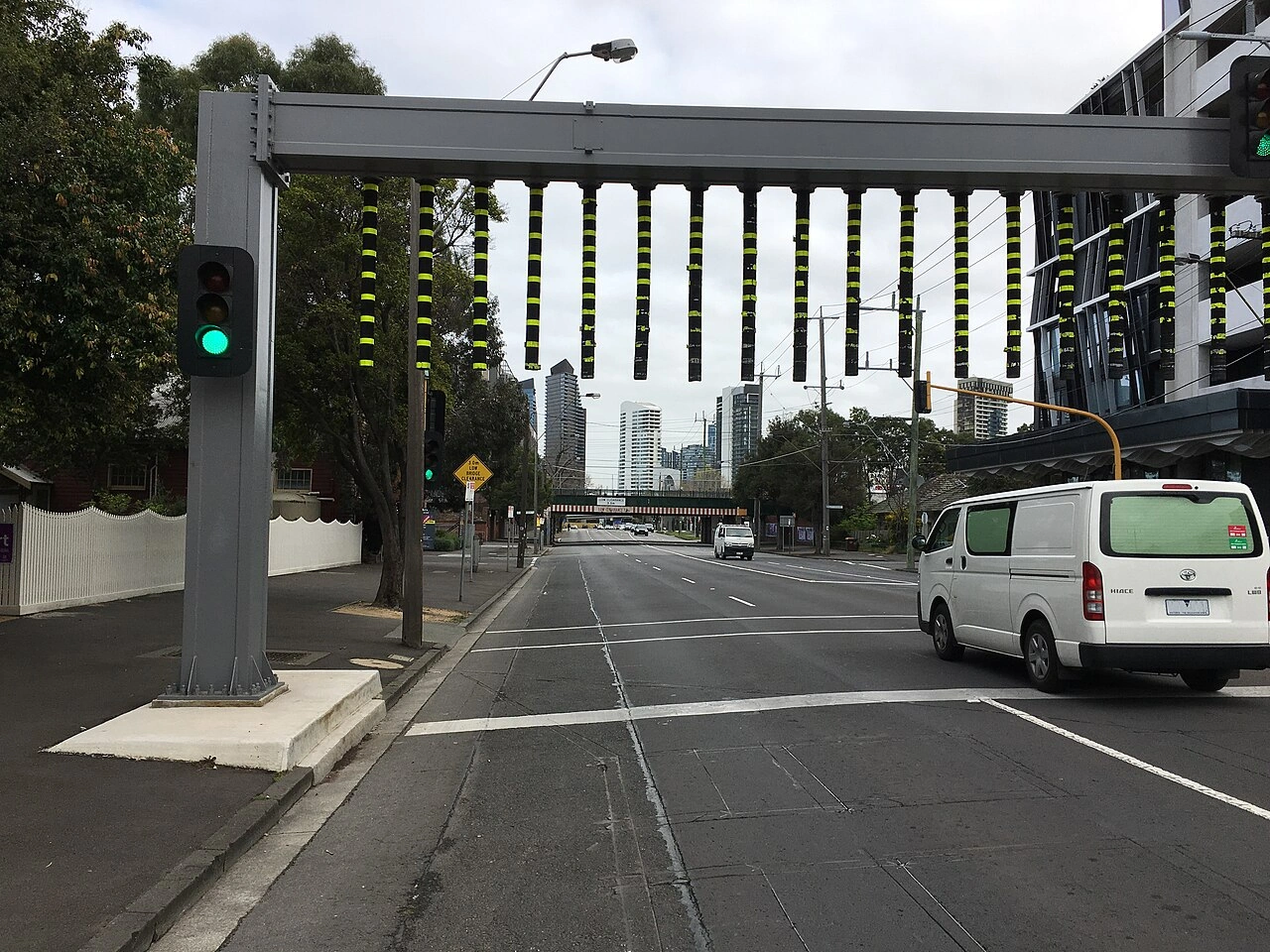
Wikimedia.org • Helicode • CC BY-SA
What should I check before crossing a bridge in Australia?
Check the applicable weight, axle-load, width and height restrictions before committing to the crossing. Include the load, trailer and roof equipment when relevant. A bridge warning and a vehicle restriction serve different purposes; comply with both.
🔗 nsw.gov.au • Australia, NSW official road-user guidance — bridge
Who goes first on a narrow bridge in Australia?
Follow any traffic lights, give-way controls or signs allocating priority over oncoming traffic. Do not force your way onto a bridge that cannot accommodate both directions safely. A bridge warning alone does not give your direction priority.
🔗 nsw.gov.au • Australia, NSW official road-user guidance — bridge
May I stop or park on a bridge in Australia?
In New South Wales, stopping on a bridge or in a tunnel is prohibited unless a parking-control sign permits it. Traffic-required stops and unavoidable emergencies are treated separately.
🔗 nsw.gov.au • Australia, NSW official road-user guidance — bridge
9. Speed bump
A speed bump is a raised traffic-calming device placed across all or part of a road to make drivers reduce their speed. It is commonly used near homes, schools, crossings, parking areas and other places where low vehicle speeds are important.
Speed bumps vary in shape, height and legal status. Drivers should approach them at a low, controlled speed and follow any warning signs or speed limits that apply.
Wikimedia.org • Kgbo • CC BY-SA
How should I recognise and approach a speed bump in Australia?
Traffic-calming devices can be humps, cushions or raised platforms. In New South Wales, read them together with the local signs, speed limit and any pedestrian-crossing markings; rules in other states and territories must be checked separately.
🔗 nsw.gov.au • Australia, NSW official road-user guidance — speed-bump
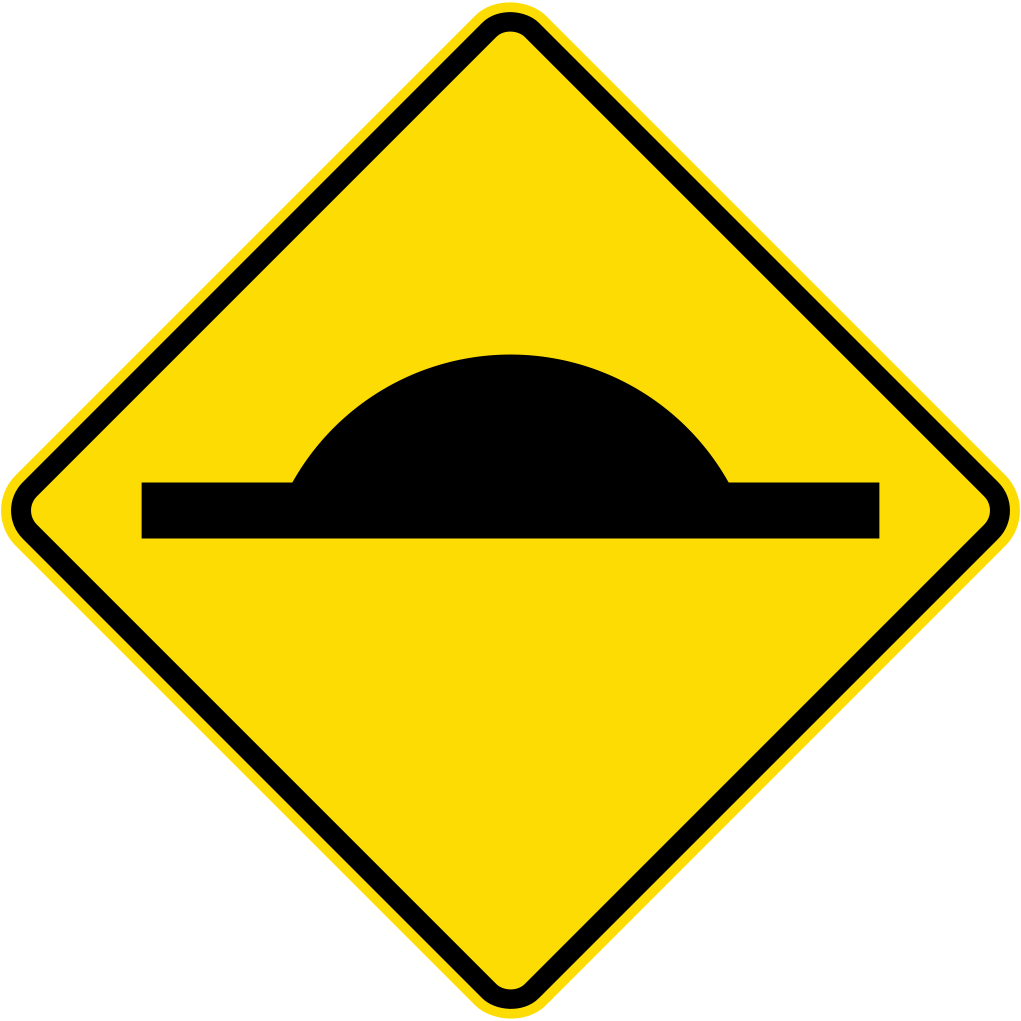 Warning for a speed bump.
English • W5-10 • Road hump. A road hump is ahead. Slow down to cross it safely.
Sources
🔗 Commons.wikimedia.org
🔗 Transport.nsw.gov.au • Transport for NSW • W5-10 road hump drawing
SVG source: Standards Australia • Public domain • Original revision 2024-09-19. Wikimedia original unmodified.
Artwork verified against Qld.gov.au • official published diagram W5-10.
Which speed should I use at a raised device in Australia?
In New South Wales, obey the signed limit and drive safely for the conditions. A speed hump is not a general permission to drive at the maximum or a reason to disregard a lower local limit.
🔗 nsw.gov.au • Australia, NSW official road-user guidance — speed-bump
Does a raised road surface give pedestrians priority in Australia?
A raised road surface alone does not establish pedestrian priority in Australia. Identify whether the device incorporates a designated crossing and apply the relevant state or territory rules. In New South Wales, give way to pedestrians on a pedestrian crossing and approach slowly enough to stop. A driver turning at an intersection must also give way to pedestrians crossing the road being entered under the applicable rules.
🔗 nsw.gov.au • Australia, NSW official road-user guidance — speed-bump
10. Toll road
A toll road is a road, motorway, bridge, tunnel or other route for which users must pay a charge. The toll may apply to all vehicles or only to particular vehicle categories, and the amount can depend on factors such as distance travelled, vehicle type, weight or emissions.
Tolls may be collected at toll booths, electronically or through a vignette or distance-based charging system. Drivers should check the applicable payment rules before using a toll road, especially when travelling in another country.
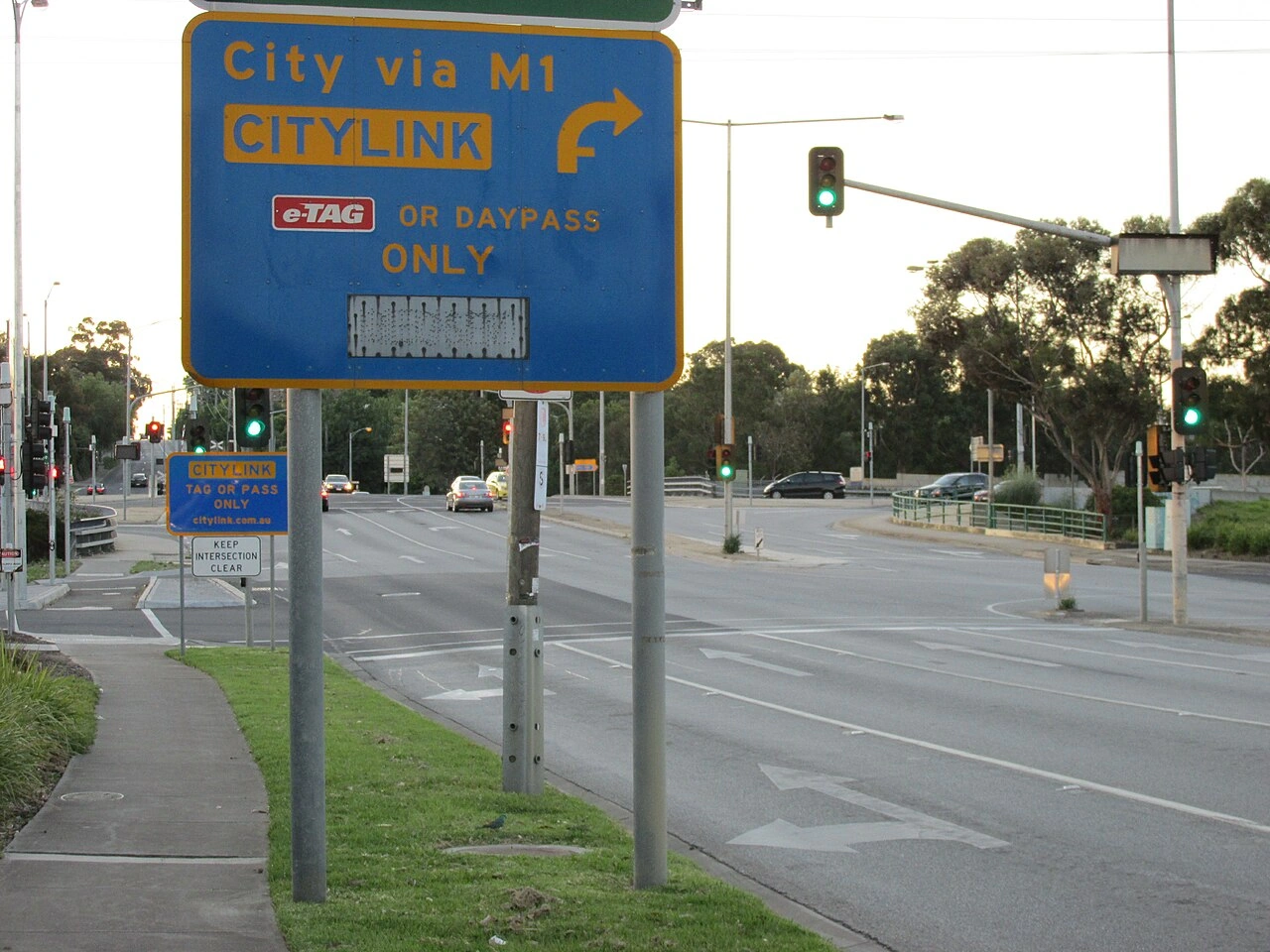
Wikimedia.org • Orderinchaos • CC BY-SA
Which road-charging system should I check in Australia?
Australia has state and operator-specific toll roads. In New South Wales, Sydney toll roads use electronic payment arrangements; this example does not establish one national tariff or a vignette for all Australian roads.
🔗 service.nsw.gov.au • Service NSW — electronic toll accounts, tags, passes and toll notices
What should I check before using a charged road in Australia?
For a NSW journey, arrange an accepted account, tag or pass and the correct vehicle details. If no arrangement paid the journey, follow the operator’s toll-notice process promptly; check other states’ arrangements separately.
🔗 service.nsw.gov.au • Service NSW — electronic toll accounts, tags, passes and toll notices
Does the absence of a toll booth prove that a road is free in Australia?
The absence of a payment booth is not proof that a charged road is free. A vignette, electronic account, vehicle-registration record or another payment procedure may be used where the actual scheme provides for it. Follow the responsible authority or operator’s instructions for that road.
🔗 service.nsw.gov.au • Service NSW — electronic toll accounts, tags, passes and toll notices
11. One-way traffic
One-way traffic means that vehicles on a road or carriageway may travel only in one designated direction. The permitted direction is normally indicated by traffic signs, lane arrows or road markings.
Some road users, such as cyclists or public-transport vehicles, may be allowed to travel in the opposite direction when signs expressly permit it. A one-way road does not by itself determine the speed limit, priority or parking rules.
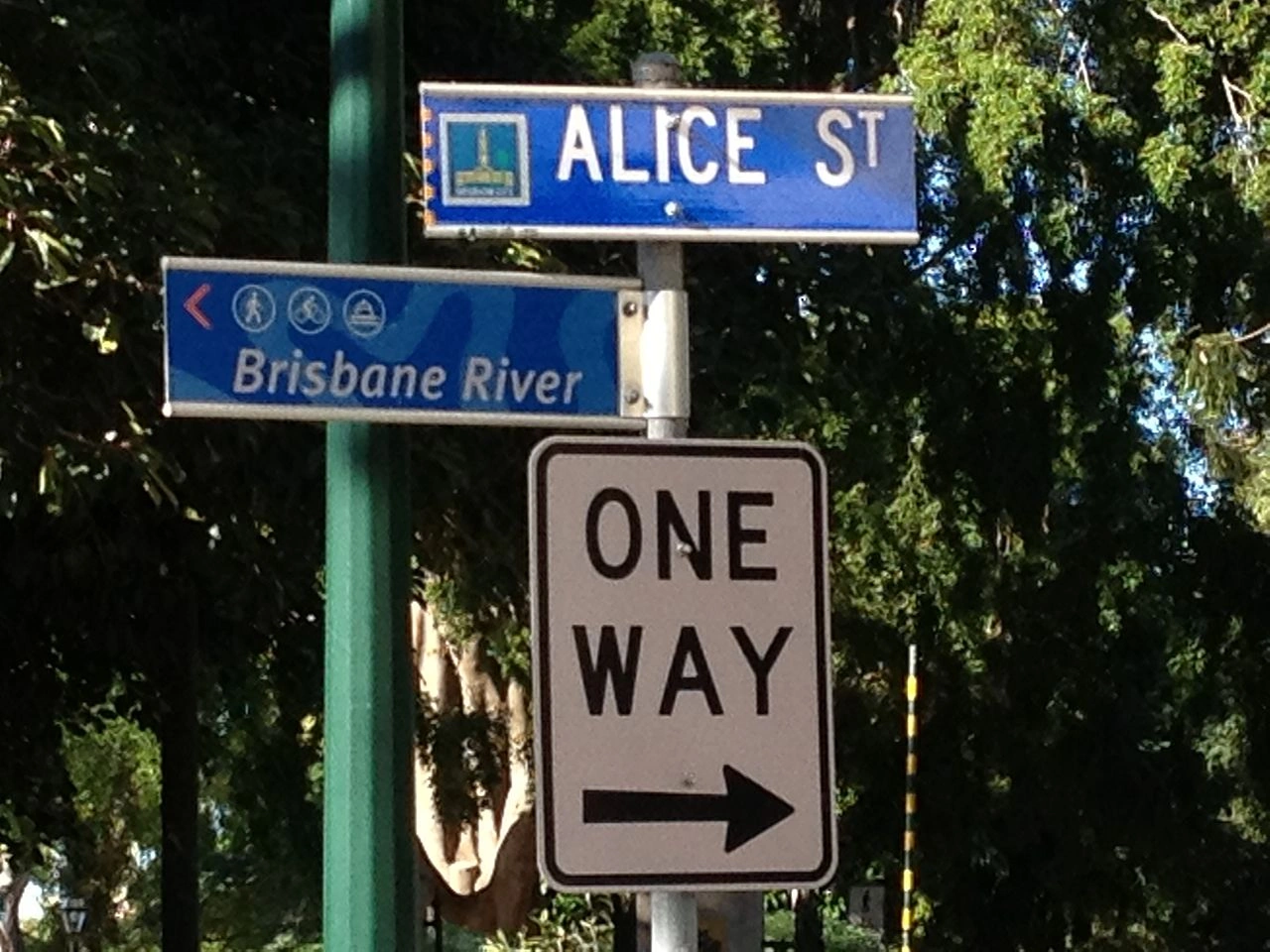
Wikimedia.org • Kgbo • CC BY-SA
How should I read a one-way restriction in Australia?
Australian one-way requirements are regulated by the relevant state or territory. In New South Wales, follow the one-way street rule and any specifically authorised lane or sign arrangement.
🔗 nsw.gov.au • Australia, NSW official road-user guidance — one-way-traffic
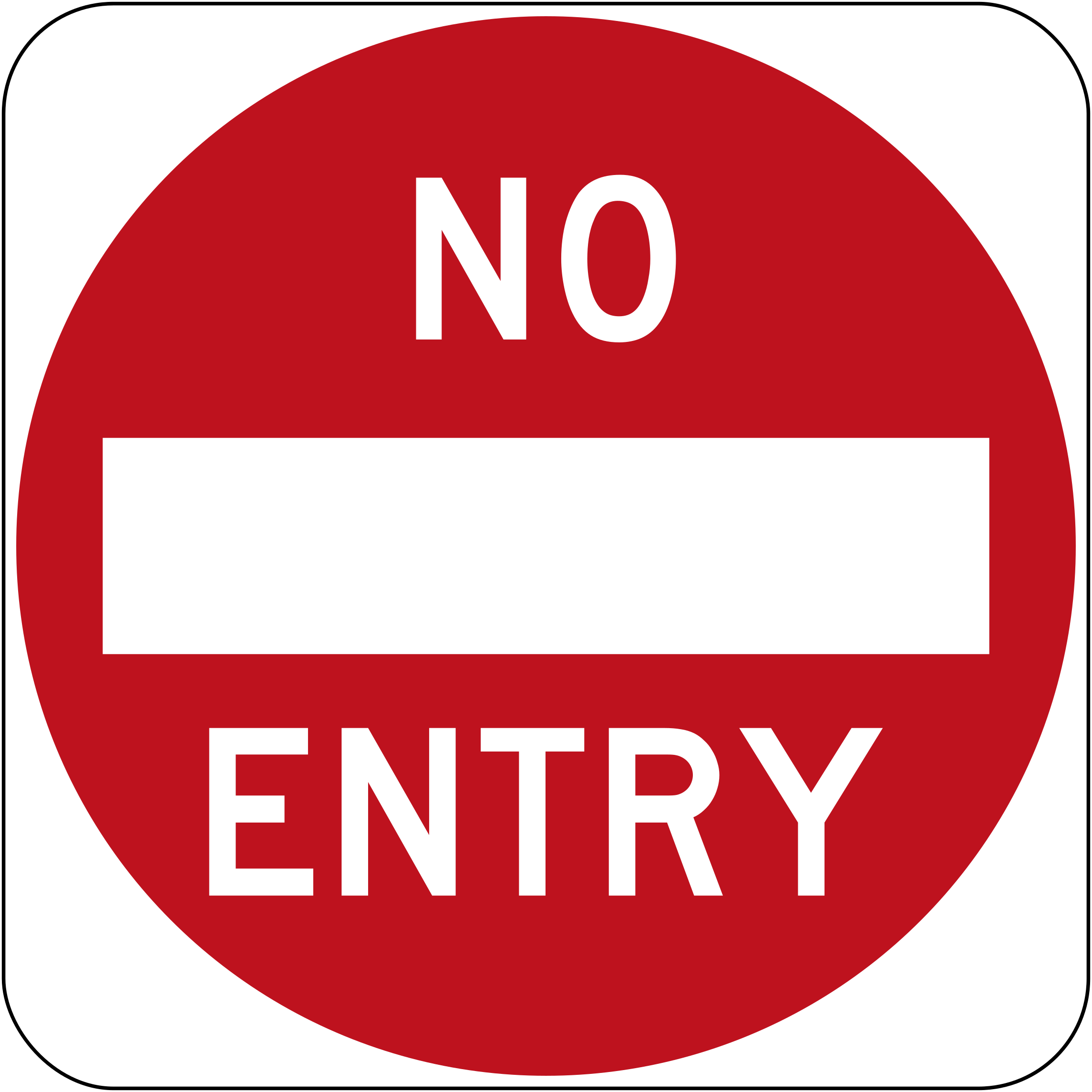 No entry.
English • Model rule 100 • no entry sign • No entry. Do not enter the road or area beyond this sign from this direction. State and territory rules and exceptions apply.
Sources
🔗 Commons.wikimedia.org
🔗 Pcc.gov.au • Australian Road Rules • model law • rule100; Schedule2p310
🔗 Legislation.qld.gov.au • Queensland Road Rules • local legislation example
SVG source: Standards Australia • Public domain • Original revision 2020-03-19. Wikimedia original unmodified.
May cyclists travel against the general traffic direction in Australia?
The NSW Road Rules provide for bicycle riding against the general direction where the applicable bicycle-lane or sign arrangement authorises it. That state example is not permission to ride against every Australian one-way street.
🔗 nsw.gov.au • Australia, NSW official road-user guidance — one-way-traffic
Does one-way traffic give me priority or a different speed limit in Australia?
A one-way restriction concerns direction. Continue to follow the applicable speed limit, signals, give-way or stop controls and junction-priority rules. Where authorised counterflow traffic exists, check for it before turning or crossing; your permitted direction is not automatic junction priority.
🔗 nsw.gov.au • Australia, NSW official road-user guidance — one-way-traffic
12. Slope
A slope is a section of road that rises or descends noticeably. A steep slope can affect vehicle speed, braking distance, traction, visibility and the ability of heavy or low-powered vehicles to maintain a steady speed.
Warning signs may indicate a steep ascent or dangerous descent and may show the gradient as a percentage. Drivers should adjust their speed early, select a suitable gear and remain prepared for slow vehicles, bends and changing road conditions.
Wikimedia.org • JarrahTree • CC BY
What does a steep-slope warning mean in Australia?
Australian rules are administered by states and territories. In New South Wales, a hill warning and any advisory speed must be distinguished from a mandatory speed limit.
🔗 nsw.gov.au • Australia, NSW official road-user guidance — slope
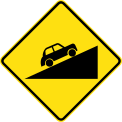 Warning for a steep ascent.
English • W5-13 • Steep climb. The road climbs steeply ahead. Select a suitable gear and maintain control.
Sources
🔗 Commons.wikimedia.org
🔗 Transport.nsw.gov.au • Transport for NSW • W5-13
SVG source: Government of Queensland • Public domain • Original revision 2012-10-12. Wikimedia original unmodified.
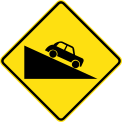 Warning for a steep descent.
English • W5-12 • Steep descent. The road descends steeply ahead. Reduce speed and select a suitable gear before descending.
Sources
🔗 Commons.wikimedia.org (Government of Queensland • CC BY 3.0 au)
🔗 Transport.nsw.gov.au • Transport for NSW • W5-12
SVG source: Government of Queensland • CC BY 3.0 au • Original revision 2012-10-12. Wikimedia original unmodified.
Artwork verified against Qld.gov.au • official published diagram W5-12.
How should I approach a steep descent in Australia?
Reduce speed before the descent and select a suitable gear to help control the vehicle. Keep enough following distance and avoid building up speed that requires continuous heavy braking. A warning gives no fixed safe descent speed: the gradient, surface, visibility, load and vehicle can require a speed well below the legal maximum.
🔗 nsw.gov.au • Australia, NSW official road-user guidance — slope
What should I check when meeting or overtaking on a slope in Australia?
In New South Wales, do not overtake unless you have a clear view of approaching traffic and enough space to complete the manoeuvre safely. A crest can hide an oncoming vehicle even when the visible part of the road is empty.
🔗 nsw.gov.au • Australia, NSW official road-user guidance — slope
13. Bus stop
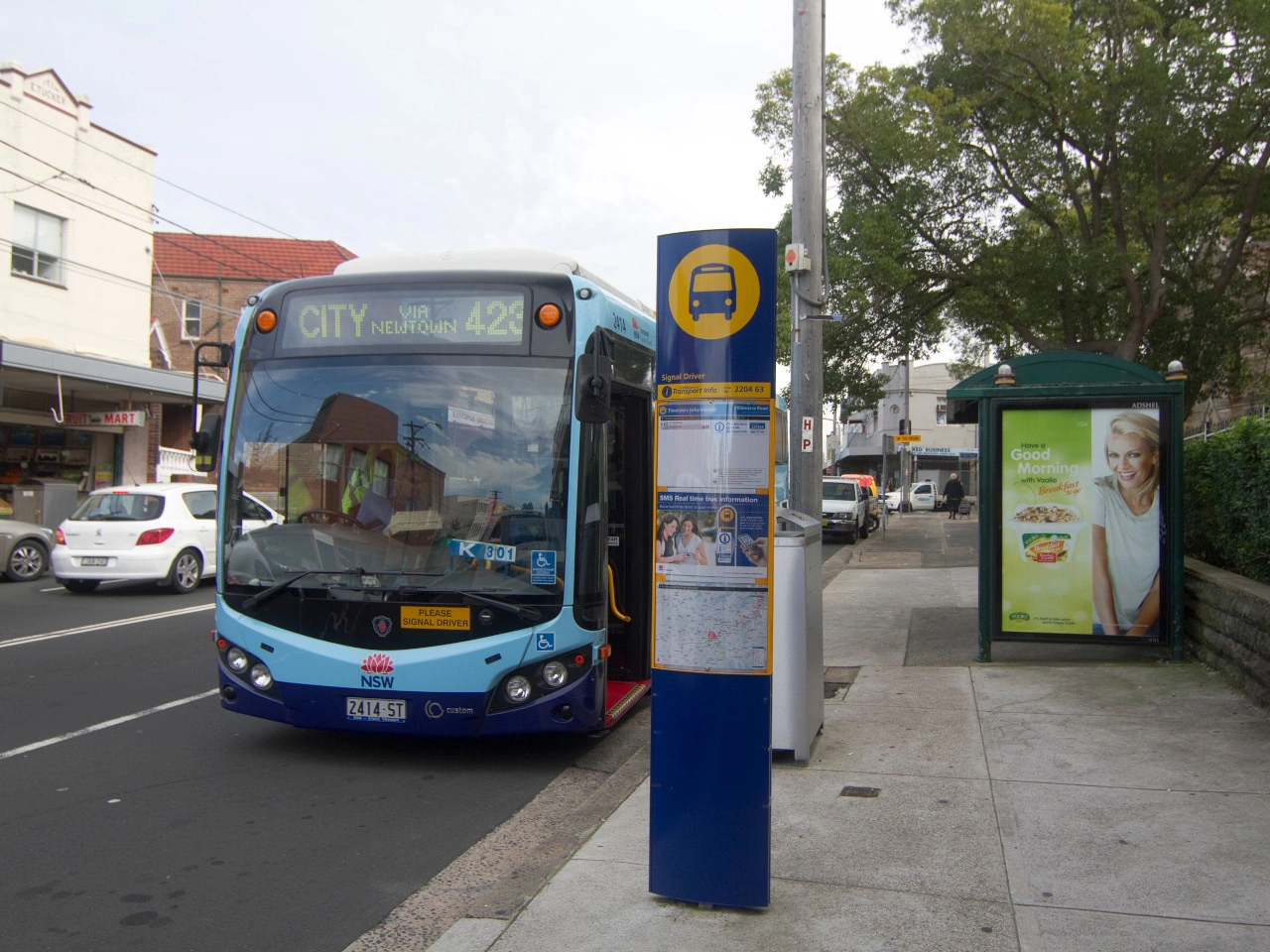
A bus stop is a designated place where buses stop to allow passengers to board or leave. It may be identified by a sign, shelter, raised platform, road marking or other public-transport infrastructure and can be located beside the road or in a specially constructed stopping area.
Drivers approaching a bus stop should watch carefully for buses, pedestrians and passengers crossing or entering the roadway. Parking or stopping restrictions may apply around bus stops to keep the area accessible and visible.
Wikimedia.org • Maksym Kozlenko • CC BY-SA
What stopping or parking restrictions apply at bus stops in Australia?
Australian rules vary by state and territory. In New South Wales, an ordinary driver must not stop at a bus stop or within 20 metres before and 10 metres after its sign, unless an applicable parking-control sign lawfully permits stopping there.
🔗 nsw.gov.au • Australia, NSW official road-user guidance — bus-stop
🔗 nsw.gov.au • Australia, official supporting guidance — bus-stop
May I briefly drop off a passenger at a bus stop in Australia?
In New South Wales, a private car’s brief passenger drop-off is not a general exception to the bus-stop prohibition. A bus zone has its own restrictions, so read the actual signs.
🔗 nsw.gov.au • Australia, NSW official road-user guidance — bus-stop
🔗 nsw.gov.au • Australia, official supporting guidance — bus-stop
What should I do near a stopped bus in Australia?
Rules depend on the state or territory. In New South Wales built-up areas, give way when you are in the left lane or line of traffic and a bus displaying a give-way-to-buses sign is stopped or moving slowly at the far left, indicates right and is about to move in front of you. NSW guidance says the bus must indicate for at least five seconds and move out safely.
🔗 nsw.gov.au • NSW Government, Merging and changing lanes, When a bus changes lanes; 🔗 nsw.gov.au • NSW Government, Buses, Giving way to buses
14. Stop sign
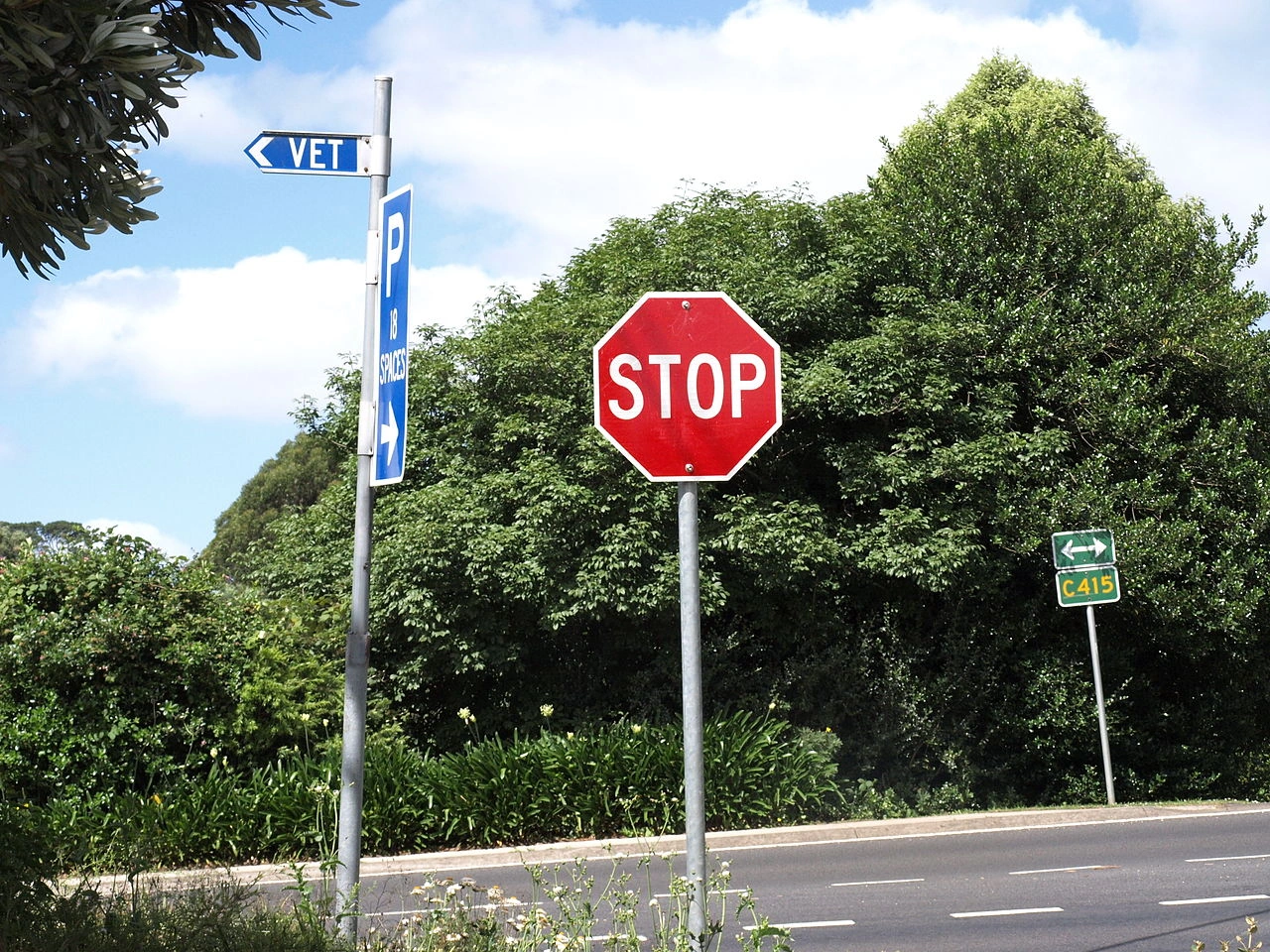
A stop sign requires drivers to bring their vehicle to a complete stop and give way before entering or crossing the road ahead. The stop must be made at the stop line or another legally prescribed position.
After stopping, the driver may continue only when this can be done safely and without interfering with traffic that has priority. The sign does not create priority for the driver who has stopped.
Wikimedia.org • Matthew Paul Argall • CC0
Must I stop completely at a stop sign in Australia?
In the New South Wales example, yes. Come to a complete stop when the applicable stop sign controls your approach, even when you cannot see another road user. Slowing to a crawl is not a stop. The stopping duty is separate from the duty to give way before continuing. Check the rules for another state, province or territory separately.
🔗 nsw.gov.au • Australia, NSW official road-user guidance — stop-sign
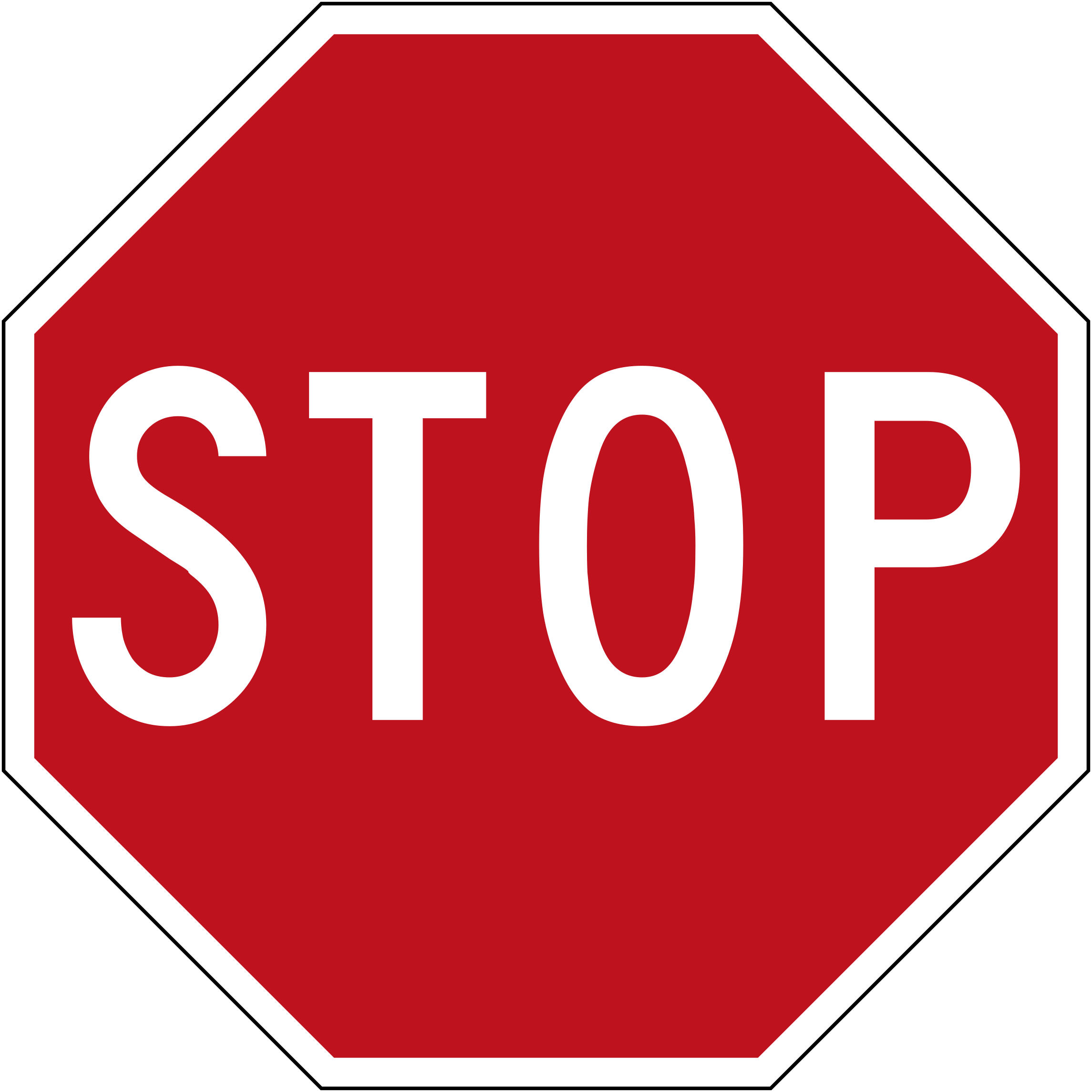 Stop and give way.
English • R1-1 • model rule 67 • Stop. Stop completely at the stop line, or before entering the intersection if there is no line, and give way as required before proceeding. State and territory rules and exceptions apply.
Sources
🔗 Commons.wikimedia.org
🔗 Pcc.gov.au • Australian Road Rules • model law • rule67; Schedule2p316
🔗 Legislation.qld.gov.au • Queensland Road Rules • local legislation example
SVG source: Standards Australia • Public domain • Original revision 2020-04-09. Wikimedia original unmodified.
Where must I stop at a stop-controlled junction in Australia?
In New South Wales, stop as near as practicable to, but before reaching, the stop line. If there is no line at an intersection, stop as near as practicable to, but before entering, it. Read any railway-crossing stop separately.
🔗 nsw.gov.au • Australia, NSW official road-user guidance — stop-sign
Does stopping first give me priority at a stop sign in Australia?
A complete stop does not, by itself, give you priority. Give way to the road users entitled to pass under the junction’s signs and rules, check pedestrians and cyclists, and proceed only when the gap is safe. Do not follow another stopped vehicle through without satisfying your own stopping and yielding duties.
🔗 nsw.gov.au • Australia, NSW official road-user guidance — stop-sign
15. Give way
A give-way sign requires drivers to allow traffic with priority to proceed before entering, crossing or joining a road. Drivers must reduce speed, observe approaching traffic and stop when necessary.
Unlike a stop sign, a give-way sign does not always require a complete stop. The driver may continue without stopping only when the route is clearly safe and no road user with priority is forced to change speed or direction.
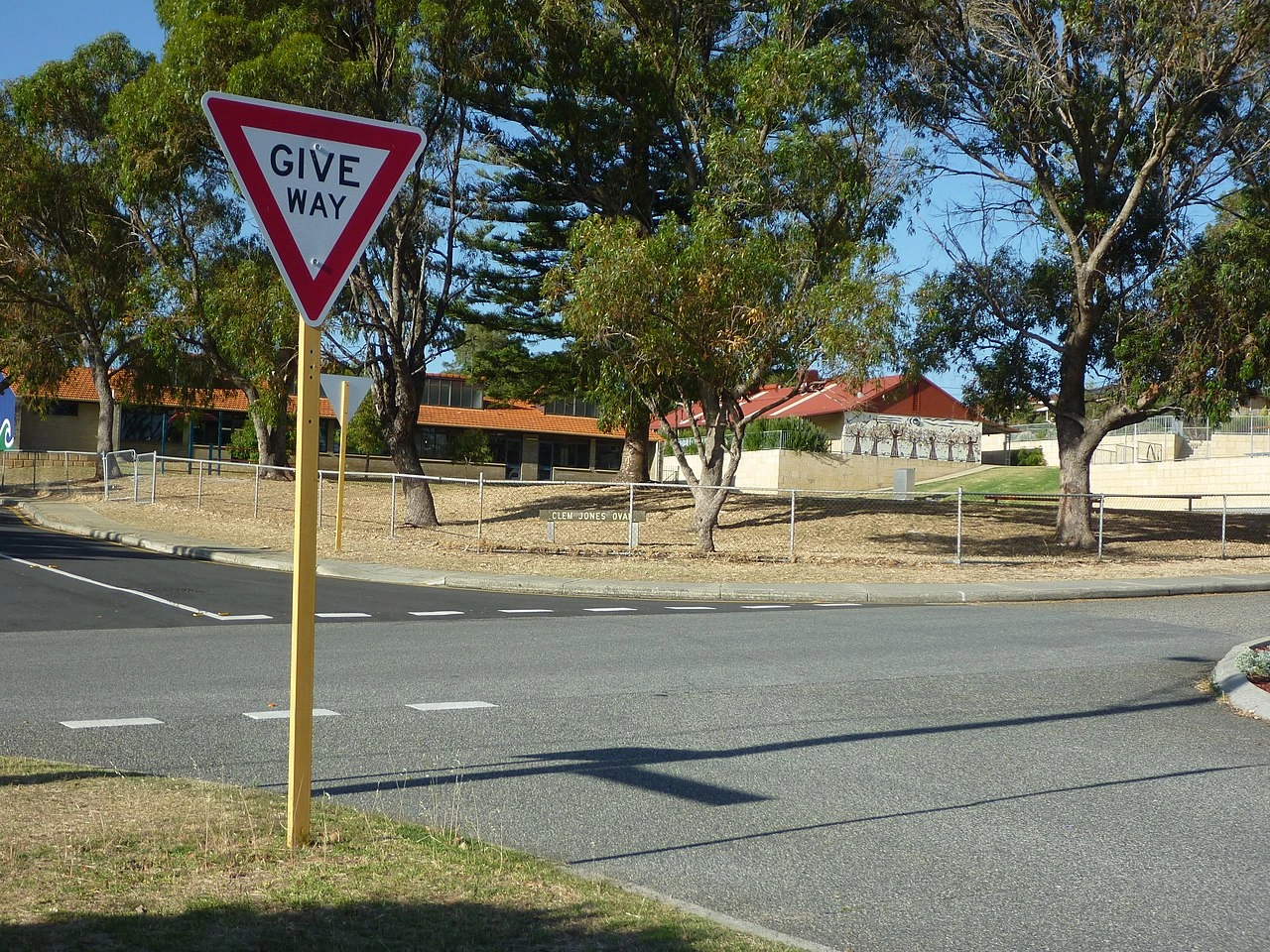
Wikimedia.org • Samwilson • CC BY-SA
What does giving way mean in Australia?
Australian rules vary by state and territory. In New South Wales, a Give Way sign or line requires yielding under the Road Rules for the particular junction or road arrangement; it is different from a Stop control.
🔗 nsw.gov.au • Australia, NSW official road-user guidance — give-way
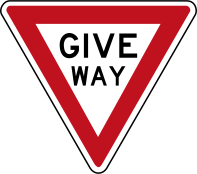 Give way.
English • R1-2 • model rule 69 • Give way. Slow down and, if necessary, stop. Give way to traffic as required before entering the intersection. State and territory rules and exceptions apply.
Sources
🔗 Commons.wikimedia.org
🔗 Pcc.gov.au • Australian Road Rules • model law • rule69; Schedule2p308
🔗 Legislation.qld.gov.au • Queensland Road Rules • local legislation example
SVG source: Standards Australia • Public domain • Original revision 2012-10-07. Wikimedia original unmodified.
Must you always stop when giving way in Australia?
In New South Wales, you must stop at a Stop sign or line, but a Give Way control requires stopping only when necessary to give way. Apply the rules of the state or territory where you are driving.
🔗 nsw.gov.au • Australia, NSW official road-user guidance — give-way
What should you check before proceeding after giving way in Australia?
Wait until the manoeuvre is safe. Check the priority traffic, the view in both directions and enough space to complete the entry. Giving way to one vehicle does not remove duties towards another driver, a cyclist or a pedestrian.
🔗 nsw.gov.au • Australia, NSW official road-user guidance — give-way
16. Roundabout
A roundabout is a circular road arrangement in which traffic travels around a central island in one designated direction. Vehicles enter and leave through connecting roads, and traffic signs or local rules determine who has priority.
Drivers should reduce speed, choose a suitable lane, observe all road users and signal as required when leaving. The direction of travel, entry priority, lane use and rules for cyclists and pedestrians depend on local traffic signs and regulations.
Wikimedia.org • Cygnis_insignis • CC0
Who has priority at a roundabout in Australia?
In New South Wales, a driver entering a roundabout must give way to vehicles already in it. This is not a blanket duty to yield to every vehicle approaching from the right outside the roundabout. Other Australian jurisdictions have their own rules.
🔗 nsw.gov.au • Australia, NSW official road-user guidance — roundabout
How should you choose a roundabout lane in Australia?
In New South Wales, follow the lane arrows and the Road Rules for a left turn, right turn or straight-ahead movement. Check before changing lanes and give way as required; priority at entry does not give priority for a lane change.
🔗 nsw.gov.au • Australia, NSW official road-user guidance — roundabout
What should you check when leaving a roundabout in Australia?
Check the lane you will cross or enter, signal the manoeuvre as required and look for cyclists and pedestrians at the exit. Obey any separate crossing controls and do not force an exit across another vehicle’s path.
🔗 nsw.gov.au • Australia, NSW official road-user guidance — roundabout
17. Pedestrian crossing
A pedestrian crossing is a designated place where pedestrians may cross a road. It is commonly indicated by road markings, traffic signs, signals or a combination of these measures.
Drivers must approach with appropriate caution and give way when required by local law. Pedestrians must also observe approaching traffic and follow any pedestrian signals or instructions from authorised traffic controllers.
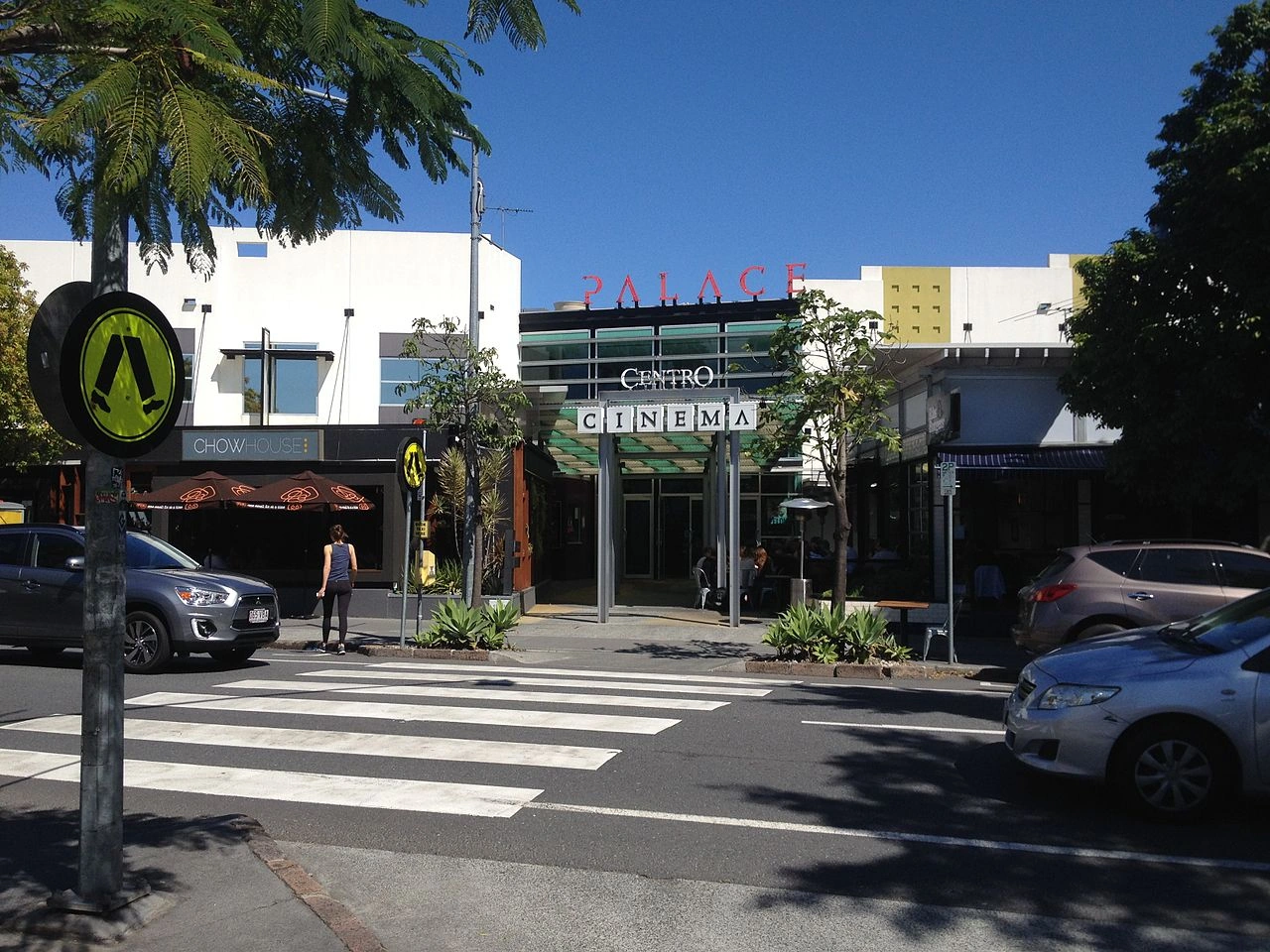
Wikimedia.org • Kgbo • CC BY-SA
When must drivers give way at a pedestrian crossing in Australia?
In New South Wales, motorists must give way to pedestrians crossing at a pedestrian crossing and may not overtake a vehicle stopping for them. Other states and territories set their own detailed road rules.
Are all pedestrian crossings controlled the same way in Australia?
No. In NSW, a zebra crossing, priority path crossing, continuous footpath, signal-controlled crossing and pedestrian refuge have different controls. Priority path crossings require giving way to pedestrians, cyclists and vehicles at or near the crossing. A refuge island alone does not create the same crossing priority. Check the signs, markings and signals; other states and territories have their own rules.
🔗 nsw.gov.au • Australia, NSW Government, Pedestrian crossings
May I enter a pedestrian crossing if the road beyond it is blocked in Australia?
In NSW, do not drive onto a pedestrian crossing if the road ahead is blocked. Do not overtake a vehicle stopping or stopped to give way to pedestrians crossing there. Wait before the crossing until you can clear it. Other states and territories set their own detailed rules.
🔗 nsw.gov.au • Australia, NSW Government, Pedestrian crossings
What should I do if a pedestrian is still crossing when the traffic signal changes in Australia?
In NSW, give way to pedestrians still crossing the road you are turning into, including when their pedestrian signal is flashing red. A green vehicle light does not remove this duty. Allow them to finish safely and check for people hidden by other vehicles. Check the applicable rules elsewhere in Australia.
🔗 nsw.gov.au • Australia, NSW Government, Traffic lights, pedestrian signals
18. Railway crossing
A railway crossing, also called a level crossing or railroad crossing, is a place where a road or path crosses railway tracks at the same level. It may be protected by barriers, warning lights, bells, traffic signs or a combination of these measures.
Road users must approach carefully and never enter when a train is approaching, warning signals are active or the exit is blocked. They should cross promptly and must never stop, wait or become trapped on the tracks.
Wikimedia.org • Maksym Kozlenko • CC BY-SA
When must I stop at a railway level crossing in Australia?
In NSW, stop for a STOP sign, flashing red lights, a closed gate or a railway employee’s stop signal. Do not enter while a boom gate is closing, down or opening; wait until the warnings have stopped and the gate is fully open. Do not enter with a train approaching or unless your whole vehicle can clear the crossing. Other states and territories set their own detailed rules.
🔗 nsw.gov.au • Australia, NSW Government, Railway level crossings
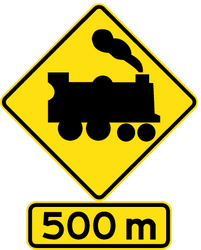 Warning for a railway crossing without barriers.
English • W7-7(R) with distance plate • Railway crossing ahead. A railway level crossing is 500 m ahead. Approach cautiously, look for trains and obey the crossing controls.
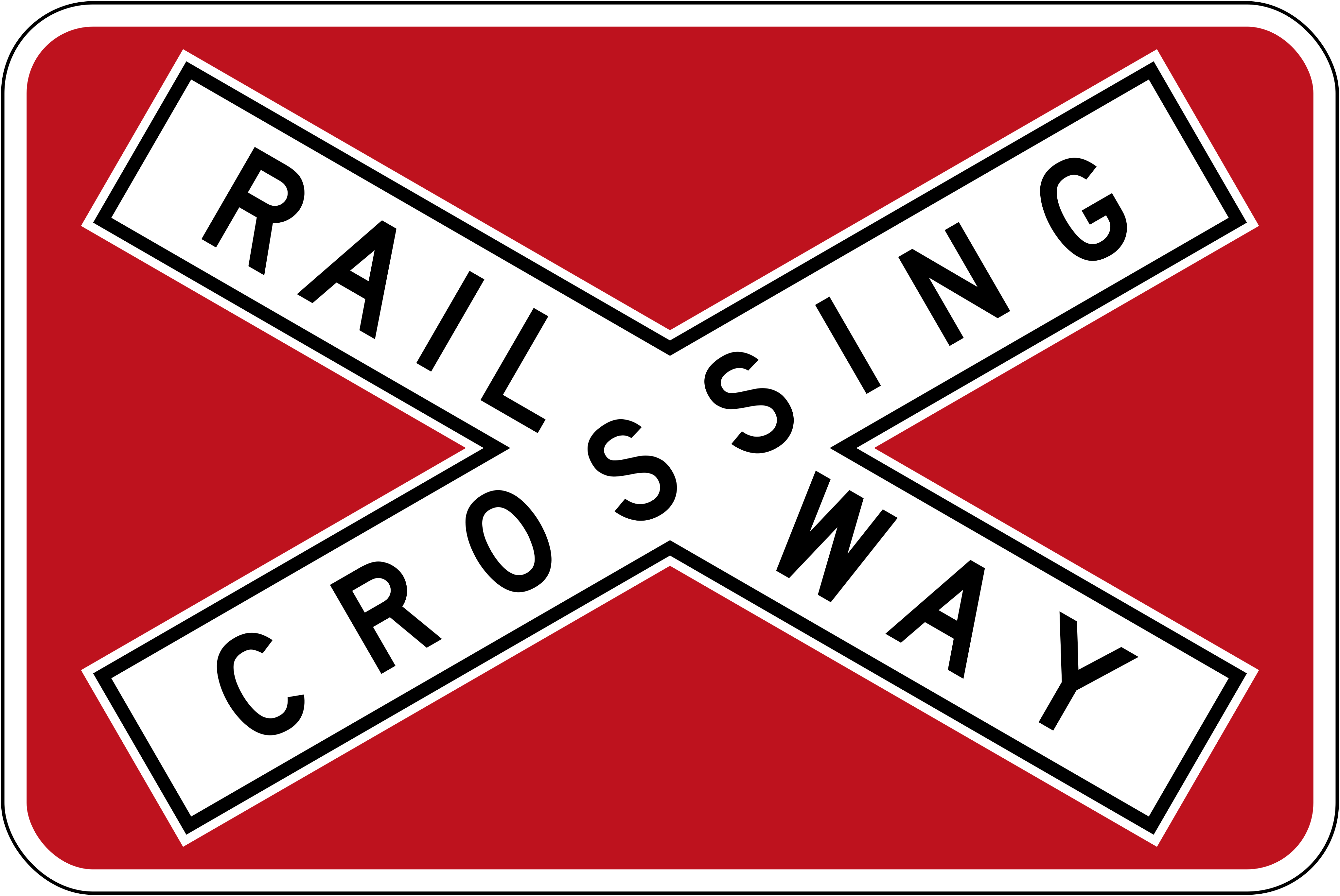 Warning for a railway crossing with one track.
English • Model rule 120 • level crossing sign • Railway crossing. A railway level crossing is at this location. Check for trains and obey any stop sign, give way sign, lights or barriers. State and territory rules and exceptions apply.
Sources
🔗 Commons.wikimedia.org
🔗 Pcc.gov.au • Australian Road Rules • model law • rule120; Schedule2p309
🔗 Legislation.qld.gov.au • Queensland Road Rules • local legislation example
SVG source: Standards Australia • Public domain • Original revision 2020-04-06. Wikimedia original unmodified.
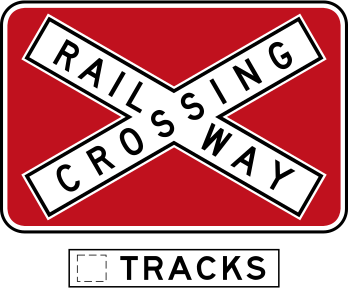 Warning for a railway crossing with two or more tracks.
English • Model rule 120 • level crossing and track plate • Railway crossing with multiple tracks. More than one railway track crosses the road. After a train passes, check for another train before proceeding. The illustration leaves the number of tracks blank. State and territory rules and exceptions apply.
Sources
🔗 Commons.wikimedia.org
🔗 Pcc.gov.au • Australian Road Rules • model law • rule120; Schedule2p309 + track plate
🔗 Legislation.qld.gov.au • Queensland Road Rules • local legislation example
Image via Commons.wikimedia.org
Government of Queensland • Public domain • Source revision 2012-11-09. Wikimedia original unmodified.
Must I stop at every unguarded railway crossing in Australia?
Not merely because there are no barriers. In NSW, a STOP sign requires a full stop; at a GIVE WAY sign, slow down, look both ways and stop if a train is coming. At crossings without gates or flashing lights, look and listen carefully in both directions and cross only when safe. Check the applicable state or territory rules elsewhere.
🔗 nsw.gov.au • Australia, NSW Government, Railway level crossings
What if road traffic is queued beyond a railway crossing in Australia?
In NSW, you must not enter unless your entire vehicle can clear the railway crossing. Wait before the tracks until there is enough room beyond them; do not simply follow the vehicle ahead. Keep the tracks clear even if no train is visible. Other states and territories set their own detailed rules.
🔗 nsw.gov.au • Australia, NSW Government, Railway level crossings
Can I cross after a train has passed if the warning lights are still active in Australia?
In NSW, no. Wait until the warning lights have stopped flashing and the gates or boom gates are fully open. Check that no other train is approaching before crossing. Follow the applicable state or territory rules elsewhere in Australia.
🔗 nsw.gov.au • Australia, NSW Government, Railway level crossings
19. Mandatory direction
A mandatory-direction sign requires drivers to travel only in the direction or one of the directions indicated by its arrow or arrows. It may require traffic to continue straight ahead, turn, or pass an obstacle on a specified side.
The sign does not itself determine priority or speed. Drivers must still use the appropriate lane, signal when required and give way according to local traffic signs and regulations.
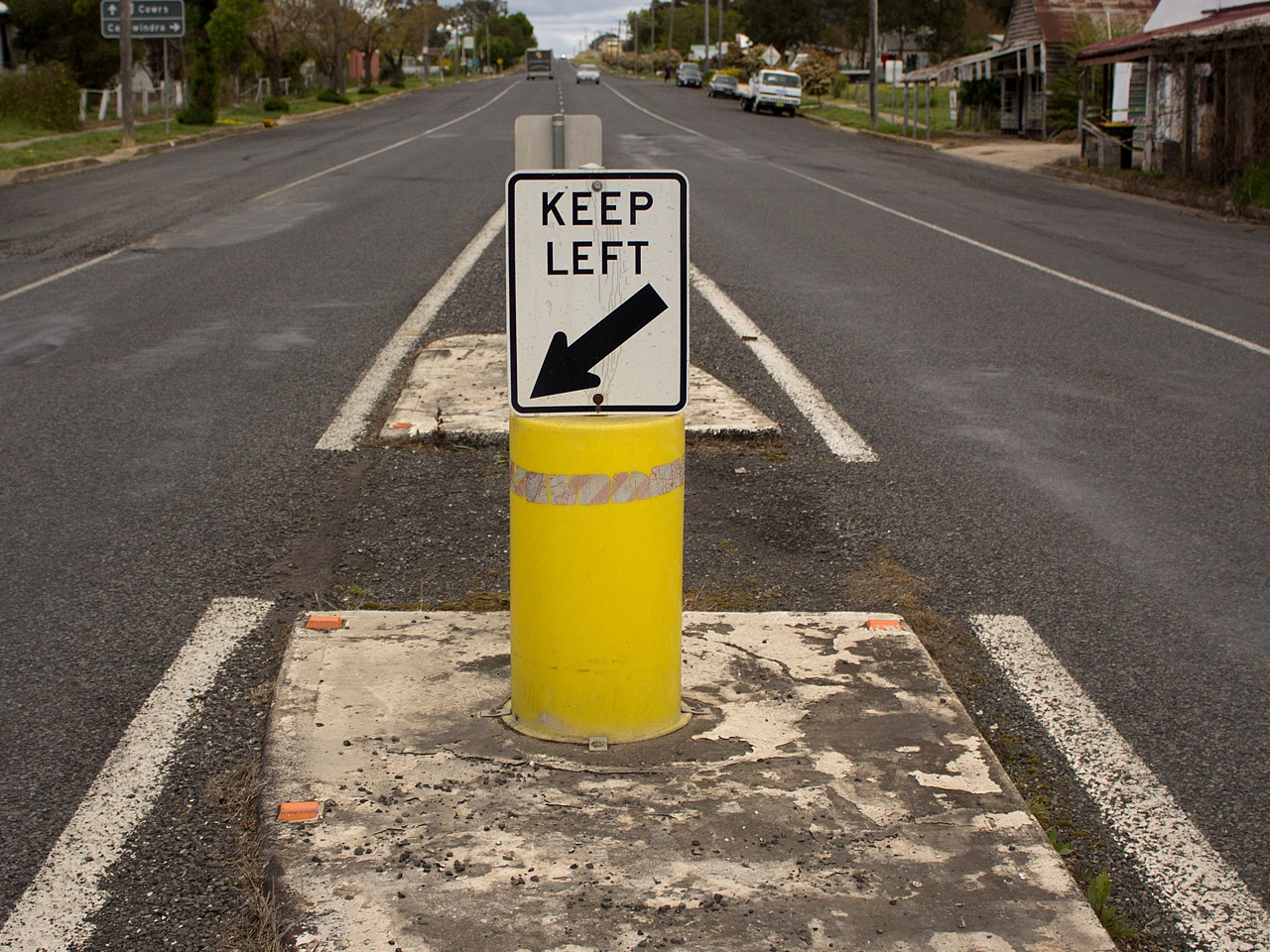
Wikimedia.org • Bidgee • CC BY-SA
How can a mandatory turn be indicated in Australia?
Mandatory movements in Australia may be shown by regulatory signs, lane-direction arrows or turn-only indications. Do not expect the sign shape to be identical to the European blue circular sign system.
🔗 nsw.gov.au • Australia, NSW official road-user guidance — mandatory-direction
Can I choose another turn if the mandatory-direction arrow is inconvenient in Australia?
No, unless another applicable sign, lane instruction or authorised traffic direction lawfully permits it. Plan a permitted alternative route; do not make an abrupt or prohibited turn to reach your destination.
🔗 nsw.gov.au • Australia, NSW official road-user guidance — mandatory-direction
Does a mandatory-direction sign give me priority over pedestrians in Australia?
No. It tells you which way to move, not who goes first. Check traffic lights, other priority signs, pedestrians and cyclists, and give way when required before completing the manoeuvre.
🔗 nsw.gov.au • Australia, NSW official road-user guidance — mandatory-direction
20. Turn prohibition
A turn prohibition prevents drivers from turning in the direction indicated by a traffic sign. It may prohibit a left turn, a right turn or a U-turn at an intersection or along a specified section of road.
Drivers must continue along a permitted route and follow any lane arrows or mandatory-direction signs. A turn prohibition does not itself determine priority or speed, and any exemption for cyclists, public transport or other road users must be expressly indicated.
Wikimedia.org • Maksym Kozlenko • CC BY-SA
What does a no-turn sign prohibit in Australia?
It prohibits the left, right or other turn shown at the junction or position controlled by the sign in Australia. Follow any supplementary panel or authorised direction and choose another legal route.
🔗 nsw.gov.au • Australia, NSW official road-user guidance — turn-prohibition
Does a no-left-turn sign always prohibit a U-turn in Australia?
Check the state or territory rules and every applicable sign and marking. For example, NSW prohibits U-turns at traffic lights unless a U-turn-permitted sign is displayed, and prohibits them on motorways and freeways. A no-left-turn sign alone does not settle those other restrictions.
🔗 nsw.gov.au • NSW Government, U-turns and three-point turns
Can a no-turn restriction apply only to certain vehicles or hours in Australia?
Yes, where the local sign system provides a supplementary condition or exemption, such as a vehicle class, time or authorised access. Without a valid exception, comply with the prohibited movement shown.
🔗 nsw.gov.au • Australia, NSW official road-user guidance — turn-prohibition
If a traffic light permits movement, can I ignore a prohibited-turn sign in Australia?
Not automatically. A green traffic signal normally authorises proceeding only in a lawful direction; an applicable no-turn restriction may still prohibit the manoeuvre. Follow any specific turn signal and authorised traffic direction.
🔗 nsw.gov.au • Australia, NSW official road-user guidance — turn-prohibition
21. School area
A school area is a road or group of roads near a school where large numbers of children may walk, cycle, cross the road or enter and leave vehicles. It may be identified by warning signs, zone signs, road markings, traffic-calming measures or flashing lights.
Special speed limits, parking restrictions or access rules may apply permanently or only during school arrival and departure times. Drivers should reduce speed, watch carefully for children and be prepared to stop.
Wikimedia.org • Bidgee • CC BY-SA
What is the speed limit in an Australian school zone?
School-zone law varies by state and territory. For example, New South Wales generally uses signed 40 km/h school zones during the times shown, with local exceptions; do not apply NSW hours throughout Australia.
🔗 nsw.gov.au • Australia, NSW official road-user guidance — school-area
🔗 nsw.gov.au • Transport for NSW — Road User Handbook, relevant topic
Does a school warning sign in Australia automatically set the speed limit?
A children or school warning alerts you to a potential hazard; the enforceable numerical speed limit depends on the applicable law, regulatory signs and any time or variable display. Slow further if children are near the road.
🔗 nsw.gov.au • Australia, NSW official road-user guidance — school-area
🔗 nsw.gov.au • Transport for NSW — Road User Handbook, relevant topic
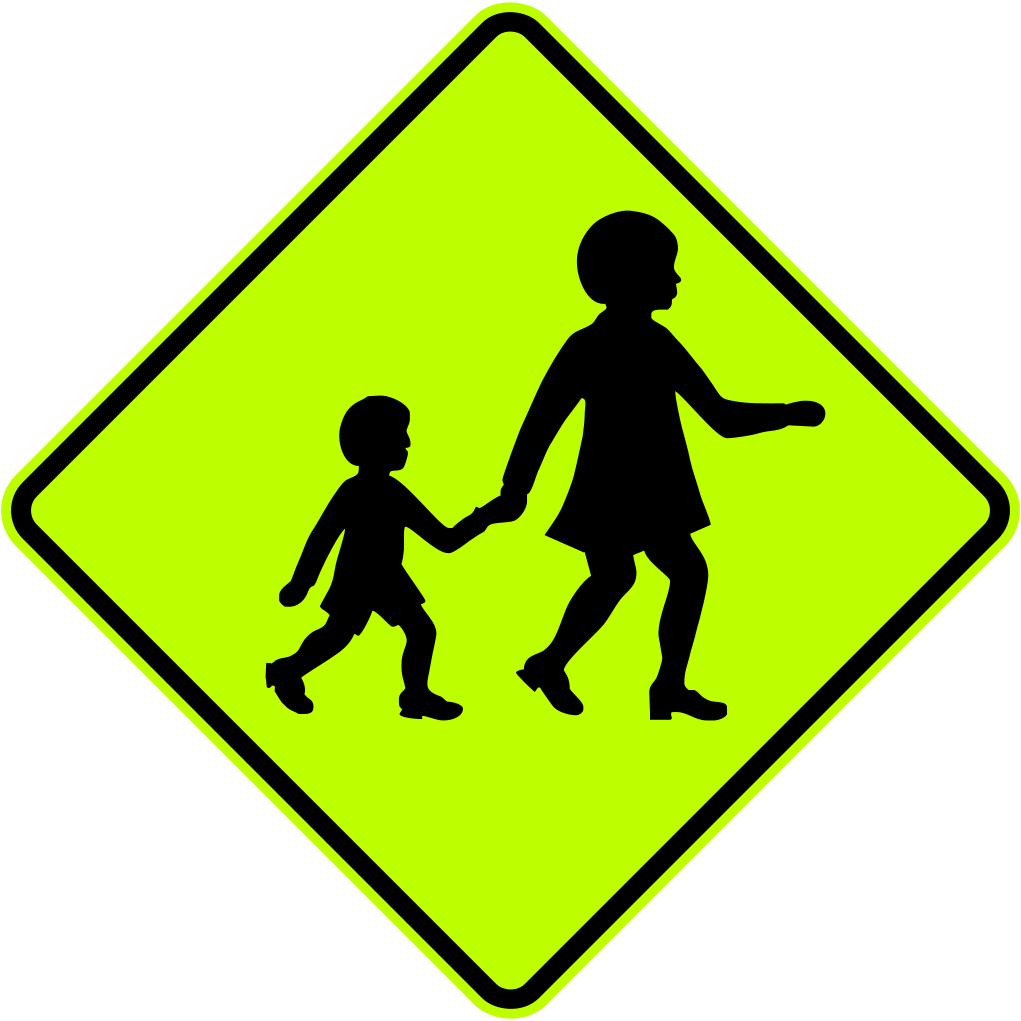 Warning for children.
English • W6-1 family • pedestrian illustration • Pedestrians. Pedestrians may be on or crossing the road ahead. Slow down and watch for people entering the road. Illustration identified by its sign family or meaning; the exact current prescribed design has not been confirmed.
Sources
🔗 Commons.wikimedia.org
🔗 Transport.nsw.gov.au • Transport for NSW • W6-1 family • pedestrian illustration
🔗 Qld.gov.au • Queensland Government • warning-sign illustrations
Image via Commons.wikimedia.org
Standards Australia • CC BY-SA 3.0 AU • Source revision 2024-09-15. Wikimedia original unmodified.
How should you pass a school entrance in Australia?
Watch for children stepping out from between parked vehicles, obey crossings and any school patrol, and follow stopping or parking restrictions. Do not obstruct visibility near a crossing or school entrance; approach at a speed that permits a safe stop.
🔗 nsw.gov.au • Australia, NSW official road-user guidance — school-area
🔗 nsw.gov.au • Transport for NSW — Road User Handbook, relevant topic
22. Crossing animals
An animals-crossing warning indicates a place or road section where wild animals, livestock or ridden animals may enter or cross the road. Animals may appear suddenly, move unpredictably or be difficult to see in darkness, vegetation or poor weather.
Drivers should reduce speed, scan both sides of the road and remain prepared to stop. The warning sign does not itself give animals priority or impose a numerical speed limit, but drivers must avoid frightening, endangering or colliding with them.
Wikimedia.org • Hossen27 • CC BY-SA
Which animals might drivers encounter on roads in Australia?
Depending on the locality, drivers may meet kangaroos, wallabies, wombats and livestock, particularly on regional roads. Roadside animal-warning signs and local hazard information indicate where extra care may be needed; do not assume the hazard ends immediately after a sign.
🔗 nsw.gov.au • Australia, NSW official road-user guidance — crossing-animals
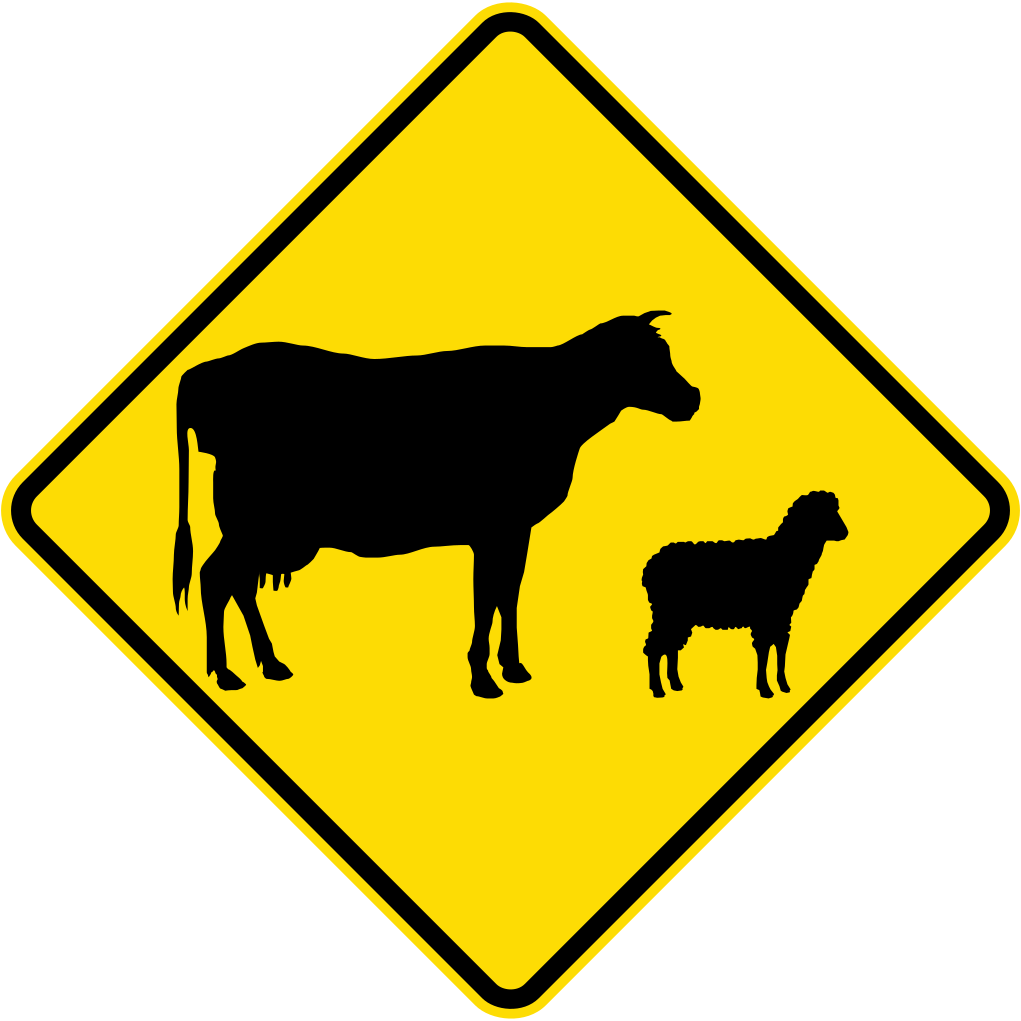 Warning for cattle on the road.
English • Stock warning family • cattle illustration • Cattle on the road. Cattle may be on or crossing the road ahead. Reduce speed and be prepared to stop. Illustration identified by its sign family or meaning; the exact current prescribed design has not been confirmed.
Sources
🔗 Commons.wikimedia.org
🔗 Transport.nsw.gov.au • Transport for NSW • Stock warning family • cattle illustration
🔗 Tmr.qld.gov.au • Queensland MUTCD • May2026 • stock warning variants
SVG source: Standards Australia • Public domain • Original revision 2024-09-19. Wikimedia original unmodified.
Artwork verified against Qld.gov.au • official published diagram W5-38.
Does an animal-crossing warning sign in Australia set a new speed limit?
A warning of animals is not, by itself, a numerical speed-limit sign. Continue to obey the applicable speed limit, but slow down whenever animals could enter the road or visibility is poor. A separate regulatory speed sign must also be obeyed.
🔗 nsw.gov.au • Australia, NSW official road-user guidance — crossing-animals
What should you do if an animal enters the road in Australia?
Ease off the accelerator, assess the traffic behind and brake smoothly if necessary. Avoid abrupt swerving into opposing traffic or off the road. Give farm animals and ridden animals room, avoid frightening them with unnecessary horn use, and be alert for more animals following.
🔗 nsw.gov.au • Australia, NSW official road-user guidance — crossing-animals
23. Slippery road
A slippery road has reduced tyre grip and can make steering, braking and acceleration less effective. Roads may become slippery because of rain, ice, snow, mud, oil, loose material or other substances on the surface. Drivers should reduce speed, increase their following distance and avoid sudden steering, braking or acceleration. Extra caution is needed in bends, on bridges and wherever the road surface changes unexpectedly.
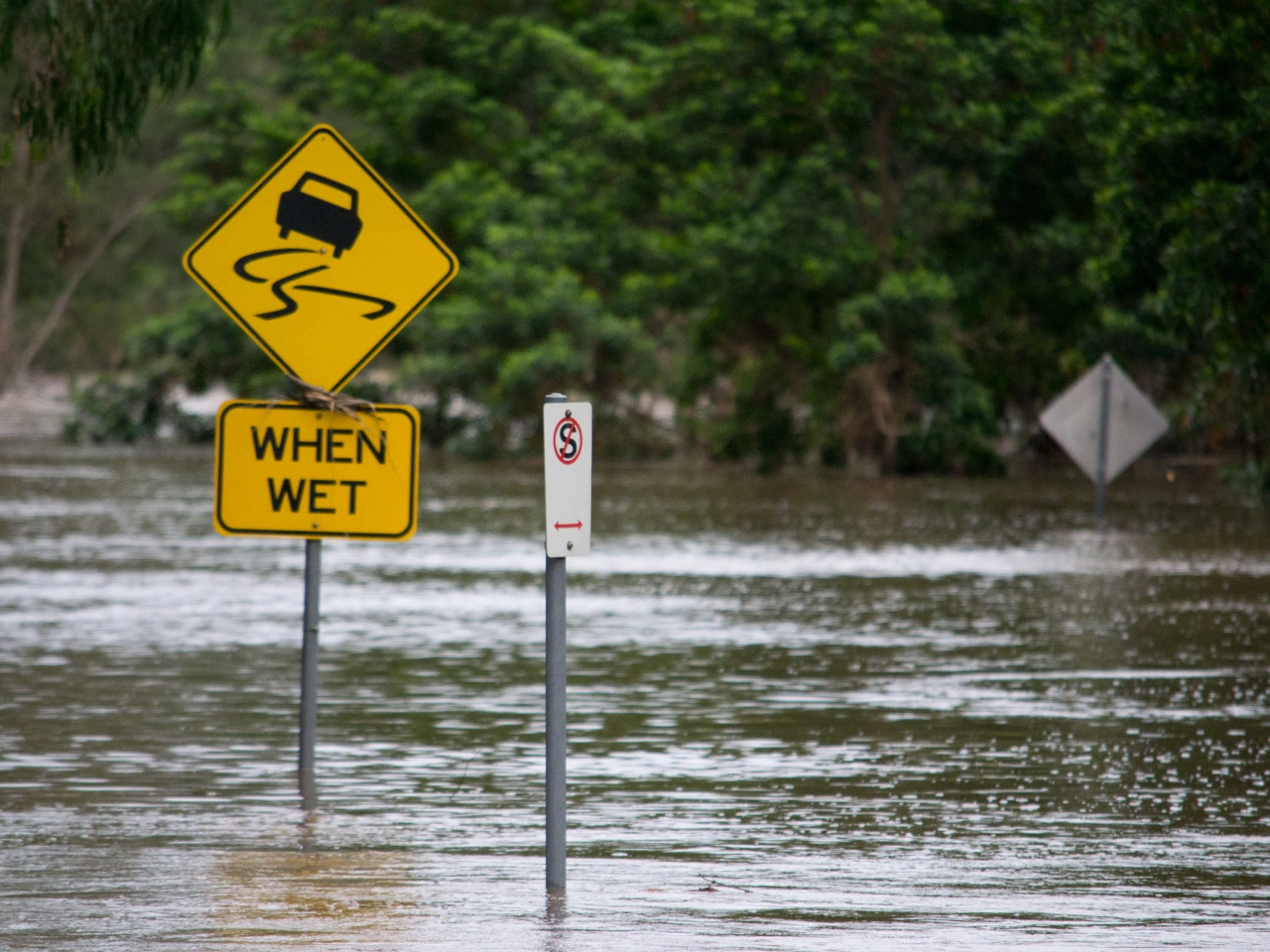
Wikimedia.org • lordphantom74 • CC BY
What can make roads slippery in Australia?
Be prepared for wet roads and loose gravel, with winter ice in some southern or mountain areas. A surface can become slippery even if it looks clear, and different parts of the road may have very different grip.
🔗 nsw.gov.au • Australia, NSW official road-user guidance — slippery-road
How should you drive on a slippery road in Australia?
Reduce speed early, increase the gap to the vehicle ahead and use smooth steering, braking and acceleration. Do not rely on the posted maximum as a safe target when grip is poor.
🔗 nsw.gov.au • Australia, NSW official road-user guidance — slippery-road
Does a slippery-road warning sign in Australia automatically impose a lower number?
The warning sign highlights a reduced-grip risk; it normally does not itself prescribe a new numerical speed limit. A separate speed-limit sign, temporary restriction or local condition may still apply. Travel below the legal maximum when necessary for safety.
🔗 nsw.gov.au • Australia, NSW official road-user guidance — slippery-road
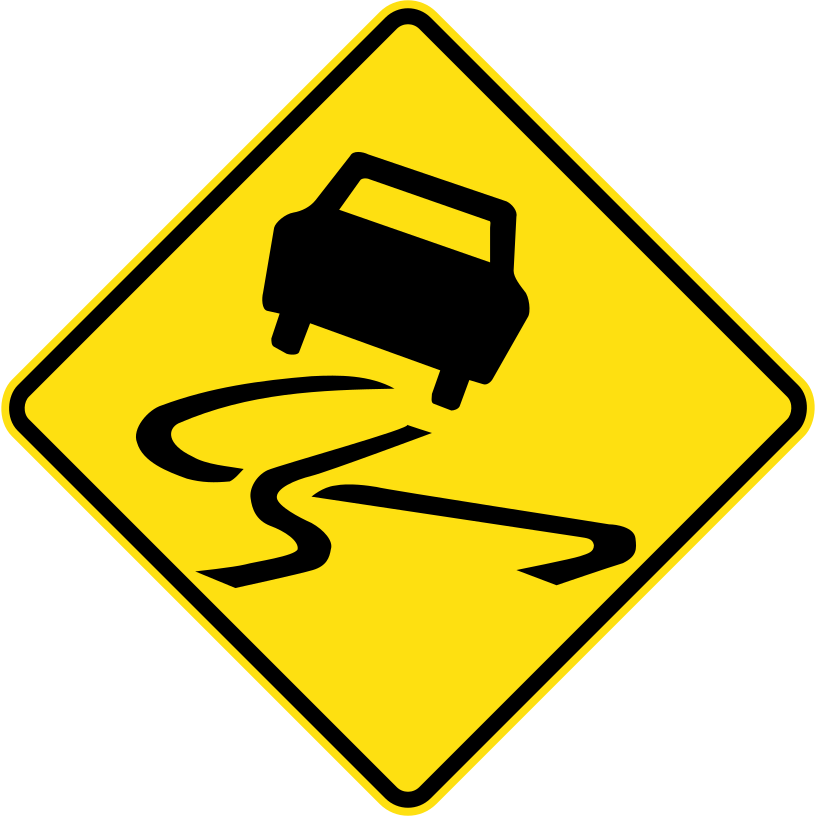 Warning for a slippery road surface.
English • W5-20 • Slippery road. The road may be slippery, particularly when wet. Reduce speed and avoid sudden braking or steering.
Sources
🔗 Commons.wikimedia.org
🔗 Transport.nsw.gov.au • Transport for NSW • W5-20
SVG source: Standards Australia • Public domain • Original revision 2015-10-30. Wikimedia original unmodified.
24. Curve
A curve is a section of road that changes direction to the left or right. A sharp, unexpected or poorly visible curve can reduce a driver’s view of approaching traffic, stopped vehicles, pedestrians and other hazards.
Drivers should reduce speed before entering the curve, remain within their lane and use smooth steering, braking and acceleration. Warning signs may indicate the direction of the first curve or a series of successive curves.
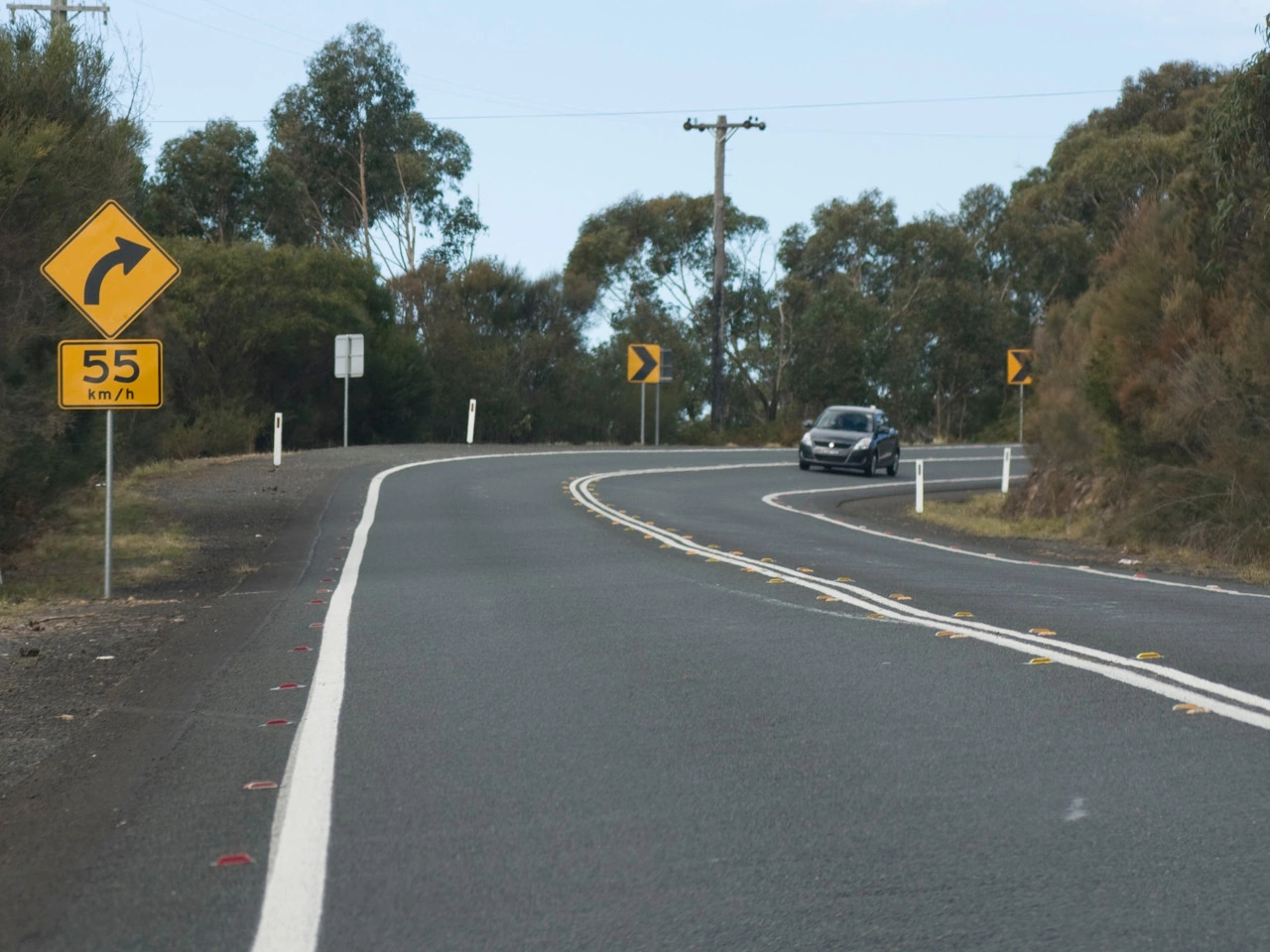
Wikimedia.org • Maksym Kozlenko • CC BY-SA
What makes a bend dangerous in Australia?
Curves shorten your view of the road ahead and can reduce the margin for correcting a mistake. Drivers may encounter remote outback curves and bends where wildlife or road trains may be present; the safe speed can be well below the posted maximum. Australian states and territories use advisory-speed signs at some bends; the actual statutory limit and any local restriction must still be followed.
🔗 nsw.gov.au • Australia, NSW official road-user guidance — curve
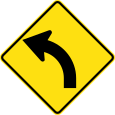 Warning for a curve to the left.
English • W1-3(L) • Curve to the left. The road curves to the left ahead. Adjust your speed before entering the curve.
Sources
🔗 Commons.wikimedia.org
🔗 Standards.transport.nsw.gov.au • Transport for NSW • alignment signs • section17.4.1
SVG source: Standards Australia • Public domain • Original revision 2012-10-11. Wikimedia original unmodified.
How should you approach a sharp curve in Australia?
Slow down before the bend, select the correct lane position, look through the curve and steer smoothly. Keep enough grip and visible stopping distance for the road and weather conditions.
🔗 nsw.gov.au • Australia, NSW official road-user guidance — curve
Is overtaking safe on a blind bend in Australia?
No. Do not start overtaking where your view of oncoming traffic is obstructed or where signs or road markings prohibit it. Wait until there is a lawful, clear and sufficiently long view ahead.
🔗 nsw.gov.au • Australia, NSW official road-user guidance — curve
25. Chevron
A chevron is a V-shaped or arrow-shaped road marker used to show a sharp change in the direction of a road. Chevron boards are normally placed along the outside of a curve so that their points indicate the direction in which the road continues.
Chevrons improve the visibility and alignment of a curve, especially in darkness or poor weather. They do not normally impose a speed limit or determine priority, so drivers must reduce speed before the curve and follow all other signs and road markings.
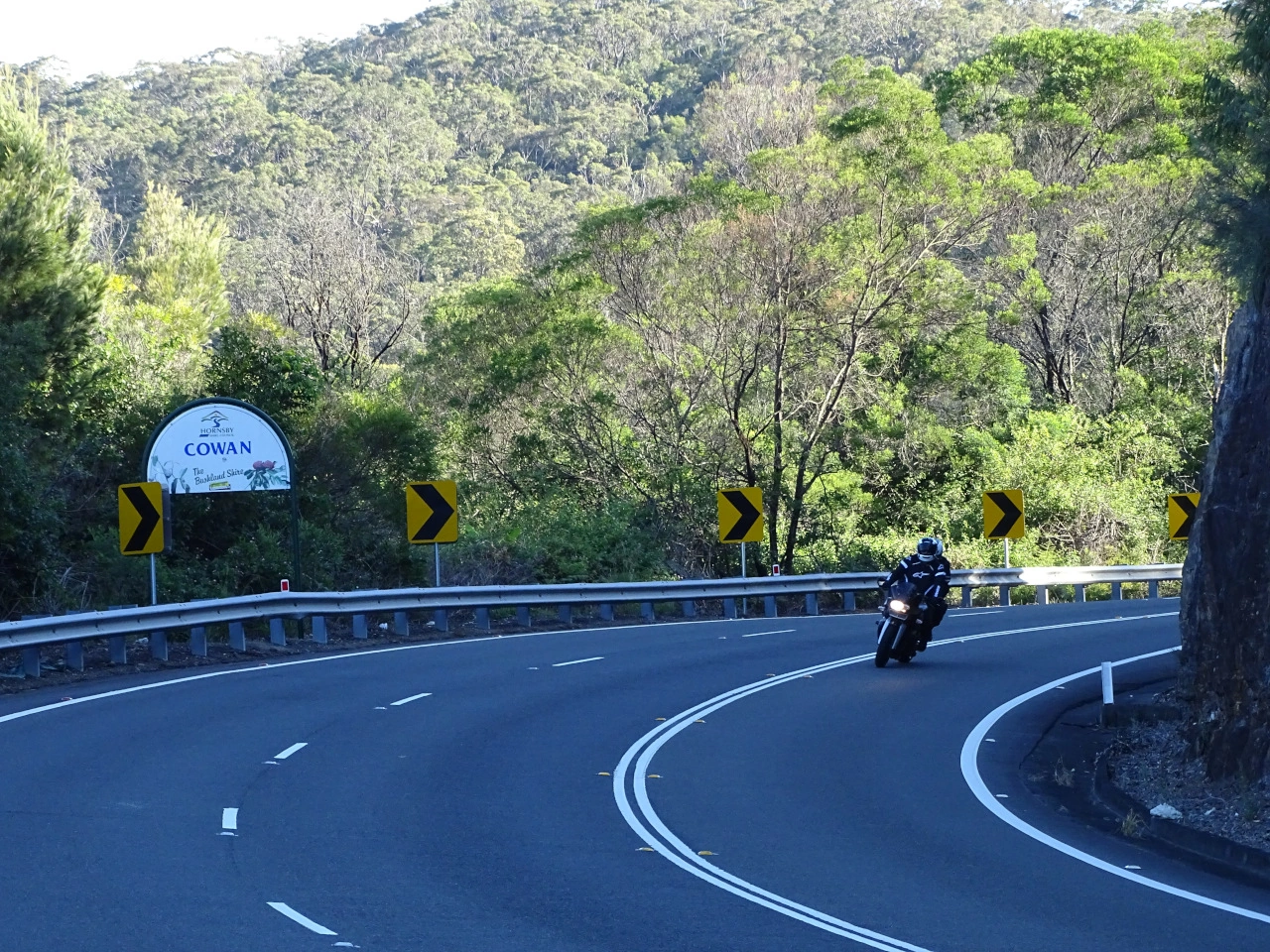
Wikimedia.org • FotoSleuth • CC BY
What is the purpose of chevron boards on a road in Australia?
Chevron alignment boards help drivers see which way a sharp bend continues, especially in darkness or poor visibility. Look for separate curve advisory-speed signs where provided; the board showing the curve direction is not itself a legal speed-limit sign.
🔗 nsw.gov.au • Australia, NSW official road-user guidance — chevron
Do chevron boards give priority or order a turn at junctions in Australia?
Not ordinary curve-alignment chevrons. They guide you around a bend. Give-way, no-entry, keep-direction and other mandatory traffic signs must be read separately; similar-looking arrows can have different legal meanings.
🔗 nsw.gov.au • Australia, NSW official road-user guidance — chevron
Is the speed shown by a chevron in Australia a compulsory maximum?
A chevron alone does not set a numerical maximum speed. If an advisory-speed panel or a regulatory speed-limit sign is displayed alongside it, identify which type it is and follow the binding speed rules.
🔗 nsw.gov.au • Australia, NSW official road-user guidance — chevron