


Bus stopAustralia
 Traffic rules
 Australia
13. Bus stop
A bus stop is a designated place where buses stop to allow passengers to board or leave. It may be identified by a sign, shelter, raised platform, road marking or other public-transport infrastructure and can be located beside the road or in a specially constructed stopping area.
Drivers approaching a bus stop should watch carefully for buses, pedestrians and passengers crossing or entering the roadway. Parking or stopping restrictions may apply around bus stops to keep the area accessible and visible.
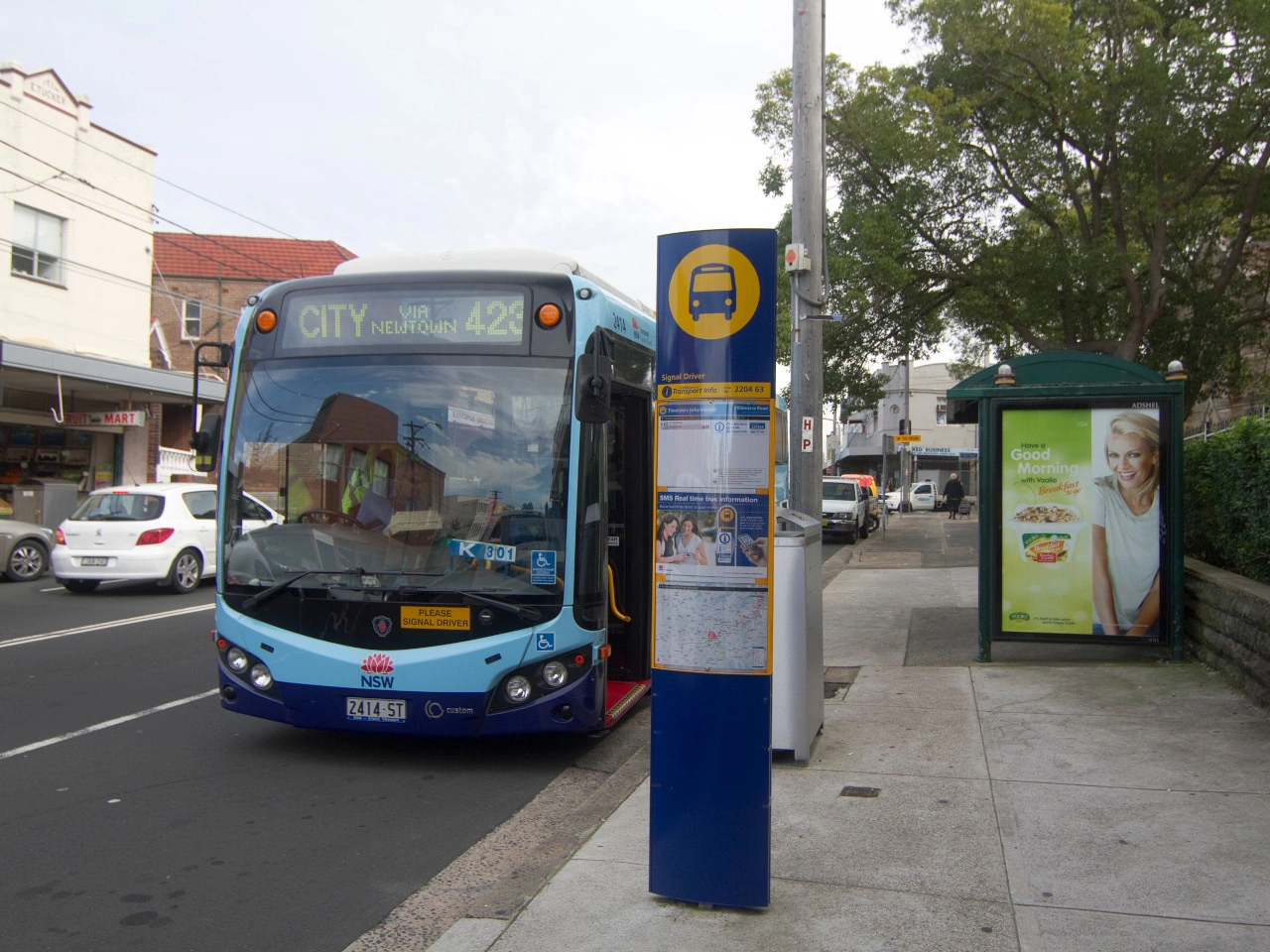
Wikimedia.org • Maksym Kozlenko • CC BY-SA
What stopping or parking restrictions apply at bus stops in Australia?
Australian rules vary by state and territory. In New South Wales, an ordinary driver must not stop at a bus stop or within 20 metres before and 10 metres after its sign, unless an applicable parking-control sign lawfully permits stopping there.
🔗 nsw.gov.au • Australia, NSW official road-user guidance — bus-stop
🔗 nsw.gov.au • Australia, official supporting guidance — bus-stop
May I briefly drop off a passenger at a bus stop in Australia?
In New South Wales, a private car’s brief passenger drop-off is not a general exception to the bus-stop prohibition. A bus zone has its own restrictions, so read the actual signs.
🔗 nsw.gov.au • Australia, NSW official road-user guidance — bus-stop
🔗 nsw.gov.au • Australia, official supporting guidance — bus-stop
What should I do near a stopped bus in Australia?
Rules depend on the state or territory. In New South Wales built-up areas, give way when you are in the left lane or line of traffic and a bus displaying a give-way-to-buses sign is stopped or moving slowly at the far left, indicates right and is about to move in front of you. NSW guidance says the bus must indicate for at least five seconds and move out safely.
🔗 nsw.gov.au • NSW Government, Merging and changing lanes, When a bus changes lanes; 🔗 nsw.gov.au • NSW Government, Buses, Giving way to buses


