


Multiple-vehicle collisionAustralia
 Traffic rules
 Australia
243. Multiple-vehicle collision
A multiple-vehicle collision is a traffic accident involving three or more vehicles. It can occur when one collision triggers additional impacts, especially in heavy traffic, poor visibility or slippery conditions. These crashes can be difficult to assess because several vehicles may be damaged and responsibility may involve more than one driver. After a multiple-vehicle collision, drivers should make the scene safe, assist injured people, contact emergency services when necessary and carefully document the vehicles, damage and circumstances.
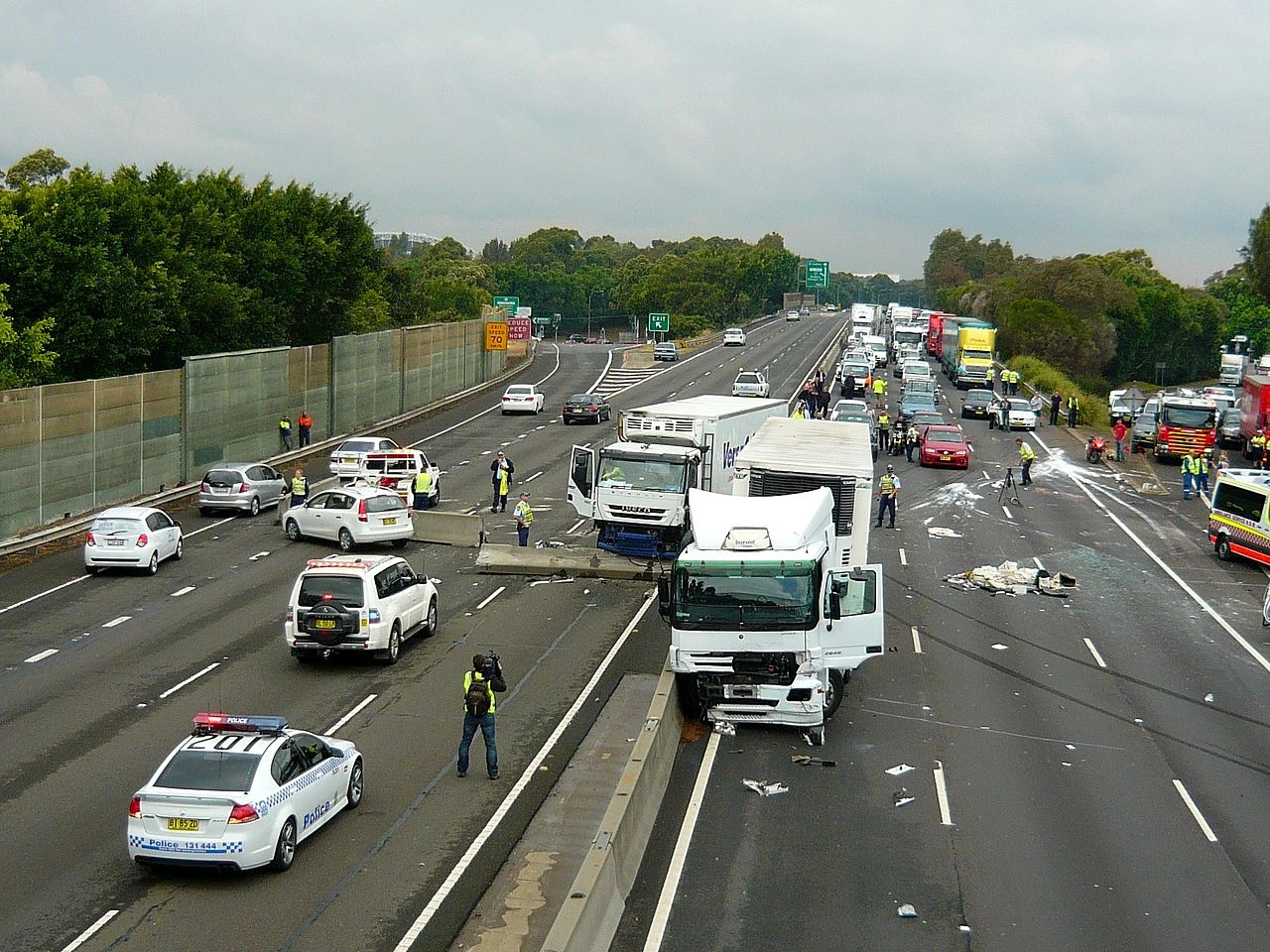
Wikimedia.org • sv1ambo • CC BY
What is a multiple-vehicle collision?
A multiple-vehicle collision involves more than one vehicle. It is not universally defined as requiring at least three: NHTSA’s technical material expressly includes two-vehicle crashes within multi-vehicle crashes.
🔗 wikifin.be • Belgian FSMA Wikifin, what to do after a collision
🔗 nhtsa.gov • US NHTSA, CAFE technical support document (2021), multi-vehicle crash usage
What is a chain collision?
A chain collision occurs when an initial crash leads to additional vehicles colliding one after another. It is a common type of multiple-vehicle collision.
🔗 wikifin.be • Belgian FSMA Wikifin, what to do after a collision
🔗 nhtsa.gov • US NHTSA, CAFE technical support document (2021), multi-vehicle crash usage
What should you do after a multiple-vehicle collision?
Protect yourself and others from further danger, check for injuries, contact emergency services when necessary and document the accident. Follow local rules on moving vehicles and reporting the crash.
🔗 wikifin.be • Belgian FSMA Wikifin, what to do after a collision
🔗 nhtsa.gov • US NHTSA, CAFE technical support document (2021), multi-vehicle crash usage


