

BrusselsBrussels
 Traffic rules
 Brussels
1. Brussels
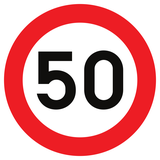
Brussels is Belgium’s capital region and consists of 19 municipalities at the centre of the country, completely surrounded by Flanders. Traffic drives on the right. Driving is predominantly urban, with busy junctions, trams, buses, cyclists, pedestrians and extensive one-way and restricted-access streets. Since 2021, Brussels has operated as a City 30: 30 km/h is the general speed limit throughout the region, while selected major roads are specifically signed at 50 or 70 km/h and residential or meeting zones can be limited to 20 km/h.
The Brussels-Capital Region also operates a region-wide low-emission zone covering all 19 municipalities, apart from the R0 Ring and certain access roads to transit car parks. Its emission requirements became stricter again on 1 January 2026. Written road information is commonly provided in French and Dutch, the region’s two official languages. Passenger cars do not need a road vignette, although qualifying goods vehicles are subject to Belgium’s kilometre-charge system.
AI
Which side of the road do you drive on in Brussels?
Drive on the right and normally overtake on the left.
Are traffic rules in Brussels different from the rest of Belgium?
Many basic traffic rules remain Belgian federal rules, including priority, alcohol, seat belts, child restraints and mobile-phone use. The Brussels-Capital Region is responsible for important regional matters such as its general speed regime, low-emission zone, vehicle inspection and road management.
What emergency numbers are used in Brussels?
Call 112 for an ambulance, the fire service or other emergency assistance. For urgent police assistance in Belgium, you can also call 101.
What is the alcohol limit for driving in Brussels?
The general Belgian limit applies. A driver is punishable from 0.5 g/L of alcohol in the blood, equivalent to 0.22 mg/L in exhaled air. A lower threshold of 0.2 g/L applies to specified professional drivers.
Is there a lower alcohol limit for novice drivers in Brussels?
No separate lower alcohol limit applies simply because a driver is young or inexperienced. The ordinary 0.5 g/L threshold applies.
What is the general speed limit in Brussels?
The general speed limit throughout the Brussels-Capital Region is 30 km/h. This City 30 rule applies unless a traffic sign indicates another limit.
Can the speed limit be 50 or 70 km/h in Brussels?
Yes. Certain major roads are specifically signed at 50 km/h or 70 km/h. These are exceptions to the regional 30 km/h default, so drivers must follow the posted signs.
What is the speed limit in a residential or meeting zone in Brussels?
In a residential or meeting zone indicated by the appropriate traffic signs, the maximum speed is 20 km/h.
Does Brussels have a low-emission zone?
Yes. The Brussels Low Emission Zone (LEZ) covers all 19 municipalities of the Brussels-Capital Region and applies continuously. Vehicle access depends mainly on vehicle category, fuel type and Euro emission standard.
Is the Brussels Ring included in the low-emission zone?
No. The R0 Ring is outside the Brussels LEZ. Certain roads providing access to designated transit car parks are also excluded, allowing some drivers to reach a Park & Ride without entering the LEZ itself.
Which passenger cars can enter the Brussels LEZ in 2026?
As of 1 January 2026, ordinary diesel passenger cars generally need to meet at least Euro 6, while petrol cars generally need at least Euro 3. Always check the official LEZ vehicle checker because rules depend on the vehicle category, fuel, Euro standard and any applicable exemption.
Did the Brussels LEZ become stricter in 2026?
Yes. From 1 January 2026, Euro 5 diesel and Euro 2 petrol vehicles covered by the rules no longer satisfy the normal access criteria. This followed the restoration of the previously scheduled LEZ milestone after a Constitutional Court ruling in September 2025.
Does the Brussels LEZ apply to motorcycles?
Yes. Motorcycles are now among the vehicle categories covered by the Brussels LEZ. In 2026, petrol motorcycles that do not meet at least the applicable Euro 3 requirement can be excluded unless an exemption or other permitted access arrangement applies.
Must a foreign vehicle be registered for the Brussels LEZ?
Most vehicles registered abroad must be registered with the Brussels LEZ system even if they satisfy the emission standard. Vehicles registered in the Netherlands are currently exempt from this separate registration requirement because their data can be obtained automatically.
Can a non-compliant vehicle use a day pass for the Brussels LEZ?
Yes. A vehicle that does not meet the normal LEZ requirements can generally use a day pass, subject to the applicable conditions. A maximum of 24 day passes per calendar year and per vehicle is currently allowed.
Do passenger cars need a vignette or motorway toll in Brussels?
No. Ordinary passenger cars do not need a Brussels road vignette, and there is no general passenger-car toll for driving on Brussels roads.
Does Brussels have a kilometre charge for trucks?
Yes. Goods vehicles covered by the Belgian Viapass kilometre charge, principally vehicles over 3.5 tonnes used or intended for goods transport and certain semi-trailer tractors, must use a functioning On Board Unit. Covered vehicles travelling in the Brussels-Capital Region are subject to the regional kilometre-charge rules.
Do cars have to use headlights during the day in Brussels?
Ordinary cars do not have a general requirement to use dipped headlights throughout normal daylight. Lights must be used at night and when visibility is insufficient.
Do motorcycles have to use their lights during the day in Brussels?
Yes. Two-wheeled mopeds and motorcycles must use their dipped headlight and red rear light continuously while riding, subject to the applicable technical rules for daytime running lights.
Are seat belts compulsory in Brussels?
Yes. The driver and passengers must wear a seat belt on seats equipped with one, subject to limited legal exemptions.
What are the child-restraint rules in Brussels?
Children under 18 years old and shorter than 135 cm must normally travel in a suitable child-restraint system. Specific exceptions apply in certain vehicles and circumstances.
Are motorcycle helmets compulsory in Brussels?
Yes. Drivers and passengers of motorcycles and the relevant categories of mopeds must wear an approved protective helmet.
Can you use a mobile phone while driving in Brussels?
Except when the vehicle is stationary or parked, a driver may not use, hold or manipulate a mobile electronic device with a screen unless it is fixed in a holder intended for that purpose.
Who has priority at an uncontrolled intersection in Brussels?
The general Belgian rule is priority from the right. A driver must give way to a vehicle approaching from the right unless traffic signs, signals or another statutory exception establish a different priority.
Who has priority at a roundabout in Brussels?
A driver entering a roundabout must give way to traffic already circulating on the roundabout.
Do pedestrians have priority at pedestrian crossings in Brussels?
Yes. At an uncontrolled pedestrian crossing, drivers must approach at moderate speed and give way to pedestrians who are on the crossing or about to enter it.
How much space must you leave when overtaking a cyclist in Brussels?
Within a built-up area, a driver must leave at least 1 metre of lateral distance when overtaking a cyclist or two-wheeled moped rider. Outside a built-up area, the minimum is 1.5 metres.
Do you have to let a bus leave its stop in Brussels?
Inside a built-up area, a driver travelling in the same direction must allow a bus or trolleybus to leave its stop when its driver signals the intention to pull out. Slow down and stop if necessary.
How does zipper merging work in Brussels?
In heavily congested traffic where a lane ends or becomes blocked, drivers should continue using the available lanes until near the obstruction and then merge alternately. The driver in the continuing lane must allow one vehicle to merge in turn.
Do drivers have to form an emergency corridor in Brussels?
Yes. As soon as a queue begins to form on a road with at least two lanes in the same direction, drivers must create a rescue corridor for priority vehicles. The rule also applies on urban roads.
Can tourists drive in Brussels with a foreign driving licence?
A valid EU or EEA driving licence is recognised in Belgium. Qualifying non-EU licences can also be recognised under international conventions or bilateral arrangements. An International Driving Permit is therefore not universally required; it depends on the licence concerned.
Is motor insurance compulsory in Brussels?
Yes. Motor vehicles used on Belgian public roads must have at least third-party liability insurance.
What safety equipment must a car carry in Brussels?
Belgian vehicle rules require important safety equipment including an approved warning triangle, retro-reflective safety vest, fire extinguisher and first-aid kit. The applicable breakdown rules determine when the vest and warning triangle must be used.
Do private cars need technical inspection in Brussels?
Yes. An ordinary passenger car generally enters periodic technical inspection when it reaches about 4 years of age. Brussels currently retains an annual periodic-inspection framework for older private cars, although the exact validity shown on the inspection certificate and particular vehicle circumstances must always be checked.
What languages are used on road signs in Brussels?
Traffic signs rely largely on standard symbols, while written road information in the officially bilingual Brussels-Capital Region commonly appears in French and Dutch.

