


HungaryHungary
 Traffic rules
 Hungary
1. Hungary
Hungary is a landlocked country in Central Europe, bordered by Austria, Slovakia, Ukraine, Romania, Serbia, Croatia and Slovenia. Traffic drives on the right, and passenger cars using tolled sections of the motorway and expressway network generally need an electronic motorway vignette (e-matrica). Hungary also applies a strict zero-alcohol rule for drivers, while cars must use daytime running lights or dipped headlights on roads outside built-up areas even during good daylight conditions.
Hungarian is the official language and is the main language used on text-based road and destination signs. Hungarian uses the Latin alphabet but includes distinctive accented letters such as á, é, í, ó, ö, ő, ú, ü and ű. In some communities with recognised national minorities, drivers may also encounter bilingual settlement and street-name signs alongside Hungarian. Winter tyres are not generally compulsory during a fixed season, but snow chains become mandatory where the appropriate traffic sign requires them.
AI-generated by Rijbewijs-online.be • WCIT • CC BY-SA
Which number can you call in an emergency in Hungary?
Call 112 for urgent emergency assistance. Give the operator your location and explain what happened.
🔗 police.hu • Hungarian Police, when to call the emergency numbers
What is the legal alcohol limit for drivers in Hungary?
Hungary applies a zero-alcohol rule for drivers. A driver must not have alcohol from alcoholic drinks in their body while driving.
🔗 europa.eu • Your Europe / national authorities, Hungary road rules, Alcohol limits
What speed limits apply to passenger cars in Hungary?
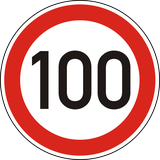
Built-up areas: For passenger cars, the general maximum speed is 50 km/h, unless signs indicate another limit.
Outside built-up areas: For passenger cars, the general maximum speed on ordinary roads outside built-up areas is 90 km/h, unless signs indicate another limit.
Expressways: For passenger cars, the general maximum speed on an autóút is 110 km/h, unless signs indicate another limit.
Motorways: For passenger cars, the general maximum speed on an autópálya is 130 km/h, unless signs indicate a lower limit.
What are the seat-belt and child-restraint rules in Hungary?
Seat belts must be worn by drivers and passengers using seats equipped with them, subject to specific legal exemptions.
Children shorter than 150 cm normally need a suitable child restraint. An exception allows a child aged 3 or older and at least 135 cm tall to travel on a rear seat using the fitted belt if it safely fits their body.
A rear-facing seat in front requires the frontal airbag to be absent or deactivated. Children under 3 may not travel in a car whose original construction does not allow a child restraint to be fitted. Separate exemptions include rear-seat travel in a taxi operating as a taxi.
🔗 europa.eu • Your Europe / national authorities, Hungary road rules, Seat belts and child restraints; 🔗 police.hu • Hungarian Police, Road Traffic Rules, section 48(7) and (8); 🔗 police.hu • Hungarian Police, safe travel with children
Can you use a handheld mobile phone while driving in Hungary?
A car driver may not use a handheld mobile phone while driving. The restriction also applies to riders of two-wheeled and certain three-wheeled vehicles while temporarily stopped for traffic reasons.
🔗 njt.jog.gov.hu • Hungarian National Legislation Database, Road Traffic Rules
What safety equipment should you carry in a car in Hungary?
Carry a first-aid kit, warning triangle and accessible reflective clothing. Hungary’s technical rules prescribe first-aid equipment and a triangle for passenger cars; qualifying foreign-registered vehicles are subject to the separate Vienna Convention provision. Use the triangle for a breakdown on the carriageway or hard shoulder outside built-up areas. Wear reflective clothing there or on the roadside verge at night or in poor visibility.
🔗 njt.jog.gov.hu • Hungarian National Legislation Database, Technical Regulation 6/1990, sections 1(2), 103 and 106, version 10 October 2026; 🔗 njt.jog.gov.hu • Hungarian National Legislation Database, current KRESZ, sections 16(4)(b), 21(12) and 56(6), version 11 April 2026
Can a visitor use a driving licence issued in another EU country in Hungary?
Yes. A valid, full EU driving licence is recognised for the vehicle categories it covers. You must meet the applicable minimum age. A learner licence or a temporary replacement certificate does not have the same automatic recognition.
Are motorcycle helmets compulsory in Hungary?
Yes. On an ordinary, open motorcycle, both the rider and passenger must wear a protective helmet. Use a helmet that meets the applicable approval requirements and fasten it correctly. Check the specific rules before relying on an exemption for an enclosed or specially equipped vehicle.
🔗 europa.eu • Your Europe / national authorities, Hungary road rules

