


No vehiclesHungary
 Traffic rules
 Hungary
77. No vehicles
No vehicles indicates that vehicles are prohibited from entering the road, street or area beyond the sign. Unlike a one-way no-entry restriction, the prohibition normally applies to traffic approaching from both directions.
The exact road users covered by the restriction can vary between countries. Depending on local law, bicycles, mopeds, animal-drawn vehicles or other road users may also be prohibited. Supplementary signs may provide exceptions for residents, deliveries, cyclists, public transport or other authorised traffic.
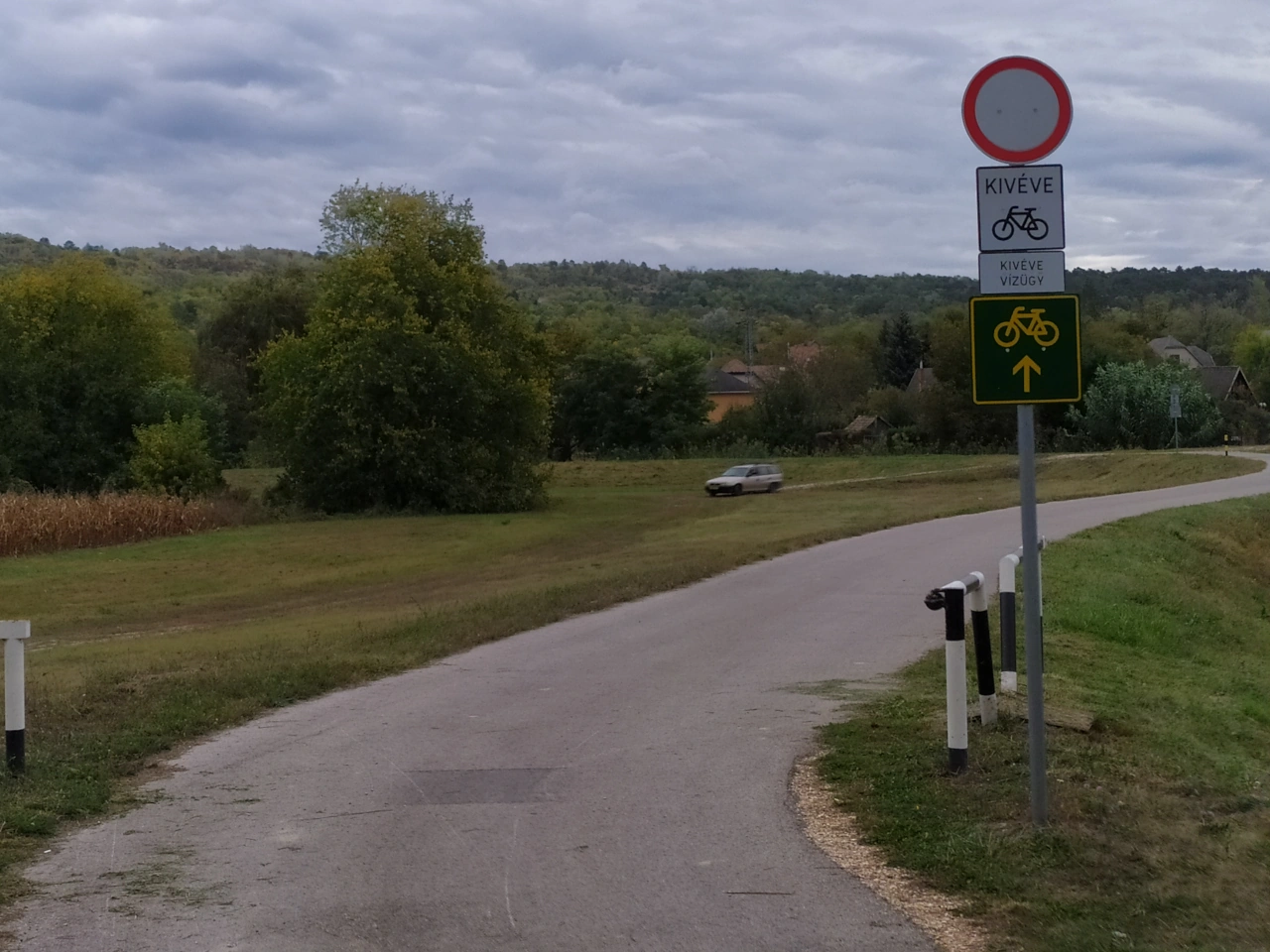
Wikimedia.org • Antal Gertheis • CC BY-SA
What does a no-vehicles sign mean?
A no-vehicles sign indicates that vehicles may not enter the road or area beyond the sign. The restriction normally applies to traffic approaching from either direction unless supplementary signs provide an exception.
🔗 gov.uk • UK Department for Transport, Know Your Traffic Signs, regulatory signs; British example
 Access prohibited in both directions.
Does no vehicles apply to cars and motorcycles?
Yes, normally. Cars, motorcycles and other motor vehicles are generally covered by a prohibition applying to all vehicles or all drivers unless an exception is specifically indicated.
🔗 gov.uk • UK Department for Transport, Know Your Traffic Signs, regulatory signs; British example
Can pedestrians pass a no-vehicles sign?
Usually yes if the prohibition applies only to vehicles or drivers. A separate pedestrian prohibition may be required to prevent pedestrians from entering. Local definitions and supplementary signs must always be checked.
🔗 gov.uk • UK Department for Transport, Know Your Traffic Signs, regulatory signs; British example


