

ReversingRussia
 Traffic rules
 Russia
40. Reversing
Reversing means driving a vehicle backwards. It is commonly used when parking, leaving a confined space or repositioning a vehicle where forward movement is not practical.
Before reversing, the driver should check mirrors and blind spots, look carefully around the vehicle and make sure the area behind is clear. Reversing should be performed slowly and only for as long as necessary because visibility behind the vehicle is often limited.

Wikimedia.org • Kārlis Dambrāns • CC BY
When may Russian drivers reverse?
Only safely and without obstructing other road users.
🔗 sh380.krsl.gov.spb.ru • Russia — Sections 8.11–8.12 and 16.1
When must Russian reversing drivers obtain assistance?
Whenever needed to ensure a safe manoeuvre.
🔗 sh380.krsl.gov.spb.ru • Russia — Sections 8.11–8.12 and 16.1
Can you reverse at Russian junctions?
No. Reversing at intersections is prohibited.
🔗 sh380.krsl.gov.spb.ru • Russia — Sections 8.11–8.12 and 16.1
Can you reverse on Russian pedestrian crossings?
No. Reversing is prohibited there.
🔗 sh380.krsl.gov.spb.ru • Russia — Sections 8.11–8.12 and 16.1
Can you reverse in Russian tunnels or under bridges?
No. The ban covers tunnels, bridges, overpasses and beneath them.
🔗 sh380.krsl.gov.spb.ru • Russia — Sections 8.11–8.12 and 16.1
What visibility restriction affects Russian reversing?
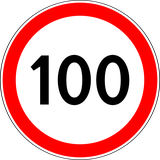
It is prohibited where road visibility in either direction is below 100 metres.
🔗 sh380.krsl.gov.spb.ru • Russia — Sections 8.11–8.12 and 16.1
Can you reverse at Russian public-transport stops?
No. Reversing at designated route-service stops is prohibited.
🔗 sh380.krsl.gov.spb.ru • Russia — Sections 8.11–8.12 and 16.1
Can you reverse on Russian motorways?
No. Reversing is prohibited.
🔗 sh380.krsl.gov.spb.ru • Russia — Sections 8.11–8.12 and 16.1


