


Bike pathAustria
An introduction to the traffic rules and road signs of Austria. Learn about driving, road safety and much more in our illustrated book, with answers to frequently asked questions.
For informational purposes only. Always follow official regulations. Some content and images were created with AI assistance.
 Traffic rules
 Austria
8. Bike path
A bike path is a part of a road or a separate route intended primarily or exclusively for people riding bicycles. It may be physically separated from motor traffic, marked on the road surface or identified by traffic signs.
Bike paths may be one-way, two-way or shared with other road users. The permitted users, direction of travel, priority rules and obligation to use the path depend on local traffic signs and regulations.
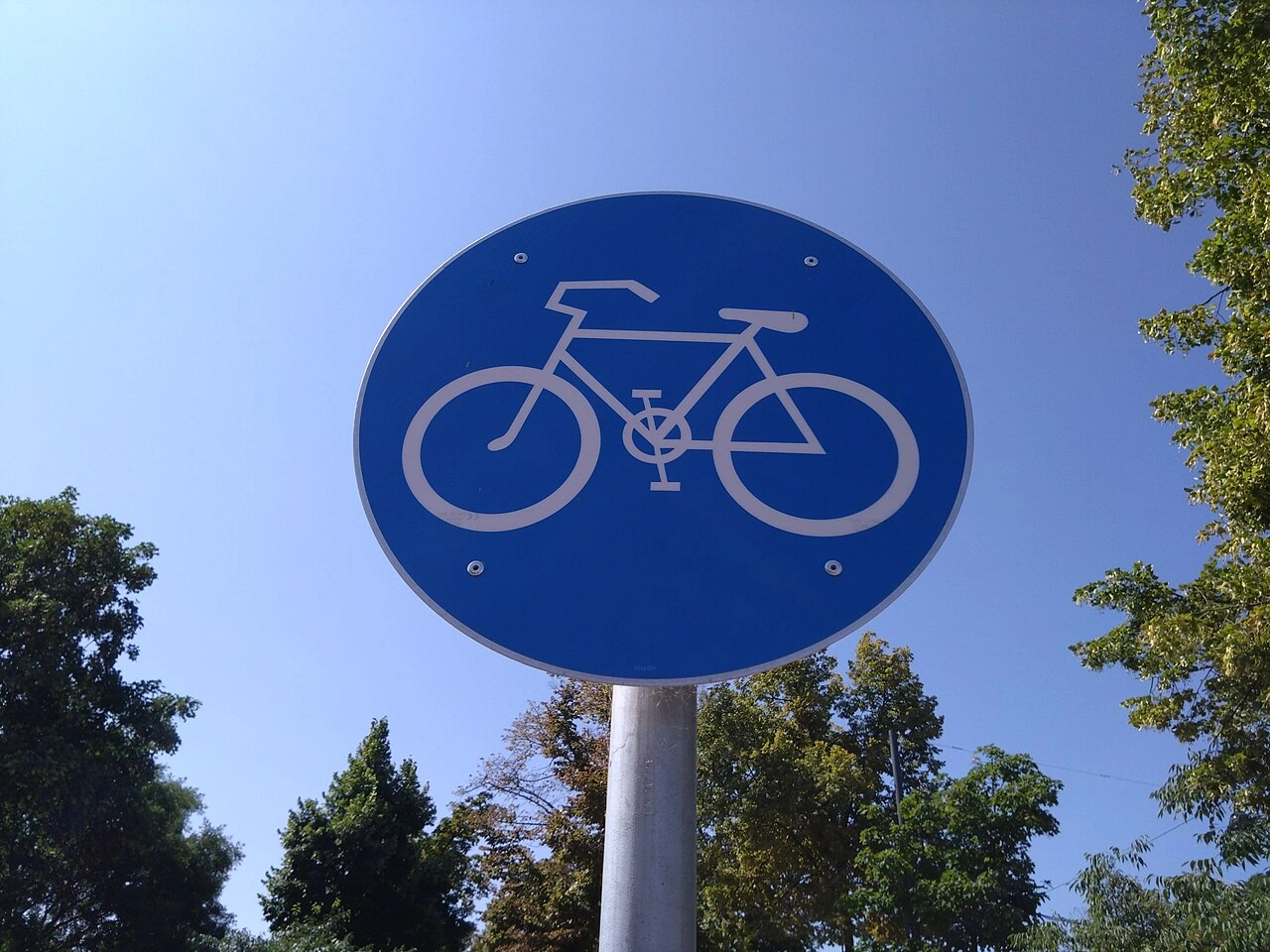
Wikimedia.org • RandomDuck5000 • CC BY-SA
How does Austria distinguish a cycle path from a cycle lane?
A Radweg is a signed path intended for cycling. A Radfahrstreifen is a specially marked part of the carriageway. A combined walking and cycling route is a Geh- und Radweg. These facilities have different layouts and access rules.
🔗 ris.bka.gv.at • Austrian RIS, StVO — sections 2, 8a, 52(16–17a), 53(27–28), 68
Must I use every Austrian cycle path?
Normally use the cycling facility provided for your direction when riding an ordinary bicycle without a trailer. Square optional-path signs remove that obligation. The Act also provides exceptions for specified bicycle dimensions, trailers and racing-bike training; check which applies to your bicycle.
🔗 ris.bka.gv.at • Austrian RIS, StVO — sections 2, 8a, 52(16–17a), 53(27–28), 68
Does an Austrian cycle path always give cyclists a separate space from pedestrians?
No. A cycle-only path differs from a combined walking and cycling path. On the combined facility, cyclists must not endanger pedestrians. Where the sign divides the users into separate parts, follow that allocation instead of assuming the whole surface is for cycling.
🔗 ris.bka.gv.at • Austrian RIS, StVO — sections 2, 8a, 52(16–17a), 53(27–28), 68


