


TunnelAustria
An introduction to the traffic rules and road signs of Austria. Learn about driving, road safety and much more in our illustrated book, with answers to frequently asked questions.
For informational purposes only. Always follow official regulations. Some content and images were created with AI assistance.
 Traffic rules
 Austria
10. Tunnel
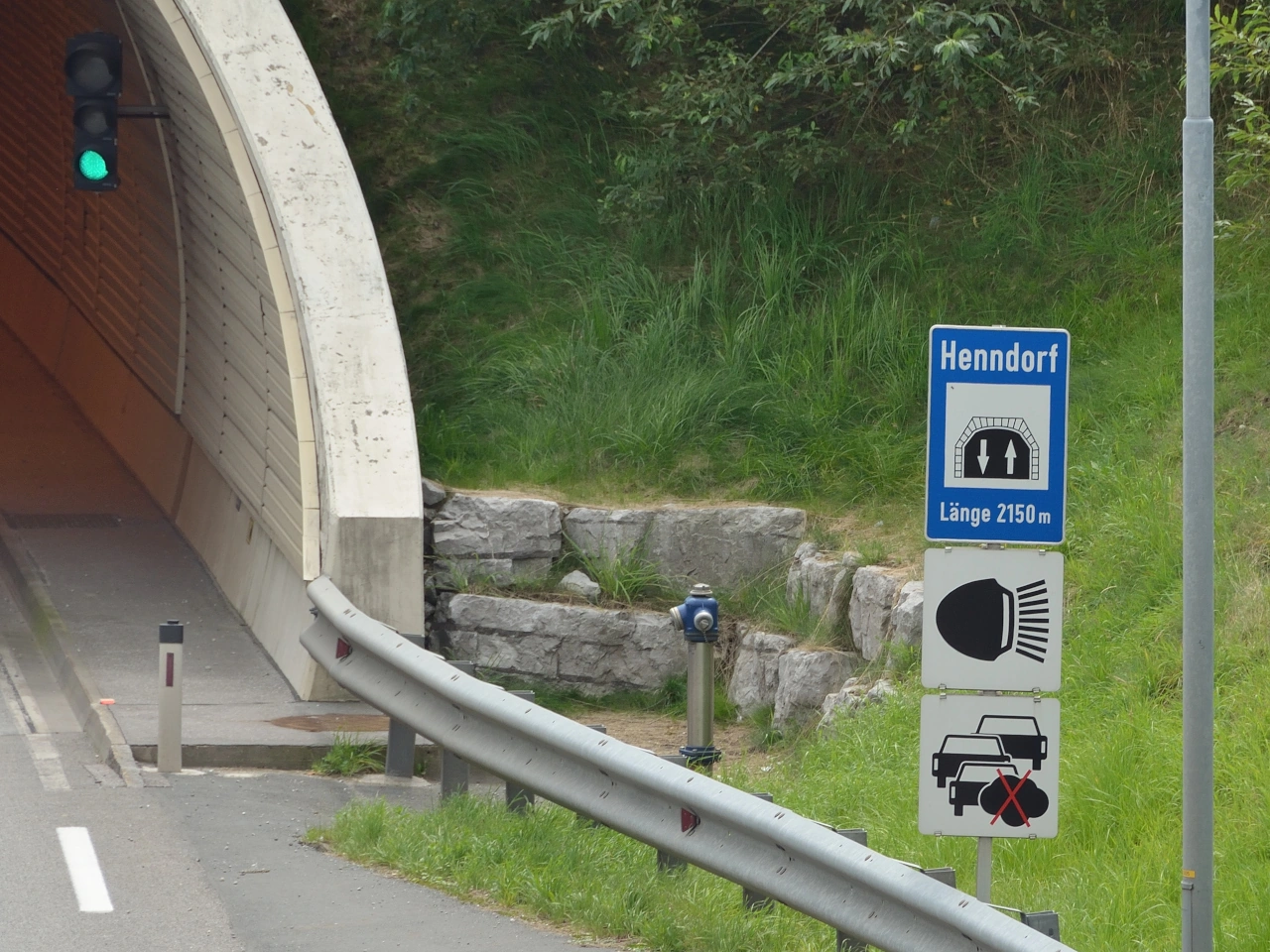
A tunnel is a covered passage that carries a road through or beneath an obstacle such as a hill, mountain, building, waterway or another transport route. Road tunnels may contain one or more traffic lanes and can carry traffic in one or both directions.
Driving in a tunnel requires particular attention because visibility, available escape routes and space for avoiding hazards are limited. Drivers should follow the applicable lighting, speed, lane and following-distance rules and pay attention to emergency exits, traffic signals and variable-message signs.
Wikimedia.org • Herzi_Pinki • CC BY-SA
What should I check before entering a tunnel in Austria?
Read the entrance signs, clearance limits and lane controls. Use lighting appropriate to visibility and comply with any headlights instruction. Austria normally prohibits stopping and parking in road tunnels, with exceptions where lawful signs or road markings provide otherwise.
🔗 ris.bka.gv.at • Austrian RIS, StVO — sections 20, 24(1)(b), 24(2), 46, 50, 52–53
Does a tunnel sign in Austria set a universal speed limit?
No single speed can be read from the tunnel pictogram. Apply the road’s relevant limit and any permanent or electronic speed restriction, and drive more slowly when visibility, queues or another hazard require it.
🔗 ris.bka.gv.at • Austrian RIS, StVO — sections 20, 24(1)(b), 24(2), 46, 50, 52–53
Is every tunnel in Austria open to pedestrians and cyclists?
No. Check the road category and access signs before entering. A motorway tunnel, a vehicle-restricted tunnel and a purpose-built walking or cycling underpass have different access arrangements. Emergency evacuation routes do not establish ordinary public access.
🔗 ris.bka.gv.at • Austrian RIS, StVO — sections 20, 24(1)(b), 24(2), 46, 50, 52–53


