


Emergency telephoneAustria
Learn traffic rules with clear explanations and visual examples in our illustrated book, designed to make studying simple and engaging.
 Traffic rules
 Austria
42. Emergency telephone
An emergency telephone is a dedicated roadside or tunnel telephone that connects road users directly with an emergency, traffic-control or roadside-assistance centre. Emergency telephones are commonly installed in tunnels, along motorways or at other locations where quickly reporting an accident, breakdown or fire is important. They can provide operators with useful information about the caller’s location and may remain available where mobile-phone reception is poor.
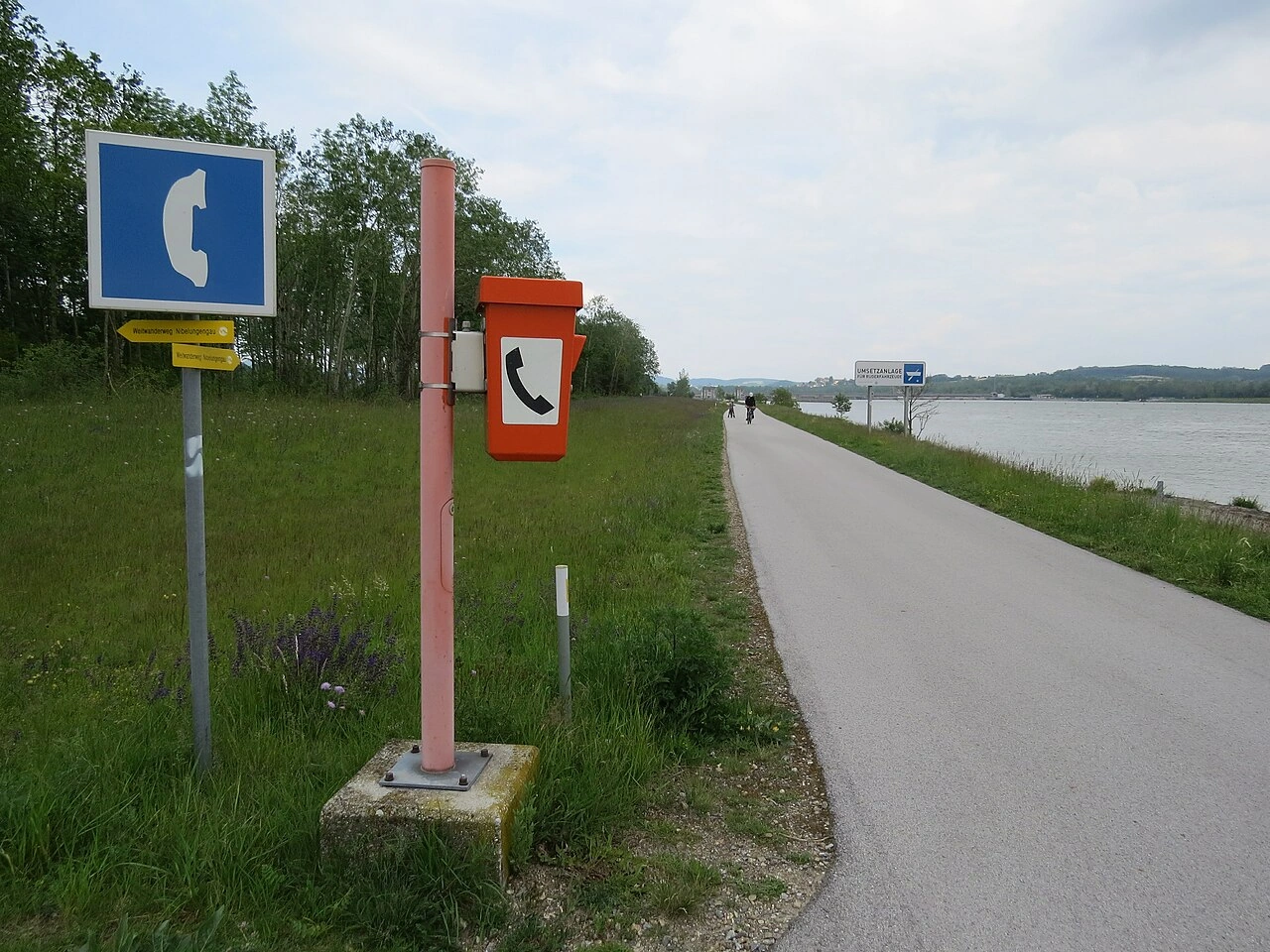
Wikimedia.org • GT1976 • CC BY-SA
What is an emergency telephone?
An emergency telephone is a dedicated telephone used to contact emergency services, a traffic-control centre or roadside assistance from the road.
Where are emergency telephones commonly found?
They are commonly installed in road tunnels, motorway emergency areas and other locations where rapid assistance may be needed.
When should you use an emergency telephone?
Use an emergency telephone to report situations such as a breakdown, accident, fire or other serious road emergency when assistance is required.
Why use an emergency telephone instead of a mobile phone?
An emergency telephone may allow the operator to identify your location immediately and connect you directly with the responsible control centre. It can also be useful where mobile reception is poor.
Are emergency telephones available on every motorway?
No. Their availability varies between countries and road networks. Mobile phones and emergency apps have replaced many traditional roadside call boxes.
Is an emergency telephone free to use?
Dedicated emergency telephones are generally intended for emergency assistance and do not require normal telephone payment, although systems vary between countries.


