


Mandatory directionAustria
 Traffic rules
 Austria
25. Mandatory direction
A mandatory-direction sign requires drivers to travel only in the direction or one of the directions indicated by its arrow or arrows. It may require traffic to continue straight ahead, turn, or pass an obstacle on a specified side.
The sign does not itself determine priority or speed. Drivers must still use the appropriate lane, signal when required and give way according to local traffic signs and regulations.
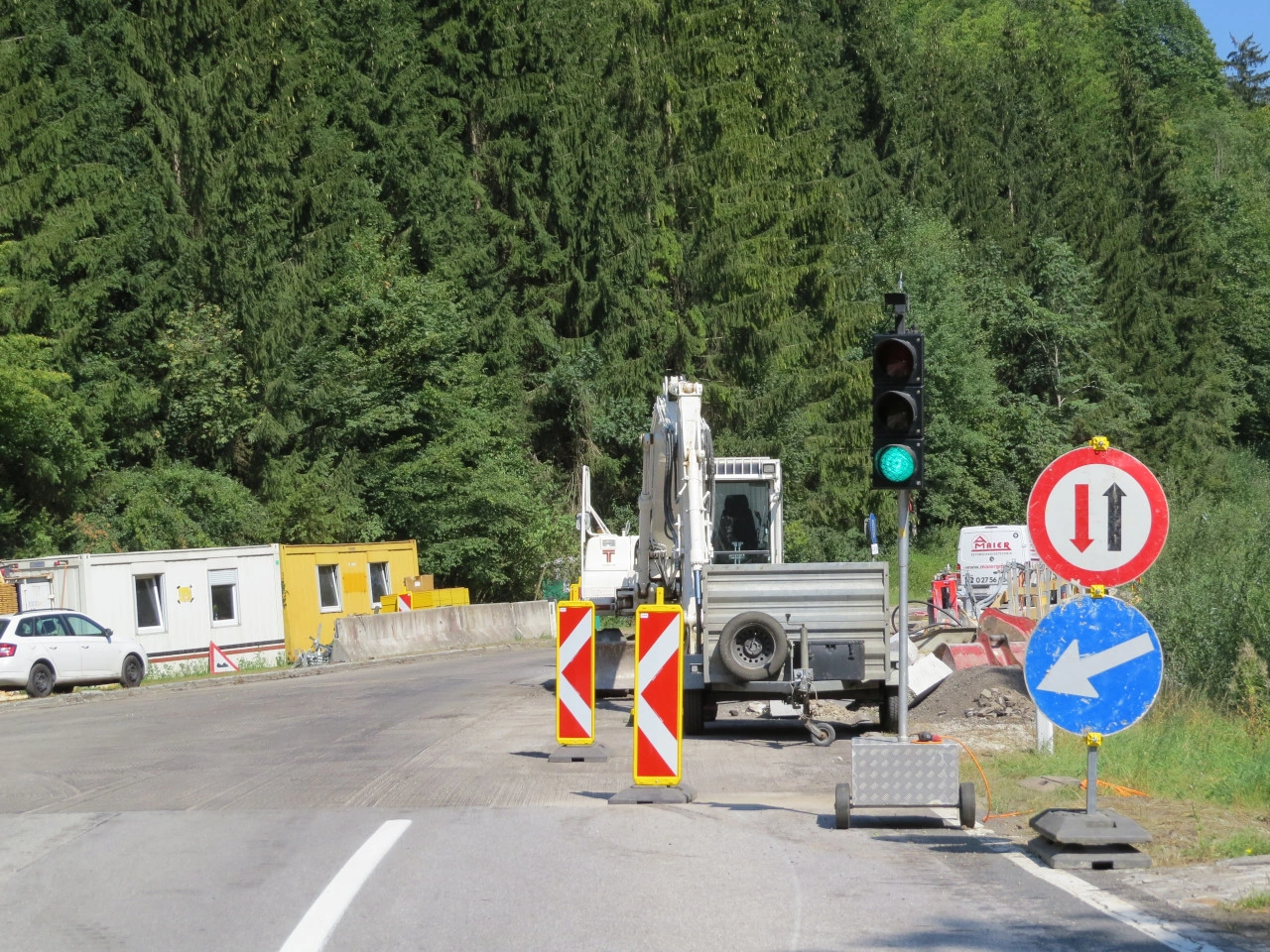
Wikimedia.org • GT1976 • CC BY-SA
What does a mandatory-direction sign mean?
It requires drivers to follow the direction or one of the directions shown by the arrow or arrows.
How can you recognise a mandatory-direction sign?
It is commonly a blue circular sign with one or more white arrows. Colours and designs may differ in some countries.
What does an upward arrow mean?
It normally means that drivers must continue straight ahead and may not turn in another direction at that location.
What does a left or right arrow mean?
It normally requires drivers to turn or proceed in the direction shown by the arrow.
What do two arrows mean?
Drivers may choose one of the displayed directions. Any direction not shown is prohibited.
What does an arrow beside an obstacle mean?
It requires drivers to pass the traffic island, barrier, roadworks equipment or other obstruction on the side indicated by the arrow.
Is a mandatory-direction sign the same as a one-way sign?
No. A mandatory-direction sign prescribes a movement at a particular location. A one-way sign indicates the permitted direction along a road or carriageway.
Is it the same as a no-turn sign?
No. A mandatory sign states which direction must be followed, while a prohibition sign states which movement is forbidden. Both may produce a similar practical result.
Does the sign impose a speed limit?
No. Drivers must follow the applicable general, zonal or posted speed limit and reduce speed when necessary to complete the required movement safely.
Does the sign give you priority?
No. You must still obey traffic lights, priority signs and the ordinary rules concerning oncoming traffic, pedestrians, cyclists and other road users.
When does the obligation begin?
It normally applies at the sign, intersection or obstacle associated with it. An advance sign may indicate that the obligation begins farther ahead.
Can a mandatory-direction sign apply to only one lane?
Yes. When it is positioned above a particular lane or clearly associated with that lane, it normally applies only to traffic using that lane.
Can road arrows also prescribe a direction?
Yes. Lane arrows may require drivers to use a particular lane and follow one of the directions displayed within that lane.
Must you use an indicator?
Yes, when the required movement involves turning or changing position and local law requires signalling. The sign does not replace the obligation to indicate.
Does signalling give you priority?
No. An indicator communicates your intention but does not allow you to force another road user to brake or change direction.
May you make a U-turn?
Not when doing so would conflict with the mandatory direction or another prohibition. Drivers must follow the permitted route shown by the signs and markings.
May you reverse to avoid following the sign?
No. Reversing must not be used to evade a mandatory direction. Continue along a lawful route and turn around later where permitted.
Does the sign apply to cyclists?
Cyclists are normally treated as drivers and must obey the sign unless a supplementary panel or local rule expressly exempts them.
Can other road users be exempted?
Yes. Supplementary signs may exempt or separately regulate cyclists, public transport or other specified categories where local law permits this.
What if the required route is blocked?
Do not enter a closed or unsafe route. Stop where safe and follow temporary signs, traffic lights or instructions from authorised personnel.
Do traffic lights cancel a mandatory-direction sign?
Not normally. Traffic lights determine when traffic may proceed, while the mandatory-direction sign determines which movement is permitted.
Do police instructions override the sign?
Yes. Instructions from an authorised traffic officer normally take precedence over traffic signs and ordinary traffic rules.
Can a temporary mandatory-direction sign be binding?
Yes. Properly placed temporary signs at roadworks, incidents or events must be obeyed.
What is a mandatory route for dangerous-goods vehicles?
It requires vehicles carrying specified dangerous goods to follow a designated route suitable for their cargo and any applicable tunnel restrictions.
When does the mandatory direction end?
The obligation is normally completed after the driver has followed the required direction at the intersection or passed the obstacle on the indicated side.


