


Traffic signsBelgium
 Traffic rules
 Belgium
 Priority signs
 Warning signs
 Prohibitory signs
 Mandatory signs
 Information signs
 Additional signs
Traffic signs
A traffic sign is a standardised visual symbol placed along roads to guide, warn, or regulate drivers, cyclists, and pedestrians. These signs provide essential information about road conditions, rules, directions, and potential hazards, helping to ensure safety and smooth traffic flow. They come in various shapes and colours—such as triangular warning signs, circular prohibitory or mandatory signs, and rectangular information signs—each designed for quick recognition and clear understanding.
What are Belgian A-series traffic signs?
The A series mainly consists of warning signs. They warn road users of a danger ahead, such as dangerous curves, road narrowing, slippery roads, pedestrian crossings or railway crossings.
 Warning for a danger with no specific traffic sign.
Signal routier A51 • Danger non défini par un symbole spécial. Un panneau additionnel indique la nature du danger.
Verkeersbord A51 • Gevaar dat niet door een speciaal symbool wordt bepaald. Een onderbord duidt de aard van het gevaar aan.
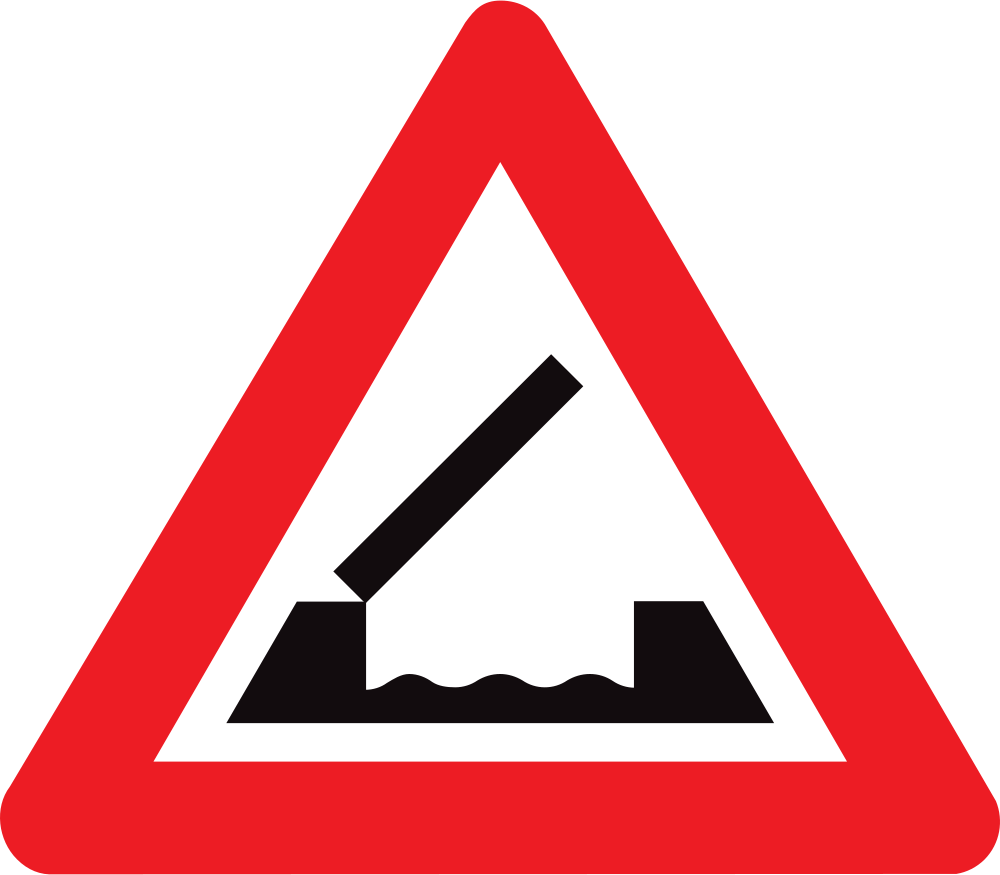 Warning for a movable bridge.
Signal routier A9 • Pont mobile.
Verkeersbord A9 • Beweegbare brug.
What are Belgian B-series traffic signs?
The B series contains priority signs. These signs regulate matters such as giving way, stopping, priority roads, priority from the right and priority at narrow passages.
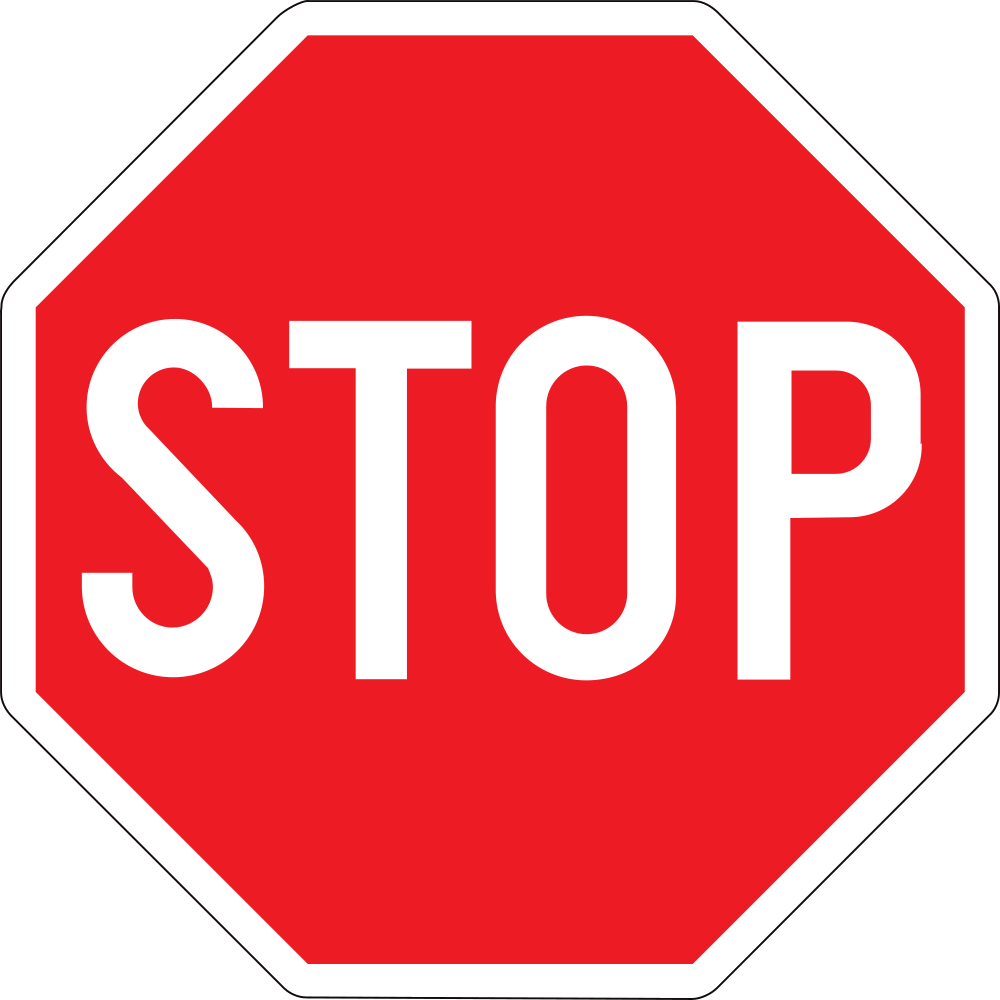 Stop and give way.
Signal routier B5 • Marquer l’arrêt et céder la priorité.
Verkeersbord B5 • Stoppen en voorrang verlenen.
 Give way.
Signal routier B1 • Céder la priorité.
Verkeersbord B1 • Voorrang verlenen.
What are Belgian C-series traffic signs?
The C series contains prohibition and restriction signs. They can prohibit access, restrict particular categories of vehicles, impose a maximum speed or prohibit certain manoeuvres.
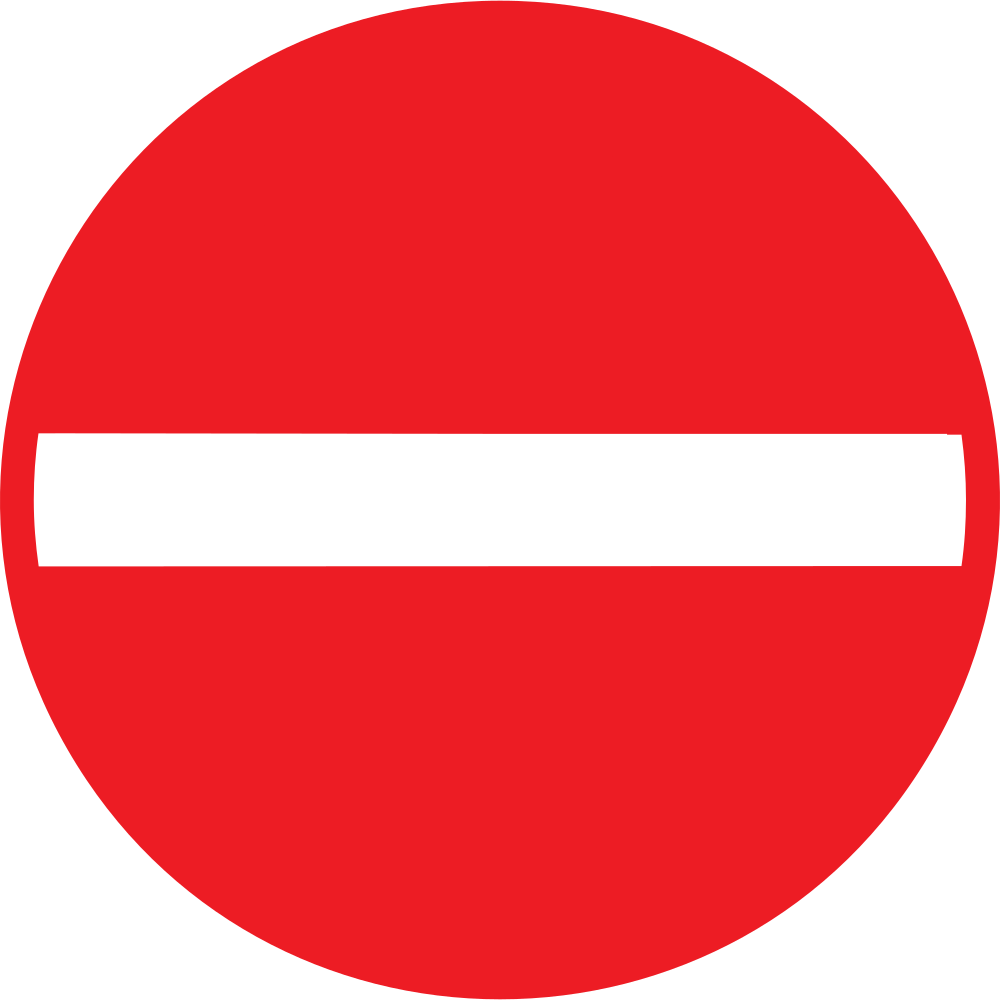 No entry.
Signal routier C1 • Sens interdit à tout conducteur.
Verkeersbord C1 • Verboden richting voor iedere bestuurder.
 Access prohibited in both directions.
Signal routier C3 • Accès interdit, dans les deux sens, à tout conducteur.
Verkeersbord C3 • Verboden toegang, in beide richtingen, voor iedere bestuurder.
What are Belgian D-series traffic signs?
The D series contains mandatory signs. They can require drivers to follow a particular direction or require certain road users to use a designated part of the public road.
 Driving straight ahead mandatory.
Signal routier D1 • Obligation de suivre la direction indiquée par la flèche. La disposition des lieux détermine la position de la flèche. Si le signal présentant une flèche non coudée, est placé sur un obstacle, il signifie obligation de passer du côté indiqué par la flèche.
Verkeersbord D1 • Verplichting de door de pijl aangeduide richting te volgen. De plaatsgesteldheid bepaalt de stand van de pijl. Wanneer het verkeersbord dat een niet-gebogen pijl voorstelt, op een hindernis geplaatst is, betekent het dat langs de door de pijl aangeduide richting moet voorbijgereden worden.
What are Belgian E-series traffic signs?
The E series contains signs concerning stopping and parking. They can prohibit stopping or parking or indicate and regulate parking places.
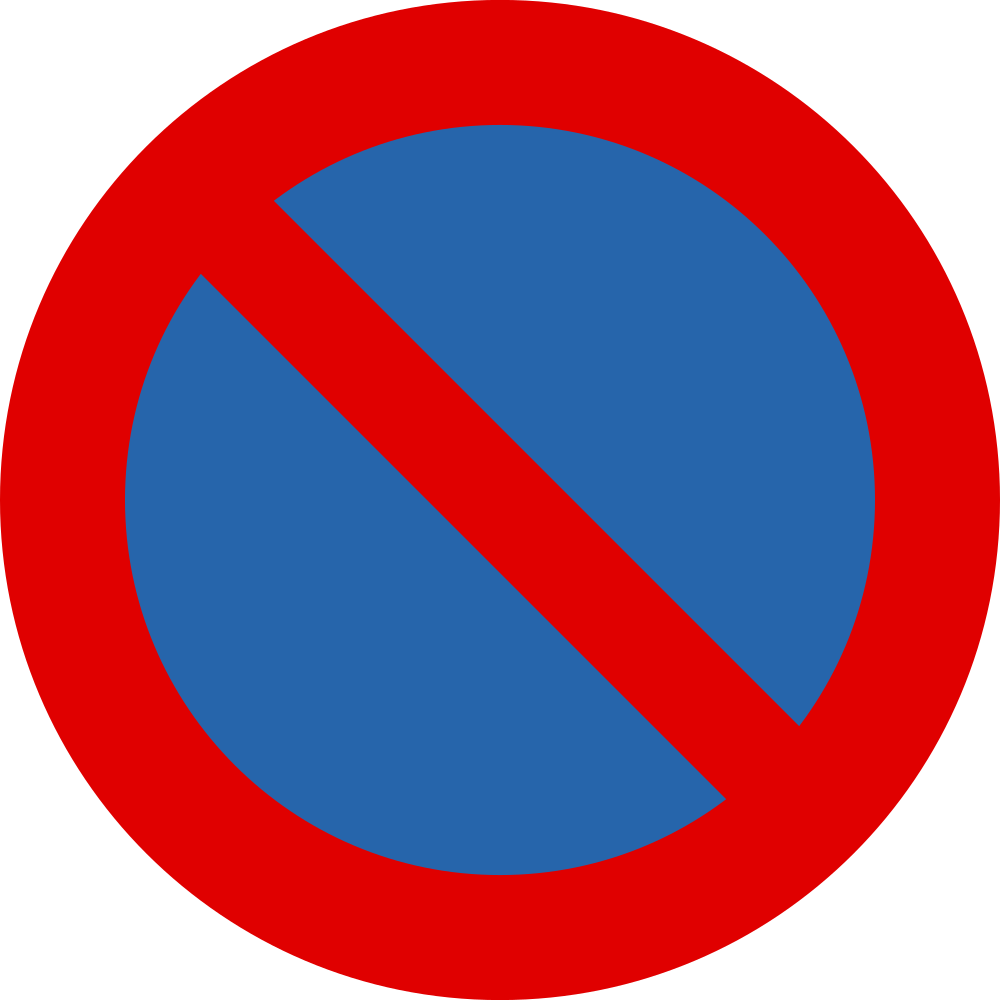 Parking prohibited.
Signal routier E1 • Stationnement interdit.
Verkeersbord E1 • Parkeerverbod.
What are Belgian F-series traffic signs?
The F series mainly contains indication signs and signs establishing particular traffic situations, such as motorways, built-up areas, one-way roads, bus lanes, pedestrian crossings and dead-end roads.
 Start of a built-up area.
Signal routier F1b • Commencement d'une agglomération. Ce signal est placé à droite, à chaque accès d'une agglomération; il peut être répété à gauche.
Verkeersbord F1b • Begin van een bebouwde kom. Dit verkeersbord wordt rechts geplaatst op elke toegangsweg tot een bebouwde kom; het mag links herhaald worden.
Are Belgian traffic signs legally binding?
Yes. Road users must obey Belgian traffic signs when they are regular in form, sufficiently visible and installed in accordance with the applicable rules.
What takes priority if Belgian traffic instructions, signs and rules conflict?
Instructions given by authorised persons take priority over traffic signs and the ordinary traffic rules. Traffic signs take priority over the ordinary traffic rules. When traffic lights are operating at a location, priority signs placed on the same road do not apply there.
Are traffic lights and road markings also traffic signs?
No. Belgian law distinguishes between traffic lights, traffic signs and road markings. Together they form the traffic-signalling system that road users must follow.
How are Belgian traffic signs currently classified?
Under the current Belgian Road Code, traffic signs are divided into six categories: warning signs, priority signs, prohibitory signs, mandatory signs, signs concerning stopping and parking, and information signs.
Can an additional sign change the meaning of a Belgian traffic sign?
Yes. An additional sign placed below a traffic sign can supplement, specify or limit its meaning. It may indicate matters such as a distance, the length of a regulation, a period, a particular vehicle category or an exception.
Can Belgian traffic signs be displayed electronically?
Yes. Traffic signs can be displayed using dynamic or variable signalling. Their colours may be adapted for the electronic display, but red remains red and the legal meaning of the sign does not change.
Who is allowed to place traffic signs on Belgian public roads?
Traffic signs may normally only be placed by the legally competent authorities. Temporary signalling may also be used in specific circumstances, such as roadworks, traffic obstructions or emergencies, in accordance with the applicable rules.
Why is Belgium introducing new traffic signs?
Belgium’s new Code of the Public Road modernises and reorganises the traffic-sign system. Many signs have been adapted to use simpler and more internationally harmonised symbols, while obsolete signs are removed and several situations receive their own dedicated signs instead of relying on combinations of existing signs and additional panels.
How will Belgian traffic signs look different under the new Road Code?
Many signs receive modernised and simplified symbols. Warning and prohibitory signs receive a white contrast border, additional contrast is introduced between blue and red areas on certain signs, and the current blue additional signs are replaced by white panels with black symbols or text.
How are traffic signs classified under Belgium’s new Road Code?
The new Code keeps the familiar A, B, C, D, E and F series and adds a clearer structure with R-series signs for special regulations, Z-series signs for zonal regulations and M-series additional signs.
When do Belgium’s new traffic signs become valid?
Belgium’s new Code of the Public Road takes effect on 1 June 2027. The new traffic signs may not be used before that date.
Must all current Belgian traffic signs be replaced on 1 June 2027?
No. Most current Belgian traffic signs may remain in use during a long transition period and do not have to be replaced immediately. Most old models remain valid until 1 January 2045.
Are there Belgian traffic signs that must be replaced earlier?
Yes. Traffic signs E5, E7 and E11 lose their meaning on 1 June 2027. The current F17 and F18 bus-lane signs and associated markings lose their meaning on 1 June 2030, while certain current F111 and F113 cycling-zone signs lose their meaning on 1 January 2035.
Can an old Belgian traffic sign remain in place but receive the meaning of the new Road Code?
Yes. Many current signs may physically remain in place during the transition period. From 1 June 2027, they are interpreted according to the new Code of the Public Road unless a specific transitional provision provides otherwise.
Should drivers learn both the current and new Belgian traffic signs?
Yes. The current traffic signs remain relevant until the new Code takes effect, and many old designs will remain on Belgian roads for years afterwards. During the transition period, drivers should therefore be able to recognise both current and new traffic signs.

51. Quads prohibited
This traffic sign indicates that quads are prohibited. Quad riders may not enter or continue beyond the sign.
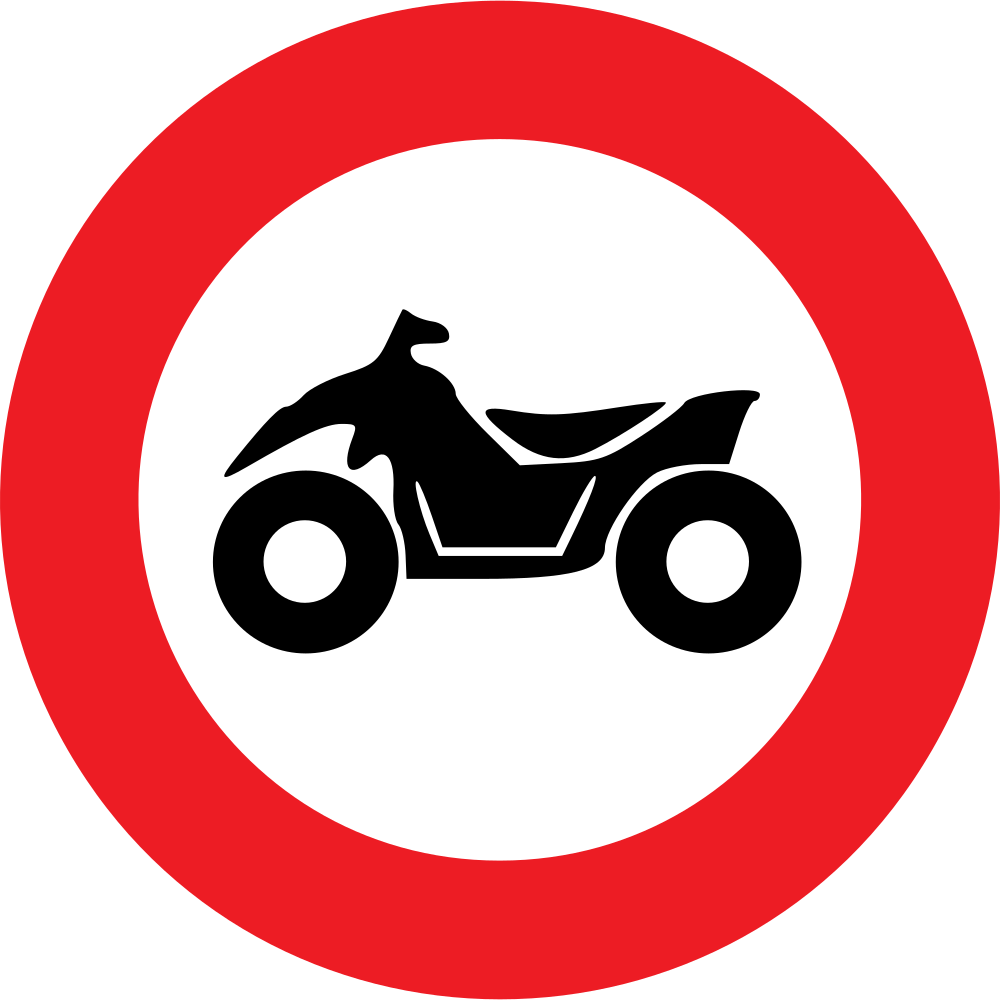
Signal routier C6 • Accès interdit aux conducteurs de véhicules à moteur à quatre roues, construits pour terrain non praticable, avec une carrosserie ouverte, un guidon comme sur une motocyclette et une selle.
Verkeersbord C6 • Verboden toegang voor bestuurders van motorvoertuigen met vier wielen, geconstrueerd voor onverhard terrein, met een open carrosserie, een stuur als op een motorfiets en een zadel.
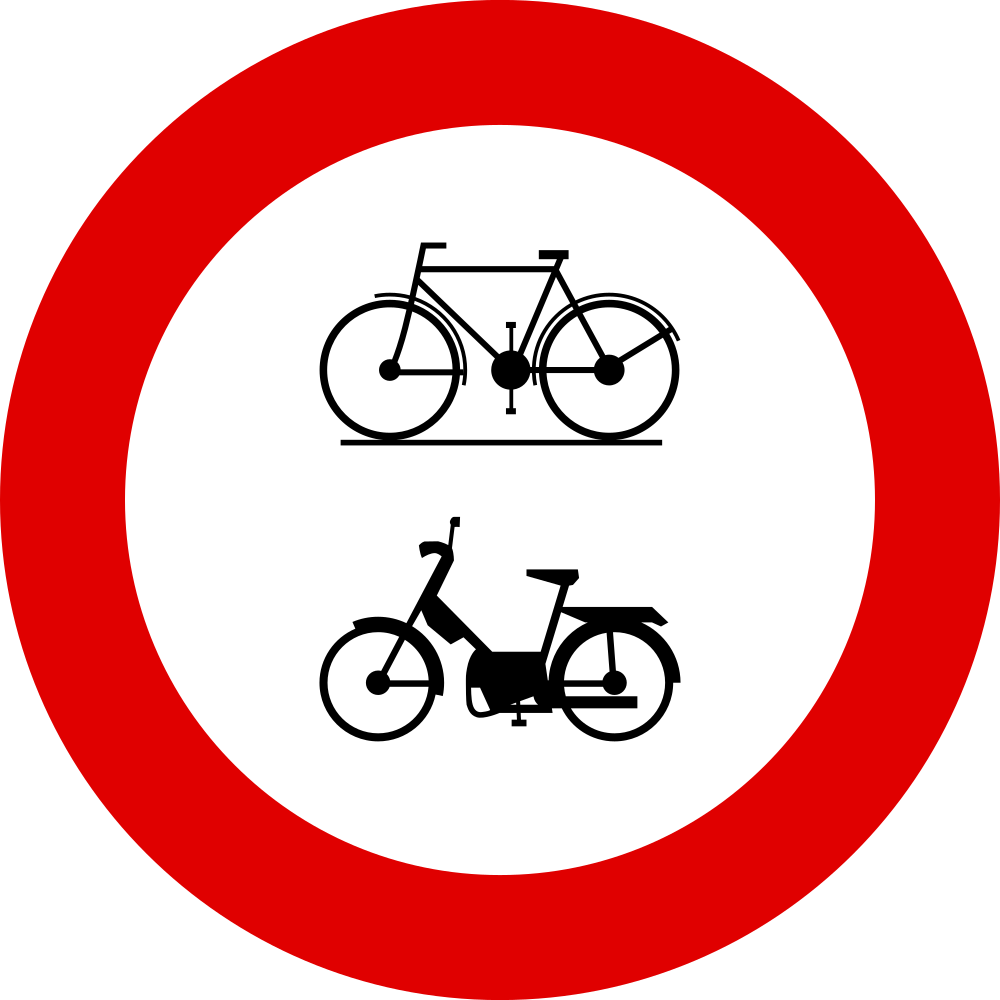
52. Cyclists and mopeds prohibited
This traffic sign indicates that cyclists and mopeds are prohibited. Cyclists and moped riders may not enter or continue beyond the sign. Other road users may still be permitted unless another restriction applies.
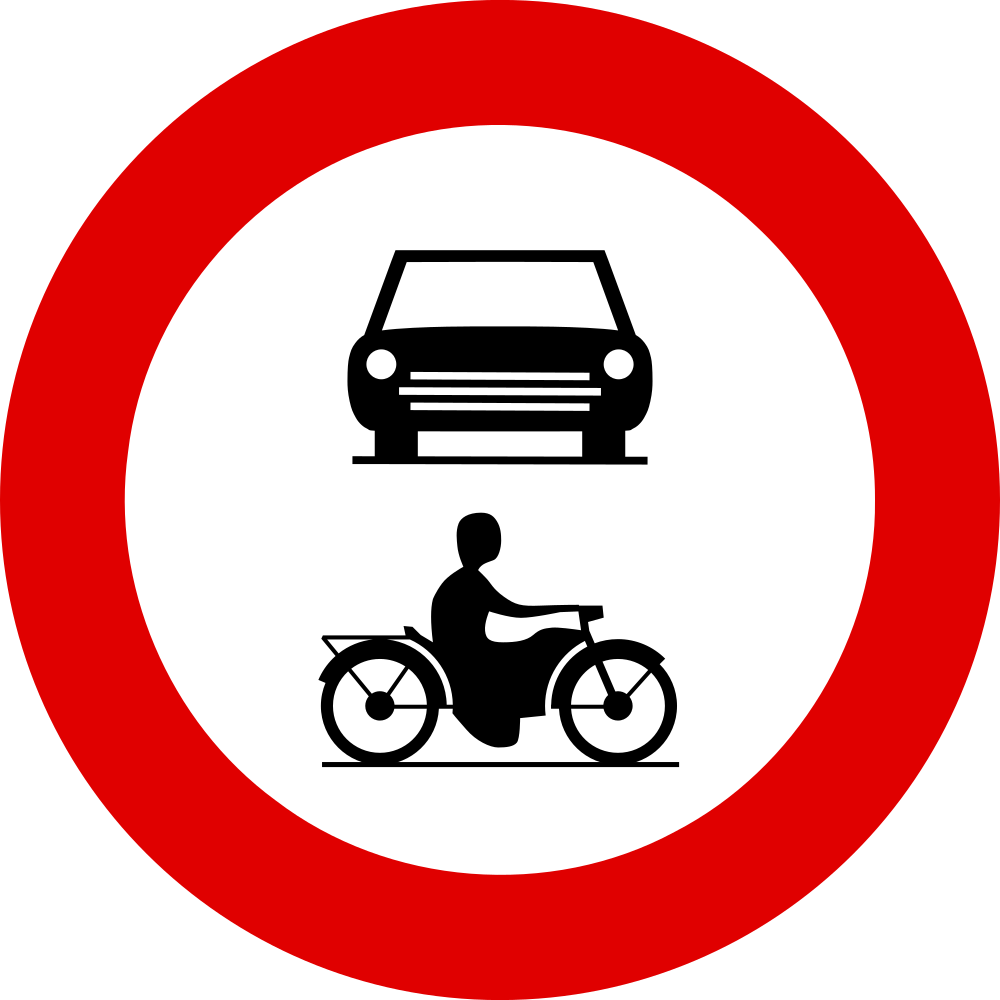
53. Motorcycles and cars prohibited
This traffic sign indicates that motorcycles and cars are prohibited. Motorcycles and cars may not enter or continue beyond the sign. Other road users may still be permitted unless another restriction applies.
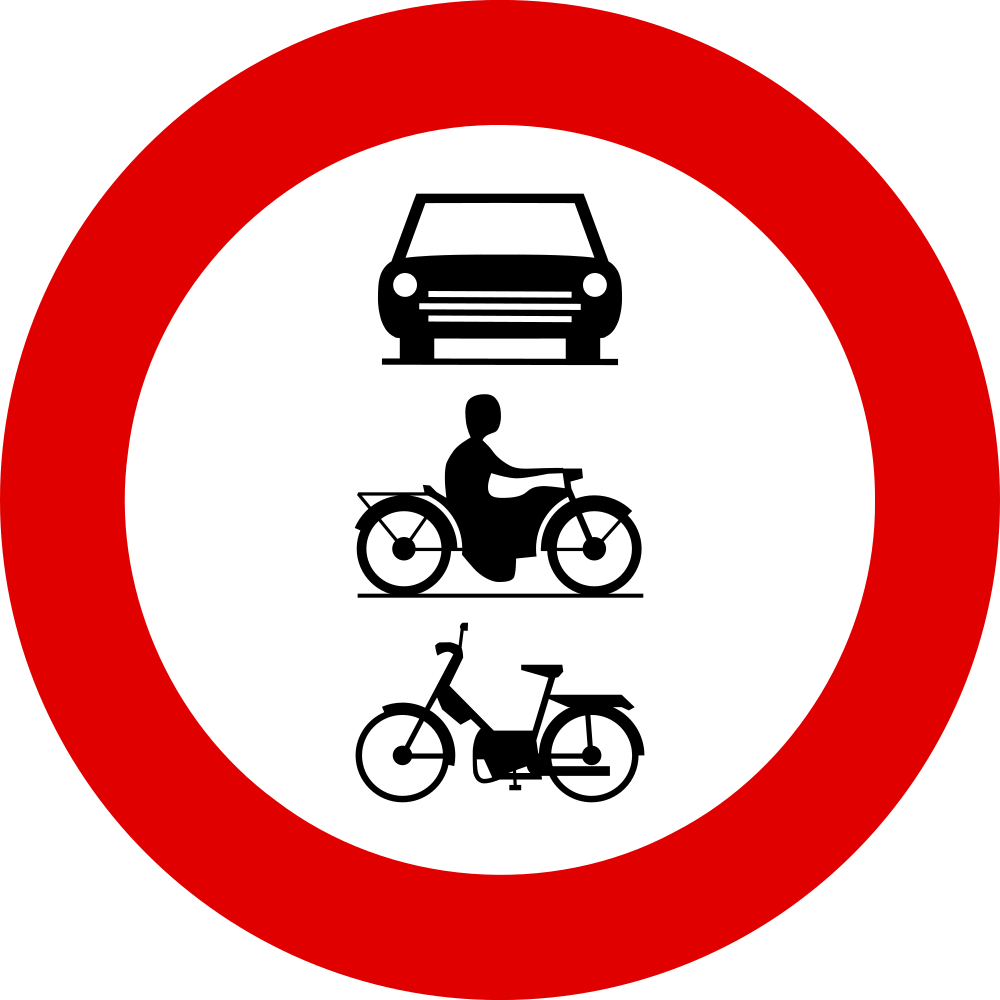
54. Mopeds, motorcycles and cars prohibited
This traffic sign indicates that mopeds, motorcycles and cars are prohibited. Mopeds, motorcycles and cars may not enter or continue beyond the sign. Other road users may still be permitted unless another restriction applies.
55. Vehicles carrying dangerous goods prohibited
This traffic sign indicates that vehicles carrying dangerous goods are prohibited. Vehicles carrying the dangerous goods covered by the sign may not enter or continue beyond it.
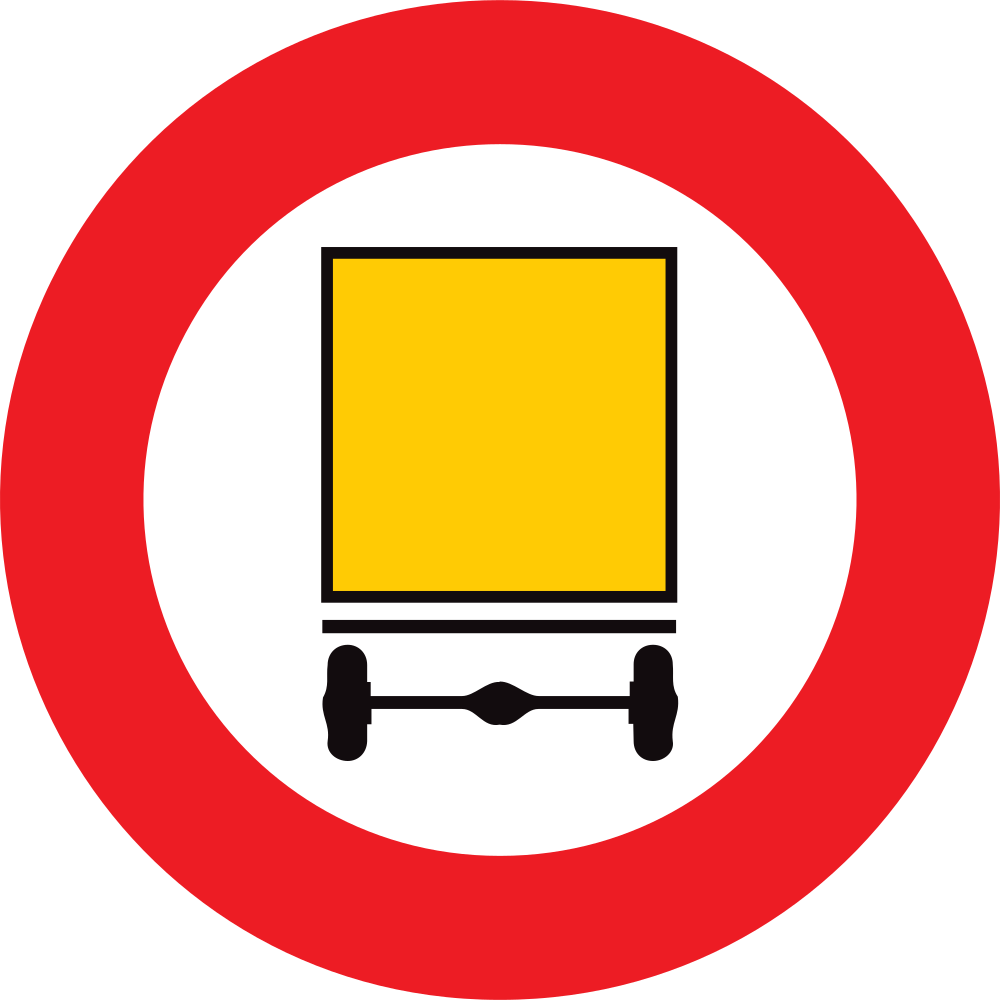
Signal routier C24a • Accès interdit aux conducteurs de véhicules transportant les marchandises dangereuses déterminées par les Ministres compétents en matière de transport des marchandises dangereuses.
Verkeersbord C24a • Verboden toegang voor bestuurders van voertuigen die de gevaarlijke goederen, bepaald door de voor vervoer van gevaarlijke goederen bevoegde Ministers, vervoeren.
56. Flammable or explosive goods prohibited
This traffic sign indicates that vehicles carrying flammable or explosive substances are prohibited. Vehicles carrying the substances covered by the sign may not enter or continue beyond it.
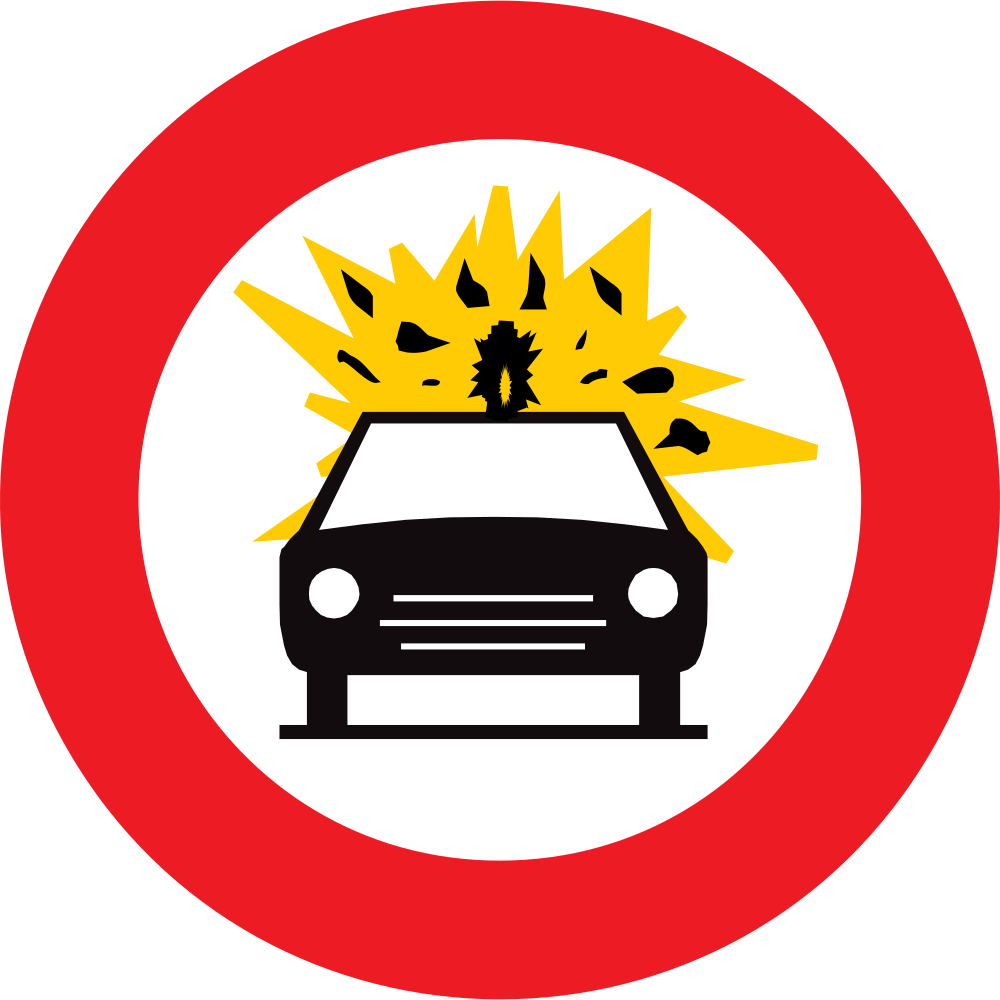
Signal routier C24b • Accès interdit aux conducteurs de véhicules transportant les marchandises dangereuses inflammables ou explosibles déterminées par les Ministres compétents en matière de transport des marchandises dangereuses.
Verkeersbord C24b • Verboden toegang voor bestuurders van voertuigen die de gevaarlijke ontvlambare of ontplofbare stoffen, bepaald door de voor vervoer van gevaarlijke goederen bevoegde Ministers, vervoeren.
57. Vehicles carrying water-polluting substances prohibited
This traffic sign indicates that vehicles carrying water-polluting substances are prohibited. Vehicles carrying the substances covered by the sign may not enter or continue beyond it.
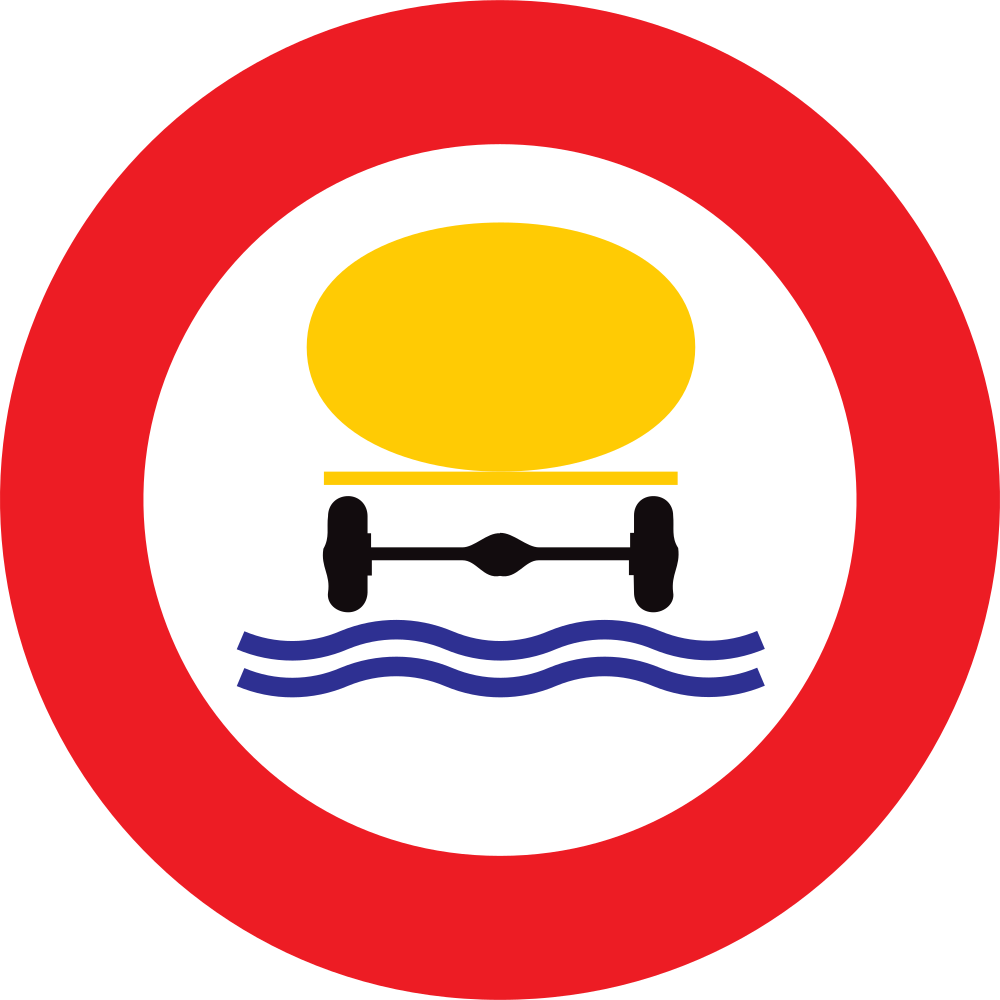
Signal routier C24c • Accès interdit aux conducteurs de véhicules transportant les marchandises dangereuses de nature à polluer les eaux déterminées par les Ministres compétents en matière de transport des marchandises dangereuses.
Verkeersbord C24c • Verboden toegang voor bestuurders van voertuigen die de gevaarlijke verontreinigende stoffen, bepaald door de voor vervoer van gevaarlijke goederen bevoegde Ministers, vervoeren.
58. Vehicles wider than indicated prohibited
This traffic sign indicates that vehicles wider than indicated are prohibited. A vehicle or vehicle combination whose overall width, including its load, exceeds the displayed limit may not continue beyond the sign.
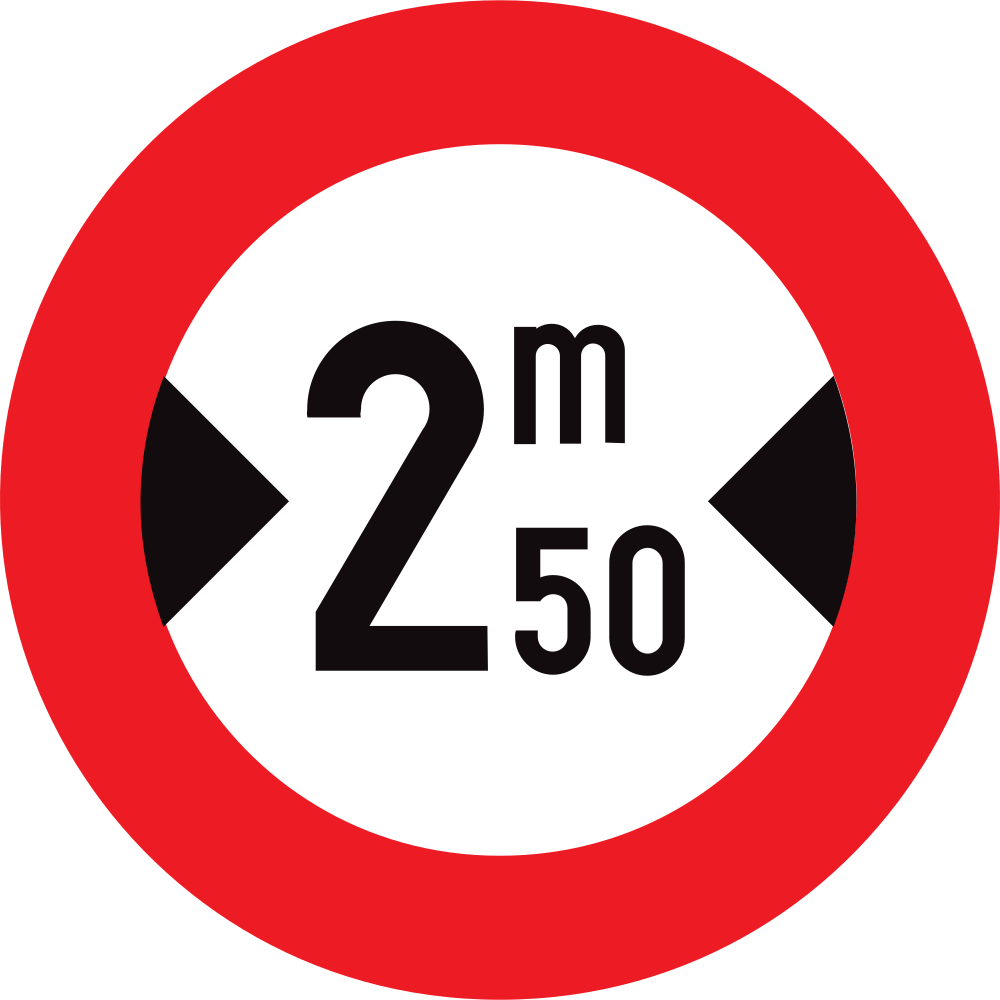
Signal routier C27 • Accès interdit aux conducteurs de véhicules ayant, chargement compris, une largeur supérieure à celle indiquée.
Verkeersbord C27 • Verboden toegang voor bestuurders van voertuigen waarvan de breedte, lading inbegrepen, groter is dan de aangeduide.
59. Vehicles higher than indicated prohibited
This traffic sign indicates that vehicles higher than indicated are prohibited. A vehicle or vehicle combination whose overall height, including its load, exceeds the displayed limit may not continue beyond the sign.
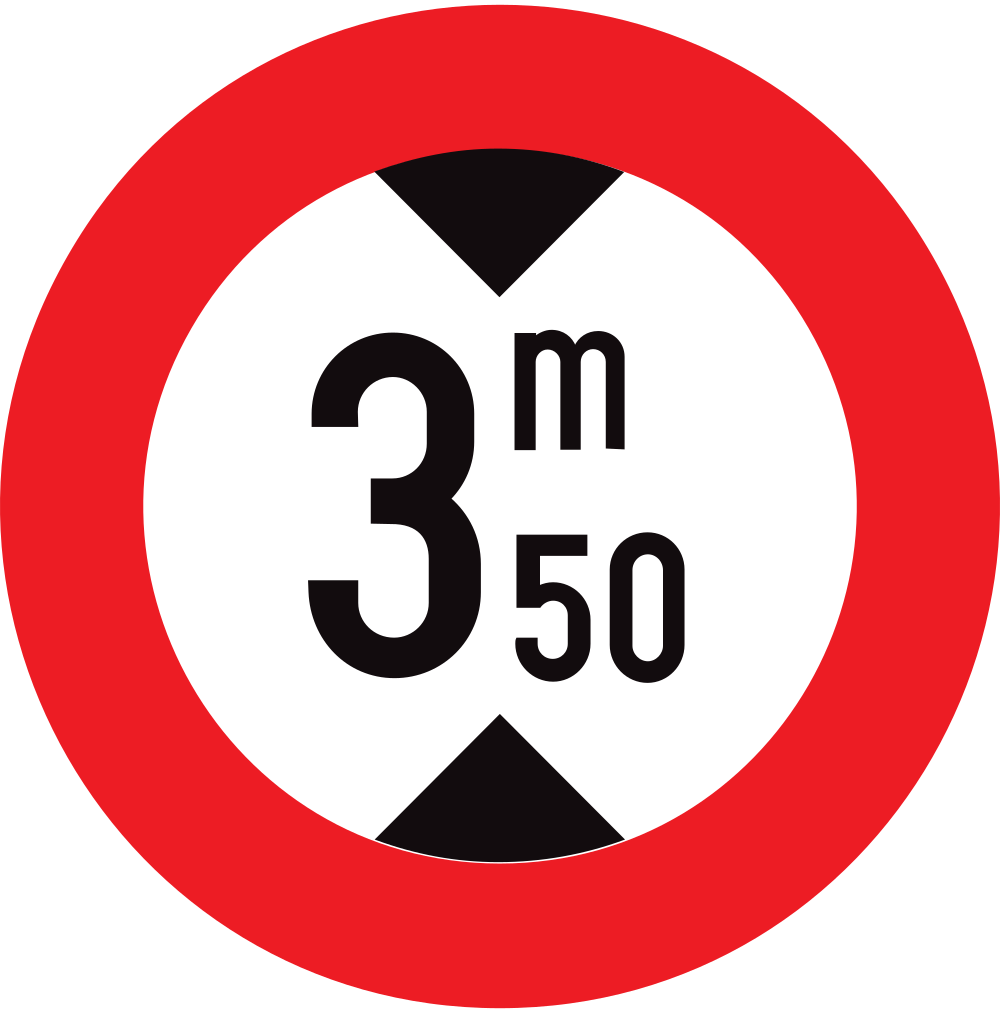
Signal routier C29 • Accès interdit aux conducteurs de véhicules ayant, chargement compris, une hauteur supérieure à celle indiquée.
Verkeersbord C29 • Verboden toegang voor bestuurders van voertuigen waarvan de hoogte, lading inbegrepen, groter is dan de aangeduide.
60. Vehicles longer than indicated prohibited
This traffic sign indicates that vehicles longer than indicated are prohibited. A vehicle or vehicle combination whose overall length, including its load, exceeds the displayed limit may not continue beyond the sign.
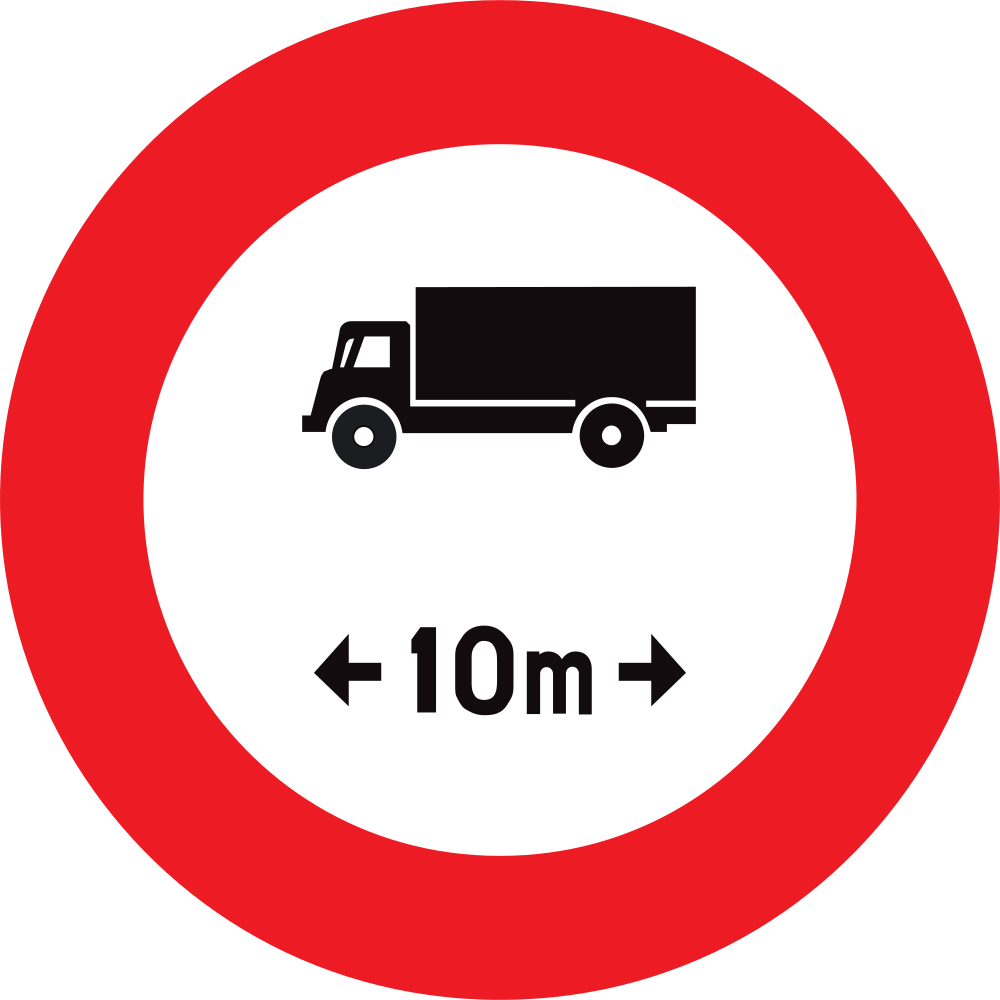
Signal routier C25 • Accès interdit aux conducteurs de véhicules ou trains de véhicules ayant, chargement compris, une longueur supérieure à celle indiquée.
Verkeersbord C25 • Verboden toegang voor bestuurders van voertuigen of slepen waarvan de lengte, lading inbegrepen, groter is dan de aangeduide.
61. Vehicles heavier than indicated prohibited
This traffic sign indicates that vehicles heavier than indicated are prohibited. Vehicles or vehicle combinations exceeding the displayed mass limit may not continue beyond the sign. The legally relevant mass is determined by the applicable local rules.
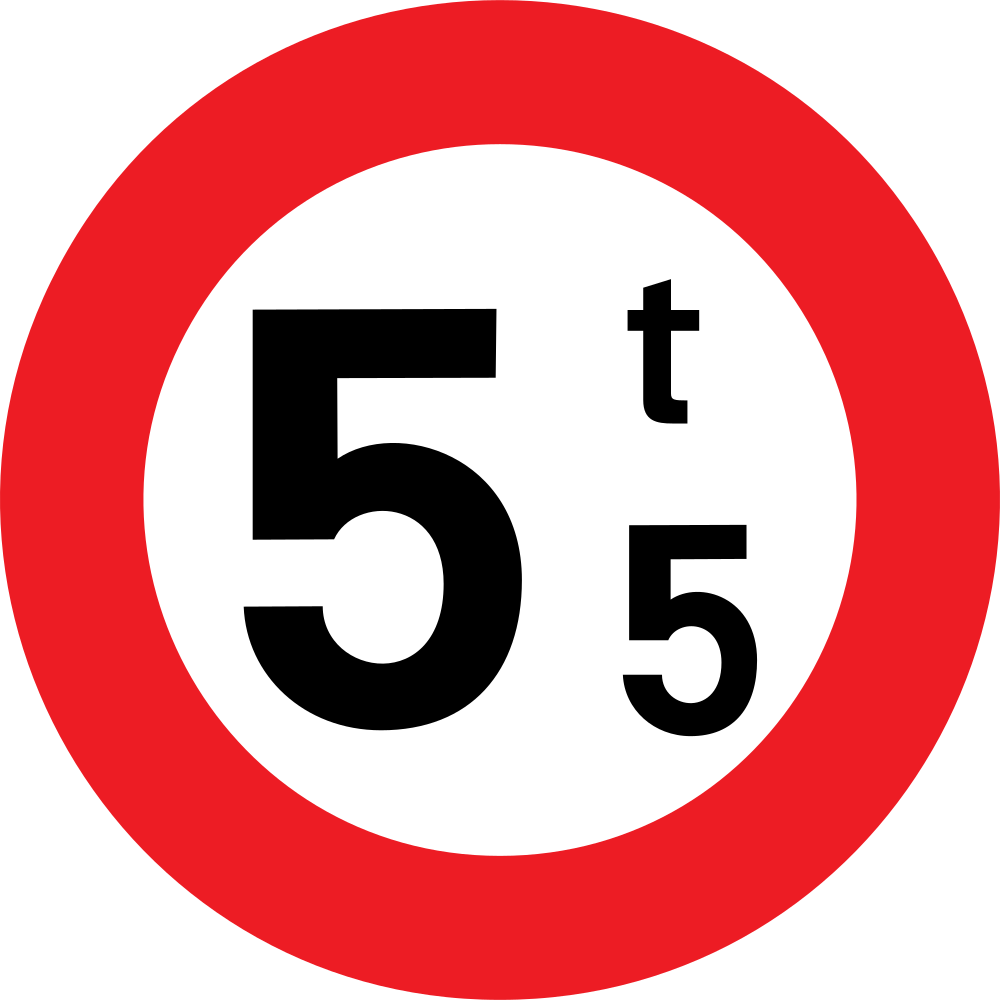
Signal routier C21 • Accès interdit aux conducteurs de véhicules dont la masse en charge dépasse la masse indiquée.
Verkeersbord C21 • Verboden toegang voor bestuurders van voertuigen waarvan de massa in beladen toestand hoger is dan de aangeduide massa.
62. Road narrowing, give way to oncoming drivers
This traffic sign indicates a road narrowing where you must give way to oncoming traffic. Allow approaching traffic to pass before entering or continuing through the narrow section when required.

Signal routier B19 • Passage étroit. Obligation de céder le passage aux conducteurs venant en sens opposé.
Verkeersbord B19 • Smalle doorgang. Gebod voorrang te verlenen aan de bestuurders die uit de tegenovergestelde richting komen.
63. Turning left prohibited
This traffic sign indicates that turning left is prohibited. A left turn may not be made where the sign applies. Other movements may still be permitted unless another restriction applies.

Signal routier C31a • Au prochain carrefour, interdiction de tourner dans le sens indiqué par la flèche.
Verkeersbord C31a • Verbod aan het volgend kruispunt af te slaan in de richting door de pijl aangegeven.
64. Turning right prohibited
This traffic sign indicates that turning right is prohibited. A right turn may not be made where the sign applies. Other movements may still be permitted unless another restriction applies.
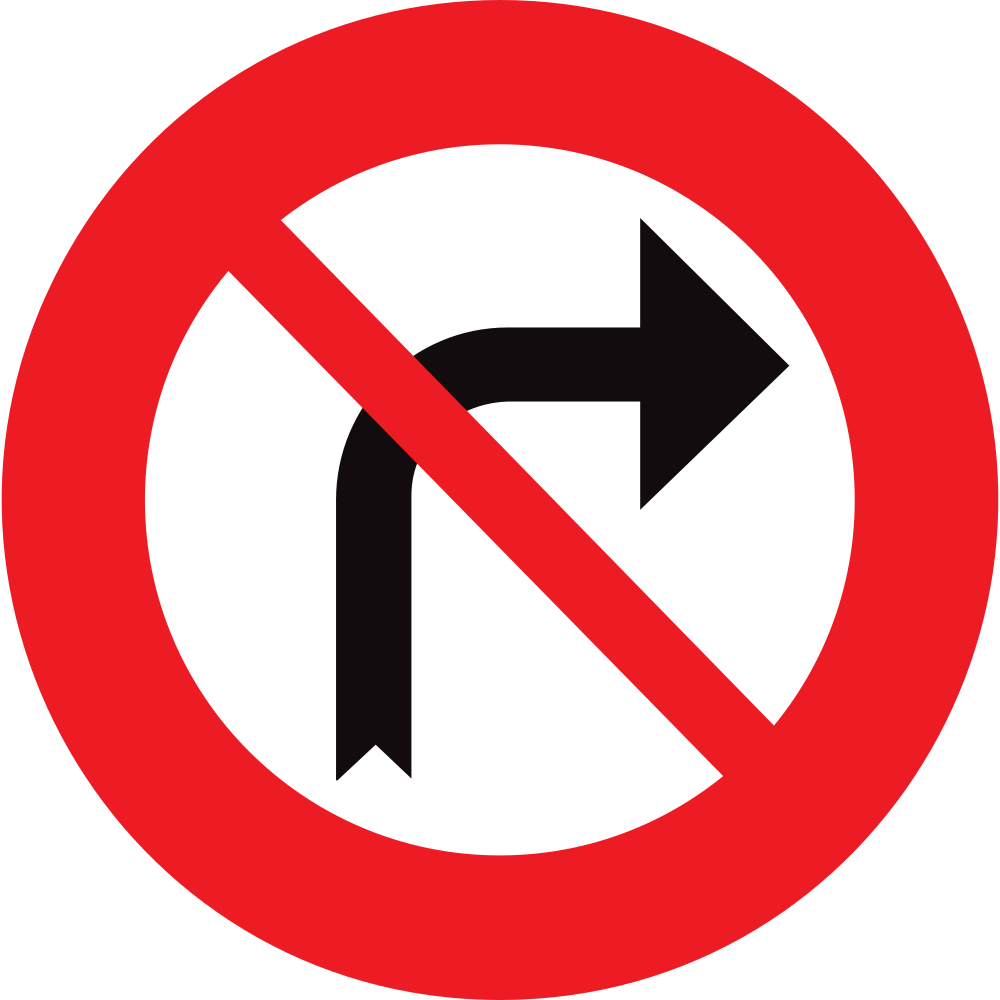
Signal routier C31b • Au prochain carrefour, interdiction de tourner dans le sens indiqué par la flèche.
Verkeersbord C31b • Verbod aan het volgend kruispunt af te slaan in de richting door de pijl aangegeven.
65. Turning around prohibited (U-turn)
This traffic sign indicates that turning around (making a U-turn) is prohibited. A U-turn may not be made where the prohibition applies. Other movements may still be permitted unless another restriction applies.

Signal routier C33 • A partir du signal jusqu'au prochain carrefour inclus, interdiction de faire demi-tour.
Verkeersbord C33 • Vanaf het verkeersbord tot en met het volgend kruispunt, verbod te keren.
66. Overtaking prohibited
This traffic sign indicates that overtaking is prohibited. The vehicles covered by the prohibition and any categories that may still be overtaken depend on the applicable local rules.
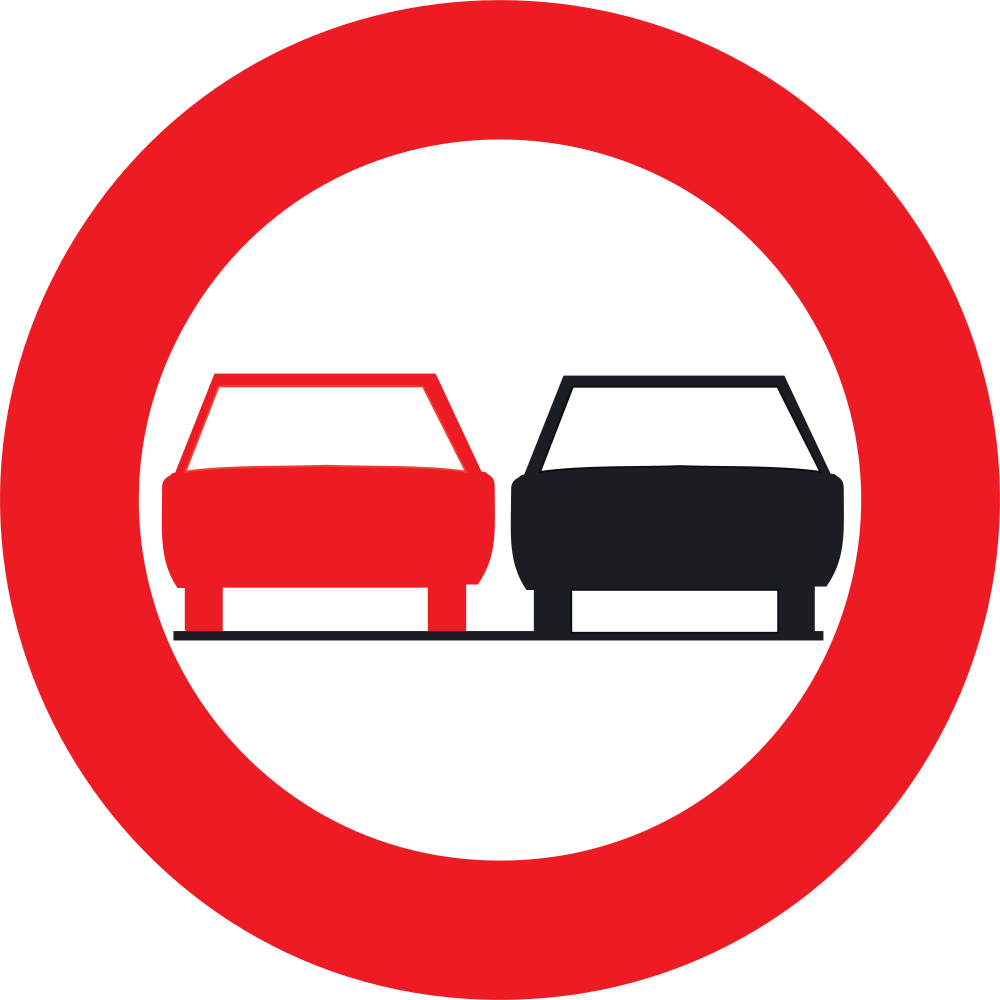
Signal routier C35 • A partir du signal jusqu'au prochain carrefour inclus, interdiction de dépasser par la gauche un véhicule attelé ou un véhicule à plus de deux roues.
Verkeersbord C35 • Vanaf het verkeersbord tot en met het volgend kruispunt, verbod een gespan of een voertuig met meer dan twee wielen, links in te halen.
67. End of the overtaking prohibition
This traffic sign indicates the end of the overtaking prohibition. The preceding overtaking restriction ends at this point. Overtaking remains subject to the applicable traffic rules and any other restrictions.
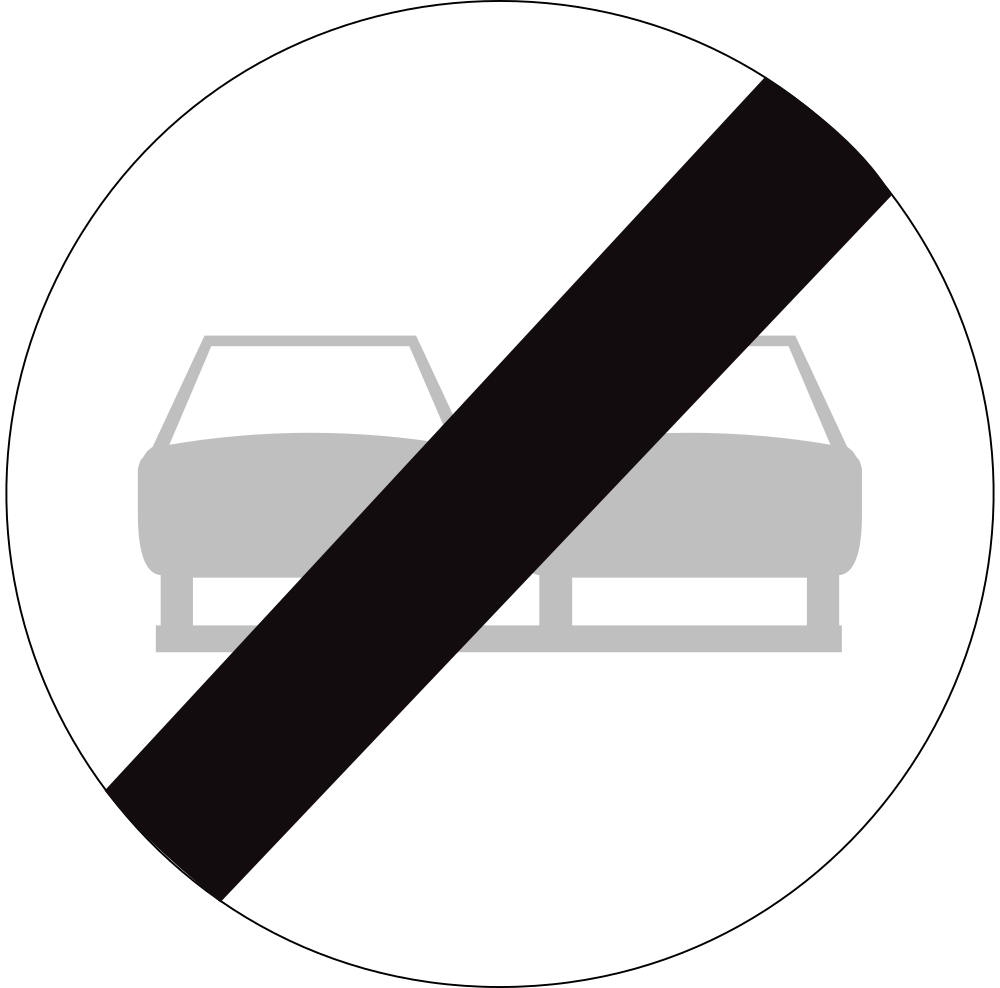
Signal routier C37 • Fin de l'interdiction prévue par le signal C35.
Verkeersbord C37 • Einde van het verbod opgelegd door het verkeersbord C35.
68. Overtaking prohibited for trucks
This traffic sign indicates that overtaking is prohibited for trucks. Trucks covered by the sign may not overtake where the prohibition applies. The affected truck categories and any exceptions depend on the applicable local rules.
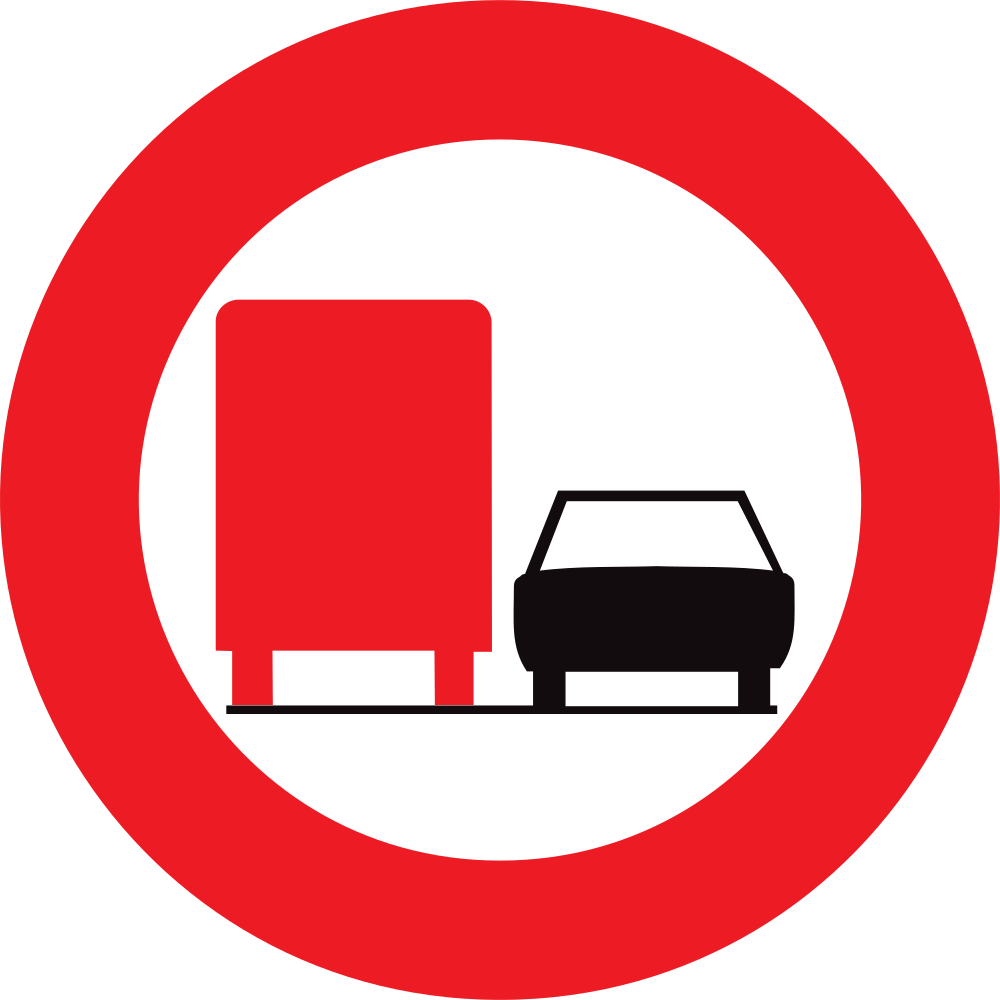
Signal routier C39 • A partir du signal jusqu'au prochain carrefour inclus, interdiction aux conducteurs de véhicules ou trains de véhicules affectés au transport de choses, dont la masse maximale autorisée dépasse 3.500 kg de dépasser par la gauche un véhicule attelé ou un véhicule à plus de deux roues.
Verkeersbord C39 • Vanaf het verkeersbord tot en met het volgend kruispunt, verbod voor bestuurders van voertuigen of slepen gebruikt voor het vervoer van zaken, waarvan de maximale toegelaten massa meer dan 3.500 kg bedraagt, een gespan of een voertuig met meer dan twee wielen links in te halen.
69. End of the overtaking prohibition for trucks
This traffic sign indicates the end of the overtaking prohibition for trucks. The preceding truck overtaking restriction ends at this point. Other overtaking rules and restrictions may still apply.
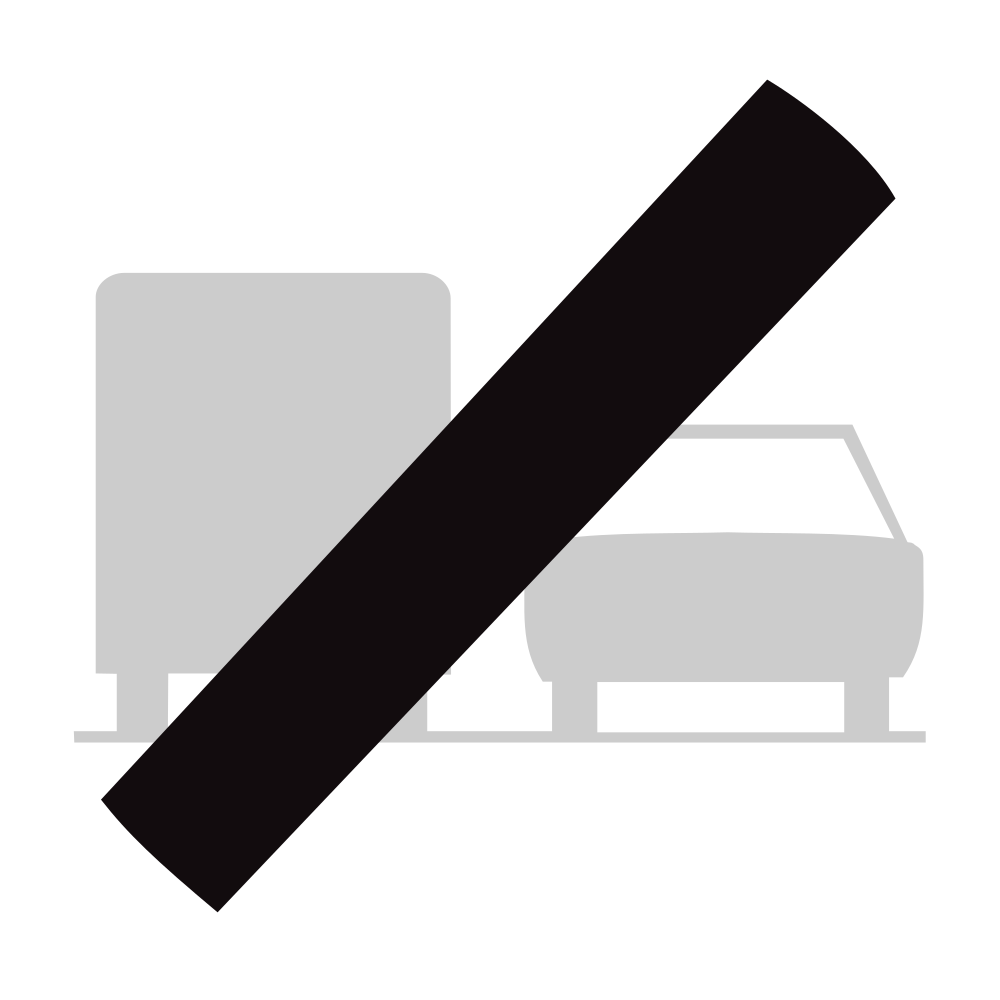
Signal routier C41 • Fin de l'interdiction prévue par le signal C39.
Verkeersbord C41 • Einde van het verbod opgelegd door het verkeersbord C39.
70. Start of a speed limit
This traffic sign indicates the start of a speed limit. The displayed value is the maximum permitted speed from this point. The limit remains in force until it ends or is replaced according to the applicable traffic signs and local rules.

Signal routier C43 • A partir du signal jusqu'au prochain carrefour inclus, ou jusqu’à chaque signal C43 avec ou sans validité zonale, ou jusqu’au signal indiquant le début ou la fin d’une agglomération, d’une zone résidentielle, d’une zone de rencontre ou d’une zone piétonne, interdiction de circuler à une vitesse supérieure à celle qui est indiquée.
Verkeersbord C43 • Vanaf het verkeersbord tot en met het volgend kruispunt, of tot elk verkeersbord C43 met of zonder zonale geldigheid, of tot het verkeersbord dat het begin of het einde van een bebouwde kom, van een woonerf of erf, of van een voetgangerszone aanduidt, verbod te rijden met een grotere snelheid dan deze die is aangeduid.
71. End of the speed limit
This traffic sign indicates the end of the previously indicated speed limit. From this point, follow any newly posted limit or the applicable default speed rules for the road and vehicle category.

Signal routier C45 • Fin de la limitation de vitesse imposée par le signal C43.
Verkeersbord C45 • Einde van de snelheidsbeperking opgelegd door het verkeersbord C43.
72. Start of a zone with speed limit
This traffic sign indicates the start of a zone with a speed limit. The displayed speed limit applies throughout the zone according to the applicable zonal rules, until the zone is ended or another rule replaces it.

Signal routier F4a • Commencement d'une zone dans laquelle la vitesse est limitée à 30 km à l'heure. Ce signal est placé à droite de chaque accès à une zone dans laquelle la vitesse est limitée à 30 km à l'heure; il peut être répété à gauche.
Verkeersbord F4a • Begin van een zone met een snelheidsbeperking van 30 km per uur. Dit verkeersbord wordt rechts geplaatst aan elke toegang tot een zone met een snelheidsbeperking van 30 km per uur; het mag links herhaald worden.
73. End of the zone with speed limit
This traffic sign indicates the end of the zone with a speed limit. The zonal speed limit ends at this point. Follow any newly posted limit or the applicable default speed rules.

Signal routier F4b • Fin d'une zone dans laquelle la vitesse est limitée à 30 km à l'heure. Ce signal est placé à droite de chaque sortie d'une zone dans laquelle la vitesse est limitée à 30 km à l'heure; il peut être répété à gauche.
Verkeersbord F4b • Einde van een zone met een snelheidsbeperking van 30 km per uur. Dit verkeersbord wordt rechts geplaatst aan elke uitgang van een zone met een snelheidsbeperking van 30 km per uur; het mag links herhaald worden.
74. Parking prohibited
This traffic sign indicates that parking is prohibited. Vehicles may not be parked in the area covered by the sign unless an exception applies. Brief stopping to pick up or drop off passengers or to load or unload goods may still be permitted where local rules allow it.
Signal routier E1 • Stationnement interdit.
Verkeersbord E1 • Parkeerverbod.
75. Half-monthly alternate-side parking
This traffic sign indicates half-monthly alternate-side parking. Parking alternates between the two sides of the road according to the indicated dates and applicable local rules. Follow the prescribed side and changeover times.

Signal routier E11 • Stationnement semi-mensuel dans toute l'agglomération.
Verkeersbord E11 • Halfmaandelijks parkeren in gans de bebouwde kom.
76. Parking and stopping prohibited
This traffic sign indicates that parking and stopping are prohibited. Vehicles may not stop or park voluntarily where the restriction applies, except where an applicable rule provides an exemption or stopping is required by traffic conditions.
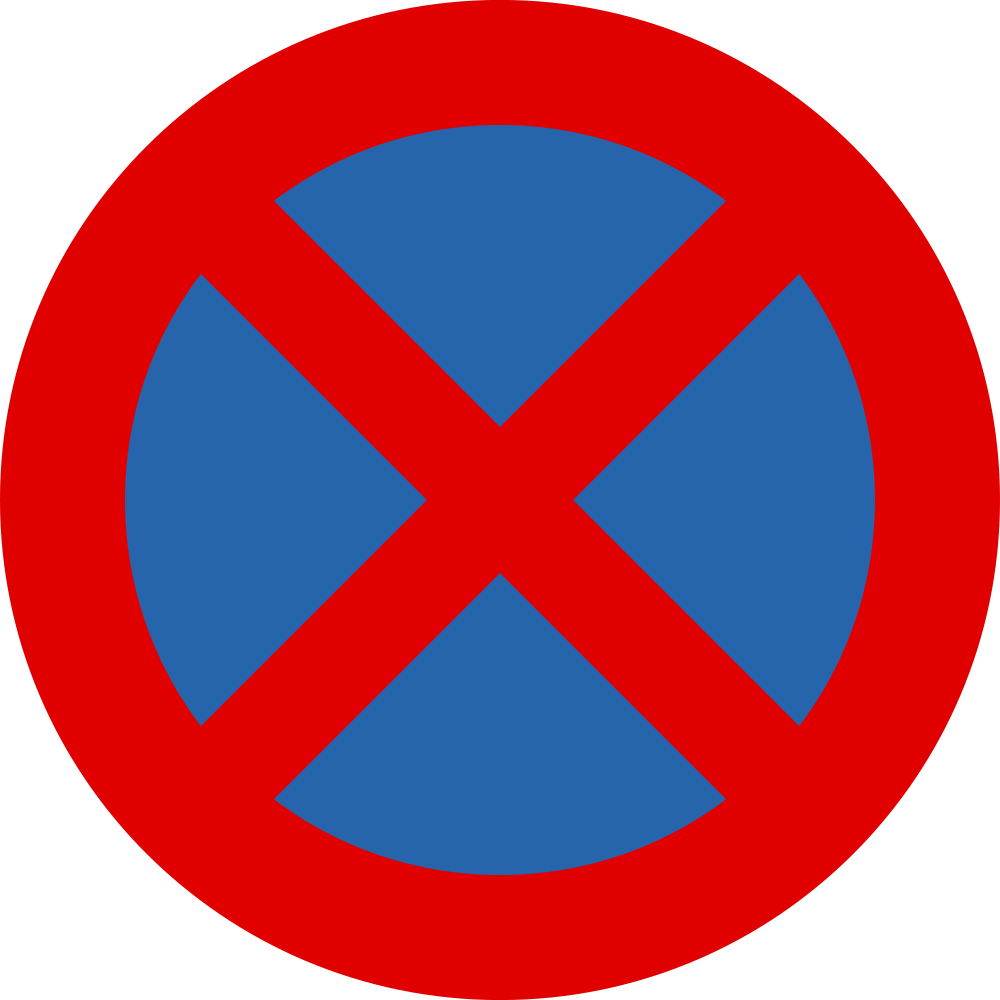
Signal routier E3 • Arrêt et stationnement interdits.
Verkeersbord E3 • Stilstaan en parkeren verboden.
77. Mandatory roundabout direction
This traffic sign indicates the mandatory direction around a roundabout. Traffic must circulate in the direction shown by the arrows. The sign does not itself determine priority; follow the applicable priority signs, traffic signals and local rules.

Signal routier D5 • Sens giratoire obligatoire.
Verkeersbord D5 • Verplicht rondgaand verkeer.
78. Turning left mandatory
This traffic sign indicates that turning left is mandatory at the junction ahead. Traffic must turn left and may not continue straight ahead or turn right.

Signal routier D1 • Obligation de suivre la direction indiquée par la flèche. La disposition des lieux détermine la position de la flèche. Si le signal présentant une flèche non coudée, est placé sur un obstacle, il signifie obligation de passer du côté indiqué par la flèche.
Verkeersbord D1 • Verplichting de door de pijl aangeduide richting te volgen. De plaatsgesteldheid bepaalt de stand van de pijl. Wanneer het verkeersbord dat een niet-gebogen pijl voorstelt, op een hindernis geplaatst is, betekent het dat langs de door de pijl aangeduide richting moet voorbijgereden worden.
79. Turning right mandatory
This traffic sign indicates that turning right is mandatory at the junction ahead. Traffic must turn right and may not continue straight ahead or turn left.

Signal routier D1 • Obligation de suivre la direction indiquée par la flèche. La disposition des lieux détermine la position de la flèche. Si le signal présentant une flèche non coudée, est placé sur un obstacle, il signifie obligation de passer du côté indiqué par la flèche.
Verkeersbord D1 • Verplichting de door de pijl aangeduide richting te volgen. De plaatsgesteldheid bepaalt de stand van de pijl. Wanneer het verkeersbord dat een niet-gebogen pijl voorstelt, op een hindernis geplaatst is, betekent het dat langs de door de pijl aangeduide richting moet voorbijgereden worden.
80. Pass obstacle on the left
This traffic sign indicates that traffic must pass an obstacle on the left. Keep to the left of the obstacle and follow any accompanying signs or road markings.

Signal routier D1 • Obligation de suivre la direction indiquée par la flèche. La disposition des lieux détermine la position de la flèche. Si le signal présentant une flèche non coudée, est placé sur un obstacle, il signifie obligation de passer du côté indiqué par la flèche.
Verkeersbord D1 • Verplichting de door de pijl aangeduide richting te volgen. De plaatsgesteldheid bepaalt de stand van de pijl. Wanneer het verkeersbord dat een niet-gebogen pijl voorstelt, op een hindernis geplaatst is, betekent het dat langs de door de pijl aangeduide richting moet voorbijgereden worden.
81. Pass obstacle on the right
This traffic sign indicates that traffic must pass an obstacle on the right. Keep to the right of the obstacle and follow any accompanying signs or road markings.

Signal routier D1 • Obligation de suivre la direction indiquée par la flèche. La disposition des lieux détermine la position de la flèche. Si le signal présentant une flèche non coudée, est placé sur un obstacle, il signifie obligation de passer du côté indiqué par la flèche.
Verkeersbord D1 • Verplichting de door de pijl aangeduide richting te volgen. De plaatsgesteldheid bepaalt de stand van de pijl. Wanneer het verkeersbord dat een niet-gebogen pijl voorstelt, op een hindernis geplaatst is, betekent het dat langs de door de pijl aangeduide richting moet voorbijgereden worden.
82. Driving straight ahead or turning left mandatory
This traffic sign indicates that traffic must continue straight ahead or turn left. One of the indicated directions must be followed; turning right is prohibited.

Signal routier D3 • Obligation de suivre une des directions indiquées par les flèches. La disposition des lieux détermine la position des flèches.
Verkeersbord D3 • Verplichting één van de door de pijlen aangeduide richtingen te volgen. De plaatsgesteldheid bepaalt de stand van de pijlen.
83. Driving straight ahead or turning right mandatory
This traffic sign indicates that traffic must continue straight ahead or turn right. One of the indicated directions must be followed; turning left is prohibited.

Signal routier D3 • Obligation de suivre une des directions indiquées par les flèches. La disposition des lieux détermine la position des flèches.
Verkeersbord D3 • Verplichting één van de door de pijlen aangeduide richtingen te volgen. De plaatsgesteldheid bepaalt de stand van de pijlen.
84. Mandatory left
This traffic sign indicates a mandatory direction to the left. Traffic must proceed to the left at the sign and may not continue straight ahead or to the right.

Signal routier D1 • Obligation de suivre la direction indiquée par la flèche. La disposition des lieux détermine la position de la flèche. Si le signal présentant une flèche non coudée, est placé sur un obstacle, il signifie obligation de passer du côté indiqué par la flèche.
Verkeersbord D1 • Verplichting de door de pijl aangeduide richting te volgen. De plaatsgesteldheid bepaalt de stand van de pijl. Wanneer het verkeersbord dat een niet-gebogen pijl voorstelt, op een hindernis geplaatst is, betekent het dat langs de door de pijl aangeduide richting moet voorbijgereden worden.
85. Mandatory right
This traffic sign indicates a mandatory direction to the right. Traffic must proceed to the right at the sign and may not continue straight ahead or to the left.

Signal routier D1 • Obligation de suivre la direction indiquée par la flèche. La disposition des lieux détermine la position de la flèche. Si le signal présentant une flèche non coudée, est placé sur un obstacle, il signifie obligation de passer du côté indiqué par la flèche.
Verkeersbord D1 • Verplichting de door de pijl aangeduide richting te volgen. De plaatsgesteldheid bepaalt de stand van de pijl. Wanneer het verkeersbord dat een niet-gebogen pijl voorstelt, op een hindernis geplaatst is, betekent het dat langs de door de pijl aangeduide richting moet voorbijgereden worden.
86. Driving straight ahead mandatory
This traffic sign indicates that driving straight ahead is mandatory. Traffic must continue straight ahead and may not turn left or right at the location to which the sign applies.
Signal routier D1 • Obligation de suivre la direction indiquée par la flèche. La disposition des lieux détermine la position de la flèche. Si le signal présentant une flèche non coudée, est placé sur un obstacle, il signifie obligation de passer du côté indiqué par la flèche.
Verkeersbord D1 • Verplichting de door de pijl aangeduide richting te volgen. De plaatsgesteldheid bepaalt de stand van de pijl. Wanneer het verkeersbord dat een niet-gebogen pijl voorstelt, op een hindernis geplaatst is, betekent het dat langs de door de pijl aangeduide richting moet voorbijgereden worden.
87. Mandatory path for pedestrians
This traffic sign indicates the start of a mandatory path for pedestrians. Pedestrians must use the designated path, while other road users may use it only where the applicable signs or local rules permit them to do so.

Signal routier D11 • Chemin obligatoire pour les piétons.
Verkeersbord D11 • Verplichte weg voor voetgangers.
88. Mandatory path for cyclists
This traffic sign indicates a mandatory path for cyclists. Cyclists must use the designated path where the sign applies. Other road users may use the path only where the applicable signs or local rules permit them to do so.

Signal routier D7 • Piste cyclable obligatoire.
Verkeersbord D7 • Verplicht fietspad.
89. Mandatory path for equestrians
This traffic sign indicates a mandatory path for equestrians. Equestrians must use the designated path where the sign applies. Other road users may use it only where the applicable signs or local rules permit them to do so.

Signal routier D13 • Chemin obligatoire pour les cavaliers.
Verkeersbord D13 • Verplichte weg voor ruiters.
90. Mandatory shared pedestrian and cycle path
This traffic sign indicates a mandatory shared path for pedestrians and cyclists. Pedestrians and cyclists must use the same designated path rather than separate sections. They must share the space safely and follow the applicable local rules.

Signal routier D10 • Partie de la voie publique réservée à la circulation des piétons et des cyclistes.
Verkeersbord D10 • Deel van de openbare weg voorbehouden voor het verkeer van voetgangers en fietsers.
91. Mandatory divided pedestrian and cycle path
This traffic sign indicates a mandatory divided path for pedestrians and cyclists. Pedestrians and cyclists must use the section designated for them. Other road users may use the path only where the applicable signs or local rules permit them to do so.

Signal routier D9 • Partie de la voie publique réservée à la circulation des piétons, des bicyclettes et des cyclomoteurs à deux roues classe A.
Verkeersbord D9 • Deel van de openbare weg voorbehouden voor het verkeer van voetgangers, van fietsen en van tweewielige bromfietsen klasse A.
92. Start of a priority road
This traffic sign indicates the start of a priority road. Drivers on the priority road normally have priority over traffic entering from side roads until the priority road ends, unless traffic lights, other signs or applicable traffic rules indicate otherwise.

Signal routier B9 • Voie prioritaire.
Verkeersbord B9 • Voorrangsweg.
93. End of the priority road
This traffic sign indicates the end of the priority road. The road no longer has continuing priority at subsequent intersections. Follow the applicable traffic lights, priority signs and default priority rules.

Signal routier B11 • Fin de voie prioritaire.
Verkeersbord B11 • Einde van voorrangsweg.
94. Start of a built-up area
This traffic sign indicates the start of a built-up area. From this point, the traffic rules that apply to built-up areas take effect according to the applicable local regulations.
Signal routier F1b • Commencement d'une agglomération. Ce signal est placé à droite, à chaque accès d'une agglomération; il peut être répété à gauche.
Verkeersbord F1b • Begin van een bebouwde kom. Dit verkeersbord wordt rechts geplaatst op elke toegangsweg tot een bebouwde kom; het mag links herhaald worden.
95. End of the built-up area
This traffic sign indicates the end of the built-up area. The traffic rules specifically associated with the built-up area cease to apply from this point according to the applicable local regulations.

Signal routier F3b • Fin d'une agglomération. Ce signal est placé à droite, à chaque sortie d'une agglomération; il peut être répété à gauche.
Verkeersbord F3b • Einde van een bebouwde kom. Dit verkeersbord wordt rechts geplaatst op elke uitvalsweg van een bebouwde kom; het mag links herhaald worden.
96. City limit
This traffic sign indicates a city or town limit. It marks the boundary or entrance of the named locality. Any traffic rules associated with the boundary depend on the applicable local regulations.

Verkeersbord F43 • Plaatsnaambord.
97. Start of a motorway
This traffic sign indicates the start of a motorway. From this point, special motorway rules apply, including restrictions on which road users may enter and on stopping, reversing and other manoeuvres. Follow the applicable speed limits, lane rules and local motorway regulations.

Signal routier F5 • Commencement d'une autoroute ou accès à une autoroute. Les règles spéciales de circulation sur les autoroutes s'appliquent à partir de l'endroit où le signal est placé.
Verkeersbord F5 • Begin of oprit van een autosnelweg. De bijzondere verkeersregelen op de autosnelwegen gelden vanaf de plaats waar het verkeersbord aangebracht is. Dit verkeersbord wordt rechts geplaatst en mag links herhaald worden.
98. End of the motorway
This traffic sign indicates the end of the motorway. The special motorway rules end at this point. Follow the speed limits, access rules and other traffic signs that apply to the road ahead.

Signal routier F7 • Fin d'autoroute. Ce signal est placé à droite et peut être répété à gauche.
Verkeersbord F7 • Einde van een autosnelweg. Dit verkeersbord wordt rechts geplaatst en mag links herhaald worden.
99. Start of an expressway
This traffic sign indicates the start of an expressway. From this point, the traffic rules and access conditions that apply to expressways take effect according to the applicable local regulations.

Signal routier F9 • Route pour automobiles. Les règles spéciales de circulation sur les routes pour automobiles s'appliquent à partir de l'endroit où le signal est placé.
Verkeersbord F9 • Autoweg. De bijzondere verkeersregelen op de autowegen gelden vanaf de plaats waar het verkeersbord is aangebracht. Dit verkeersbord wordt rechts geplaatst en mag links herhaald worden.
100. End of the expressway
This traffic sign indicates the end of the expressway. The special traffic rules associated with the expressway end at this point. Follow the rules and traffic signs that apply to the road ahead.

Signal routier F11 • Fin de route pour automobiles. Ce signal est placé à droite et peut être répété à gauche.
Verkeersbord F11 • Einde van een autoweg. Dit verkeersbord wordt rechts geplaatst en mag links herhaald worden.