

Public squareFlanders
An introduction to the traffic rules and road signs of Flanders. Learn about driving, road safety and much more in our illustrated book, with answers to frequently asked questions.
For informational purposes only. Always follow official regulations. Some content and images were created with AI assistance.
 Traffic rules
 Flanders
76. Public square
A public square is an open public space where one or more roads, streets or pedestrian routes meet. Squares are commonly found in towns and cities and may provide space for traffic, pedestrians, parking, public transport, markets or other public activities.
The traffic arrangement within a square can vary considerably. It may contain roadways, pedestrian areas, cycle facilities, parking spaces or restricted-access areas, so road users must follow the traffic signs, road markings, priority rules and local regulations applying within the square.
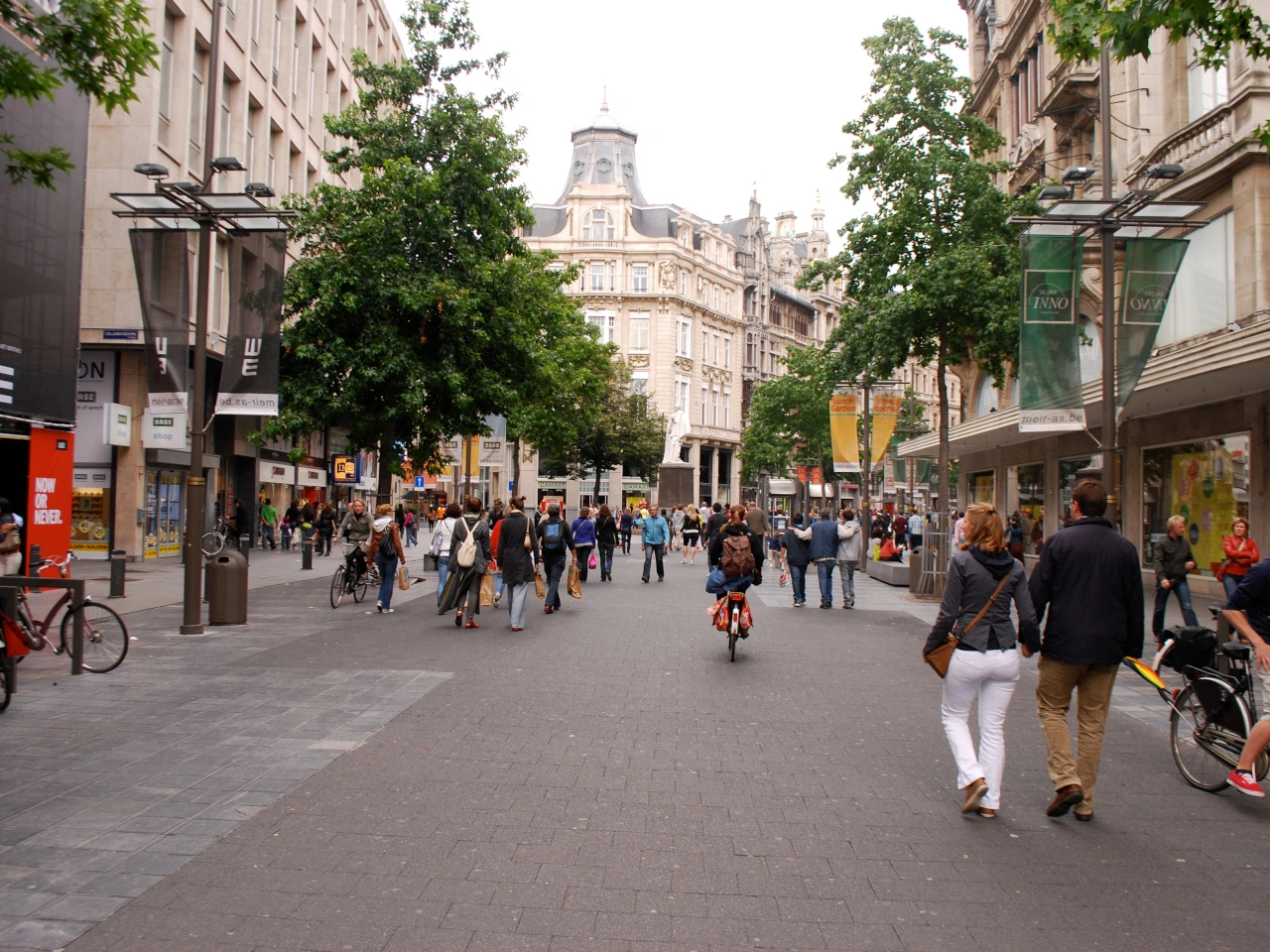
Wikimedia.org • Jeanhousen • CC BY-SA
What is legally considered a square in Belgium?
A Belgian square, or plein, is an open space where one public road enters or several public roads meet and where the layout allows traffic and other activities to be organised together.
🔗 codex.vlaanderen.be • Belgian Road Code — articles 2.10, 6, 9.3, 11–12 and special-area rules
🔗 wegcode.be • Road Code of 1 December 1975 — 2.10, 6, 9.3, 11–12 and special-area rules
Does being on a square give any road user automatic priority?
No. The fact that a road user is travelling across a square does not itself create priority. Traffic lights, signs, markings and the applicable Belgian priority rules determine who must give way.
🔗 codex.vlaanderen.be • Belgian Road Code — articles 2.10, 6, 9.3, 11–12 and special-area rules
🔗 wegcode.be • Road Code of 1 December 1975 — 2.10, 6, 9.3, 11–12 and special-area rules
Is there a special Belgian speed limit for every square?
No. The applicable speed depends on the traffic signs and the zone in which the square is located, such as a Zone 30, pedestrian zone, residential area or other regulated area.
🔗 codex.vlaanderen.be • Belgian Road Code — articles 2.10, 6, 9.3, 11–12 and special-area rules
🔗 wegcode.be • Road Code of 1 December 1975 — 2.10, 6, 9.3, 11–12 and special-area rules


