Cruce de animalesBruselas

Aprende normas de tráfico con explicaciones claras y ejemplos visuales en nuestro libro ilustrado, diseñado para que estudiar sea sencillo y ameno.


30. Cruce de animales

Una advertencia de cruce de animales indica un lugar o tramo donde animales salvajes, ganado o animales montados pueden entrar o cruzar la carretera. Los animales pueden aparecer de repente, moverse de forma imprevisible o ser difíciles de ver en la oscuridad, entre vegetación o con mal tiempo.

Los conductores deben reducir la velocidad, observar ambos lados de la carretera y mantenerse preparados para detenerse. La señal no concede por sí misma prioridad a los animales ni impone un límite numérico de velocidad, pero los conductores deben evitar asustarlos, ponerlos en peligro o colisionar con ellos.
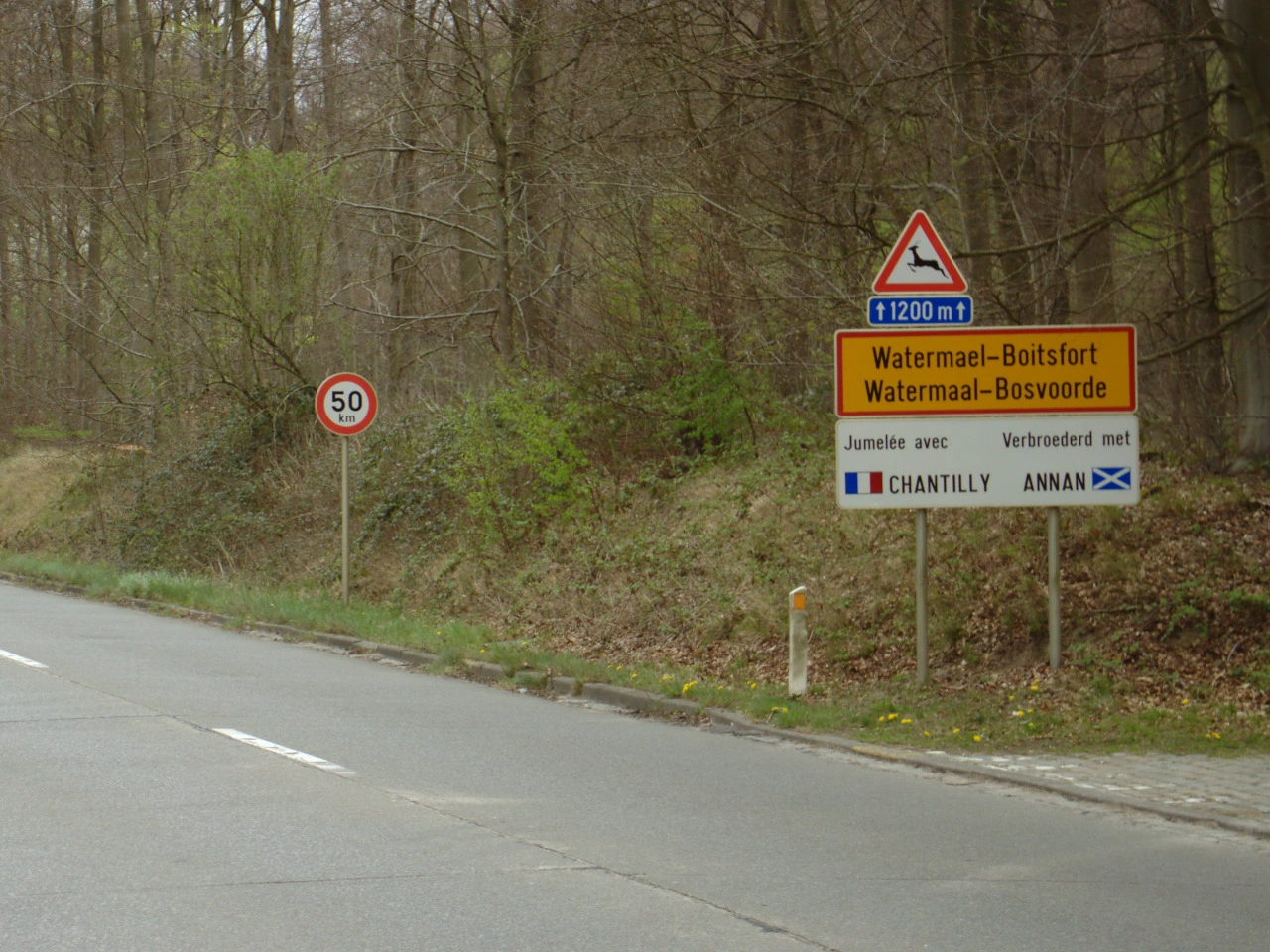
Cruce de animales
Which Belgian signs warn of animals crossing?

Under the current Belgian Highway Code, traffic sign A27 warns of large wild animals and traffic sign A29 warns of livestock crossing.

Advertencia de ganado en la calzada. Advertencia de ganado en la calzada.

Signal routier A29 • Traversée de bétail.

Verkeersbord A29 • Doortocht van vee.

Advertencia de cruce de ciervos. Advertencia de cruce de ciervos.

Signal routier A27 • Traversée de gros gibier.

Verkeersbord A27 • Doortocht van groot wild.

What does Belgian sign A27 mean?

Traffic sign A27 warns of a road section where large wild animals may cross.

Which animals does A27 commonly concern?

Belgian placement rules specifically refer to road sections regularly crossed by animals such as deer, roe deer and wild boar.

What does Belgian sign A29 mean?

Traffic sign A29 warns that livestock may cross or travel on the road.

Which animals may be considered livestock?

The sign may warn of controlled farm animals such as cattle, sheep, goats or other livestock being moved across or along the public road.

Does A27 or A29 impose a speed limit?

No. They are warning signs. The applicable regional, zonal, posted and vehicle-specific speed limits remain in force.

Must you drive below the speed limit?

Yes, when necessary. Belgian drivers must adapt their speed to visibility, traffic, road conditions and foreseeable hazards and remain able to stop before an obstruction.

Must you slow down when approaching livestock or horses?

Yes. A driver must slow down when approaching draft, load or riding animals or livestock on the public road.

When must you stop near controlled animals?

You must stop when the animals show signs of fear.

Does the same specific stopping rule apply to wild animals?

The express rule concerning frightened animals applies to draft, load and riding animals and livestock. A driver encountering wild animals must still reduce speed or stop whenever necessary to avoid danger.

Do animals have legal priority because A27 or A29 is displayed?

No. The signs warn of danger but do not create a separate priority rule. Drivers must nevertheless avoid striking, frightening or trapping animals already on the road.

Is the person leading livestock considered a driver?

Yes. A person riding, leading or supervising draft, load or riding animals or livestock is considered a driver under Belgian traffic law.

Must animals on the road be supervised?

Yes. Moving animals and livestock must have a driver, whether they travel individually or in a herd.

Must handlers remain near their animals?

Yes. Drivers and assistants must remain close enough to control the animals and prevent them from obstructing traffic or causing an accident.

Can additional handlers be required?

Yes. The person controlling draft, load or riding animals or livestock must be assisted by enough handlers when this is necessary for traffic safety.

May animals use the carriageway?

Animals being ridden, led or supervised generally follow the applicable rules for drivers. Outside built-up areas, certain animals or livestock may use the right-hand level verge when this does not endanger other road users.

May ridden or harnessed animals gallop inside a built-up area?

No. Under the current Belgian Highway Code, harnessed or ridden animals may not be allowed to gallop inside built-up areas.

Should you sound the horn near animals?

Avoid unnecessary horn use because it may frighten them. In a built-up area, the horn may generally be used only to provide a necessary warning to prevent an immediate accident.

How should you pass a horse in Belgium?

Reduce speed considerably, leave as much lateral space as reasonably possible and pass quietly. Stop if the horse shows signs of fear.

How should you approach a herd crossing the road?

Slow down early, stop when necessary and follow the handler’s directions. Do not attempt to drive through the herd or separate the animals.

May you overtake animals on the road?

Only when the manoeuvre can be completed safely, quietly and with sufficient space. The A27 or A29 sign itself does not create a specific overtaking prohibition.

May you stop or park near an animal-crossing sign?

The signs do not create an automatic stopping or parking prohibition. A vehicle may still not be stopped or parked where it creates danger, reduces visibility or obstructs animals and their handlers.

What should you do if a wild animal is standing on the road?

Reduce speed smoothly, stop at a safe distance and allow it to leave. Expect another animal to follow and avoid approaching or trying to move it yourself.

What should you do after colliding with an animal?

Stop safely, activate the hazard warning lights, protect the scene and check whether anyone is injured. Contact the police or emergency services when the animal, vehicle or debris creates danger.

Should you approach a wounded wild animal?

No. Keep your distance because an injured animal may react defensively. Let the police, a wildlife rescue centre or another competent service handle it.

What if the injured animal runs away?

Do not follow it into woodland or fields. Record the location and direction in which it travelled and provide that information to the police or wildlife professionals.

Does the absence of A27 or A29 mean animals will not cross?

No. Animals can appear on any road. Drivers must remain attentive and adapt their speed even where no warning sign is installed.

What changes on 1 June 2027?

Belgium’s new Code of the Public Road uses a single traffic sign A27 for animals crossing. The animal symbol displayed on the sign identifies the species concerned.

What happens to the separate livestock sign?

Under the new sign system, the adaptable A27 animal sign replaces the current distinction between A27 for large wild animals and A29 for livestock. Existing signs remain recognised during the applicable transitional period.

1 Bruselas 2 Autopista 3 Vía rápida 4 Zona residencial 5 Zona urbana 6 Zona 7 Límite de velocidad 8 Carril bici 9 Calle ciclista 10 Zona peatonal 11 Resalto 12 Aduana 13 Sentido único 14 Muelle 15 Pendiente 16 Carril bus 17 Calle sin salida 18 Señal de STOP 19 Ceda el paso 20 Glorieta 21 Vía con prioridad 22 Estrechamiento de calzada 23 Prioridad sobre el tráfico en sentido contrario 24 Ceda el paso al tráfico en sentido contrario 25 Paso de peatones 26 Paso a nivel 27 Dirección obligatoria 28 Prohibición de giro 29 Zona escolar 30 Cruce de animales 31 Desprendimiento de rocas 32 Curva 33 Panel direccional 34 Circulación en sentido contrario 35 Obras 36 Límite de altura 37 Límite de anchura 38 Límite de peso 39 Señal de control de velocidad 40 Barreras selectivas 41 Señal de dirección en intersección 42 Prioridad en la próxima intersección 43 Semáforos 44 Semáforos peatonales 45 Permiso de conducir 46 Marcador de ubicación 47 Espejo de tráfico 48 Frontera internacional 49 Ruta ciclista 50 Estacionamiento 51 Prohibido estacionar 52 Kiss and Ride 53 Parquímetro 54 Gestión del tráfico 55 Marcha atrás 56 Intersección sin regulación 57 Estado de la calzada 58 Circunvalación 59 Autopista ciclista 60 Matrícula 61 Estación de carga 62 Peligros 63 Giro con semáforo rojo 64 Documento de identidad 65 Riesgo de incendio 66 Peatón 67 Ciclomotor 68 Turismo 69 Camión 70 Autobús 71 Policía 72 Ambulancia 73 Semáforos para tranvías 74 Norma europea de emisiones 75 Bache 76 Plaza 77 Camino 78 Partículas 79 Contaminación del aire 80 Hora punta 81 Código de circulación 82 Canaleta de la calle 83 Bicicleta de carga 84 Vehículo forestal 85 Vehículo de construcción 86 Camión articulado 87 Trolebús 88 Speed pedelec 89 Vehículo de reparto 90 Motor al ralentí 91 Grúa 92 Tracción a las cuatro ruedas 93 Prohibido el paso de vehículos 94 Bicicleta 95 Equipamiento de motocicleta 96 Automotor ferroviario 97 Vía férrea 98 Transporte público 99 Caravana 100 Remolque ...