ZonaBruselas

Aprende normas de tráfico con explicaciones claras y ejemplos visuales en nuestro libro ilustrado, diseñado para que estudiar sea sencillo y ameno.


6. Zona

Una zona de tráfico es un área en la que una norma de tráfico se aplica a todas las carreteras o tramos incluidos. La norma normalmente comienza en una señal de entrada a zona y sigue siendo aplicable hasta pasar la señal correspondiente de fin de zona.

Las zonas pueden regular la velocidad, el estacionamiento, el acceso, las categorías de vehículos, las emisiones u otros comportamientos de tráfico. Las señales utilizadas, las carreteras incluidas y el efecto de las intersecciones o excepciones locales dependen de la legislación de tráfico local.

How can you recognise a traffic zone in Belgium?

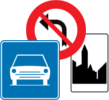
A Belgian traffic zone is normally indicated by a rectangular zonal sign displaying the applicable prohibition, speed restriction or parking rule. For example, a Zone 30 begins at traffic sign F4a and ends at traffic sign F4b. Other zonal regulations use the relevant prohibition sign from the C series or parking and stopping sign from the E series within a zonal panel. The corresponding end-zone sign indicates where the zonal regulation ends.

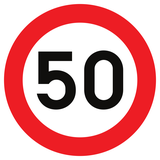
Inicio de zona con límite de velocidad. Inicio de zona con límite de velocidad.

Signal routier F4a • Commencement d'une zone dans laquelle la vitesse est limitée à 30 km à l'heure. Ce signal est placé à droite de chaque accès à une zone dans laquelle la vitesse est limitée à 30 km à l'heure; il peut être répété à gauche.

Verkeersbord F4a • Begin van een zone met een snelheidsbeperking van 30 km per uur. Dit verkeersbord wordt rechts geplaatst aan elke toegang tot een zone met een snelheidsbeperking van 30 km per uur; het mag links herhaald worden.

Fin de zona con límite de velocidad. Fin de zona con límite de velocidad.

Signal routier F4b • Fin d'une zone dans laquelle la vitesse est limitée à 30 km à l'heure. Ce signal est placé à droite de chaque sortie d'une zone dans laquelle la vitesse est limitée à 30 km à l'heure; il peut être répété à gauche.

Verkeersbord F4b • Einde van een zone met een snelheidsbeperking van 30 km per uur. Dit verkeersbord wordt rechts geplaatst aan elke uitgang van een zone met een snelheidsbeperking van 30 km per uur; het mag links herhaald worden.

What changes for traffic zones under Belgium’s new Road Code?

Belgium’s new Code of the Public Road takes effect on 1 June 2027. Zonal traffic signs receive their own numbering: traffic sign Z1 marks the beginning of a zone and traffic sign Z3 marks the end. The traffic sign whose rule applies throughout the zone is displayed within these signs. A Z5 sign may be used as a reminder of the zonal regulation. For example, a speed zone may be indicated by Z1-C43 at the beginning and Z3-C43 at the end.

Inicio de zona con límite de velocidad. Inicio de zona con límite de velocidad.

Signal routier Z1-C43 • Début d’une zone de vitesse.

Verkeersbord Z1-C43 • Begin van een snelheidszone.

Fin de zona con límite de velocidad. Fin de zona con límite de velocidad.

Signal routier Z3-C43 • Fin d’une zone de vitesse.

Verkeersbord Z3-C43 • Einde van een snelheidszone.

Which Belgian traffic signs can have zonal validity?

Zonal validity may be given to certain prohibition signs and signs concerning parking. Not every Belgian traffic sign may be used as a zonal sign.

Where does a Belgian zonal rule apply?

The regulation applies throughout the entire area enclosed by the zone signs. It may therefore cover several roads, road sections and intersections.

Does an intersection end a Belgian traffic zone?

No. Passing an intersection does not normally end a zonal regulation. The rule continues until the corresponding end-zone sign or another legally applicable change is reached.

How does a Belgian traffic zone end?

The zone ends when you pass the corresponding end-zone sign. The rules applicable to the surrounding road, built-up area or another zone then take effect.

What is a Belgian speed zone?

A speed zone is an area in which the maximum speed displayed on a zonal C43 sign applies from the beginning of the zone until its end.

Which zonal speed limits may be used in Belgium?

A zonal speed limit of 30 km/h may be introduced. Zonal limits of 50 km/h and 70 km/h may also be used outside built-up areas under the conditions prescribed by Belgian regulations.

How is a Belgian Zone 30 indicated?

A Zone 30 begins at traffic sign F4a and ends at traffic sign F4b. The maximum permitted speed throughout the zone is 30 km/h.

Can a lower speed limit apply inside a Belgian speed zone?

Yes. An ordinary C43 sign may impose a lower speed on a particular road section. From the next intersection, the original zonal speed applies again without the zone sign having to be repeated.

Can a higher speed limit be displayed inside a Belgian speed zone?

No. An ordinary C43 sign displaying a speed higher than the zonal speed may not be placed within the speed zone.

What happens after leaving a woonerf, erf or school environment inside a speed zone?

The original zonal speed limit applies again after leaving the woonerf, erf or school environment. The original zone sign does not normally need to be repeated.

Can another speed zone exist inside a Belgian speed zone?

Yes. A different speed zone may be created within a larger zone. Where the original zone continues afterwards, its entrance sign must be displayed again when legally required.

How does a Belgian parking zone work?

A zonal parking rule applies throughout the defined area. A different parking regulation may nevertheless be indicated for a particular location by local parking signs or road markings.

Can two zonal rules apply at the same time?

Yes. Belgian signs may introduce up to two zonal regulations together at an entrance, subject to the prescribed exceptions and placement rules.

Must a Belgian zone sign be repeated after every intersection?

No. The sign does not normally need to be repeated after each intersection. A reminder sign may nevertheless be placed with the word Herhaling.

Are small Zone 30 signs attached to poles legally binding?

Small stickers or recognition signs displaying the zonal speed may be attached to lighting or traffic poles as reminders. They are informational reminders and do not create a speed restriction by themselves.

Does a Belgian Zone 30 automatically change the priority rules?

No. Entering a Zone 30 does not by itself change priority at intersections. Drivers must continue to follow priority signs, traffic signals and the normal priority rules.

Does a zonal rule apply to every vehicle?

Not necessarily. Text, symbols or additional panels may specify that a zonal rule applies only to certain vehicles, road users, times or conditions.

1 Bruselas 2 Autopista 3 Vía rápida 4 Zona residencial 5 Zona urbana 6 Zona 7 Límite de velocidad 8 Carril bici 9 Calle ciclista 10 Zona peatonal 11 Resalto 12 Aduana 13 Sentido único 14 Muelle 15 Pendiente 16 Carril bus 17 Calle sin salida 18 Señal de STOP 19 Ceda el paso 20 Glorieta 21 Vía con prioridad 22 Estrechamiento de calzada 23 Prioridad sobre el tráfico en sentido contrario 24 Ceda el paso al tráfico en sentido contrario 25 Paso de peatones 26 Paso a nivel 27 Dirección obligatoria 28 Prohibición de giro 29 Zona escolar 30 Cruce de animales 31 Desprendimiento de rocas 32 Curva 33 Panel direccional 34 Circulación en sentido contrario 35 Obras 36 Límite de altura 37 Límite de anchura 38 Límite de peso 39 Señal de control de velocidad 40 Barreras selectivas 41 Señal de dirección en intersección 42 Prioridad en la próxima intersección 43 Semáforos 44 Semáforos peatonales 45 Permiso de conducir 46 Marcador de ubicación 47 Espejo de tráfico 48 Frontera internacional 49 Ruta ciclista 50 Estacionamiento 51 Prohibido estacionar 52 Kiss and Ride 53 Parquímetro 54 Gestión del tráfico 55 Marcha atrás 56 Intersección sin regulación 57 Estado de la calzada 58 Circunvalación 59 Autopista ciclista 60 Matrícula 61 Estación de carga 62 Peligros 63 Giro con semáforo rojo 64 Documento de identidad 65 Riesgo de incendio 66 Peatón 67 Ciclomotor 68 Turismo 69 Camión 70 Autobús 71 Policía 72 Ambulancia 73 Semáforos para tranvías 74 Norma europea de emisiones 75 Bache 76 Plaza 77 Camino 78 Partículas 79 Contaminación del aire 80 Hora punta 81 Código de circulación 82 Canaleta de la calle 83 Bicicleta de carga 84 Vehículo forestal 85 Vehículo de construcción 86 Camión articulado 87 Trolebús 88 Speed pedelec 89 Vehículo de reparto 90 Motor al ralentí 91 Grúa 92 Tracción a las cuatro ruedas 93 Prohibido el paso de vehículos 94 Bicicleta 95 Equipamiento de motocicleta 96 Automotor ferroviario 97 Vía férrea 98 Transporte público 99 Caravana 100 Remolque ...