


Cycling streetFrance
 Traffic rules
 France
14. Cycling street
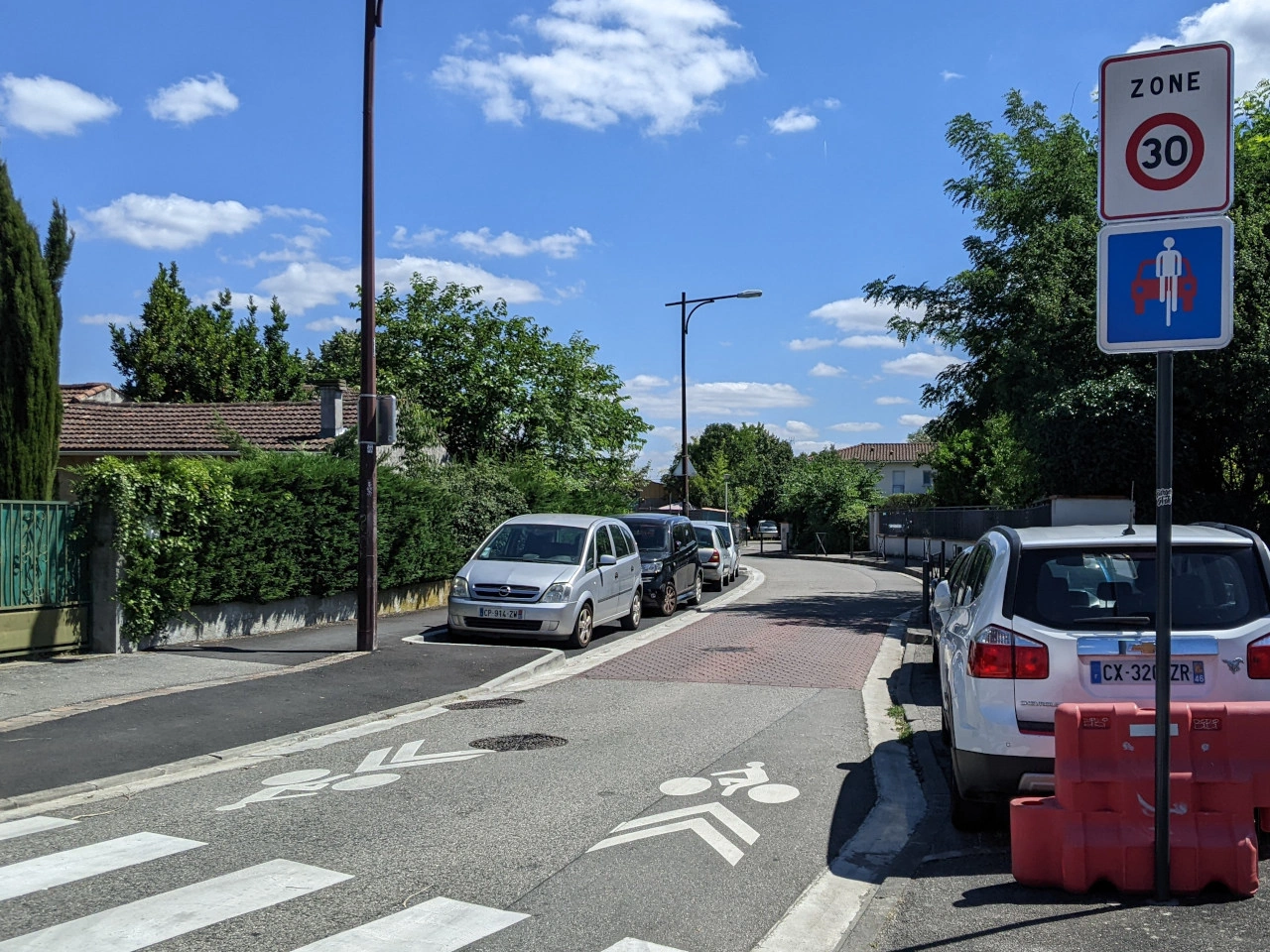
A cycling street is a street designed or legally designated to give cyclists a prominent position in mixed traffic. Motor vehicles may usually enter, but they must adapt their speed and driving behaviour to the presence of cyclists.
Depending on the country, cyclists may be permitted to use more of the carriageway and motor vehicles may be prohibited from overtaking them. The speed limit, priority rules, permitted vehicles and beginning and end of the street depend on local traffic signs and regulations.
Wikimedia.org • Abdoucondorcet • CC BY-SA
How should I interpret a cycling-priority street in France?
A vélorue is a local cycling-oriented street arrangement. For example, Toulouse describes shared road space encouraging cycling, with motor traffic limited to local access. Its local signs and the national Road Code determine the enforceable traffic rules.
🔗 metropole.toulouse.fr • Toulouse Métropole — local vélorues and urban passing clearance
🔗 legifrance.gouv.fr • Road Code — R412-9 and R414-4; national duties remain applicable
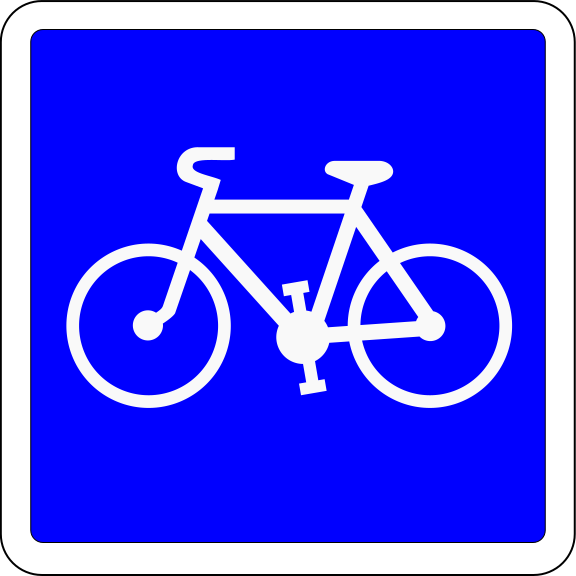 Lane for cyclists.
English • Traffic sign C113 • Recommended cycle track or lane reserved for two- or three-wheeled cycles. This sign indicates that use of the facility is recommended and reserved for two- or three-wheeled cycles; pedestrians and drivers of other vehicles must not use it or stop on it. However, powered personal mobility devices and light motorised cycles must use it under articles R. 412-43-1 and R. 412-43-4 of the Highway Code, unless a different decision by the traffic authority is duly signposted. An accompanying M4d2 plate indicates that the competent authority has also permitted mopeds to use the facility.
Français • Panneau C113 • Piste ou bande cyclable conseillée et réservée aux cycles à deux ou trois roues. Ce panneau indique que l'accès à une piste ou à une bande cyclable est conseillé et réservé aux cycles à deux ou trois roues et indique aux piétons et aux conducteurs des autres véhicules qu'ils n'ont pas le droit d'emprunter cet aménagement ni de s'y arrêter. Toutefois les engins de déplacement personnel motorisés et des cyclomobiles légers sont tenus d'y circuler conformément aux articles R. 412-43-1 et R. 412-43-4 du code de la route, sauf décision différente de l'autorité de police de la circulation dûment signalée. Le panonceau M4d2 qui peut compléter le panneau indique que, par décision de l'autorité compétente, cet aménagement est accessible aux cyclomoteurs.
Sources
🔗 Commons.wikimedia.org
🔗 Equipementsdelaroute.cerema.fr • Arrêté du 24 novembre 1967
© Roulex 45 et les contributeurs Wikimedia • CC BY-SA 3.0 • SVG original non modifié.
Image via Commons.wikimedia.org
Roulex 45 self-made from source above • CC BY-SA 3.0 • Source revision 2019-10-04. Wikimedia original unmodified.
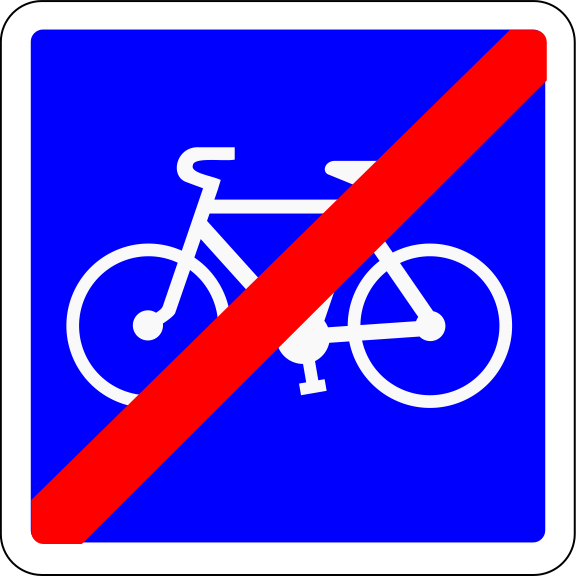 End of the lane for cyclists.
English • Traffic sign C114 • End of a recommended cycle track or lane reserved for two- or three-wheeled cycles. This sign ends the rules imposed by sign C113.
Français • Panneau C114 • Fin d'une piste ou d'une bande cyclable conseillée et réservée aux cycles à deux ou trois roues. Ce panneau indique la fin de la réglementation édictée par le panneau C113.
Sources
🔗 Commons.wikimedia.org
🔗 Equipementsdelaroute.cerema.fr • Arrêté du 24 novembre 1967
© Roulex 45 et les contributeurs Wikimedia • CC BY-SA 3.0 • SVG original non modifié.
Image via Commons.wikimedia.org
Roulex 45 self-made from source above • CC BY-SA 3.0 • Source revision 2019-10-04. Wikimedia original unmodified.
Which driving rules matter on a mixed cycling street in France?
In Toulouse’s example, a motorist must keep the required one-metre urban passing clearance when overtaking a cyclist. If there is insufficient space, wait. A vélorue label alone does not establish Belgium’s nationwide overtaking ban.
🔗 metropole.toulouse.fr • Toulouse Métropole — local vélorues and urban passing clearance
🔗 legifrance.gouv.fr • Road Code — R412-9 and R414-4; national duties remain applicable
Which priority rules apply on cycling streets in France?
Apply the junction’s signs, signals and ordinary priority rules. A local vélorue identity is not a promise of automatic cyclist priority at every crossing road. Check whether the route also has separate traffic or access restrictions.
🔗 metropole.toulouse.fr • Toulouse Métropole — local vélorues and urban passing clearance
🔗 legifrance.gouv.fr • Road Code — R412-9 and R414-4; national duties remain applicable


