


Traffic jamFrance
Learn traffic rules with clear explanations and visual examples in our illustrated book, designed to make studying simple and engaging.
 Traffic rules
 France
86. Traffic jam
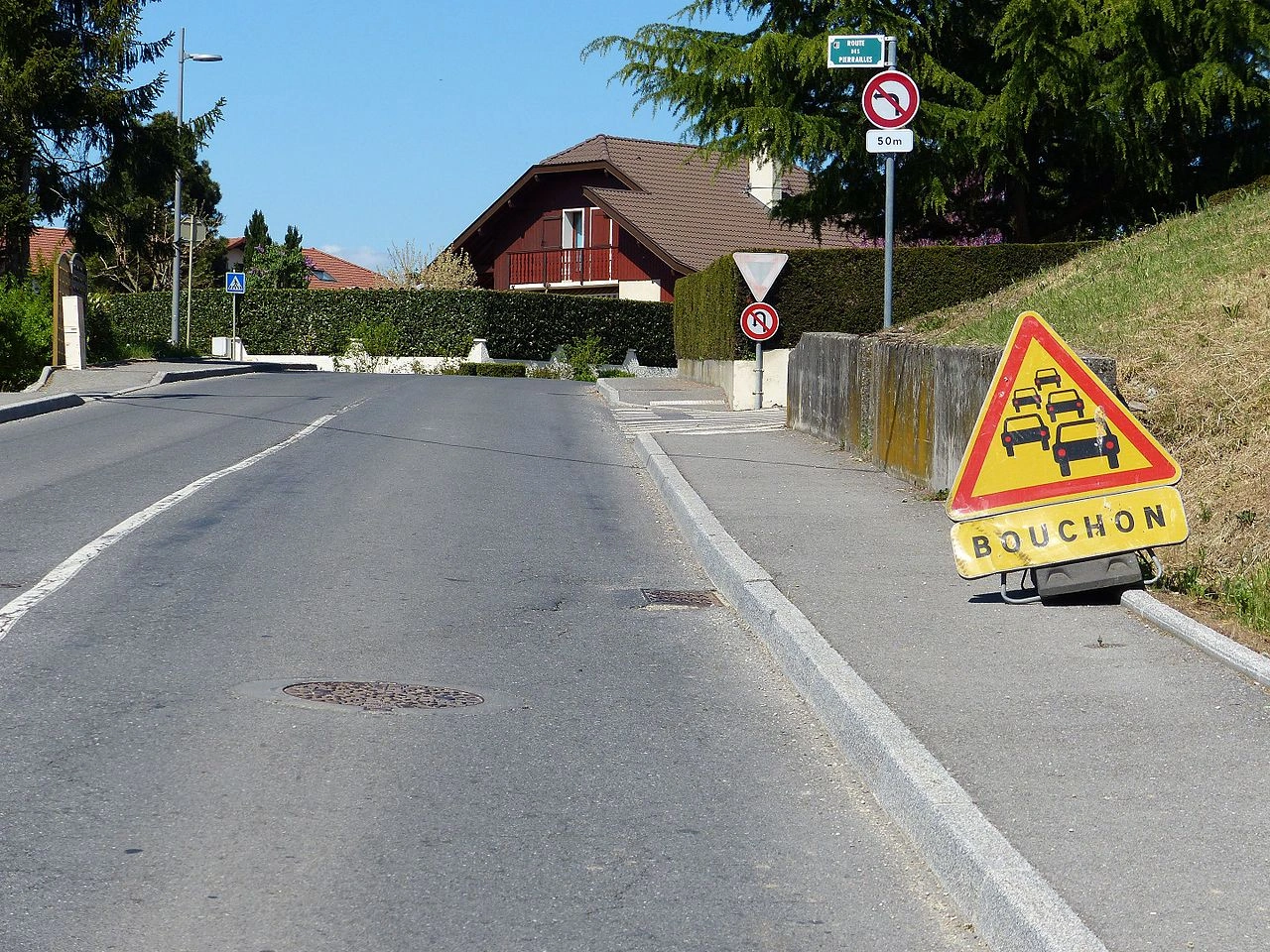
A traffic jam is a situation where traffic becomes heavily congested and vehicles move very slowly or stop for extended periods. Traffic jams are commonly caused by high traffic volumes, accidents, roadworks, lane closures or poor weather. Drivers should remain patient, keep a safe distance, avoid unnecessary lane changes and watch for motorcycles, emergency vehicles and sudden braking. Where lanes merge during congestion, local rules may require drivers to use a zipper-merging system.
Wikimedia.org • Marc Mongenet • CC BY-SA
What is a traffic jam?
A traffic jam occurs when traffic becomes congested and vehicles move slowly or remain stationary because the road cannot accommodate the normal flow of traffic.
What causes traffic jams?
Common causes include heavy traffic, accidents, roadworks, lane closures, bottlenecks and poor weather.
How should you drive in a traffic jam?
Keep a safe distance, avoid sudden braking and unnecessary lane changes, and remain alert for changing traffic conditions and emergency vehicles.
Should you change lanes frequently in a traffic jam?
Usually not. Frequent lane changes can disrupt traffic flow and increase the risk of collisions. Change lanes only when necessary and safe.
What is zipper merging?
Zipper merging is a system where drivers use all available lanes until a lane ends or becomes blocked and then merge alternately into the remaining lane.
Should you leave space for emergency vehicles in a traffic jam?
Yes. Many countries require or recommend drivers to create space for emergency vehicles when traffic becomes congested or stationary.


