


Road markingsFrance
An introduction to the traffic rules and road signs of France. Learn about driving, road safety and much more in our illustrated book, with answers to frequently asked questions.
For informational purposes only. Always follow official regulations. Some content and images were created with AI assistance.
 Traffic rules
 France
58. Road markings
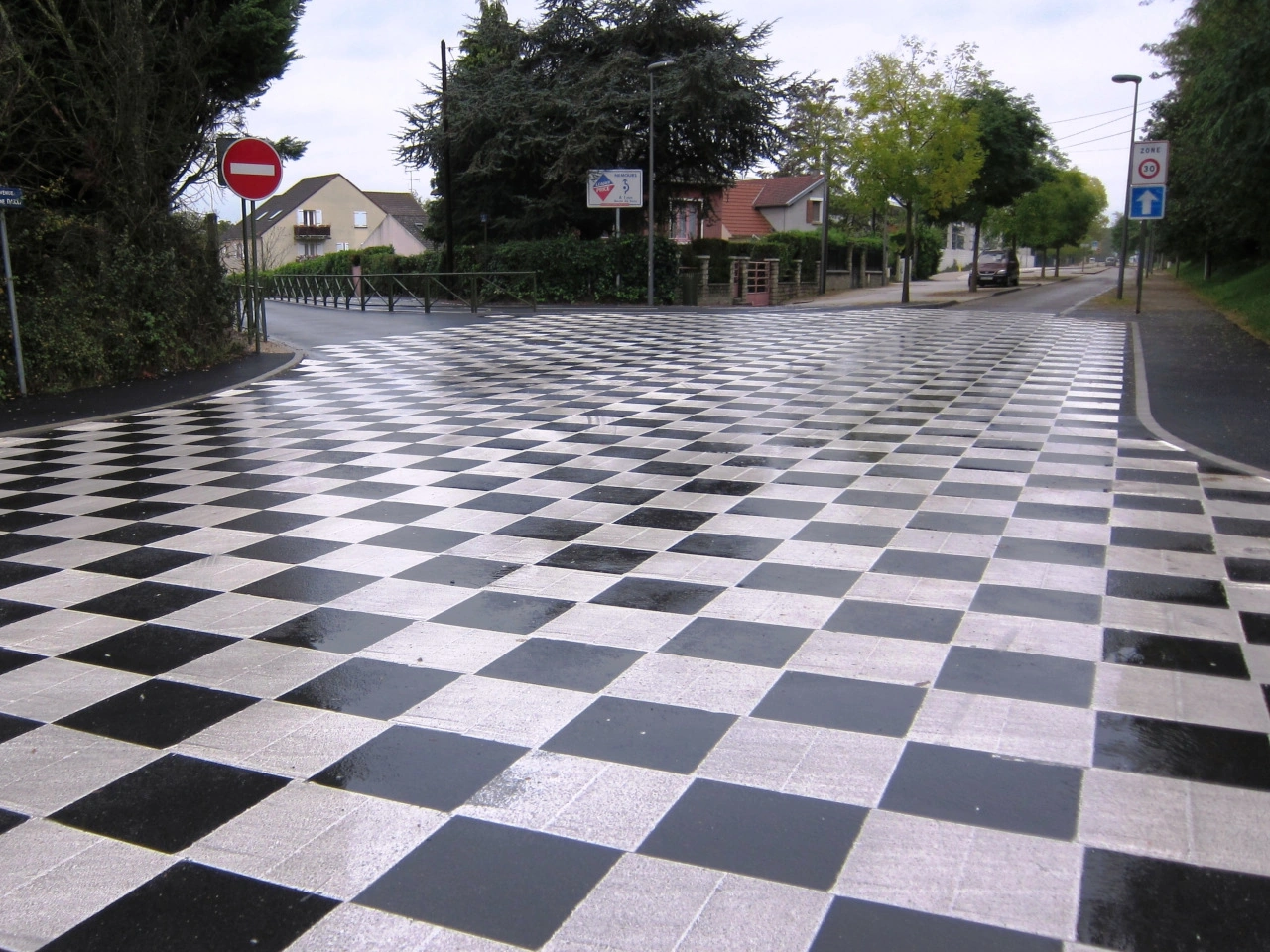
Road markings are lines, symbols, arrows, words or other markings applied to the road surface to regulate, guide or inform road users. They can separate traffic lanes and opposing directions, indicate where vehicles must stop or give way, mark pedestrian and cyclist crossings and identify areas reserved for particular road users.
Road users should observe the meaning of each road marking and combine it with the applicable traffic signs, signals and traffic rules. Colours, patterns and legal meanings can differ between countries.
Wikimedia.org • Art Anderson • CC BY-SA
Which road markings are important to recognise in France?
Recognise stop and give-way lines, lane-divider markings, continuous lines, directional arrows and pedestrian-crossing markings. Their colour, shape and exact legal effect come from the local traffic rules; do not assume an overseas convention applies unchanged.
🔗 legifrance.gouv.fr • French Road Code — R412-19–20, R412-30, R415-2, R415-15; IISR part 7
May drivers cross a solid road line in France?
In France, a continuous centre or lane-separating line generally must not be crossed or straddled. Article R412-19 specifically permits straddling it to overtake a cycle, motorised personal-mobility device or light cyclomobile under the safety conditions in Article R414-4. That exception permits straddling, rather than fully crossing, the line.
🔗 legifrance.gouv.fr • French Road Code — R412-19–20, R412-30, R415-2, R415-15; IISR part 7
Can painted arrows or stop lines be ignored when signs are not obvious in France?
No. Lane arrows, stop lines and give-way markings can direct where to wait or which movement a lane permits. Read them together with traffic lights, vertical signs and directions from authorised traffic controllers; temporary changes may also apply.
🔗 legifrance.gouv.fr • French Road Code — R412-19–20, R412-30, R415-2, R415-15; IISR part 7


