


Advisory speedNew Zealand
 Traffic rules
 New Zealand
4. Advisory speed
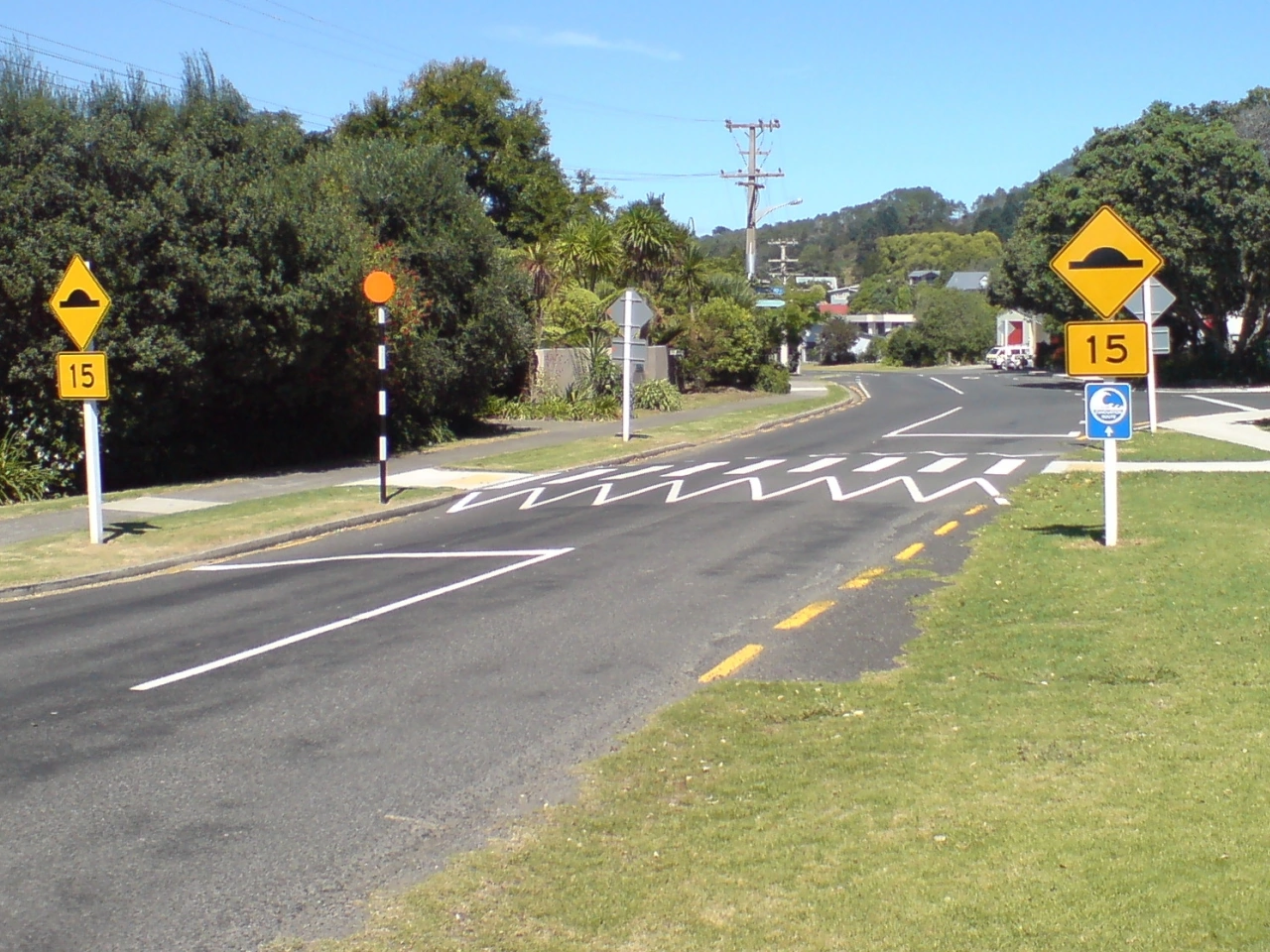
An advisory speed is a recommended speed for a particular road section or hazard rather than a legally imposed maximum speed. It may be shown near bends, junctions, steep gradients, roadworks or other locations where a lower speed can help drivers negotiate the road safely.
Drivers should treat an advisory speed as guidance for safe driving conditions and should travel even more slowly when weather, visibility, traffic or road conditions require it. A separate legally binding speed limit must still be obeyed.
Wikimedia.org • CC0
What does a New Zealand corner advisory-speed sign mean?
It recommends a speed for negotiating the corner safely. The advisory number is distinct from a regulatory maximum-speed limit. It warns that the road feature may require a lower speed than the road’s ordinary limit.
🔗 nzta.govt.nz • New Zealand, NZTA official Road Code — advisory-speed
Should I drive below a New Zealand advisory speed in poor conditions?
Yes. Conditions such as a wet surface, poor visibility, traffic or the vehicle’s handling can make the recommended number too fast. Choose a speed that retains control and allows safe stopping; the recommendation is not a minimum.
🔗 nzta.govt.nz • New Zealand, NZTA official Road Code — advisory-speed
What if New Zealand’s legal maximum is lower than a remembered advisory speed?
Follow the lower legal maximum, and slow further if necessary. A recommendation does not authorise speeding. Use the restrictions on the actual section instead of a remembered number from another bend or journey.
🔗 nzta.govt.nz • New Zealand, NZTA official Road Code — advisory-speed


