


Bus laneNew Zealand
 Traffic rules
 New Zealand
11. Bus lane
A bus lane is a traffic lane reserved primarily for buses or other authorised public-transport vehicles. It is intended to improve the reliability and flow of public transport by allowing authorised vehicles to avoid general traffic congestion.
Other road users, such as taxis, cyclists, motorcycles or vehicles carrying several occupants, may also be permitted when signs expressly allow them. The operating hours, permitted vehicles, direction of travel and rules for entering or crossing the lane depend on local traffic signs and regulations.
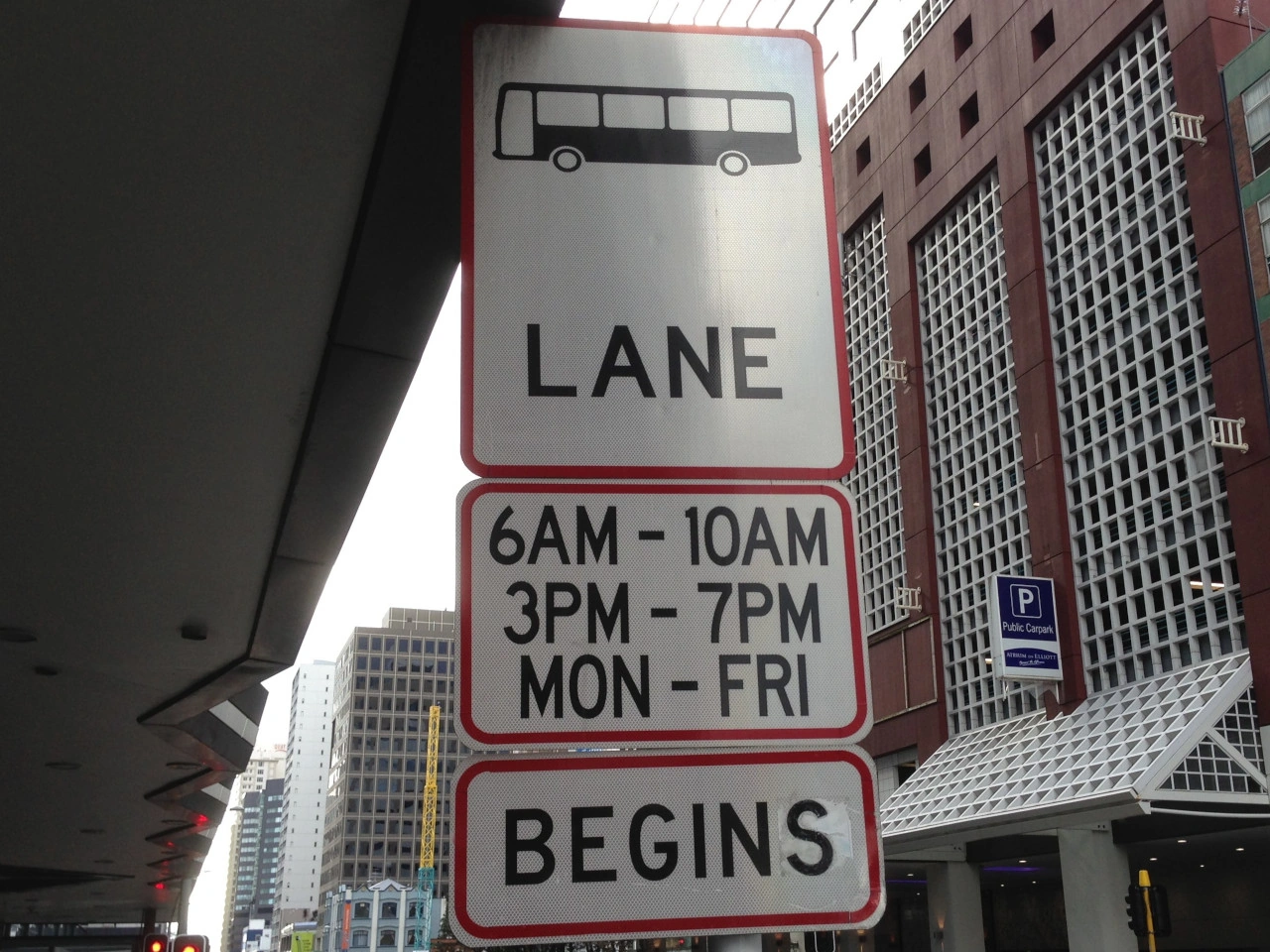
Wikimedia.org • LincolnGroup11 • CC BY-SA
What is a bus lane?
A bus lane is a lane reserved primarily for buses or other authorised public-transport vehicles. Its purpose is to help public transport move efficiently through traffic.
How can you recognise a bus lane?
A bus lane may be identified by a bus-lane sign, lane markings, coloured surfacing or the word BUS painted on the road. The markings and colours differ between countries.
Is a bus lane the same as a bus-only road?
No. A bus lane forms part of a wider road arrangement, while a bus-only road may reserve the entire road for buses and other authorised users.
Who may use a bus lane?
Buses operating authorised or scheduled services may normally use it. Other vehicles may enter only when the traffic signs or local regulations expressly permit them.
May taxis use a bus lane?
This depends on local law and the signs displayed. Some bus lanes permit licensed taxis, while others are reserved exclusively for buses.
May cyclists use a bus lane?
Cyclists may use a bus lane where signs or local law permit them. They should remain alert for large vehicles, stops, passengers and buses moving towards the kerb.
May motorcycles use a bus lane?
Only where motorcycles are expressly permitted. Permission may apply to all motorcycles, particular times or specific bus lanes.
Can a bus lane operate only at certain times?
Yes. A sign may show days or hours during which the restriction applies. Outside those periods, the lane may become available to general traffic, subject to the local rules.
Does a bus lane have a special speed limit?
Not necessarily. The normal road or posted speed limit generally applies unless a separate restriction is displayed.
May ordinary vehicles enter a bus lane to turn?
Some countries allow drivers to enter a bus lane shortly before a junction to make a turn. Drivers must follow the lane markings and enter only at the point where local rules permit it.
May you cross a bus lane?
Usually, where necessary and permitted. A driver may need to cross it at an intersection or to enter or leave a property, parking area or side road. The driver must check carefully for buses, cyclists and other authorised users.
May you use a bus lane to pass congestion?
No. An unauthorised driver may not use the bus lane simply to overtake a queue or reach the front of traffic.
May you stop or park in a bus lane?
Stopping and parking are normally prohibited unless a sign or marked bay expressly permits them. A stopped vehicle can obstruct buses and force authorised lane users into general traffic.
Do buses always have priority when leaving a stop?
Not universally. Some countries require drivers to allow a signalling bus to leave a stop, particularly inside built-up areas. Elsewhere, ordinary merging rules apply.
Does a bus lane change priority at an intersection?
No. Traffic lights, priority signs and the ordinary intersection rules continue to apply unless special public-transport signals indicate otherwise.
Can a bus lane run against the direction of general traffic?
Yes. A contraflow bus lane may carry authorised vehicles in the opposite direction from nearby general traffic. Drivers and pedestrians should check both directions before crossing.
What do special bus traffic lights mean?
Some countries use separate lights or symbols for public-transport vehicles. Only drivers authorised to use that lane should follow those signals, while other traffic follows its own lights.
What should you check before crossing a bus lane?
Check mirrors and blind spots and look for buses, taxis, cyclists, motorcycles or other authorised vehicles. Their lane may be moving even when general traffic is stationary.
How does a bus lane end?
It may end at a sign, a change in road markings, an intersection or the end of its stated operating period. Drivers should follow the lane arrows and merge safely where required.


