


New ZealandNew Zealand
 Traffic rules
 New Zealand
1. New Zealand
New Zealand lies in the southwestern Pacific Ocean and consists mainly of the North Island and South Island. Traffic drives on the left. Although the country is relatively compact, journeys can take longer than expected because many roads are narrow, winding and hilly, with mountain passes, unsealed sections and one-lane bridges still forming part of the road network. Snow and ice can affect alpine routes in winter, particularly on the South Island.
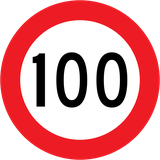
Most roads are free to use, and New Zealand has no nationwide vignette; there are currently only three toll roads, all on the North Island, using electronic number-plate-based collection without toll booths. The usual open-road maximum for light vehicles is 100 km/h, although 110 km/h applies on designated high-standard roads and many roads have lower posted limits. Road signs use standardised symbols and English, while te reo Māori and English increasingly appear together on bilingual signs.
AI-generated by Rijbewijs-online.be • WCIT • CC BY-SA
Which side of the road do you drive on in New Zealand?
Drive on the left-hand side of the road.
Which side should you overtake on in New Zealand?
Normally overtake on the right. Passing on the left is permitted in certain situations, including when vehicles are travelling in separate marked lanes.
What is the emergency telephone number in New Zealand?
Call 111 for Police, Fire or Ambulance in an emergency.
What is the alcohol limit for drivers in New Zealand?
Drivers aged 20 or older must not exceed 250 micrograms of alcohol per litre of breath or 50 milligrams per 100 millilitres of blood. Drivers under 20 have a zero-alcohol limit.
What is the default speed limit in built-up areas in New Zealand?
The usual unsigned urban default is 50 km/h, but many streets have posted limits of 30, 40 or another speed. Always follow the applicable speed-limit signs.
What is the default speed limit outside built-up areas in New Zealand?
The general open-road maximum for a light vehicle is 100 km/h unless a different limit is posted. Many rural roads have lower signed limits.
Can you drive at 110 km/h in New Zealand?
Yes, but only on designated roads signed at 110 km/h. These are high-standard motorway or expressway sections; the higher speed does not apply automatically to every motorway.
What is the speed limit on New Zealand motorways?
There is no separate universal motorway speed limit. Most motorway sections are signed at 100 km/h or lower, while selected high-standard sections are signed at 110 km/h.
What speed limits apply around schools in New Zealand?
Follow the school-zone signs. Many schools use a variable 30 km/h limit during school travel periods, while some rural schools use a variable 60 km/h limit.
Do you need a vignette to drive in New Zealand?
No. New Zealand does not have a national vignette. Most roads are free, with tolls charged only on specific roads.
How many toll roads are there in New Zealand?
There are currently three toll roads: the Northern Gateway Toll Road north of Auckland, the Tauranga Eastern Link Toll Road and the Takitimu Drive Toll Road.
How are road tolls paid in New Zealand?
Toll roads use electronic number-plate recognition and have no toll booths. Drivers can use an NZTA toll account or Pay & Go; unpaid trips should be paid promptly to avoid receiving a toll payment notice.
Are seat belts compulsory in New Zealand?
Yes. Everyone must wear a seat belt where one is provided. The driver is responsible for ensuring passengers under 15 are properly restrained.
Are child restraints compulsory in New Zealand?
Yes. Children under 7 years old must use an approved child restraint. A child aged 7 must use an approved child restraint if one is available; otherwise an available seat belt must be used.
What restraint must children aged 8 to 14 use in New Zealand?
Children aged 8 to 14 must use an available seat belt. The driver is responsible for ensuring passengers under 15 are properly restrained.
Are motorcycle helmets compulsory in New Zealand?
Yes. Motorcycle and moped riders and passengers must wear an approved safety helmet, subject to limited legal exemptions.
Must motorcycles use headlights during the daytime in New Zealand?
For motorcycles manufactured on or after 1 January 1980, the headlight on dipped beam or daytime running lamps must be used during daylight hours.
Do cars have to use headlights during the daytime in New Zealand?
There is no general daytime-headlight requirement for ordinary cars. Headlights must be used between sunset and sunrise and whenever you cannot clearly see a person or vehicle 100 metres away.
Can you use a mobile phone while driving in New Zealand?
You must not use a handheld mobile phone to call, text or access online services while driving. A phone may be used hands-free or in an appropriate fixed mounting within the permitted rules.
Who has priority at an uncontrolled intersection in New Zealand?
At an otherwise equal uncontrolled intersection, give way to traffic crossing your path from your right. Other give-way rules also apply, including that turning traffic must generally give way to traffic that is not turning and traffic on a terminating road must give way at a T-intersection.
Who has priority at roundabouts in New Zealand?
When entering a roundabout, give way to vehicles that will cross your path from your right, including vehicles already circulating where applicable.
Do drivers have to stop for pedestrians at zebra crossings in New Zealand?
Yes. Drivers must give way to pedestrians on a pedestrian crossing. Approach at a speed that allows you to stop safely.
What should you do when an emergency vehicle approaches in New Zealand?
If an emergency vehicle approaches using sirens or flashing red, blue, or red-and-blue lights, pull over and stop if necessary so it can pass.
How does priority work at a one-lane bridge in New Zealand?
Check the priority signs before entering. One direction will normally be required to give way to traffic coming from the opposite direction. Do not assume that the vehicle reaching the bridge first always has priority.
Can a visitor drive in New Zealand with a foreign driving licence?
Currently, a visitor with a valid overseas car licence may drive for up to 18 months from the date they last arrived in New Zealand. Overseas motorcycle and truck licences may generally be used for up to 12 months. Different rules apply once a New Zealand licence has been obtained.
Do you need an International Driving Permit in New Zealand?
Not always. If your overseas licence is in English, an IDP is generally unnecessary. If it is not in English, you must also carry an accurate English translation or an International Driving Permit.
Is vehicle insurance compulsory in New Zealand?
No. Motor-vehicle insurance is not legally compulsory in New Zealand, although at least third-party cover is strongly recommended.
Do vehicles need a Warrant of Fitness in New Zealand?
Vehicles used on New Zealand roads generally need a current Warrant of Fitness (WoF) or, for vehicles in the applicable categories, a Certificate of Fitness (CoF).
Are winter tyres compulsory in New Zealand?
There is no nationwide requirement to fit winter tyres. If winter tyres are fitted, they must be fitted to all four road wheels and meet the applicable tread requirements.
Are snow chains compulsory in New Zealand?
There is no general nationwide requirement to carry snow chains, but chains can be required on particular alpine roads when conditions demand them. Follow road signs and official instructions, especially on South Island mountain routes.
What should drivers know about railway crossings in New Zealand?
Not every railway crossing has flashing lights or barriers. Some crossings are controlled only by Stop or Give Way signs, so always check carefully for trains before crossing.
What languages are used on road signs in New Zealand?
Road signs use standardised symbols and predominantly English. Drivers will also increasingly see bilingual te reo Māori and English signs, including Kura/School signs and other signs introduced through the national bilingual-sign programme.

