

Advisory speedUnited States
An introduction to the traffic rules and road signs of United States. Learn about driving, road safety and much more in our illustrated book, with answers to frequently asked questions.
For informational purposes only. Always follow official regulations. Some content and images were created with AI assistance.
 Traffic rules
 United States
6. Advisory speed
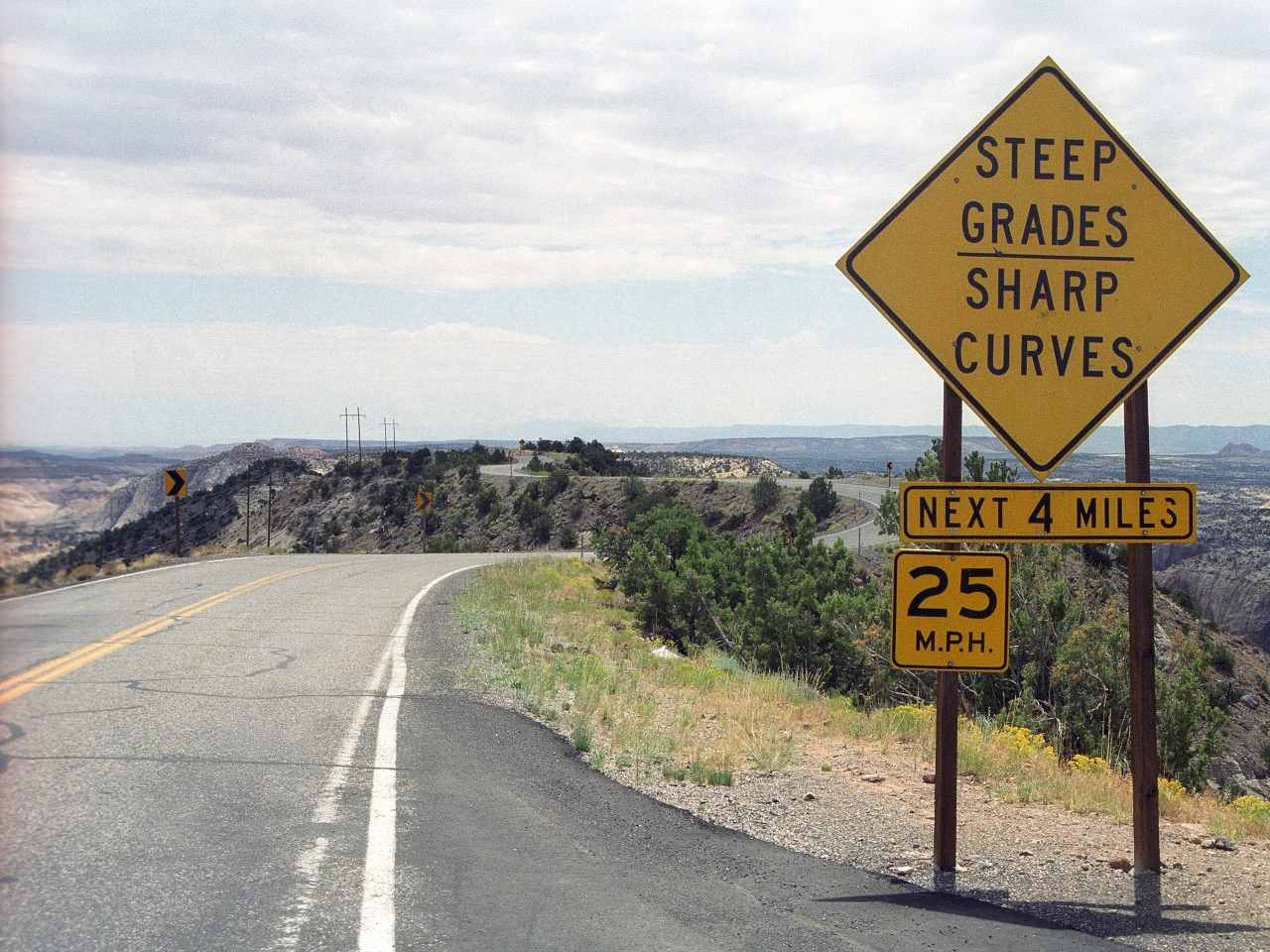
An advisory speed is a recommended speed for a particular road section or hazard rather than a legally imposed maximum speed. It may be shown near bends, junctions, steep gradients, roadworks or other locations where a lower speed can help drivers negotiate the road safely.
Drivers should treat an advisory speed as guidance for safe driving conditions and should travel even more slowly when weather, visibility, traffic or road conditions require it. A separate legally binding speed limit must still be obeyed.
Wikimedia.org • LeeAnne Adams • CC BY
Is a US advisory speed a posted legal maximum?
No. The Federal Highway Administration distinguishes a non-regulatory advisory speed for a feature such as a sharp curve or exit ramp from a regulatory speed limit. US road speeds are normally expressed in mph.
🔗 highways.dot.gov • FHWA — statutory, posted, advisory and special-condition speed limits
How are US advisory speeds selected?
They are generally based on an engineering study of the road’s design, operation and conditions. The number gives guidance for the relevant feature; it is not a compulsory minimum or a guarantee that the same speed is safe in bad weather.
🔗 highways.dot.gov • FHWA — statutory, posted, advisory and special-condition speed limits
Does a US advisory sign authorise driving above the legal limit?
No. A regulatory maximum remains applicable, and safe-driving rules depend on the state. Choose a lower speed when a hazard or conditions require it. The advisory number’s status does not remove those obligations.
🔗 highways.dot.gov • FHWA — statutory, posted, advisory and special-condition speed limits


