

Bus stopUnited States
An introduction to the traffic rules and road signs of United States. Learn about driving, road safety and much more in our illustrated book, with answers to frequently asked questions.
For informational purposes only. Always follow official regulations. Some content and images were created with AI assistance.
 Traffic rules
 United States
16. Bus stop
A bus stop is a designated place where buses stop to allow passengers to board or leave. It may be identified by a sign, shelter, raised platform, road marking or other public-transport infrastructure and can be located beside the road or in a specially constructed stopping area.
Drivers approaching a bus stop should watch carefully for buses, pedestrians and passengers crossing or entering the roadway. Parking or stopping restrictions may apply around bus stops to keep the area accessible and visible.
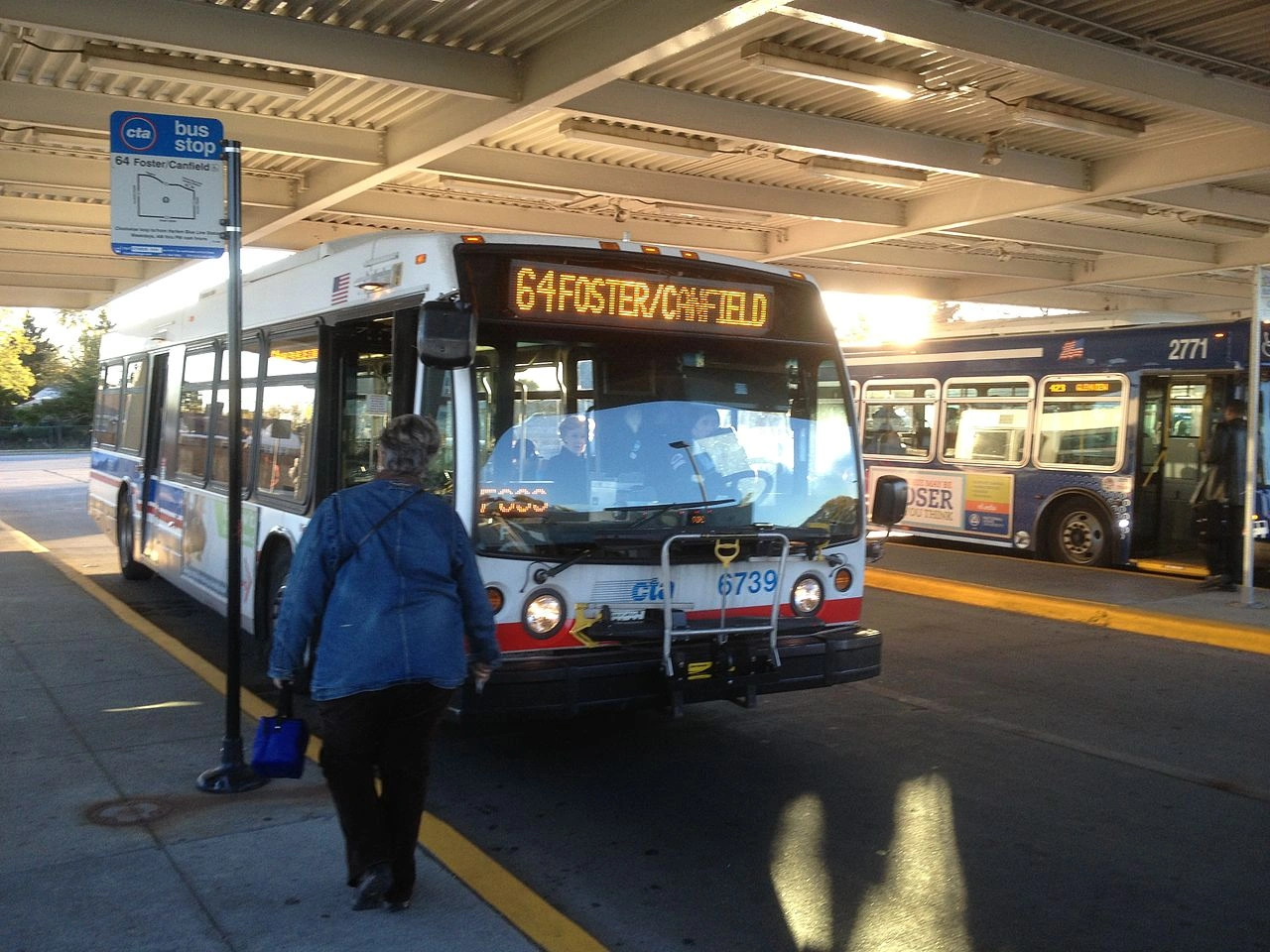
Wikimedia.org • David Wilson • CC BY
What stopping or parking restrictions apply at bus stops in the United States?
US bus-stop restrictions depend on state and local controls. In California, do not park or leave a vehicle at a designated bus stop or the applicable bus-loading area; read the kerb and signs.
🔗 dmv.ca.gov • California DMV — navigating roads, lane markings, turning, merging and passing
May I briefly drop off a passenger at a bus stop in the United States?
A brief passenger stop is not permission to ignore a bus-only loading indication or another no-stopping control. Check the actual California or local restriction and use a lawful alternative.
🔗 dmv.ca.gov • California DMV — navigating roads, lane markings, turning, merging and passing
What should I do near a stopped bus in the United States?
Slow for passengers and follow any state or local yield-to-bus requirement. An ordinary transit bus and a school bus using its special warning signals have different legal rules.
🔗 dmv.ca.gov • California DMV — navigating roads, lane markings, turning, merging and passing


