

InterchangeUnited States
 Traffic rules
 United States
93. Interchange
An interchange is a road junction designed to allow traffic to move between two or more major roads, usually using ramps, bridges or tunnels so that conflicting traffic streams do not have to cross at the same level. Interchanges are commonly found on motorways, expressways and other high-capacity roads.
Drivers should follow the direction signs, lane arrows and route numbers in good time and choose the correct lane before reaching the required exit or connecting ramp. Speed limits, merging rules and lane arrangements vary between countries and individual interchanges.
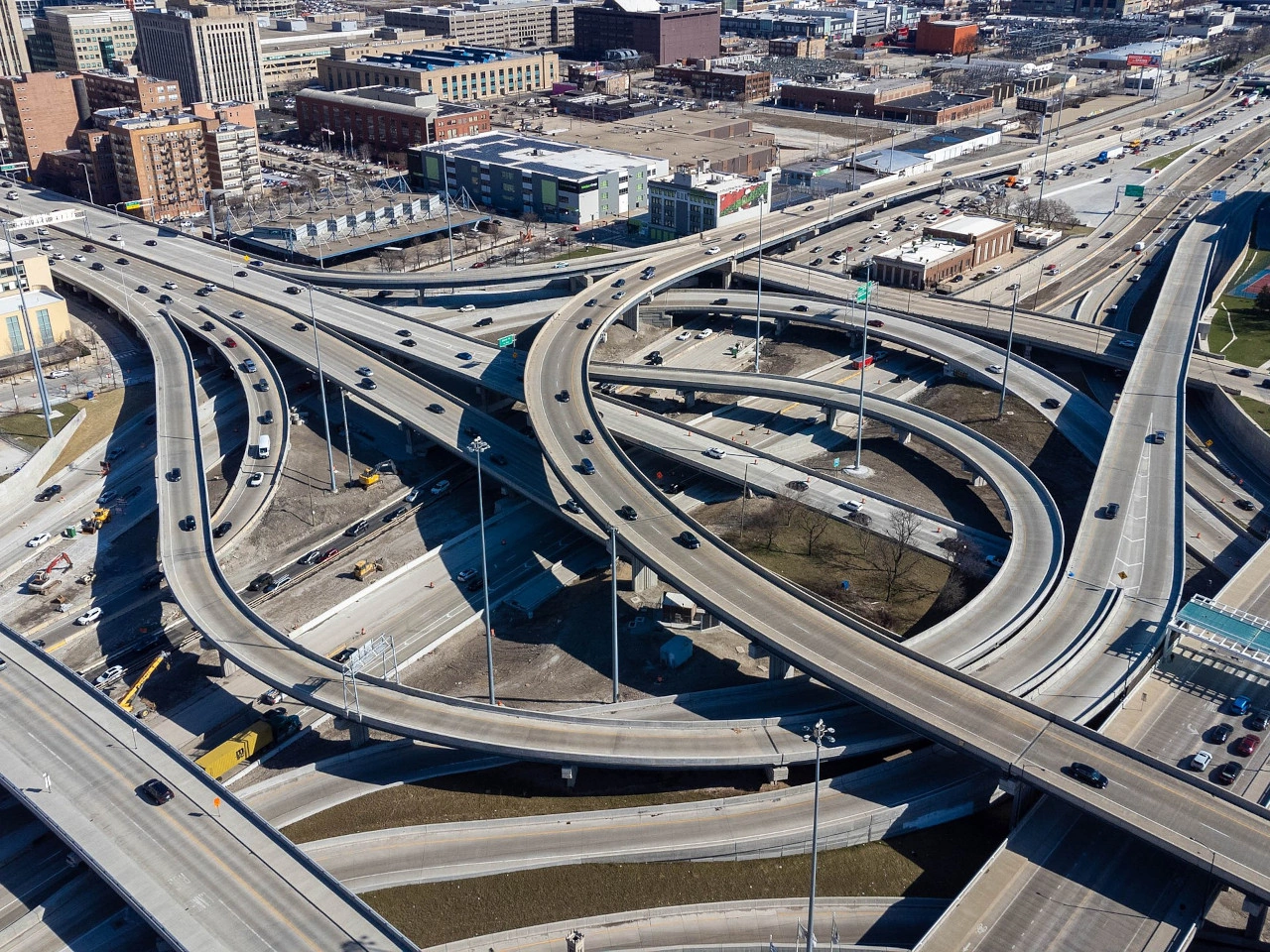
Wikimedia.org • Sea Cow • CC BY-SA
What is an interchange?
An interchange is a junction that allows traffic to transfer between major roads, commonly using ramps and grade-separated bridges or tunnels.
What is the difference between an interchange and an ordinary intersection?
At an ordinary intersection, traffic streams normally meet or cross at the same level. An interchange usually separates major traffic movements vertically and connects them using ramps.
Where are interchanges commonly found?
They are most common on motorways, expressways, ring roads and other high-capacity roads where stopping at ordinary intersections would disrupt traffic flow.
What is an interchange ramp?
A ramp is a connecting road that allows vehicles to enter, leave or transfer between the roads forming the interchange.
How should you approach an interchange?
Read the advance-direction signs early, identify your route or destination and move into the appropriate lane in sufficient time.
Should you make sudden lane changes at an interchange?
No. Interchanges can contain several exits and merging traffic streams. Signal in good time and change lane only when there is sufficient space to do so safely.
Who has priority when entering another road at an interchange?
This depends on the local signs, markings and merging rules. Drivers joining a motorway commonly have to give way to traffic already travelling on it, but local regulations must always be followed.
Can speed limits change on interchange ramps?
Yes. Ramps may have lower speed limits or require a lower safe speed because of bends, merging traffic or limited visibility.
What should you do if you miss your exit at an interchange?
Continue to the next suitable exit or interchange. Never reverse, stop unexpectedly or cross prohibited areas to return to a missed exit.
Are all interchanges designed the same way?
No. Common layouts include cloverleaf, diamond, trumpet and directional interchanges. Their design depends on traffic volumes, available space and the roads being connected.


