

Lane splittingUnited States
An introduction to the traffic rules and road signs of United States. Learn about driving, road safety and much more in our illustrated book, with answers to frequently asked questions.
For informational purposes only. Always follow official regulations. Some content and images were created with AI assistance.
 Traffic rules
 United States
102. Lane splitting
Lane splitting is the practice of riding a motorcycle or another permitted two-wheeled vehicle between two lanes or queues of traffic travelling in the same direction. When it is done through stationary or slow-moving traffic, it is also commonly called lane filtering.
Lane splitting can reduce the time motorcycles spend in congestion but requires particular care because vehicles may change lanes, open gaps or move unexpectedly. Whether lane splitting is permitted, which vehicles may do it and any applicable speed limits depend on the local traffic laws.
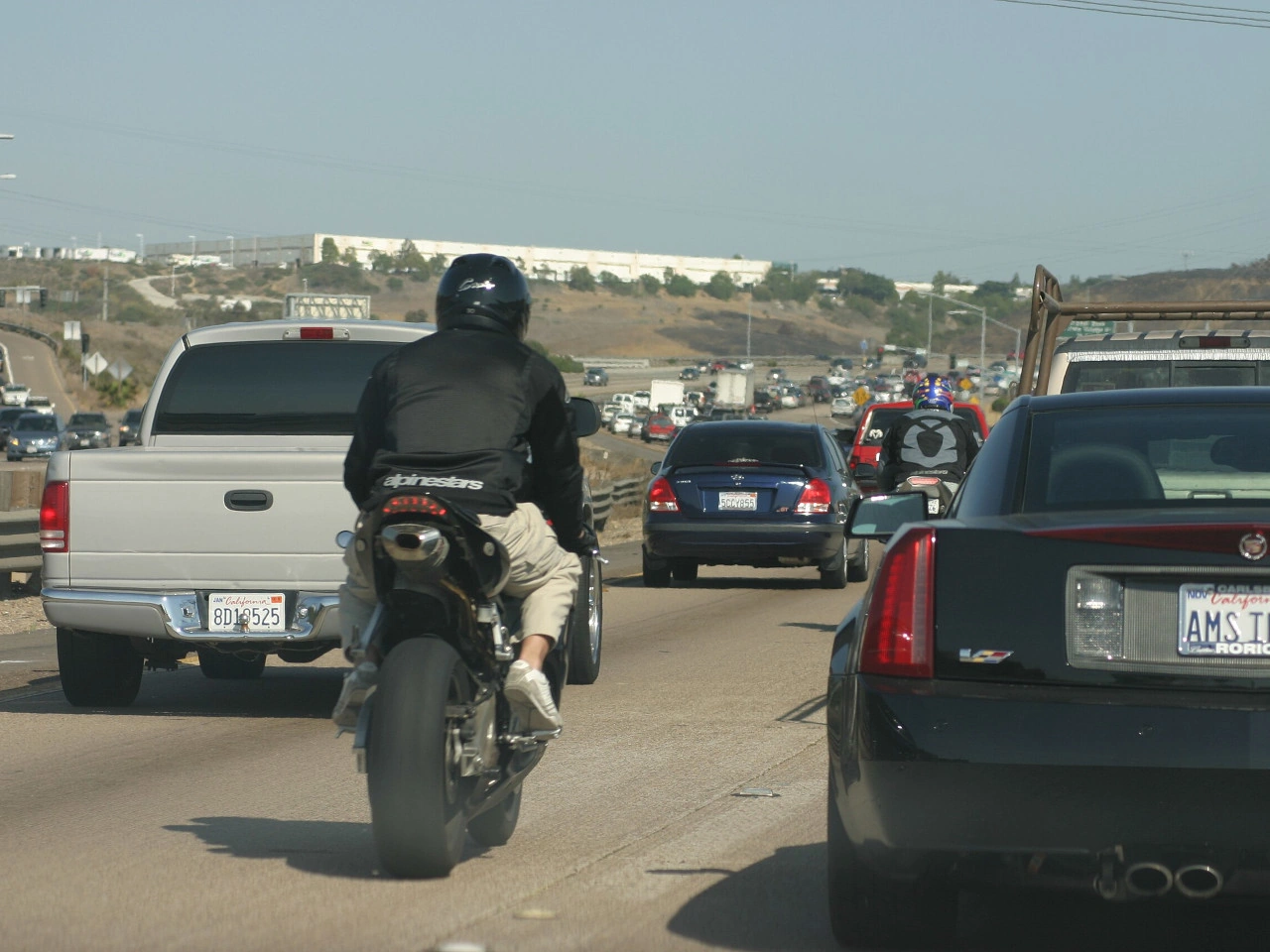
Wikimedia.org • Eric Schmuttenmaer • CC BY-SA
Can a motorcycle lane split in California?
California permits motorcycles to share lanes, a practice known as lane splitting. Riders still need to make the manoeuvre safely; California’s permission must not be generalised to every US state.
How is Utah’s lane-filtering permission more limited than California’s?
Utah permits motorcycle filtering only under stated conditions: at least two adjacent lanes in the same direction, the vehicle being passed stopped, the motorcycle travelling at no more than 15 mph and a safe manoeuvre. The road normally must have a speed limit of 45 mph or less, but qualifying off-ramps are an exception to that speed-limit condition. Filtering is not permitted on an on-ramp. These Utah conditions differ from California’s lane-splitting rules.


