

Road markingsUnited States
An introduction to the traffic rules and road signs of United States. Learn about driving, road safety and much more in our illustrated book, with answers to frequently asked questions.
For informational purposes only. Always follow official regulations. Some content and images were created with AI assistance.
 Traffic rules
 United States
42. Road markings
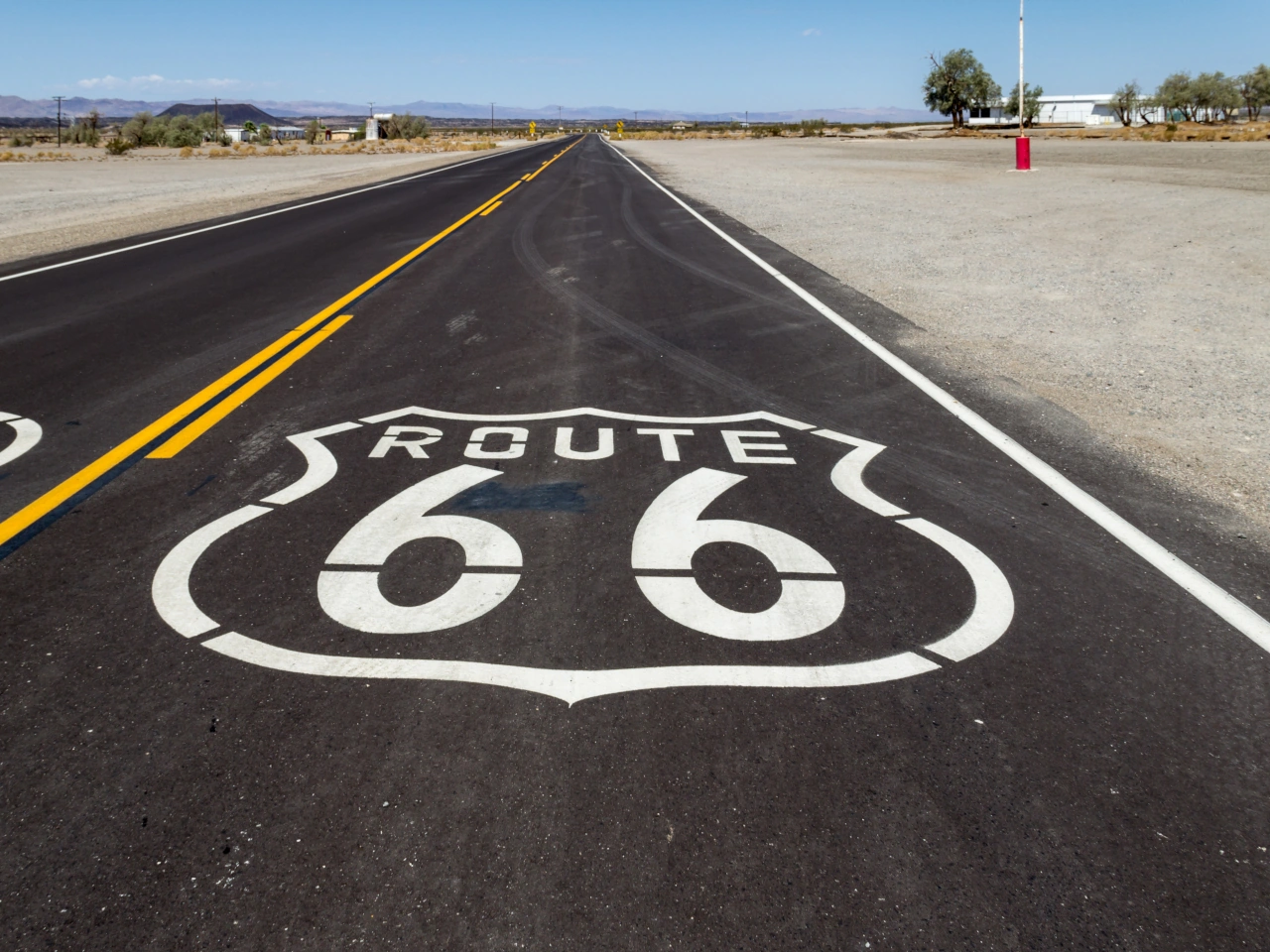
Road markings are lines, symbols, arrows, words or other markings applied to the road surface to regulate, guide or inform road users. They can separate traffic lanes and opposing directions, indicate where vehicles must stop or give way, mark pedestrian and cyclist crossings and identify areas reserved for particular road users.
Road users should observe the meaning of each road marking and combine it with the applicable traffic signs, signals and traffic rules. Colours, patterns and legal meanings can differ between countries.
Wikimedia.org • Dietmar Rabich • CC BY-SA
Which road markings are important to recognise in the United States?
In the US system, yellow centre lines generally separate opposing traffic and white lane lines separate traffic travelling in the same direction. Their solid or broken form affects the permitted movements.
May drivers cross a solid road line in the United States?
The legal effect depends on whether the line is solid, double solid or broken, its colour, and the state or territory. Do not cross a prohibited no-passing or lane-control marking; look up permitted turning exceptions locally.
Can painted arrows or stop lines be ignored when signs are not obvious in the United States?
No. Lane arrows, stop lines and give-way markings can direct where to wait or which movement a lane permits. Read them together with traffic lights, vertical signs and directions from authorised traffic controllers; temporary changes may also apply.


