
ChevronUnited States

An introduction to the traffic rules and road signs of United States. Learn about driving, road safety and much more in our illustrated book, with answers to frequently asked questions.

For informational purposes only. Always follow official regulations. Some content and images were created with AI assistance.

32. Chevron

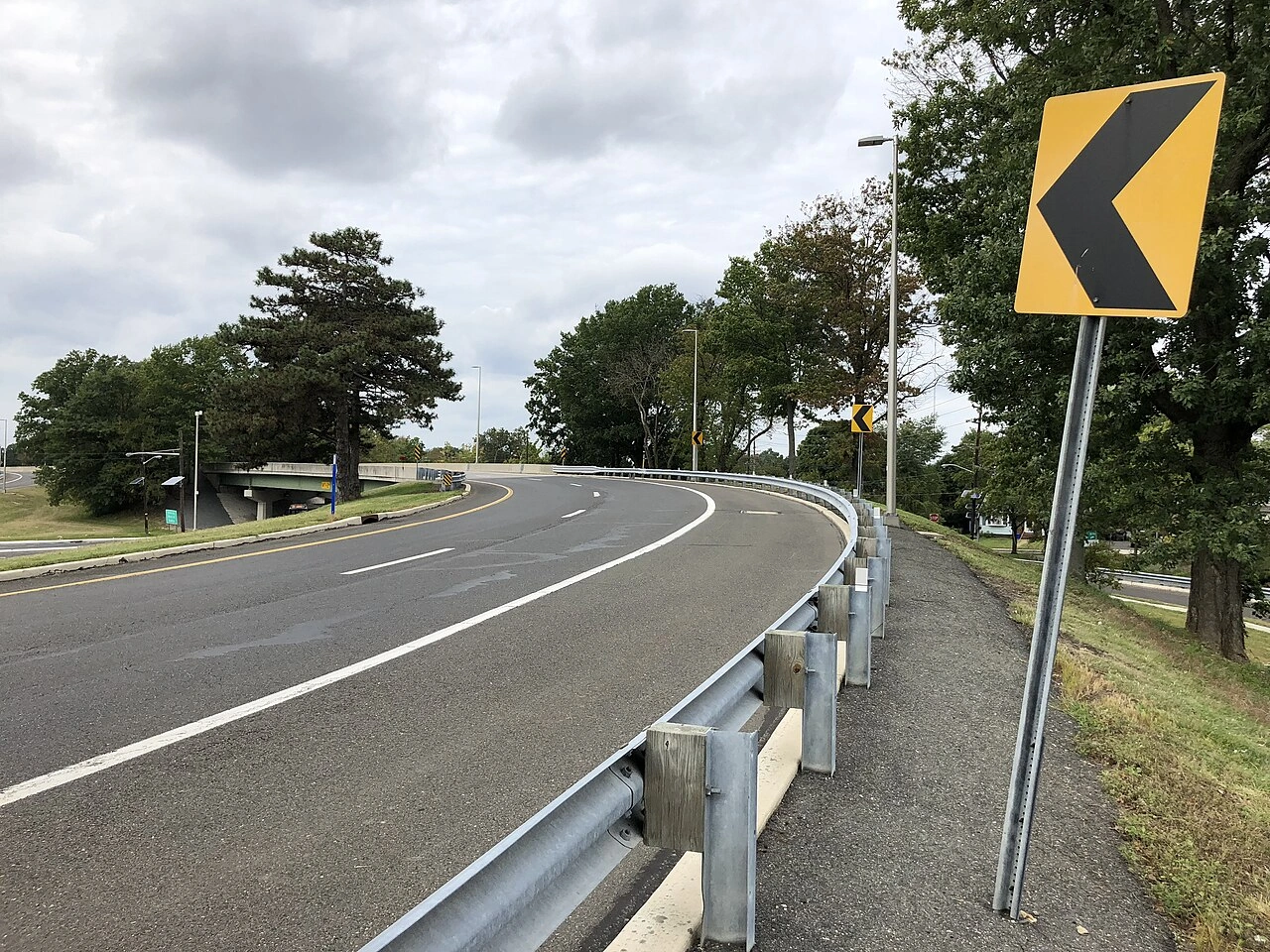
A chevron is a V-shaped or arrow-shaped road marker used to show a sharp change in the direction of a road. Chevron boards are normally placed along the outside of a curve so that their points indicate the direction in which the road continues.

Chevrons improve the visibility and alignment of a curve, especially in darkness or poor weather. They do not normally impose a speed limit or determine priority, so drivers must reduce speed before the curve and follow all other signs and road markings.
Chevron
Chevrons to indicate a sharp curve. (New Jersey, United States)
Wikimedia.org • Famartin • CC BY-SA
What is the purpose of chevron boards on a road in the United States?

Chevron alignment boards help drivers see which way a sharp bend continues, especially in darkness or poor visibility. In US guidance, W1-8 Chevron Alignment signs mark horizontal alignment through a bend.

🔗 mutcd.fhwa.dot.gov • FHWA MUTCD11th Edition including Revision1 December2025 — relevant regulatory/warning/guide, marking and signal provisions

Do chevron boards give priority or order a turn at junctions in the United States?

Not ordinary curve-alignment chevrons. They guide you around a bend. Give-way, no-entry, keep-direction and other mandatory traffic signs must be read separately; similar-looking arrows can have different legal meanings.

🔗 mutcd.fhwa.dot.gov • FHWA MUTCD11th Edition including Revision1 December2025 — relevant regulatory/warning/guide, marking and signal provisions

Is the speed shown by a chevron in the United States a compulsory maximum?

A chevron alone does not set a numerical maximum speed. If an advisory-speed panel or a regulatory speed-limit sign is displayed alongside it, identify which type it is and follow the binding speed rules.

🔗 mutcd.fhwa.dot.gov • FHWA MUTCD11th Edition including Revision1 December2025 — relevant regulatory/warning/guide, marking and signal provisions

1 United States 2 Motorway 3 Expressway 4 Speed limit 5 Minimum speed 6 Advisory speed 7 Bike path 8 Pedestrian warning 9 Tunnel 10 Bridge 11 Speed bump 12 Toll road 13 One-way traffic 14 Slope 15 Bus lane 16 Bus stop 17 Dead end 18 Stop sign 19 Give way 20 Roundabout 21 Road narrowing 22 Pedestrian crossing 23 Railway crossing 24 Mandatory direction 25 Turn prohibition 26 School area 27 Crossing animals 28 Slippery road 29 Rockfall 30 Aircraft 31 Curve 32 Chevron 33 Wrong-way driving 34 Roadworks 35 Height limit 36 Weight limit 37 Radar speed sign 38 Selective barriers 39 Traffic lights 40 Traffic lights warning 41 Pedestrian lights 42 Road markings 43 Bike box 44 Speed feedback 45 Driving licence 46 Traffic mirror 47 Emergency telephone 48 Cycling route 49 Parking 50 No parking 51 No stopping 52 Parallel parking 53 Park and ride 54 Kiss and ride 55 Disabled parking 56 Traffic management 57 Reversing 58 U-turn 59 Carpool 60 Detour 61 Uncontrolled crossroad 62 Ramp 63 Exit 64 Horse riding 65 Emergency exit 66 Runaway truck ramp 67 Oversize load 68 City limit 69 Tourist attraction 70 Horn 71 Axle weight limit 72 Licence plate 73 Charging station 74 Flooding 75 Dip 76 Horse 77 Local traffic 78 Pedestrian 79 Cyclist 80 Motorcycle 81 Truck 82 Bus 83 Police 84 Ambulance 85 Police signals 86 Gravel road 87 Pothole 88 Median strip 89 Public property 90 Path 91 Particulates 92 Air pollution 93 Interchange 94 Rush hour 95 Filling station 96 Road code 97 Two-way traffic 98 Passing lane 99 Street gutter 100 Road debris ...