


Engine oilBelgium
An introduction to the traffic rules and road signs of Belgium. Learn about driving, road safety and much more in our illustrated book, with answers to frequently asked questions.
For informational purposes only. Always follow official regulations. Some content and images were created with AI assistance.
 Traffic rules
 Belgium
216. Engine oil
Engine oil is a lubricant used inside an internal-combustion engine to reduce friction and wear between moving components. It also helps remove heat, keep internal surfaces clean and protect components against corrosion.
The oil level and condition should be checked according to the vehicle manufacturer's instructions. Only oil with the correct specification and viscosity should be used, and the oil and oil filter should be replaced at the recommended maintenance intervals.
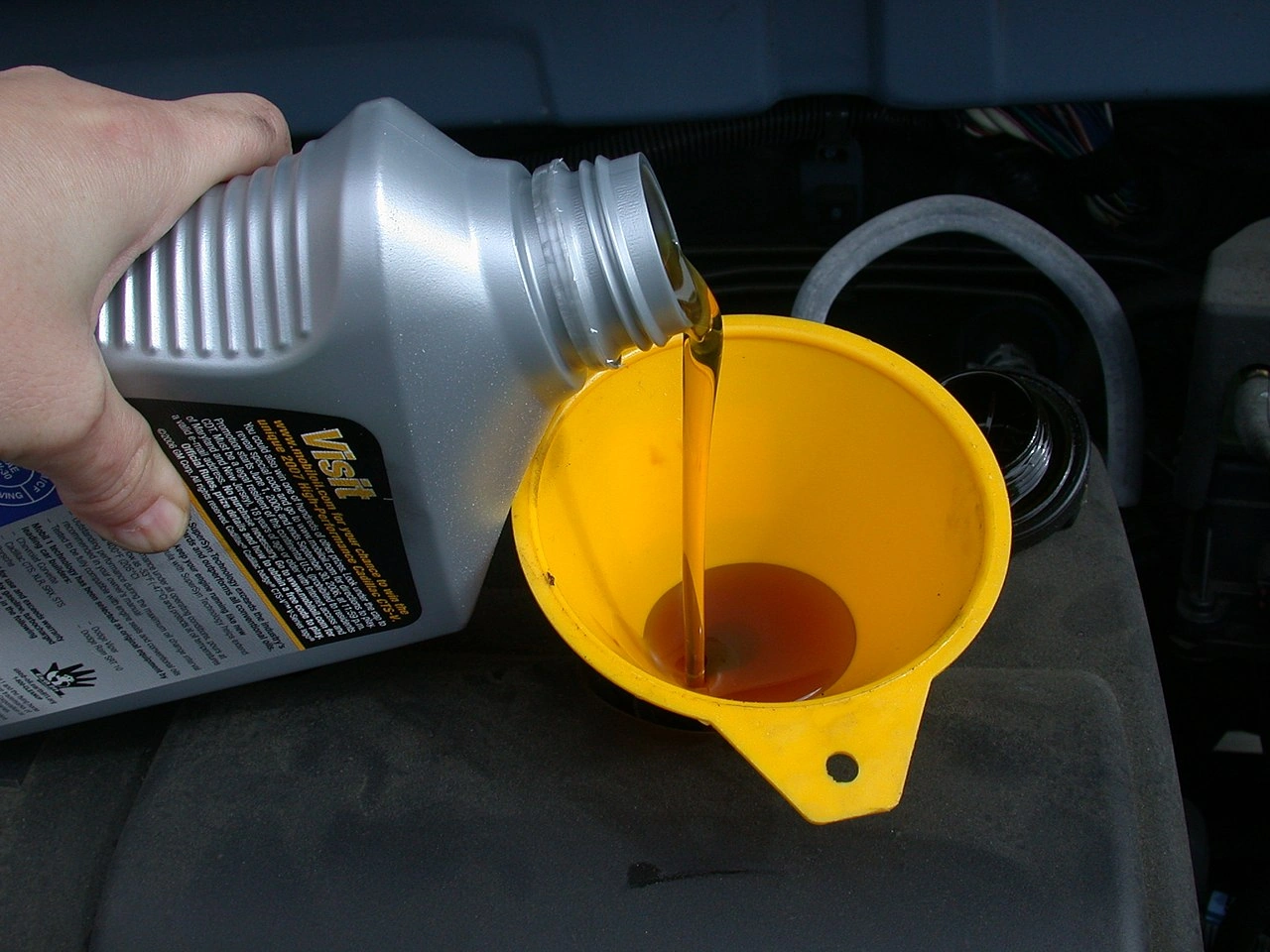
Wikimedia.org • Dvortygirl • CC BY-SA
Can engine oil be part of the Belgian practical driving test?
Yes. During the category B practical examination, a candidate may be asked to demonstrate where the engine oil level is checked.
How do you show the oil-level check during the Flemish category B test?
If the vehicle has a dipstick, you must open the bonnet and indicate where the oil dipstick is located. If the vehicle only has an electronic oil-level system, you must indicate the oil-level display on the dashboard. You are not required to perform an actual oil-level measurement during this check.
Is a Belgian technical inspection a substitute for checking and servicing the engine oil?
No. Periodic technical inspection is primarily a roadworthiness and environmental inspection and is not a complete vehicle-maintenance service. Engine-oil level, condition and replacement intervals should therefore be maintained according to the vehicle manufacturer's instructions.


