

Fuel economyGermany
An introduction to the traffic rules and road signs of Germany. Learn about driving, road safety and much more in our illustrated book, with answers to frequently asked questions.
For informational purposes only. Always follow official regulations. Some content and images were created with AI assistance.
 Traffic rules
 Germany
198. Fuel economy
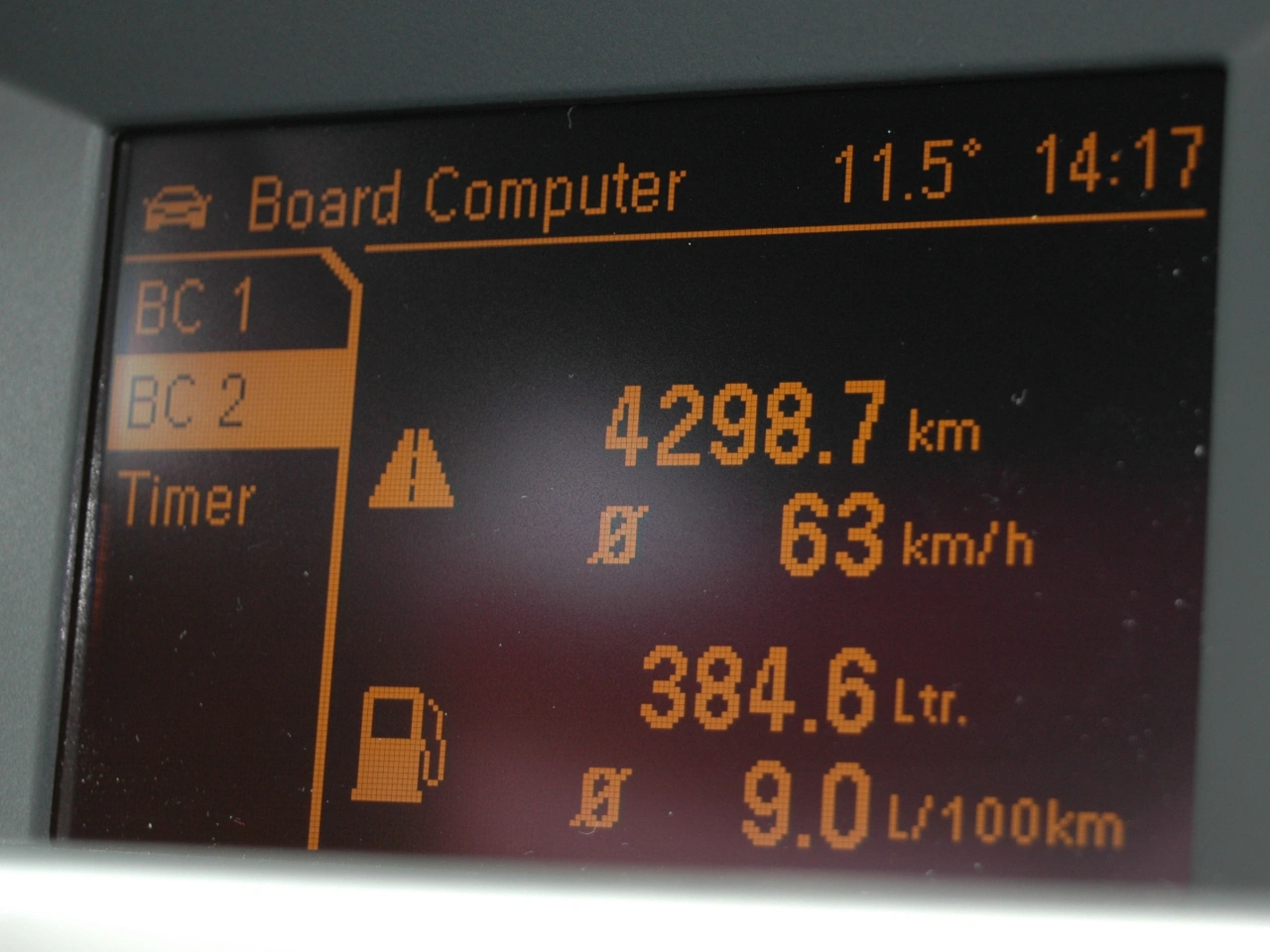
Fuel economy describes how efficiently a vehicle uses fuel to travel a certain distance. It is commonly expressed as fuel consumption, such as litres per 100 kilometres (L/100 km), or as distance travelled per unit of fuel, such as miles per gallon (mpg).
Fuel economy is affected by driving style, speed, traffic, vehicle weight, tyre pressure, aerodynamics, road conditions and maintenance. Smooth driving and anticipating traffic can reduce fuel consumption.
Wikimedia.org • Axel Schwenke • CC BY-SA
What does good fuel economy mean?
Good fuel economy means that a vehicle uses relatively little fuel for the distance travelled. When consumption is expressed in litres per 100 kilometres, a lower number generally indicates better fuel economy.
🔗 energy.gov • US Department of Energy, Internal Combustion Engine Basics
🔗 afdc.energy.gov • US Department of Energy AFDC, BEV components
🔗 afdc.energy.gov • US Department of Energy AFDC, fuel-cell electric components
🔗 afdc.energy.gov • US Department of Energy AFDC, hybrid components
🔗 gov.uk • GOV.UK, E10 petrol explained; GB fuel-compatibility example
What vehicle factors affect fuel economy?
Fuel economy can be affected by tyre pressure, vehicle weight, roof racks, mechanical condition, air conditioning and other electrical loads. Proper maintenance and removing unnecessary loads can improve efficiency.
🔗 energy.gov • US Department of Energy, Internal Combustion Engine Basics
🔗 afdc.energy.gov • US Department of Energy AFDC, BEV components
🔗 afdc.energy.gov • US Department of Energy AFDC, fuel-cell electric components
🔗 afdc.energy.gov • US Department of Energy AFDC, hybrid components
🔗 gov.uk • GOV.UK, E10 petrol explained; GB fuel-compatibility example


