

Priority over oncoming trafficGermany
An introduction to the traffic rules and road signs of Germany. Learn about driving, road safety and much more in our illustrated book, with answers to frequently asked questions.
For informational purposes only. Always follow official regulations. Some content and images were created with AI assistance.
 Traffic rules
 Germany
28. Priority over oncoming traffic
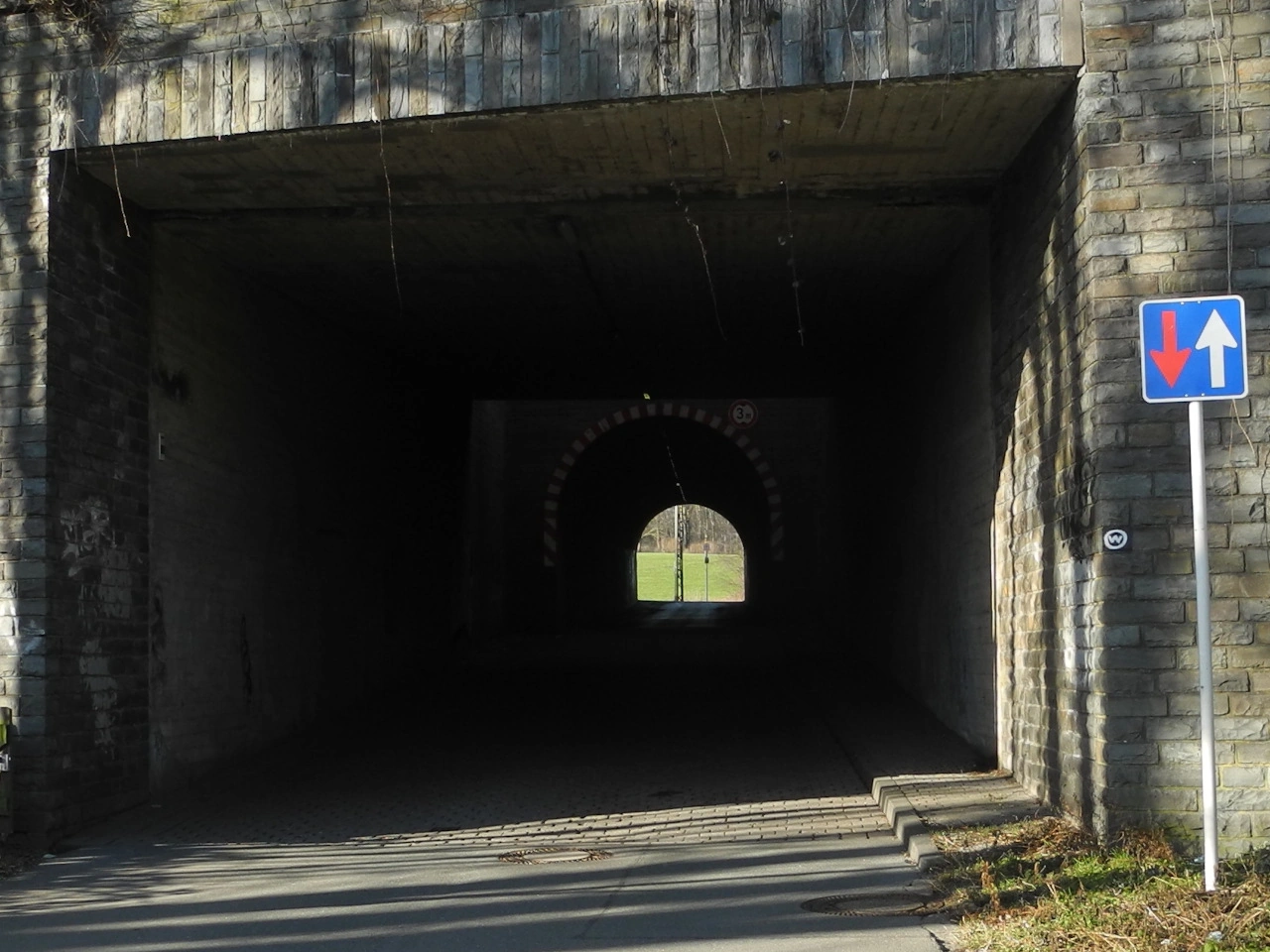
Priority over oncoming traffic means that drivers travelling in one direction have priority through a narrow section of road over drivers approaching from the opposite direction. The rule is normally indicated by a priority sign facing one direction and a corresponding give-way sign facing the other.
Drivers with priority must still approach cautiously and must not force their way through when the passage is blocked or already occupied. The signs regulate priority through the narrow section, not speed, parking or priority at nearby intersections.
Wikimedia.org • Im Fokus • CC BY-SA
How is priority over oncoming traffic controlled in Germany?
Germany’s Vorrang vor dem Gegenverkehr gives your direction priority at the narrow section. The opposing Vorrang des Gegenverkehrs instruction requires yielding; these are different from junction-priority signs.
🔗 gesetze-im-internet.de • Germany StVO: §§1,6,37; Annex 2, sign 208; Annex 3, sign 308
Can you enter an occupied narrow passage when you have priority in Germany?
Do not force a conflict. Check the full available width and let a vehicle already committed to the passage clear it when both vehicles cannot pass safely. A priority control does not permit creating danger or disregarding a red signal or authorised instruction.
🔗 gesetze-im-internet.de • Germany StVO: §§1,6,37; Annex 2, sign 208; Annex 3, sign 308
Does priority through a narrow passage extend to nearby junctions in Germany?
No. A control releasing your direction or giving priority over opposing traffic concerns that passage. Junction priority, speed limits, crossings and any later restriction must be assessed separately from their own signs and rules.
🔗 gesetze-im-internet.de • Germany StVO: §§1,6,37; Annex 2, sign 208; Annex 3, sign 308


