

Slippery roadGermany
An introduction to the traffic rules and road signs of Germany. Learn about driving, road safety and much more in our illustrated book, with answers to frequently asked questions.
For informational purposes only. Always follow official regulations. Some content and images were created with AI assistance.
 Traffic rules
 Germany
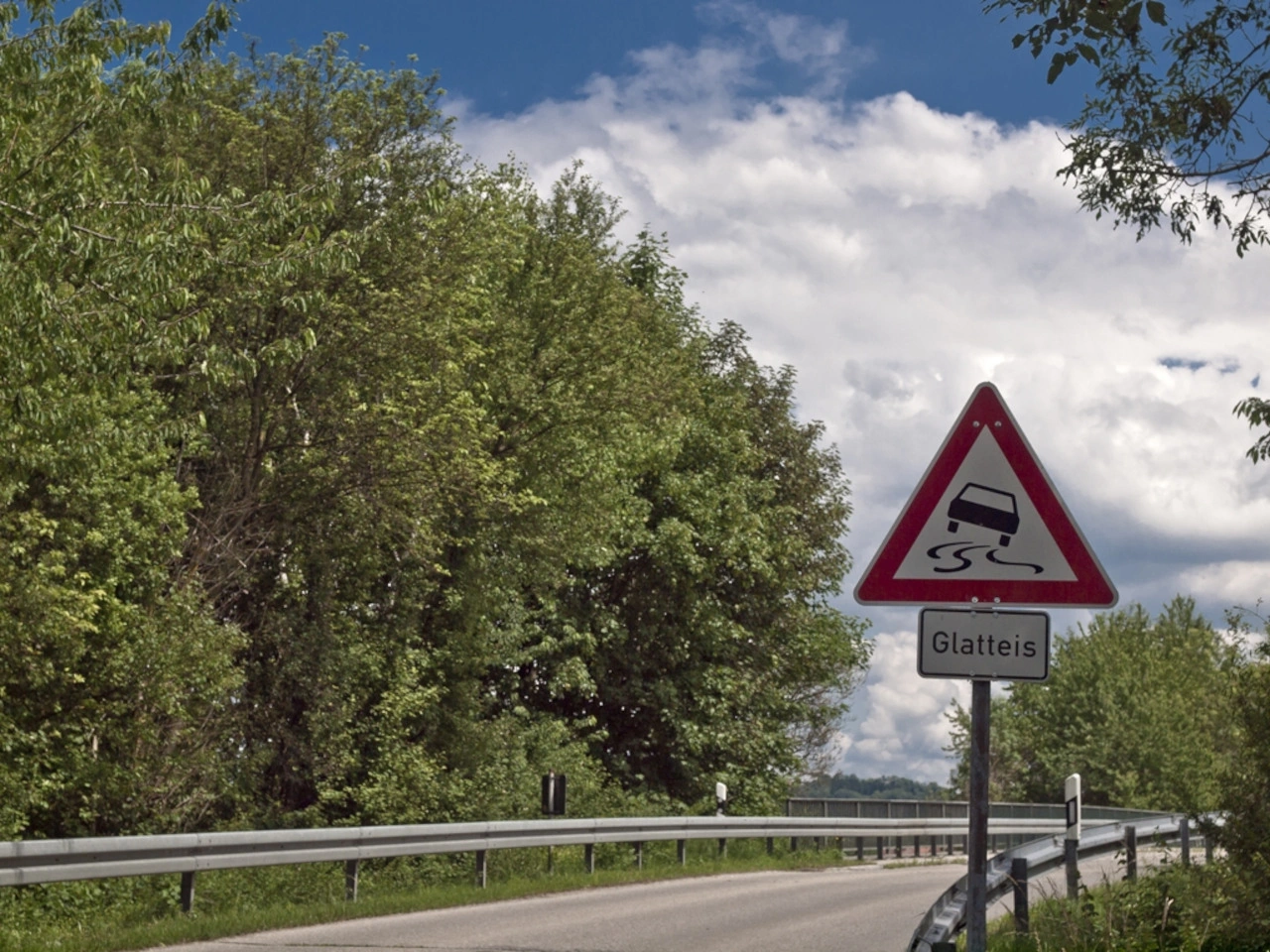
36. Slippery road
A slippery road has reduced tyre grip and can make steering, braking and acceleration less effective. Roads may become slippery because of rain, ice, snow, mud, oil, loose material or other substances on the surface. Drivers should reduce speed, increase their following distance and avoid sudden steering, braking or acceleration. Extra caution is needed in bends, on bridges and wherever the road surface changes unexpectedly.
Wikimedia.org • Bjoern Schwarz • CC BY
What can make roads slippery in Germany?
Be prepared for wet roads, black ice, frost and slush. A surface can become slippery even if it looks clear, and different parts of the road may have very different grip.
🔗 gesetze-im-internet.de • Germany StVO: §§2(3a),3(1),4; Annex 1, sign 114
How should you drive on a slippery road in Germany?
Reduce speed early, increase the gap to the vehicle ahead and use smooth steering, braking and acceleration. Do not rely on the posted maximum as a safe target when grip is poor.
🔗 gesetze-im-internet.de • Germany StVO: §§2(3a),3(1),4; Annex 1, sign 114
Are special winter tyres or equipment required in Germany?
For ordinary cars, Germany requires winter-suitable tyres with the Alpine marking in the specified icy or snowy road conditions, rather than throughout a fixed season. The Act lists exceptions and particular requirements for some vehicle classes. Appropriate tyres do not remove the duty to adapt speed and following distance to conditions.
🔗 gesetze-im-internet.de • Germany StVO: §§2(3a),3(1),4; Annex 1, sign 114
🔗 gesetze-im-internet.de • StVZO §36(4): Alpine-marked winter tyres


