

Shared-use pathGermany
 Traffic rules
 Germany
9. Shared-use path
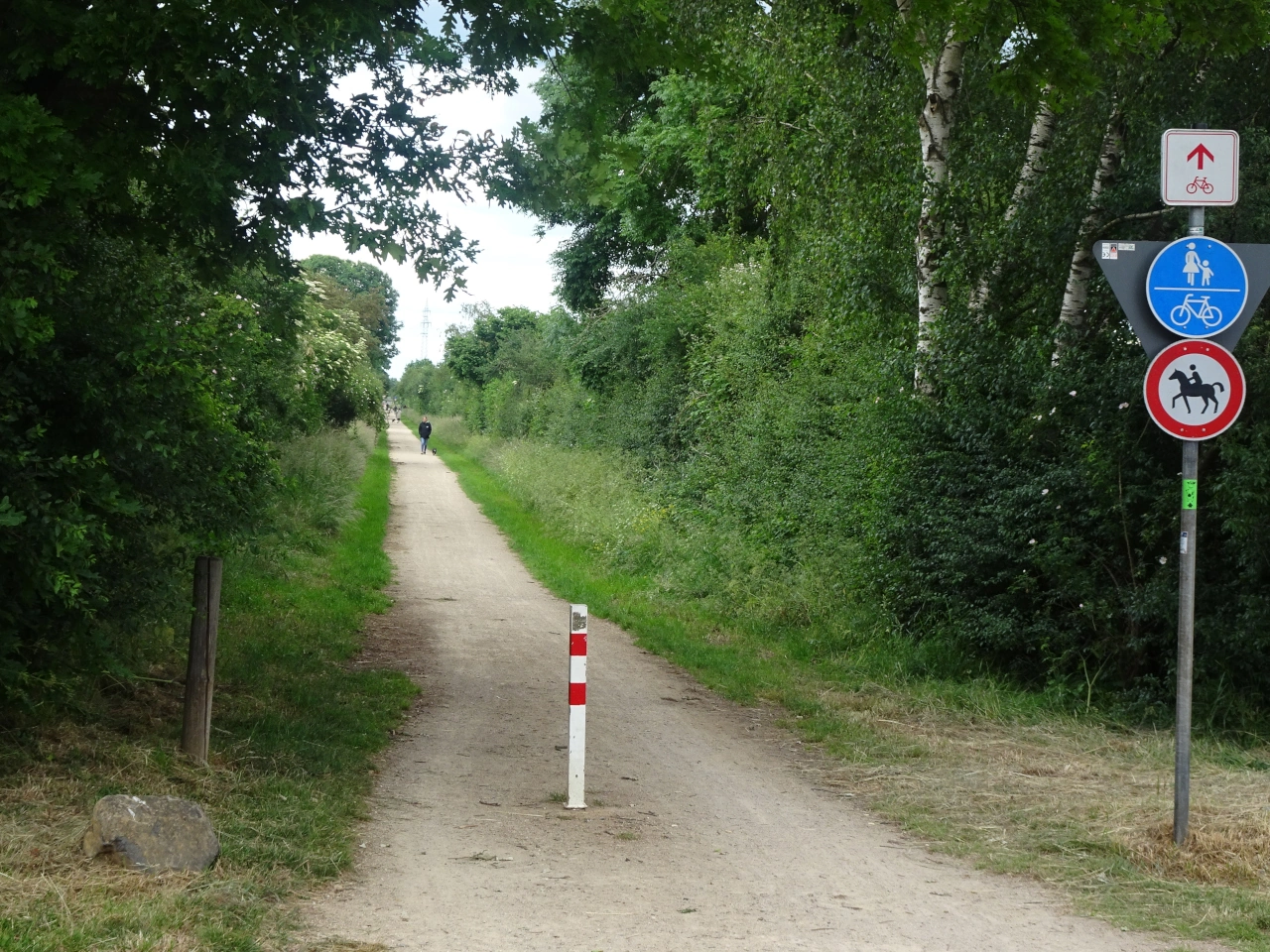
A shared-use path is a path or part of a road intended for use by both pedestrians and cyclists. Unlike facilities where pedestrians and cyclists have clearly separated sections, users of a shared-use path normally travel within the same general space.
Because users may travel at very different speeds, cyclists should approach pedestrians carefully, adapt their speed and leave sufficient space when passing. The permitted users, priority rules and any speed restrictions depend on the local traffic signs and regulations.
What is a shared-use path?
A shared-use path is a path or part of a road intended to be used by both pedestrians and cyclists.
Is a shared-use path the same as a cycle path?
Not necessarily. A cycle path is primarily intended for cyclists, while a shared-use path is specifically intended to accommodate pedestrians and cyclists together.
Do pedestrians and cyclists have separate sides on a shared-use path?
Not always. On a genuinely shared path, both categories may use the same space. Other facilities may divide pedestrians and cyclists into separate sections using signs, markings or physical separation.
Should cyclists slow down near pedestrians?
Yes. Cyclists should adapt their speed when approaching or passing pedestrians and leave sufficient space to avoid creating danger or discomfort.
Can cyclists ring a bell before passing pedestrians?
Yes, where appropriate. An audible warning can help alert pedestrians before a cyclist passes, but it should be used considerately and does not give the cyclist priority.
Do cyclists automatically have priority over pedestrians?
No. The applicable priority and conduct rules depend on local law. On a shared facility, cyclists should expect pedestrians to move within the available space.
Can mopeds use a shared-use path?
This depends on the signs and local vehicle classifications. Some shared facilities are limited to pedestrians and bicycles, while others also permit specified moped categories.
Can speed pedelecs use a shared-use path?
This depends on local law. Because speed pedelecs can travel substantially faster than ordinary bicycles, some countries or facilities exclude them from pedestrian-and-cycle shared paths.
Can motor vehicles use a shared-use path?
Normally no. Motor vehicles may use such a path only where a specific exception or local rule permits access, for example for maintenance or emergency purposes.
Can a shared-use path cross a roadway?
Yes. At crossings, pedestrians and cyclists must follow the applicable traffic lights, priority signs, road markings and crossing rules.
Can a shared-use path be two-way?
Yes. Many shared-use paths carry pedestrians and cyclists travelling in both directions. Users should therefore remain alert for approaching traffic from ahead as well as users travelling in the same direction.
What should cyclists do when a shared-use path is crowded?
Reduce speed and be prepared to stop. Crowded conditions may make normal cycling speed unsafe even when no specific lower speed limit is posted.


