

Pavement parkingGermany
An introduction to the traffic rules and road signs of Germany. Learn about driving, road safety and much more in our illustrated book, with answers to frequently asked questions.
For informational purposes only. Always follow official regulations. Some content and images were created with AI assistance.
 Traffic rules
 Germany
98. Pavement parking
Pavement parking means parking a vehicle fully or partly on a pavement or footway that is primarily intended for pedestrians. It can reduce the space available for people walking and may create particular difficulties for wheelchair users, people with pushchairs and pedestrians with visual impairments.
Pavement parking is prohibited or restricted in many countries unless signs or road markings specifically allow it. Where it is permitted, drivers should park only within the designated area and leave sufficient space for pedestrians.
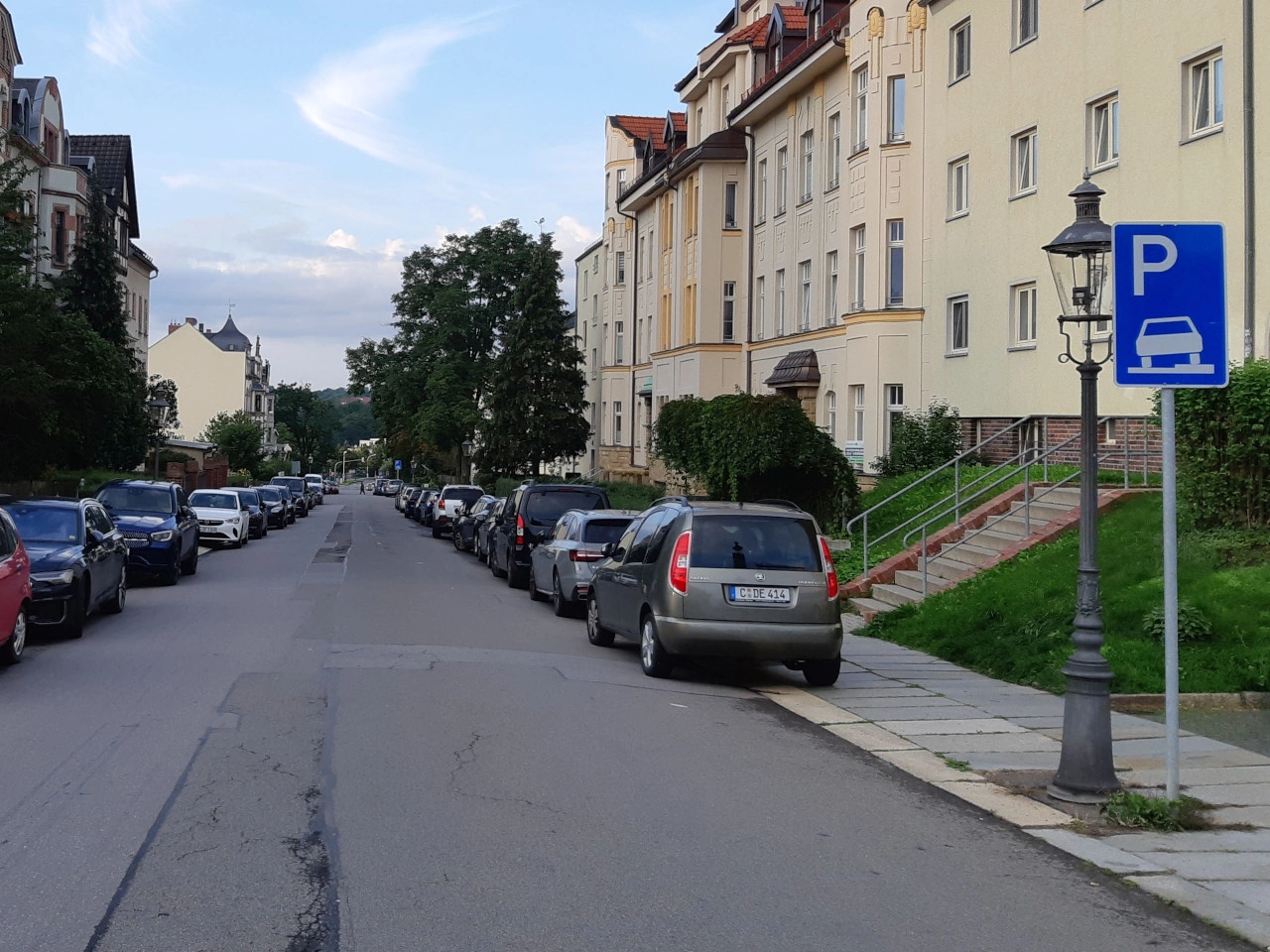
Wikimedia.org • Kleeblatt187 • CC BY-SA
When can a car park partly on a pavement in Germany?
Only where sign 315 or an applicable parking-space marking expressly permits pavement parking. The specified position must be respected; a wide pavement is not in itself permission to park on it.
🔗 gesetze-im-internet.de • Germany, StVO Annex 2, parking-space markings; 🔗 gesetze-im-internet.de • Germany, StVO Annex 3, parking signs and managed zones
Do German pavement-parking markings permit vehicles of every weight?
No. German StVO pavement-parking space markings apply to vehicles with a maximum authorised mass up to 2.8 tonnes. An explicitly permitted arrangement does not authorise obstruction outside the marked area.
🔗 gesetze-im-internet.de • German Road Traffic Regulations, Annex 2, pavement parking and sign 315


