

ParkingGermany
An introduction to the traffic rules and road signs of Germany. Learn about driving, road safety and much more in our illustrated book, with answers to frequently asked questions.
For informational purposes only. Always follow official regulations. Some content and images were created with AI assistance.
 Traffic rules
 Germany
69. Parking
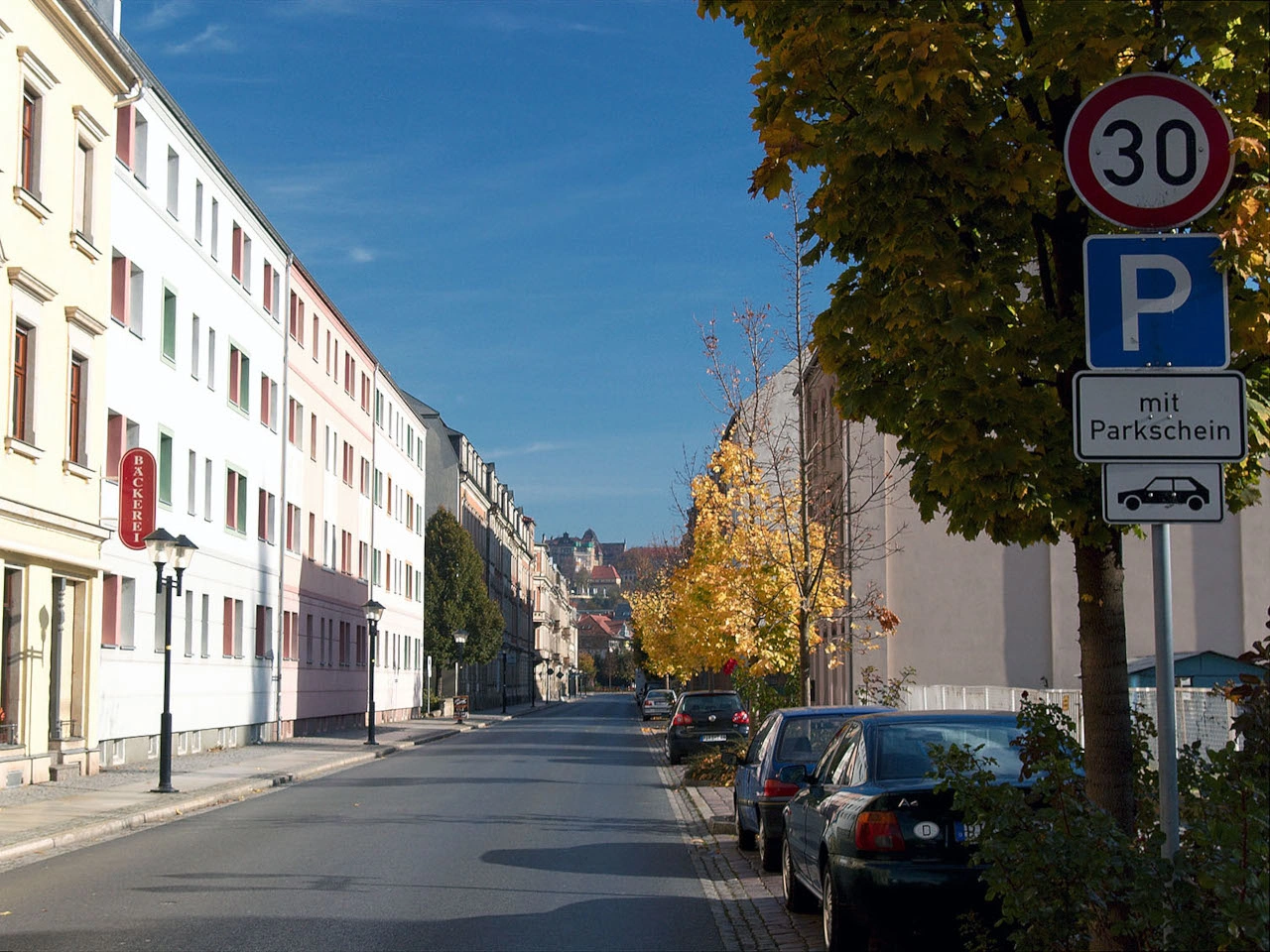
Parking means leaving a vehicle stationary at a place for a period of time rather than stopping only briefly because of traffic conditions or another immediate necessity. Many countries distinguish parking from a short stop made to pick up or drop off passengers or to load or unload goods, although the exact legal definition varies.
Parking may be permitted, restricted, reserved, time-limited or prohibited by traffic signs, road markings, parking zones and local regulations. Drivers must park without creating a danger or unnecessary obstruction and must comply with any conditions concerning payment, permits, vehicle categories or maximum parking duration.
Wikimedia.org • VSchagow • CC BY-SA
When is a vehicle legally parked in Germany?
Under section 12 StVO, a driver is considered to be parking when leaving the vehicle or stopping for longer than three minutes. A shorter stop may still be prohibited at certain locations.
🔗 gesetze-im-internet.de • Germany, Road Traffic Regulations (StVO), section 12
Which side of a German street may you normally use for parking?
Use the right-hand shoulder or right edge if otherwise permitted. German law permits parking on the left in certain cases, including one-way streets and where rails run along the right-hand side.
🔗 gesetze-im-internet.de • Germany, Road Traffic Regulations (StVO), section 12
How close to a junction may you park in Germany?
Normally, keep 5 metres before and after the intersection of carriageway edges. Before a junction, this becomes 8 metres where a physically separate cycle track runs along the right.
🔗 gesetze-im-internet.de • German StVO, section 12, subsection 3(1)
Can you park opposite a driveway on a narrow German road?
No. Parking is prohibited in front of property entrances and exits and, on narrow carriageways, opposite them too.
🔗 gesetze-im-internet.de • German StVO, section 12, subsection 3(3)


