

Cable barrierWorldwide
An introduction to the traffic rules and road signs of Worldwide. Learn about driving, road safety and much more in our illustrated book, with answers to frequently asked questions.
For informational purposes only. Always follow official regulations. Some content and images were created with AI assistance.
 Traffic rules
 Worldwide
325. Cable barrier
A cable barrier is a flexible roadside or median safety barrier made from tensioned steel cables supported by posts. It is designed to contain or redirect a vehicle that leaves its lane and reduce the risk of reaching more dangerous hazards or crossing into opposing traffic.
Unlike rigid concrete barriers, cable barriers can deform considerably when struck, absorbing part of the impact energy. Their design, positioning and number of cables depend on the road layout, traffic conditions and level of containment required.
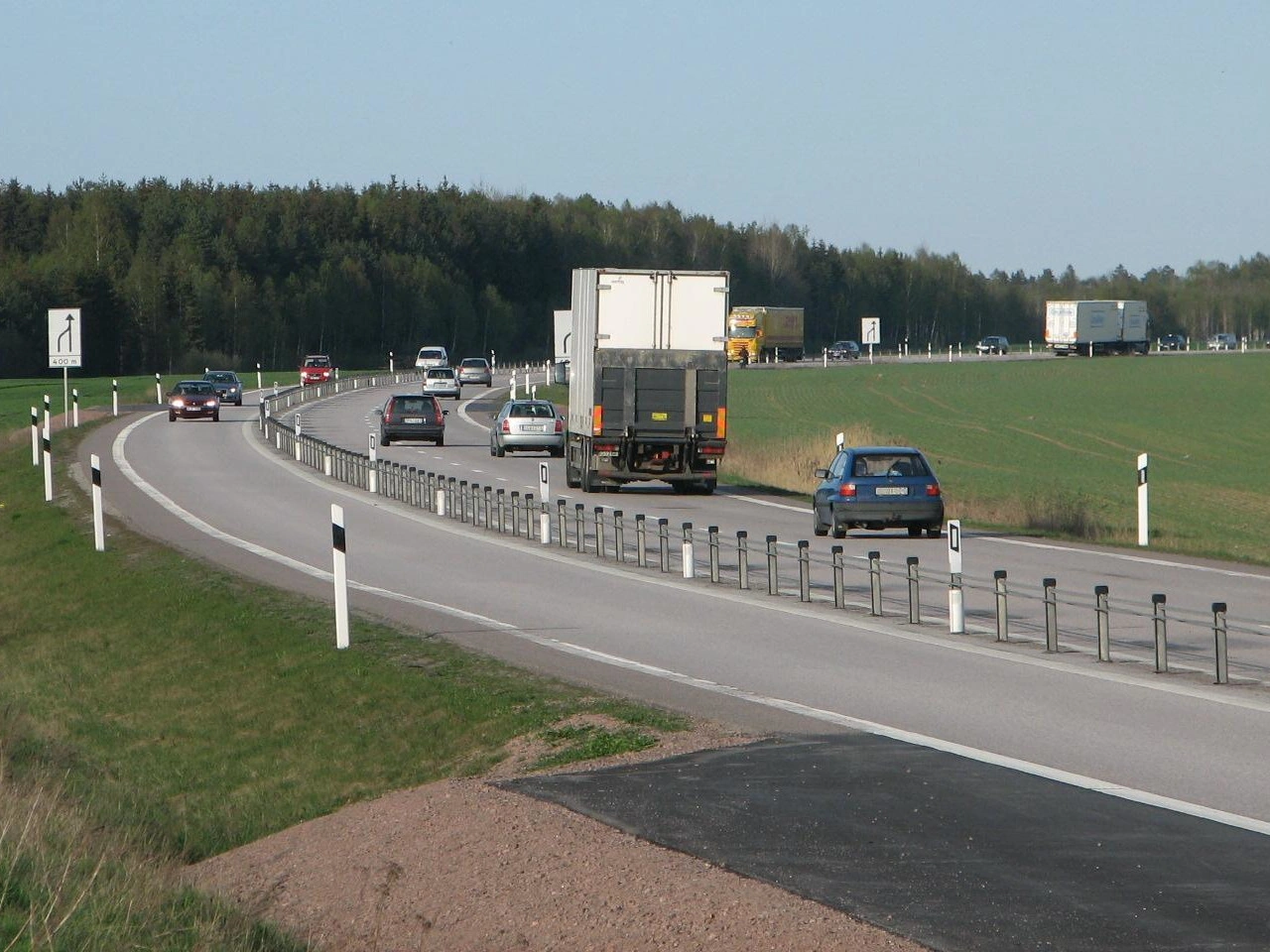
Wikimedia.org • Joel Torsson • CC0
What is the purpose of a cable barrier?
A cable barrier is designed to contain or redirect a vehicle that leaves its intended path. It is commonly used to prevent vehicles from reaching dangerous roadside hazards or entering opposing traffic lanes.
How is a cable barrier different from a guardrail?
A cable barrier uses tensioned steel cables and is relatively flexible when struck, while a conventional guardrail normally uses a shaped steel beam supported by posts. Both are vehicle-restraint systems intended to reduce the consequences of certain crashes.
Can a cable barrier prevent every vehicle from crossing it?
No. Its performance depends on factors such as vehicle type, speed, impact angle and the design and condition of the barrier. Like other safety barriers, it is intended to reduce crash severity rather than guarantee that every vehicle will be stopped.


