

Three-point turnWorldwide
An introduction to the traffic rules and road signs of Worldwide. Learn about driving, road safety and much more in our illustrated book, with answers to frequently asked questions.
For informational purposes only. Always follow official regulations. Some content and images were created with AI assistance.
 Traffic rules
 Worldwide
332. Three-point turn
A three-point turn is a driving manoeuvre used to turn a vehicle around when the road is too narrow to complete a U-turn in one continuous movement. The driver normally turns across the road, reverses in the opposite direction and then drives forward to continue in the new direction.
Before and during a three-point turn, the driver should carefully check for approaching traffic, pedestrians, cyclists and obstacles. The manoeuvre should only be performed where there is sufficient visibility and space and where turning around and reversing are permitted.
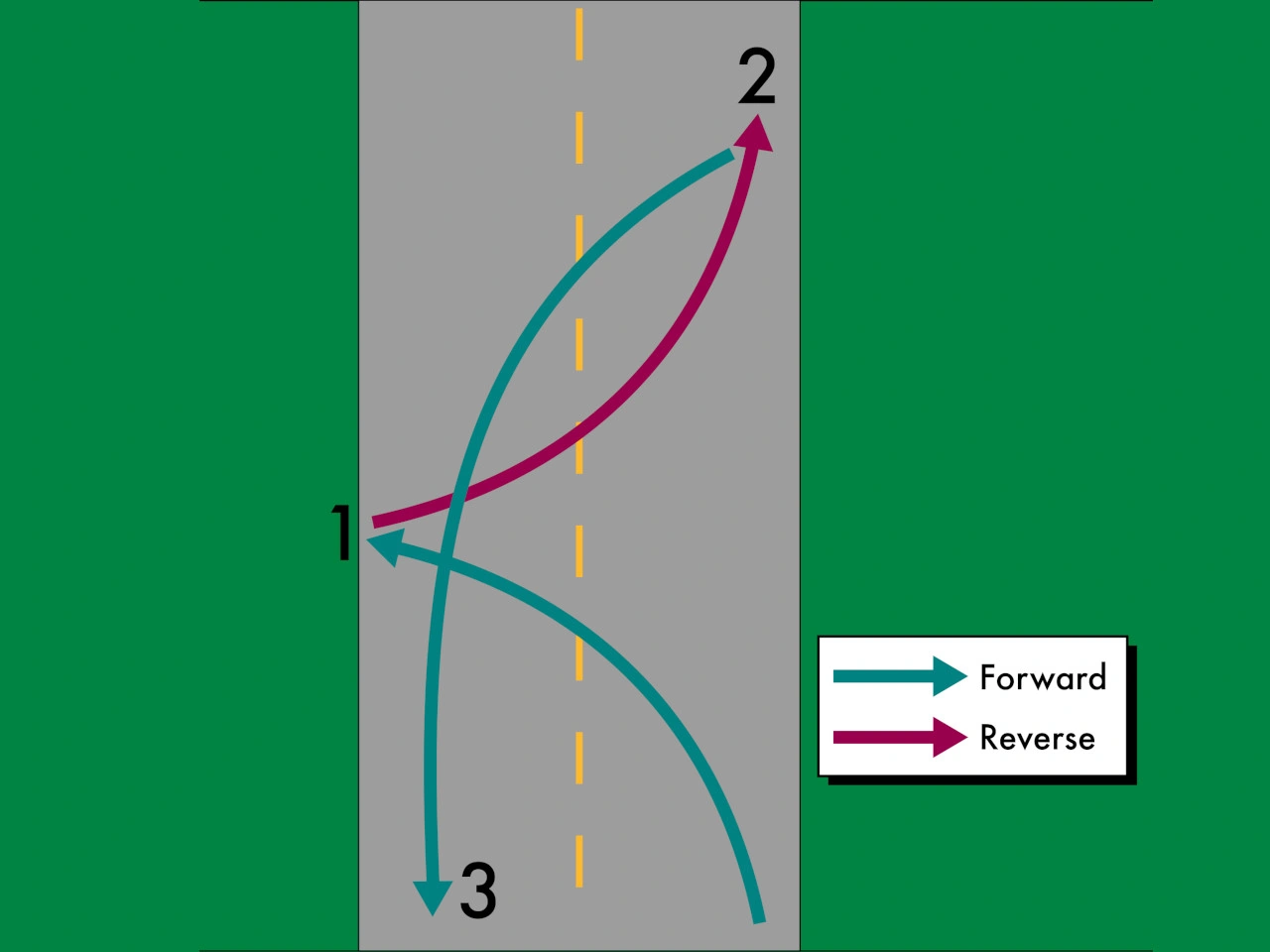
Wikimedia.org • Scott Nazelrod • CC0
What is a three-point turn?
A three-point turn is a manoeuvre used to reverse the vehicle's direction on a road that is too narrow for a normal U-turn. It usually involves driving forward across the road, reversing and then driving forward in the opposite direction.
What should you check before making a three-point turn?
Check carefully in both directions and around the vehicle for traffic, pedestrians, cyclists and obstacles. Make sure there is enough visibility and space to complete the manoeuvre without creating a danger or unnecessary obstruction.
Can you make a three-point turn anywhere?
No. Turning around or reversing may be prohibited on particular roads or by traffic signs, and the manoeuvre should never be attempted where visibility or traffic conditions make it unsafe.


