

Traffic rulesWorldwide
 Traffic rules
 Worldwide
1. Worldwide
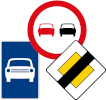
Traffic rules differ from country to country, but many basic principles are shared around the world. Countries may drive on the left or right side of the road, use kilometres or miles per hour, and follow different systems for speed limits, priority, parking and road markings. Traffic signs also vary: many countries use European-style red triangular warning signs, while others use systems such as the yellow diamond warning signs common in North America and parts of Oceania.
International agreements have helped make cross-border driving more consistent, especially for road signs, driving permits and vehicle standards, but there is no single worldwide traffic code. Every country sets its own traffic laws and enforcement rules. This worldwide section highlights common traffic-rule concepts, international differences and sign systems, making it easier to compare how driving works across different countries and regions.
AI-generated by Rijbewijs-online.be • WCIT • CC BY-SA
Do all countries drive on the same side of the road?
No. For example, the United Kingdom and Ireland drive on the left, while Belgium drives on the right. Check the driving side before travelling and take particular care at junctions and roundabouts when changing between systems.
🔗 gov.uk • UK Highway Code, Rule 160, keep left; 🔗 europa.eu • Your Europe / national authorities, Ireland road rules, Driving on the left; 🔗 wegcode.be • Belgian Road Code, Article 9, keeping right
Are road speeds and distances always shown in the same units?
No. For example, British speed limits are expressed in mph, while Belgian limits are expressed in km/h. Read the local signs and use the correct speedometer scale rather than assuming that a familiar number has the same meaning abroad.
🔗 gov.uk • UK Highway Code, Rule 124, speed limits in mph; 🔗 wegcode.be • Belgian Road Code, Article 11, speed limits in km/h
Are traffic signs identical in every country?
No. The Vienna Convention provides an international framework for road signs, with permitted national variations. The United States uses the Manual on Uniform Traffic Control Devices. Learn the signs used at your destination rather than assuming that every colour, shape or symbol has exactly the same meaning.
🔗 wetten.overheid.nl • Vienna Convention on Road Signs and Signals, International signs and permitted variations; 🔗 mutcd.fhwa.dot.gov • US Federal Highway Administration, Manual on Uniform Traffic Control Devices, US traffic-control-device standards
Can stop and give-way signs use different words?
Yes. Under the Vienna Convention, the STOP inscription can be in English or the language of the country, and national sign designs can vary within the convention. Recognise the stop and give-way sign shapes, read any local wording and comply with the local rule.
Does traffic from the right always have priority?
No. Belgium normally applies priority from the right at uncontrolled junctions, subject to its statutory exceptions. Other countries use different rules; British crossroads without signs or markings do not automatically give priority to one approach. Check the local rule and follow signs, signals and police directions.
🔗 wegcode.be • Belgium, current Road Code, Articles 8–12, 21–22bis and 35–36 as applicable
🔗 gov.uk • Great Britain Highway Code, Rule 146, unmarked junctions
Are daytime lights, winter tyres and safety equipment required everywhere?
No. Lighting, winter-tyre and equipment rules differ by country, season, weather, vehicle category and sometimes the country where the vehicle is registered. Check the destination’s official rules before travelling, including any requirements to carry or wear safety equipment.
🔗 europa.eu • Your Europe, Austrian national-authority road-safety information
🔗 europa.eu • Your Europe, German national-authority road-safety information
Is a foreign driving licence or International Driving Permit valid everywhere?
No. Recognition depends on the destination, licence, vehicle category and length of stay. An International Driving Permit accompanies the underlying licence; it does not replace it. For example, Japan recognises specified foreign licences and IDPs, while mainland China requires an appropriate Chinese driving permit.
🔗 wetten.overheid.nl • Vienna Convention on Road Traffic, Article 41, driving permits; 🔗 npa.go.jp • Japanese National Police Agency, driving licences, May 2026, Recognised permits and licences; 🔗 gov.uk • UK FCDO, China road-travel advice, Chinese driving permits
Are child-seat requirements the same in every country?
No. For example, the United Kingdom normally requires a child seat until age 12 or 135 cm, whichever comes first, while France normally requires an appropriate restraint for children under 10. Check the destination’s age, height, seating and exemption rules before travelling with children.
🔗 gov.uk • UK Government, child car seats, 🔗 service-public.gouv.fr • French Government, child seats and seat belts
Do drivers pay road charges in the same way everywhere?
No. Austria uses a vignette for many motorway journeys in light vehicles, while Norway uses electronic toll collection that also covers foreign vehicles. Check the route, vehicle category and payment procedure before travelling; a vignette bought for one country does not cover another.
🔗 help.asfinag.at • ASFINAG, Austrian motorway vignette, 🔗 autopass.no • Norwegian Public Roads Administration / AutoPASS, foreign vehicles

2. Motorway
A motorway is a road specially designed and signposted for motor traffic. Motorways normally have separate carriageways for opposing traffic, controlled access through designated entrances and exits, no direct access to neighbouring properties, and no level crossings with other roads, railways or paths.
Special traffic rules apply on motorways. The permitted road users, speed limits, lane rules, tolls and emergency procedures vary between countries, so drivers must follow the local traffic signs and regulations.
Wikimedia.org • Marc Mongenet • CC BY-SA
Who may use a motorway?
Motorways are primarily intended for motor vehicles capable of travelling safely at motorway speeds. Pedestrians, cyclists, animals and certain slow vehicles are generally prohibited, but the exact access requirements differ between countries.
🔗 gov.uk • Great Britain Highway Code, Rules 253, 262–263 and 270–274, motorway access and conduct; 🔗 gesetze-im-internet.de • German federal government, StVO Section 18, motorway and motor-road rules
How should you enter a motorway?
Use the entrance or acceleration lane to observe motorway traffic and adjust your speed where possible. Enter only when there is a safe gap and follow the local priority and merging rules.
🔗 gov.uk • Great Britain Highway Code, Rules 259 and 273–274; 🔗 icbc.com • British Columbia ICBC, Learn to Drive Smart, chapter 4, pages 54–56
How should you leave a motorway?
Move into the correct lane in good time and signal when required. Enter the exit or deceleration lane before reducing your speed, unless traffic, signs or road conditions require you to slow down earlier.
🔗 gov.uk • Great Britain Highway Code, Rules 259 and 273–274; 🔗 icbc.com • British Columbia ICBC, Learn to Drive Smart, chapter 4, pages 54–56
Can you stop on a motorway?
Use designated parking or service areas for ordinary breaks. Stopping on the motorway itself is restricted; emergencies, traffic conditions or authorised directions may require it. For example, Great Britain’s Highway Code expressly allows emergency stops and stops directed by police, traffic officers or specified signals.
🔗 gov.uk • Great Britain Highway Code, Rules 253, 262–263 and 270–274, motorway access and conduct; 🔗 gesetze-im-internet.de • German federal government, StVO Section 18, motorway and motor-road rules
Can you reverse or make a U-turn on a motorway?
Do not reverse, make a U-turn or drive against motorway traffic to recover a missed exit. Continue to the next suitable exit. Follow authorised directions: Great Britain’s Highway Code expressly provides an exception for directions from a police or traffic officer.
🔗 gov.uk • Great Britain Highway Code, Rules 253, 262–263 and 270–274, motorway access and conduct; 🔗 gesetze-im-internet.de • German federal government, StVO Section 18, motorway and motor-road rules
What should you do if your vehicle breaks down?
Move out of traffic if safe, activate the hazard warning lights and follow local emergency procedures. Exit only if you can reach safety away from traffic; otherwise keep your seat belt on and call emergency help. Use warning equipment only as locally required or permitted: Great Britain advises against placing a warning triangle on a motorway.
🔗 gov.uk • Great Britain Highway Code, Rules 275–277; follow local procedures elsewhere
3. Expressway
An expressway is a road intended to carry through traffic efficiently, usually at higher speeds than ordinary roads. Expressways often have limited access, multiple lanes, separated carriageways or grade-separated junctions, but their design and legal status vary between countries.
An expressway is not always a motorway. It may have intersections, traffic lights or direct access, and the permitted road users, speed limits and special rules depend on local signs and regulations.
Wikimedia.org • C.Suthorn • CC BY-SA
How can you recognise an expressway?
Check the country’s road classification and signs. For example, Germany identifies a Kraftfahrstraße with a specific sign. The US traffic-control manual defines an expressway as a divided highway with partial access control; it can have at-grade junctions. Appearance alone does not establish the applicable rules.
🔗 gesetze-im-internet.de • German federal government, StVO Annex 3, town, traffic-calmed-area and motor-road signs; 🔗 gesetze-im-internet.de • German federal government, StVO Section 18, motorway and motor-road rules; 🔗 mutcd.fhwa.dot.gov • US Federal Highway Administration, current MUTCD Revision 1, definitions and speed-sign framework
What is the speed limit on an expressway?
There is no universal expressway speed limit. The applicable limit depends on the country, road design, location, vehicle category and posted signs. An expressway sign does not always impose a particular speed by itself.
🔗 gesetze-im-internet.de • German federal government, StVO Section 3, speed and conditions; 🔗 gesetze-im-internet.de • German federal government, StVO Section 18, motorway and motor-road rules; 🔗 mutcd.fhwa.dot.gov • US Federal Highway Administration, current MUTCD Revision 1, definitions and speed-sign framework
What should you do after a breakdown?
Move out of traffic if safe, activate the hazard warning lights and follow local emergency procedures. Exit only if you can reach safety away from traffic; otherwise keep your seat belt on and call emergency help. Use warning equipment only as locally required or permitted: Great Britain advises against placing a warning triangle on a motorway.
🔗 gov.uk • Great Britain Highway Code, Rules 275–277; follow local procedures elsewhere
4. Residential area
A residential area is a street or group of streets where housing and access to local properties are the main functions. Drivers should expect pedestrians, cyclists, children, parked vehicles and vehicles entering or leaving driveways.
Some countries identify particular residential areas with traffic signs and apply special low-speed and residential-area rules. The speed limit, pedestrian rights, parking rules and permitted road users therefore depend on local signs and regulations.
Wikimedia.org • Erfurth • CC BY-SA
How can you recognise a residential area?
Homes and local access indicate a residential neighbourhood, but do not by themselves establish a special legal zone. Check the actual signs. For example, Germany has a separately signed traffic-calmed area, while Great Britain’s Highway Code describes Home Zones where people may use the whole road.
🔗 gesetze-im-internet.de • German federal government, StVO Annex 3, town, traffic-calmed-area and motor-road signs; 🔗 gov.uk • Great Britain Highway Code, Rules 204–218 and 223, vulnerable users and residential hazards
What is the speed limit in a residential area?
There is no universal residential-area speed limit. Ordinary residential streets may follow the local built-up-area limit or a posted zone limit. Special rules apply only where the law and signs establish them: for example, Germany’s signed traffic-calmed area requires walking pace.
🔗 gesetze-im-internet.de • Germany, StVO Annex 3, sign 325.1
How should you drive in a residential area?
Drive slowly enough to respond safely to pedestrians, cyclists, children, animals and vehicles at entrances. Leave room, stay patient and avoid overtaking when it could endanger others. Be prepared to stop where people use shared road space; follow the actual local controls.
🔗 gov.uk • Great Britain Highway Code, Rules 204–218 and 223, vulnerable users and residential hazards; 🔗 gov.uk • Great Britain Highway Code, Rules 160–169, observation and safe overtaking
5. Built-up area
A built-up area is an area containing concentrated buildings, streets and regular local activity. Drivers should expect more pedestrians, cyclists, intersections, parked vehicles, public transport and vehicles entering or leaving properties.
Many countries apply special traffic rules and lower default speed limits within built-up areas. The area may be identified by entrance and exit signs, street lighting or other legal criteria, so drivers must follow local signs and regulations.
Wikimedia.org • Janter • CC BY-SA
How can you recognise a built-up area?
Buildings and local streets are useful clues, but check the country’s legal criteria. Germany uses official town entrance and exit signs. Great Britain’s Highway Code identifies street lighting as a usual indication of the built-up-road speed regime, subject to motorway exclusions and signs.
🔗 gesetze-im-internet.de • German federal government, StVO Annex 3, town, traffic-calmed-area and motor-road signs; 🔗 gov.uk • Great Britain Highway Code, Rules 124–126 and 146, road and vehicle limits and safe speed
What is the speed limit in a built-up area?
There is no universal built-up-area speed limit. The default limit differs between countries and regions, and traffic signs may impose a lower or higher limit on a particular road or throughout a zone.
🔗 gov.uk • Great Britain Highway Code, Rules 124–126 and 146, road and vehicle limits and safe speed; 🔗 gesetze-im-internet.de • German federal government, StVO Section 3, speed and conditions
How should you drive in a built-up area?
Adjust your speed and expect pedestrians, cyclists and vehicles emerging at junctions or driveways. Take particular care near children, parked vehicles and bus stops. Observe the actual crossings, signs and priority rules; this is general safety advice.
6. Zone
A traffic zone is an area in which a traffic rule applies throughout all included roads or road sections. The rule normally begins at a zone-entry sign and remains applicable until the corresponding end-of-zone sign is passed.
Zones may regulate speed, parking, access, vehicle categories, emissions or other traffic behaviour. The signs used, the roads covered and the effect of intersections or local exceptions depend on local traffic law.
Wikimedia.org • Lukas Beck • CC BY-SA
What is a traffic zone?
A traffic zone is a defined area in which a particular restriction, prohibition or obligation applies throughout the included roads rather than only at one location.
What is the difference between a zone sign and an ordinary traffic sign?
An ordinary sign usually applies to a particular road, direction, lane or section. A zone sign applies throughout a designated area, which may contain several roads and intersections.
What should you do when entering a traffic zone?
Observe the entrance sign carefully, identify every displayed rule and remember that the regulation may continue across several roads and intersections until the zone ends.
7. Speed limit
A speed limit is the maximum legal speed permitted on a road, lane or within a designated area. It may be established by general traffic law or indicated by fixed, variable or temporary traffic signs.
A speed limit is a maximum, not a target speed. Drivers must travel more slowly whenever traffic, visibility, weather, road conditions, vulnerable road users or the condition of the vehicle make the maximum permitted speed unsafe.
Wikimedia.org • Kirchenfan • CC0
What is a speed limit?
A speed limit is the maximum legal speed permitted on a road, lane or within a designated area. It does not require drivers to travel at that speed.
🔗 gov.uk • Great Britain Highway Code, Rules 124–126 and 146, road and vehicle limits and safe speed; 🔗 gesetze-im-internet.de • German federal government, StVO Section 3, speed and conditions
How can you recognise a speed limit?
A speed limit is commonly displayed as a number on a regulatory traffic sign. General limits may also apply automatically because of the country, road category, vehicle type or surrounding area, even when no speed-limit sign is present.
Is the speed limit a recommended driving speed?
No. It is the highest speed legally permitted under suitable conditions. Drivers must reduce their speed whenever travelling at the limit would be unsafe.
🔗 gesetze-im-internet.de • German federal government, StVO Section 3, speed and conditions
Can you drive more slowly than the speed limit?
Yes. Drivers should travel more slowly when required by traffic, weather, visibility, road conditions or nearby vulnerable road users. Driving unnecessarily slowly may nevertheless be prohibited when it obstructs normal traffic.
🔗 gesetze-im-internet.de • German federal government, StVO Section 3, speed and conditions; 🔗 law.lis.virginia.gov • Virginia General Assembly, Code Section 46.2-877, minimum speeds and safety exceptions
Does the same speed limit apply to every vehicle?
Not always. Limits can differ for heavy vehicles, buses and vehicles towing trailers. Follow both the road limit and the applicable vehicle limit; a higher road limit does not cancel a lower vehicle limit.
🔗 gov.uk • Great Britain Highway Code, Rules 124–126 and 146, road and vehicle limits and safe speed; 🔗 gesetze-im-internet.de • German federal government, StVO Section 3, speed and conditions
8. Minimum speed
A minimum speed is the lowest speed that vehicles are required to maintain on a particular road or under specified conditions. Minimum-speed rules are intended to prevent vehicles travelling unnecessarily slowly from disrupting traffic or creating large speed differences between road users.
A minimum speed does not require drivers to maintain that speed when traffic, weather, visibility, road conditions or safety require them to slow down. The way minimum speeds are indicated and enforced varies between countries.
Wikimedia.org • Marc Mongenet • CC BY-SA
Why are minimum speeds used?
Minimum-speed controls can prevent unnecessarily slow traffic from obstructing normal traffic flow. For example, Virginia permits signed minimum limits following a traffic investigation, while retaining exceptions when slower travel is necessary for safety or compliance with law.
9. Advisory speed
An advisory speed is a recommended speed for a particular road section or hazard rather than a legally imposed maximum speed. It may be shown near bends, junctions, steep gradients, roadworks or other locations where a lower speed can help drivers negotiate the road safely.
Drivers should treat an advisory speed as guidance for safe driving conditions and should travel even more slowly when weather, visibility, traffic or road conditions require it. A separate legally binding speed limit must still be obeyed.
Wikimedia.org • Marc Mongenet • CC BY-SA
Can you drive slower than an advisory speed?
Yes. Drivers should reduce their speed further whenever road, traffic, visibility or weather conditions make the recommended speed unsafe.
10. Footpath
A footpath is a path or part of a road intended primarily for pedestrian traffic. It may run alongside a road, through a park or residential area, or independently from roads used by motor vehicles.
A footpath may be reserved exclusively for pedestrians or may form part of a shared route with cyclists or other permitted users. Access, priority and permitted users depend on the traffic signs and local regulations applying to the path.
Wikimedia.org • Marc Mongenet • CC BY-SA
What is a footpath?
A footpath is a path or part of a road intended primarily for pedestrians.
🔗 gesetze-im-internet.de • Germany, StVO Annex 2, signs 239–241
🔗 gesetze-im-internet.de • Germany, StVO section 2(4)–(5), cycle tracks and footway exceptions
Can cyclists use a pedestrian-only footpath?
Check the local rules and signs. A path reserved only for pedestrians generally excludes riding a bicycle, but national exceptions can apply, including for children or accompanying adults. Dismount and walk where riding is not permitted.
🔗 gesetze-im-internet.de • Germany, StVO Annex 2, signs 239–241
🔗 gesetze-im-internet.de • Germany, StVO section 2(4)–(5), cycle tracks and footway exceptions
Do pedestrians have priority on a shared footpath?
This depends on the local traffic rules and type of shared facility. Cyclists and other permitted users should always avoid endangering pedestrians.
🔗 gesetze-im-internet.de • Germany, StVO Annex 2, signs 239–241
🔗 gesetze-im-internet.de • Germany, StVO section 2(4)–(5), cycle tracks and footway exceptions
11. Bike path
A bike path is a part of a road or a separate route intended primarily or exclusively for people riding bicycles. It may be physically separated from motor traffic, marked on the road surface or identified by traffic signs.
Bike paths may be one-way, two-way or shared with other road users. The permitted users, direction of travel, priority rules and obligation to use the path depend on local traffic signs and regulations.
Wikimedia.org • Tabl-trai • CC BY-SA
How can you recognise a bike path?
A bike path may be identified by a bicycle traffic sign, bicycle symbols, coloured surfacing or road markings. It may run beside the carriageway or follow a completely separate route.
🔗 gesetze-im-internet.de • Germany, StVO Annex 2, signs 239–241
🔗 gesetze-im-internet.de • Germany, StVO section 2(4)–(5), cycle tracks and footway exceptions
Must cyclists use a bike path?
This depends on local law and the signs displayed. Some bike paths are mandatory, while others are optional. Cyclists may also be permitted to leave a path to turn, overtake or avoid an obstruction.
🔗 gesetze-im-internet.de • Germany, StVO Annex 2, signs 239–241
🔗 gesetze-im-internet.de • Germany, StVO section 2(4)–(5), cycle tracks and footway exceptions
May mopeds or speed pedelecs use a bike path?
This depends on the country, vehicle category, road speed and traffic signs. Some bike paths permit or require certain mopeds or speed pedelecs, while others are reserved exclusively for ordinary bicycles.
🔗 gesetze-im-internet.de • Germany, StVO Annex 2, signs 239–241
🔗 gesetze-im-internet.de • Germany, StVO section 2(4)–(5), cycle tracks and footway exceptions
Who has priority where a vehicle crosses a bike path?
Priority depends on the road layout, signs, signals and local law. Drivers crossing a continuous bike path commonly have to give way to its users, but cyclists approaching a separate cycle crossing may not automatically have priority before entering it.
🔗 gesetze-im-internet.de • Germany, StVO Annex 2, signs 239–241
🔗 gesetze-im-internet.de • Germany, StVO section 2(4)–(5), cycle tracks and footway exceptions
What is the difference between a bike path and a shared-use path?
A bike path is intended primarily or exclusively for cycling. A shared-use path is legally intended for cyclists together with pedestrians or other indicated road users, who must use the space considerately.
🔗 gesetze-im-internet.de • Germany, StVO Annex 2, signs 239–241
🔗 gesetze-im-internet.de • Germany, StVO section 2(4)–(5), cycle tracks and footway exceptions
12. Shared-use path
A shared-use path is a path or part of a road intended for use by both pedestrians and cyclists. Unlike facilities where pedestrians and cyclists have clearly separated sections, users of a shared-use path normally travel within the same general space.
Because users may travel at very different speeds, cyclists should approach pedestrians carefully, adapt their speed and leave sufficient space when passing. The permitted users, priority rules and any speed restrictions depend on the local traffic signs and regulations.
What is a shared-use path?
A shared-use path is a path or part of a road intended to be used by both pedestrians and cyclists.
🔗 gesetze-im-internet.de • Germany, StVO Annex 2, signs 239–241
🔗 gesetze-im-internet.de • Germany, StVO section 2(4)–(5), cycle tracks and footway exceptions
Do cyclists automatically have priority over pedestrians?
No. The applicable priority and conduct rules depend on local law. On a shared facility, cyclists should expect pedestrians to move within the available space.
🔗 gesetze-im-internet.de • Germany, StVO Annex 2, signs 239–241
🔗 gesetze-im-internet.de • Germany, StVO section 2(4)–(5), cycle tracks and footway exceptions
Can speed pedelecs use a shared-use path?
This depends on local law. Because speed pedelecs can travel substantially faster than ordinary bicycles, some countries or facilities exclude them from pedestrian-and-cycle shared paths.
🔗 gesetze-im-internet.de • Germany, StVO Annex 2, signs 239–241
🔗 gesetze-im-internet.de • Germany, StVO section 2(4)–(5), cycle tracks and footway exceptions
13. Separated path
A separated path is a path or part of a road where different categories of road users, typically pedestrians and cyclists, are assigned separate sections of the same overall route. The sections may be distinguished by road markings, different paving materials, a kerb or another physical separation.
Users should remain within the part of the path intended for them and take particular care where the sections cross, merge or connect with roads. The permitted users, priority rules and any speed restrictions depend on the local traffic signs and regulations.

Wikimedia.org • Kamil Czaiński • CC BY-SA
What is a separated path?
A separated path is a route where pedestrians, cyclists or other permitted users have clearly designated sections rather than sharing the same space.
🔗 gesetze-im-internet.de • Germany, StVO Annex 2, signs 239–241
🔗 gesetze-im-internet.de • Germany, StVO section 2(4)–(5), cycle tracks and footway exceptions
How are the different parts of a separated path identified?
The sections may be separated by a painted line, different paving materials, a kerb, verge or another physical division. Traffic signs may also show which side each category should use.
🔗 gesetze-im-internet.de • Germany, StVO Annex 2, signs 239–241
🔗 gesetze-im-internet.de • Germany, StVO section 2(4)–(5), cycle tracks and footway exceptions
Which side should pedestrians use?
Pedestrians should use the section indicated for pedestrians by the signs, symbols, markings or layout of the path.
🔗 gesetze-im-internet.de • Germany, StVO Annex 2, signs 239–241
🔗 gesetze-im-internet.de • Germany, StVO section 2(4)–(5), cycle tracks and footway exceptions
14. Pedestrian warning
A pedestrian warning is a traffic warning indicating that pedestrians may be crossing or entering the roadway ahead. It is commonly used near pedestrian crossings or other locations where drivers need advance notice of frequent pedestrian activity.
Drivers approaching a pedestrian warning should reduce speed when necessary, watch carefully for pedestrians and be prepared to stop. The design of the warning sign and the priority rules at the crossing vary between countries.
Wikimedia.org • Friedi13 • CC BY-SA
What does a pedestrian warning mean?
A pedestrian warning alerts drivers that pedestrians may be crossing or entering the road ahead.
🔗 gov.uk • Great Britain Highway Code, Rules 204–218; national guidance example
🔗 gov.uk • UK Department for Transport, Know Your Traffic Signs, warning signs
How should you react to a pedestrian warning?
Reduce speed when necessary, watch both sides of the road and be prepared to give way or stop for pedestrians according to the applicable traffic rules.
🔗 gov.uk • Great Britain Highway Code, Rules 204–218; national guidance example
🔗 gov.uk • UK Department for Transport, Know Your Traffic Signs, warning signs
15. Tunnel
A tunnel is a covered passage that carries a road through or beneath an obstacle such as a hill, mountain, building, waterway or another transport route. Road tunnels may contain one or more traffic lanes and can carry traffic in one or both directions.
Driving in a tunnel requires particular attention because visibility, available escape routes and space for avoiding hazards are limited. Drivers should follow the applicable lighting, speed, lane and following-distance rules and pay attention to emergency exits, traffic signals and variable-message signs.
Wikimedia.org • Markus Vogt • CC BY-SA
What is a road tunnel?
A road tunnel is a covered passage that carries a road through or beneath an obstacle.
What should you do if traffic stops in a tunnel?
Keep a safe distance from the vehicle ahead, follow signals and instructions, and leave emergency access clear. Use hazard warning lights where appropriate. During a prolonged stoppage, switch off the engine where required; this is expressly required by Article 25 bis of the Vienna Convention framework.
Can speed limits change inside a tunnel?
Yes. Tunnels may have permanent or variable speed restrictions. Drivers must follow the speed limit currently indicated.
16. Bridge
A bridge is a structure that carries a road, path or railway over an obstacle such as a river, valley, railway line or another road. A road bridge may carry one or more roadways together with pedestrian or cycling facilities.
Drivers should follow any speed, weight, height, width or vehicle-access restrictions applying to the bridge. Particular care may be necessary on narrow, exposed or movable bridges and when weather conditions such as wind, rain or ice affect the road surface.
Wikimedia.org • KiwiNeko14 • CC BY-SA
What is a bridge?
A bridge is a structure that carries a road, path or railway over an obstacle such as a river, valley, railway or another road.
🔗 gov.uk • Great Britain Highway Code, Rules 226–237; national guidance example
🔗 gov.uk • UK Department for Transport, Know Your Traffic Signs, warning signs
Can a bridge have a weight limit?
Yes. A bridge may have limits on vehicle mass, axle load or particular vehicle configurations. The restriction applies to every vehicle covered by the sign, including a car or combination where relevant. Check the local meaning of the displayed limit.
🔗 gov.uk • Great Britain Highway Code, Rules 226–237; national guidance example
🔗 gov.uk • UK Department for Transport, Know Your Traffic Signs, warning signs
What should you do when a movable bridge is opening?
Stop when required by the traffic lights, barriers or other signals and remain behind the designated stopping point until the crossing is reopened.
🔗 gov.uk • Great Britain Highway Code, Rules 226–237; national guidance example
🔗 gov.uk • UK Department for Transport, Know Your Traffic Signs, warning signs
17. Cycling street
A cycling street is a street designed or legally designated to give cyclists a prominent position in mixed traffic. Motor vehicles may usually enter, but they must adapt their speed and driving behaviour to the presence of cyclists.
Depending on the country, cyclists may be permitted to use more of the carriageway and motor vehicles may be prohibited from overtaking them. The speed limit, priority rules, permitted vehicles and beginning and end of the street depend on local traffic signs and regulations.
Wikimedia.org • Ben.manibog • CC BY-SA
What is a cycling street?
A cycling street is a road where cycling is given a prominent position. Where permitted by local law and signs, motor vehicles may use the road under additional restrictions.
🔗 gesetze-im-internet.de • Germany, StVO Annex 2, signs 242.1–244.2
🔗 wegcode.be • Belgium, 1975 Road Code, Articles 22sexies and 22novies
Do cyclists have to stay close to the edge of the road?
This depends on local law. In some cycling streets, cyclists may use a larger part of the carriageway or ride in the centre of the lane. In others, the normal positioning rules continue to apply.
🔗 gesetze-im-internet.de • Germany, StVO Annex 2, signs 242.1–244.2
🔗 wegcode.be • Belgium, 1975 Road Code, Articles 22sexies and 22novies
What is the speed limit on a cycling street?
There is no universal cycling-street speed limit. Follow the local law and signs. For example, Germany’s bicycle-street rules set a maximum of 30 km/h and require motor traffic to slow further when necessary to avoid hindering or endangering cyclists.
🔗 gesetze-im-internet.de • Germany, StVO Annex 2, signs 242.1–244.2
🔗 wegcode.be • Belgium, 1975 Road Code, Articles 22sexies and 22novies
Do cyclists automatically have priority?
No. A cycling street does not normally give cyclists automatic priority at every intersection. Traffic lights, priority signs, crossings and the ordinary priority rules remain applicable.
🔗 gesetze-im-internet.de • Germany, StVO Annex 2, signs 242.1–244.2
🔗 wegcode.be • Belgium, 1975 Road Code, Articles 22sexies and 22novies
When do the cycling-street rules end?
The special rules normally end at an end sign, the end of the designated street or another legally defined boundary. The exact rule differs between countries.
🔗 gesetze-im-internet.de • Germany, StVO Annex 2, signs 242.1–244.2
🔗 wegcode.be • Belgium, 1975 Road Code, Articles 22sexies and 22novies
18. Pedestrian zone
A pedestrian zone is an area consisting of one or more streets that are reserved primarily for pedestrians. Motor-vehicle access is normally prohibited or restricted to authorised users, particular purposes or specified times.
Pedestrians may usually use the full width of the available road space. Rules concerning cyclists, deliveries, public transport, vehicle speed, stopping and parking depend on local traffic signs and regulations.
Wikimedia.org • Marc Mongenet • CC BY-SA
What is a pedestrian zone?
A pedestrian zone is an area where pedestrians are the principal road users and ordinary motor-vehicle access is prohibited or strictly restricted.
🔗 gesetze-im-internet.de • Germany, StVO Annex 2, signs 242.1–244.2
🔗 wegcode.be • Belgium, 1975 Road Code, Articles 22sexies and 22novies
How can you recognise a pedestrian zone?
A pedestrian zone is normally identified by a special entrance sign. An end sign indicates where the pedestrian-zone rules stop applying.
🔗 gesetze-im-internet.de • Germany, StVO Annex 2, signs 242.1–244.2
🔗 wegcode.be • Belgium, 1975 Road Code, Articles 22sexies and 22novies
Must cyclists give way to pedestrians?
Where cycling is permitted, cyclists must normally adapt their speed and avoid hindering or endangering pedestrians. They may be required to dismount when the zone is crowded.
🔗 gesetze-im-internet.de • Germany, StVO Annex 2, signs 242.1–244.2
🔗 wegcode.be • Belgium, 1975 Road Code, Articles 22sexies and 22novies
What is the speed limit for authorised vehicles?
There is no universal numerical limit. Many countries require authorised vehicles to travel at walking pace or another very low speed.
🔗 gesetze-im-internet.de • Germany, StVO Annex 2, signs 242.1–244.2
🔗 wegcode.be • Belgium, 1975 Road Code, Articles 22sexies and 22novies
Does an intersection end a pedestrian zone?
Not necessarily. A pedestrian zone may include several connected streets and intersections. Its rules normally continue until the corresponding end sign is passed.
🔗 gesetze-im-internet.de • Germany, StVO Annex 2, signs 242.1–244.2
🔗 wegcode.be • Belgium, 1975 Road Code, Articles 22sexies and 22novies
19. Speed bump
A speed bump is a raised traffic-calming device placed across all or part of a road to make drivers reduce their speed. It is commonly used near homes, schools, crossings, parking areas and other places where low vehicle speeds are important.
Speed bumps vary in shape, height and legal status. Drivers should approach them at a low, controlled speed and follow any warning signs or speed limits that apply.
Wikimedia.org • Marc Mongenet • CC BY-SA
What is the purpose of a speed bump?
A speed bump is intended to physically reduce vehicle speeds. It encourages drivers to slow down in places where pedestrians, cyclists, children or local traffic may be present.
🔗 hse.gov.uk • UK HSE, workplace transport speed and traffic-calming guidance
How can you recognise a speed bump?
A speed bump is a raised section extending across all or part of the road. It may be marked with contrasting paint, road markings or warning signs to make it more visible.
🔗 hse.gov.uk • UK HSE, workplace transport speed and traffic-calming guidance
Is a speed bump the same as a speed table?
A speed table has ramps leading to a longer, relatively flat raised section, sometimes used at a junction or crossing. Speed bumps and humps commonly have shorter or more rounded profiles. Engineering terminology varies: the US MUTCD allows these terms to be interchangeable for signing purposes.
🔗 hse.gov.uk • UK HSE, workplace transport speed and traffic-calming guidance
How should you approach a speed bump?
Check surrounding traffic, reduce your speed smoothly and approach in a straight line where possible. Avoid sudden braking immediately before the bump.
🔗 hse.gov.uk • UK HSE, workplace transport speed and traffic-calming guidance
Do pedestrians have priority at a speed bump?
Not automatically. A speed bump does not by itself create a pedestrian crossing. Pedestrian priority depends on crossings, traffic signals, signs and local law.
🔗 hse.gov.uk • UK HSE, workplace transport speed and traffic-calming guidance
20. Toll road
A toll road is a road, motorway, bridge, tunnel or other route for which users must pay a charge. The toll may apply to all vehicles or only to particular vehicle categories, and the amount can depend on factors such as distance travelled, vehicle type, weight or emissions.
Tolls may be collected at toll booths, electronically or through a vignette or distance-based charging system. Drivers should check the applicable payment rules before using a toll road, especially when travelling in another country.
Wikimedia.org • Marc Mongenet • CC BY-SA
Do all vehicles pay the same toll?
Not necessarily. Toll rates can vary according to vehicle type, size, weight, emissions, distance travelled or the particular road being used.
🔗 viapass.be • Viapass, Belgian kilometre-charge rates, 1 July 2026
🔗 viapass.be • Viapass, FAQs, GNSS on-board units and charging
21. Customs
Customs is the government authority responsible for controlling goods entering or leaving a country or customs territory. In road traffic, a customs checkpoint is a place where drivers may be required to stop so officers can inspect the vehicle, luggage, cargo and relevant documents.
Customs controls may take place at borders, ports, ferry terminals, airports or inland control locations. Drivers must follow all traffic signs, lane signals, barriers and instructions from customs officers. Declaration requirements depend on the countries involved and on the type, value, quantity and intended use of the goods being carried.
Wikimedia.org • Marc Mongenet • CC BY-SA
What is customs?
Customs is the government service that controls goods entering or leaving a country or customs territory, collects applicable duties and taxes, and enforces restrictions on prohibited or regulated goods.
🔗 taxation-customs.ec.europa.eu • European Commission, customs controls; EU example
🔗 taxation-customs.ec.europa.eu • European Commission, customs declarations; EU example
What is a customs checkpoint?
A customs checkpoint is a control point where drivers and passengers may be required to stop, declare goods and present documents. Vehicles, luggage and cargo may be inspected in accordance with local law.
🔗 taxation-customs.ec.europa.eu • European Commission, customs controls; EU example
🔗 taxation-customs.ec.europa.eu • European Commission, customs declarations; EU example
How can you recognise a customs checkpoint?
It may be indicated by signs displaying words such as Customs, Douane, Zoll or another local-language equivalent. Barriers, traffic lights, lane arrows and instructions from officers may also control access.
🔗 taxation-customs.ec.europa.eu • European Commission, customs controls; EU example
🔗 taxation-customs.ec.europa.eu • European Commission, customs declarations; EU example
Must you stop at a customs sign?
Yes, when the sign or officer requires it. Reduce speed, enter the indicated lane and stop at the line, barrier or place shown.
🔗 taxation-customs.ec.europa.eu • European Commission, customs controls; EU example
🔗 taxation-customs.ec.europa.eu • European Commission, customs declarations; EU example
What rules apply to commercial cargo?
Commercial goods normally require customs documentation and may be subject to duties, taxes, inspections, permits, origin rules and transit procedures. The driver must carry the documents required for the shipment.
🔗 taxation-customs.ec.europa.eu • European Commission, customs controls; EU example
🔗 taxation-customs.ec.europa.eu • European Commission, customs declarations; EU example
22. One-way traffic
One-way traffic means that vehicles on a road or carriageway may travel only in one designated direction. The permitted direction is normally indicated by traffic signs, lane arrows or road markings.
Some road users, such as cyclists or public-transport vehicles, may be allowed to travel in the opposite direction when signs expressly permit it. A one-way road does not by itself determine the speed limit, priority or parking rules.
Wikimedia.org • Frank Vincentz • CC BY-SA
What is a one-way road?
A one-way road is a road or carriageway on which vehicles may travel only in the designated direction.
Does one-way traffic apply to the entire road?
It may apply to an entire road, one carriageway, a particular lane or only a designated section. Drivers must follow the signs and markings applying to the part of the road they use.
Does a one-way road have its own speed limit?
No. The applicable speed depends on the country, road type, surrounding area and traffic signs.
Does one-way traffic change priority at intersections?
No. Drivers must continue to follow traffic lights, priority signs and the ordinary local priority rules.
What should you do if you enter a one-way road incorrectly?
Do not continue against traffic. Stop somewhere safe without creating additional danger and follow lawful directions to leave or correct the situation. Do not reverse blindly into an intersection.
23. Quay
A quay is a constructed area beside a river, canal, harbour or other body of water, commonly used for loading, unloading, mooring vessels or providing waterside access. A road may run alongside the water or lead directly towards the quay edge.
In road traffic, a quay warning indicates a risk that a vehicle could leave the road and enter the water. Drivers should reduce speed, observe the road layout carefully and keep a safe distance from the waterside edge.
Wikimedia.org • Lionel Allorge • CC BY-SA
What is a quay?
A quay is a constructed waterside platform or road area beside a river, canal, harbour or other navigable water. It may be used by ships, vehicles, workers, pedestrians and loading equipment.
🔗 gov.uk • Great Britain Highway Code, Rules 226–237; national guidance example
🔗 gov.uk • UK Department for Transport, Know Your Traffic Signs, warning signs
Does the sign mean that the road ends at the water?
It may. The road may lead directly towards the water, turn sharply near it or continue alongside an insufficiently protected edge. Drivers must observe the actual road layout.
🔗 gov.uk • Great Britain Highway Code, Rules 226–237; national guidance example
🔗 gov.uk • UK Department for Transport, Know Your Traffic Signs, warning signs
How should you approach a quay?
Reduce speed early, remain in full control and watch for the road edge, barriers, bends, workers, pedestrians and moving equipment. Avoid sudden steering or braking close to the water.
🔗 gov.uk • Great Britain Highway Code, Rules 226–237; national guidance example
🔗 gov.uk • UK Department for Transport, Know Your Traffic Signs, warning signs
Is there a universal speed limit near a quay?
No. Drivers must follow the posted or general speed limit and reduce their speed further when the road is narrow, wet, poorly lit or close to an unprotected edge.
🔗 gov.uk • Great Britain Highway Code, Rules 226–237; national guidance example
🔗 gov.uk • UK Department for Transport, Know Your Traffic Signs, warning signs
Does the sign change priority?
No. Drivers must continue to follow traffic lights, priority signs and the normal priority rules.
🔗 gov.uk • Great Britain Highway Code, Rules 226–237; national guidance example
🔗 gov.uk • UK Department for Transport, Know Your Traffic Signs, warning signs
24. Slope
A slope is a section of road that rises or descends noticeably. A steep slope can affect vehicle speed, braking distance, traction, visibility and the ability of heavy or low-powered vehicles to maintain a steady speed.
Warning signs may indicate a steep ascent or dangerous descent and may show the gradient as a percentage. Drivers should adjust their speed early, select a suitable gear and remain prepared for slow vehicles, bends and changing road conditions.
Wikimedia.org • Marc Mongenet • CC BY-SA
What is a road slope?
A road slope is a section of road that rises or descends over a particular distance. It may also be called a gradient, incline or decline.
🔗 gov.uk • Great Britain Highway Code, Rules 226–237; national guidance example
🔗 gov.uk • UK Department for Transport, Know Your Traffic Signs, warning signs
What is the difference between an ascent and a descent?
An ascent rises in the direction of travel, while a descent falls in the direction of travel. The same section of road is therefore an ascent in one direction and a descent in the other.
🔗 gov.uk • Great Britain Highway Code, Rules 226–237; national guidance example
🔗 gov.uk • UK Department for Transport, Know Your Traffic Signs, warning signs
Does a slope warning sign impose a speed limit?
Not normally. It warns of a hazard rather than setting a numerical limit. Drivers must still respect the applicable speed limit and reduce their speed further when necessary.
🔗 gov.uk • Great Britain Highway Code, Rules 226–237; national guidance example
🔗 gov.uk • UK Department for Transport, Know Your Traffic Signs, warning signs
How should you approach a steep descent?
Reduce speed before the descent, select a suitable gear and maintain a safe following distance. Avoid allowing the vehicle to gain excessive speed.
🔗 gov.uk • Great Britain Highway Code, Rules 226–237; national guidance example
🔗 gov.uk • UK Department for Transport, Know Your Traffic Signs, warning signs
Who has priority on a narrow slope?
Some countries give priority to uphill traffic, while others rely on signs or ordinary obstruction rules. Drivers must follow local law and cooperate when passing is difficult.
🔗 gov.uk • Great Britain Highway Code, Rules 226–237; national guidance example
🔗 gov.uk • UK Department for Transport, Know Your Traffic Signs, warning signs
25. Bus lane
A bus lane is a traffic lane reserved primarily for buses or other authorised public-transport vehicles. It is intended to improve the reliability and flow of public transport by allowing authorised vehicles to avoid general traffic congestion.
Other road users, such as taxis, cyclists, motorcycles or vehicles carrying several occupants, may also be permitted when signs expressly allow them. The operating hours, permitted vehicles, direction of travel and rules for entering or crossing the lane depend on local traffic signs and regulations.
Wikimedia.org • Marc Mongenet • CC BY-SA
What is a bus lane?
A bus lane is a lane reserved primarily for buses or other authorised public-transport vehicles. Its purpose is to help public transport move efficiently through traffic.
🔗 gov.uk • Great Britain Highway Code, Rules 141–143; national guidance example
🔗 gov.uk • Great Britain Highway Code, Rule 223; national guidance example
May cyclists use a bus lane?
Cyclists may use a bus lane where signs or local law permit them. They should remain alert for large vehicles, stops, passengers and buses moving towards the kerb.
🔗 gov.uk • Great Britain Highway Code, Rules 141–143; national guidance example
🔗 gov.uk • Great Britain Highway Code, Rule 223; national guidance example
Does a bus lane have a special speed limit?
Not necessarily. The normal road or posted speed limit generally applies unless a separate restriction is displayed.
🔗 gov.uk • Great Britain Highway Code, Rules 141–143; national guidance example
🔗 gov.uk • Great Britain Highway Code, Rule 223; national guidance example
May you stop or park in a bus lane?
Check the local stopping and parking rules, lane operating times, signs and any applicable exemptions. Do not assume that permission to drive in a bus lane also permits stopping or parking there. A stopped vehicle can obstruct buses and other authorised users.
🔗 gov.uk • Great Britain Highway Code, Rules 141–143; national guidance example
🔗 gov.uk • Great Britain Highway Code, Rule 223; national guidance example
How does a bus lane end?
It may end at a sign, a change in road markings, an intersection or the end of its stated operating period. Drivers should follow the lane arrows and merge safely where required.
🔗 gov.uk • Great Britain Highway Code, Rules 141–143; national guidance example
🔗 gov.uk • Great Britain Highway Code, Rule 223; national guidance example