

Bike boxUnited Kingdom
An introduction to the traffic rules and road signs of United Kingdom. Learn about driving, road safety and much more in our illustrated book, with answers to frequently asked questions.
For informational purposes only. Always follow official regulations. Some content and images were created with AI assistance.
 Traffic rules
 United Kingdom
43. Bike box
A bike box, also called an advanced stop area, is a marked space at a signal-controlled intersection where cyclists can wait ahead of motor vehicles while the traffic light is red. It is usually positioned between two stop lines and may display a bicycle symbol.
A bike box helps increase cyclist visibility and allows cyclists to position themselves clearly before traffic starts moving. The exact users, markings and traffic-light rules vary between countries.
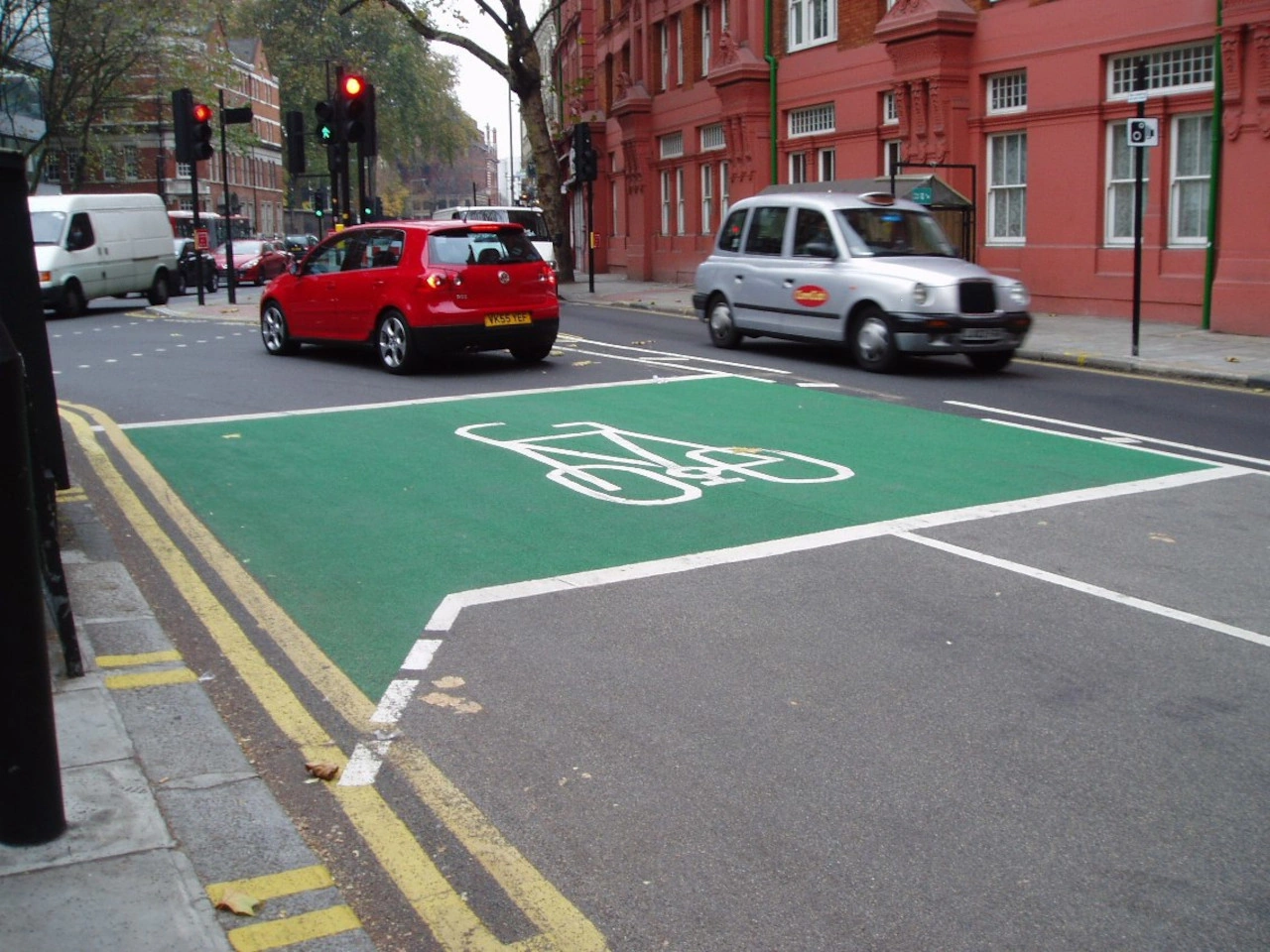
Wikimedia.org • Nordelch • CC BY-SA
What is a bike box or advanced stop area in the United Kingdom?
UK advanced stop lines create a marked area at traffic lights where cyclists can wait ahead of motor vehicles. Rule 178 regulates how motorists stop at the two lines.
🔗 gov.uk • Great Britain Highway Code: Rules 175–178; cyclists Rule 71
🔗 gov.uk • DfT Know Your Traffic Signs: bus and cycle signs and road markings (Great Britain)
Where should a car wait when a marked bike box has a red light in the United Kingdom?
Under UK Highway Code Rule 178, motorists must stop at the first white line reached on red or amber. If already across it when the signal changes, stop as soon as possible and no later than the second line; do not reverse to clear the box.
🔗 gov.uk • Great Britain Highway Code: Rules 175–178; cyclists Rule 71
🔗 gov.uk • DfT Know Your Traffic Signs: bus and cycle signs and road markings (Great Britain)
Does a bike box let cyclists ignore a red signal in the United Kingdom?
No. A bike box is a positioning facility, not a general exemption from red traffic lights. Cyclists must obey their applicable lights and any specially authorised turn indications. Turning drivers must check for cyclists moving off when signals change.
🔗 gov.uk • Great Britain Highway Code: Rules 175–178; cyclists Rule 71
🔗 gov.uk • DfT Know Your Traffic Signs: bus and cycle signs and road markings (Great Britain)


