

Bus stopUnited Kingdom
 Traffic rules
 United Kingdom
13. Bus stop
A bus stop is a designated place where buses stop to allow passengers to board or leave. It may be identified by a sign, shelter, raised platform, road marking or other public-transport infrastructure and can be located beside the road or in a specially constructed stopping area.
Drivers approaching a bus stop should watch carefully for buses, pedestrians and passengers crossing or entering the roadway. Parking or stopping restrictions may apply around bus stops to keep the area accessible and visible.
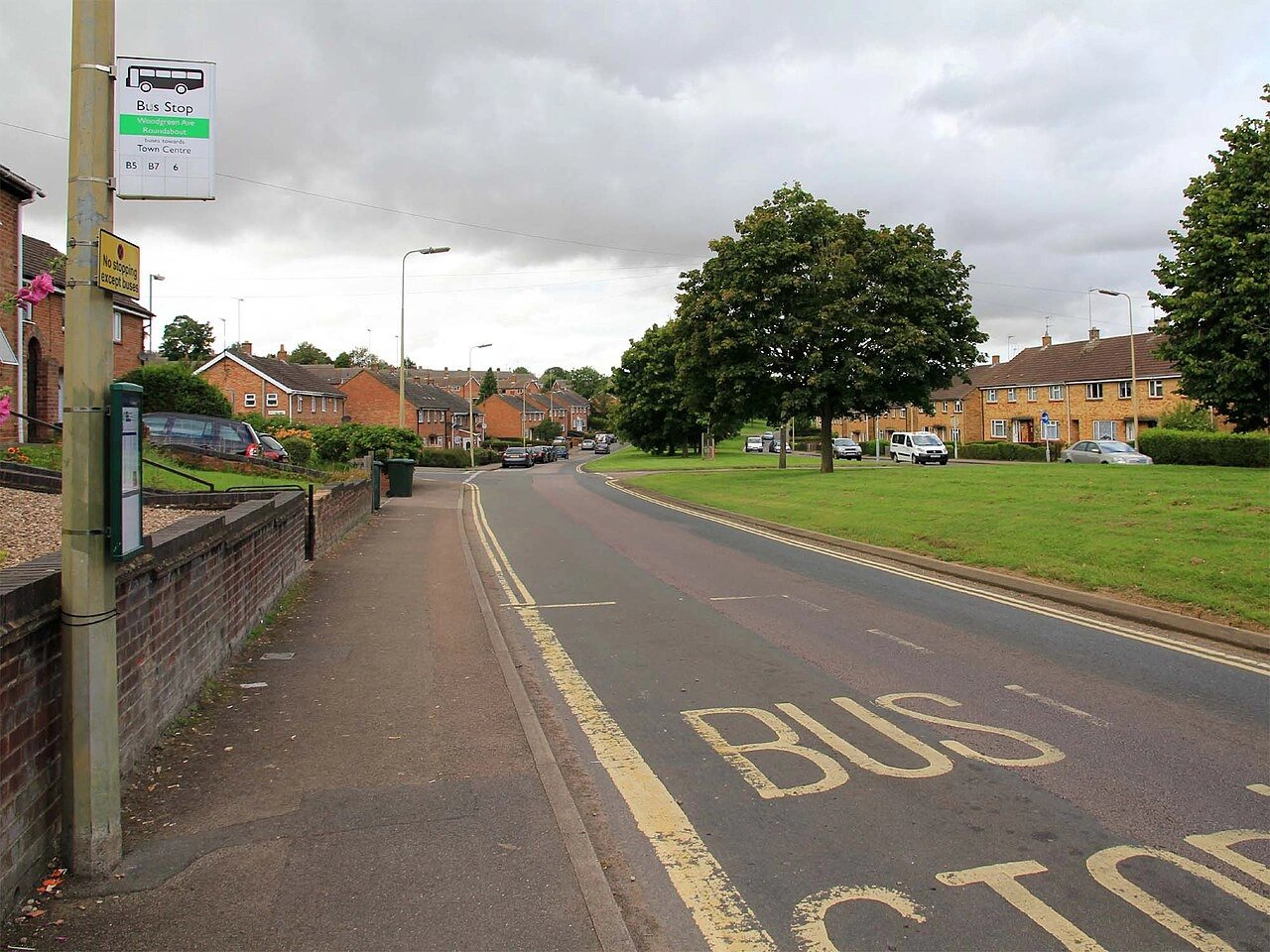
Wikimedia.org • David P Howard • CC BY-SA
What stopping or parking restrictions apply at bus stops in the United Kingdom?
In Great Britain, the Highway Code advises against stopping or parking at or near a bus stop. A bus-stop clearway imposes the applicable mandatory no-stopping restriction during its indicated period. Northern Ireland has its own Highway Code.
🔗 gov.uk • Great Britain Highway Code: Rules 240,243; Rule 223 bus-departure advice
🔗 gov.uk • DfT Know Your Traffic Signs: bus and cycle signs and road markings (Great Britain)
🔗 gov.uk • Great Britain Highway Code, Rule 223: bus-departure advice
May I briefly drop off a passenger at a bus stop in the United Kingdom?
A brief drop-off is not a general exemption from an operating bus-stop clearway. Choose a lawful place and obey the actual signs and markings.
🔗 gov.uk • Great Britain Highway Code: Rules 240,243; Rule 223 bus-departure advice
🔗 gov.uk • DfT Know Your Traffic Signs: bus and cycle signs and road markings (Great Britain)
🔗 gov.uk • Great Britain Highway Code, Rule 223: bus-departure advice
What should I do near a stopped bus in the United Kingdom?
Give priority to buses when you can do so safely, especially when they signal departure. This Highway Code advice should not be described as an unconditional priority that allows a bus to move into danger.
🔗 gov.uk • Great Britain Highway Code: Rules 240,243; Rule 223 bus-departure advice
🔗 gov.uk • DfT Know Your Traffic Signs: bus and cycle signs and road markings (Great Britain)
🔗 gov.uk • Great Britain Highway Code, Rule 223: bus-departure advice


