

VergeUnited Kingdom
 Traffic rules
 United Kingdom
55. Verge
A verge is the strip of land alongside a roadway, situated between the roadway and features such as a ditch, embankment, property boundary or other roadside area. A verge may be level with the roadway or raised above it and may consist of grass, gravel, soil or another surface.
A verge is normally separate from the roadway, pavement and cycle path. Depending on local traffic law, pedestrians, cyclists or vehicles may be permitted to use a verge in particular circumstances, and specific rules may apply to stopping and parking on it.
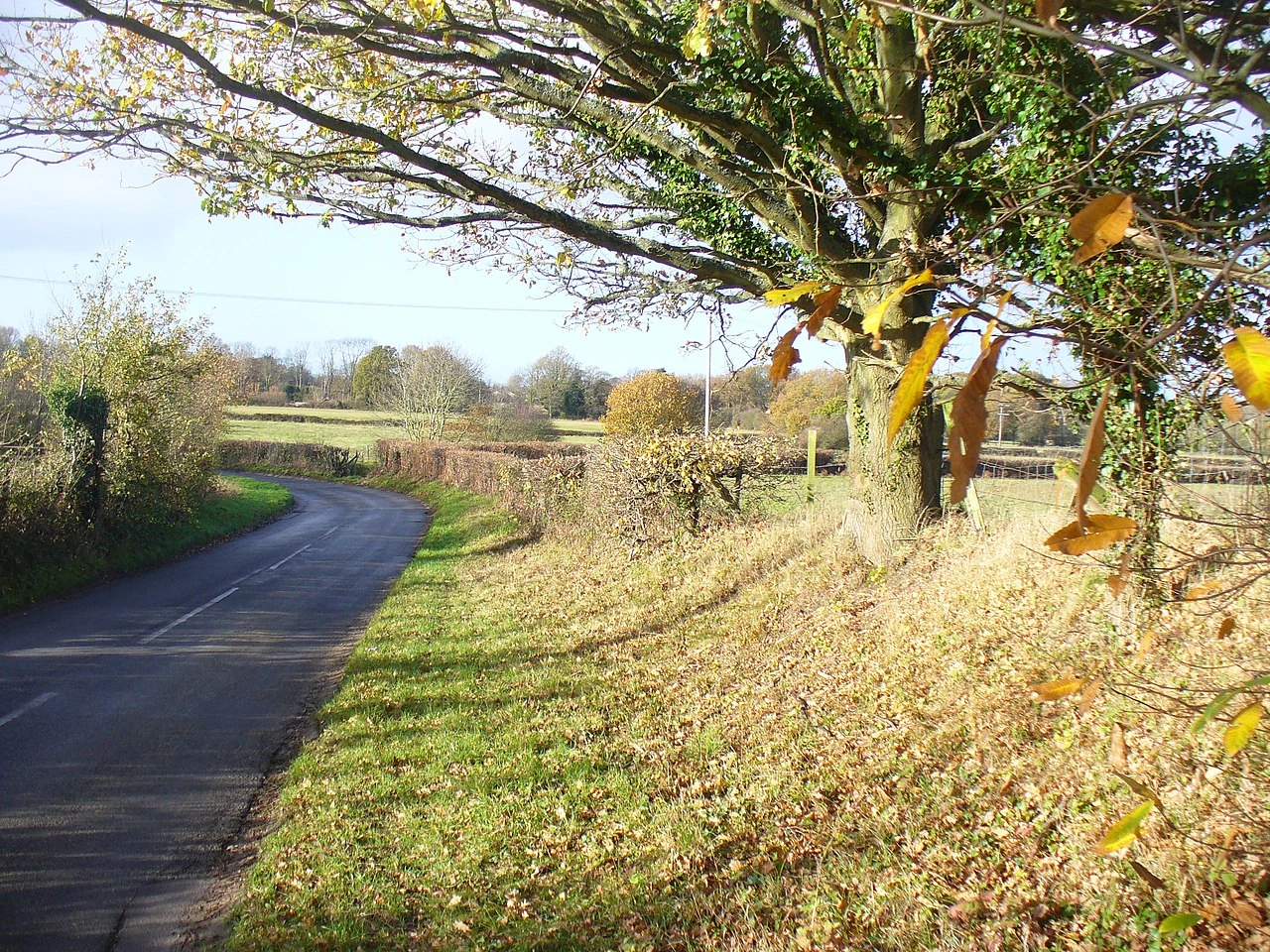
Wikimedia.org • Colin Smith • CC BY-SA
What is a verge?
A verge is an area alongside a roadway, generally between the roadway and a ditch, embankment, property boundary or other roadside feature.
Is a verge part of the roadway?
No. A verge is normally a separate part of the road environment alongside the roadway.
Is a verge the same as a pavement?
No. A pavement or sidewalk is specifically intended for pedestrians, while a verge may primarily form the roadside margin and may not be paved or comfortably walkable.
Is a verge the same as a cycle path?
No. A cycle path is specifically designated for cyclists and other permitted users. A verge has a different function and legal status.
Can a verge be level with the roadway?
Yes. A level verge lies approximately at the same height as the roadway and may consist of grass, gravel, soil or another surface.
Can a verge be raised?
Yes. A raised verge lies above the level of the roadway and is normally clearly distinguishable from it.
Can pedestrians walk on a verge?
Yes, where local rules permit or require it. A verge may provide a walking route where no suitable pavement or dedicated pedestrian facility is available.
Can cyclists ride on a verge?
This depends on the country, type of verge and available cycling facilities. Local traffic law may permit cyclists to use a suitable verge in particular circumstances.
Can vehicles drive on a verge?
Normally vehicles use the roadway, but local rules may permit temporary use of a suitable verge for purposes such as passing, meeting oncoming traffic or accessing property.
Can vehicles park on a verge?
This depends on local traffic law, the type of verge and the location. Where verge parking is permitted, sufficient space may have to remain available for pedestrians and other road users.
Should you drive onto a soft verge at high speed?
No. A soft or uneven verge can provide significantly less grip than the roadway and may affect steering or vehicle stability. Reduce speed and return to the roadway safely when possible.
Can a verge contain roadside signs or other equipment?
Yes. Verges commonly provide space for traffic signs, lighting, drainage, utility equipment, vegetation and other roadside infrastructure.


